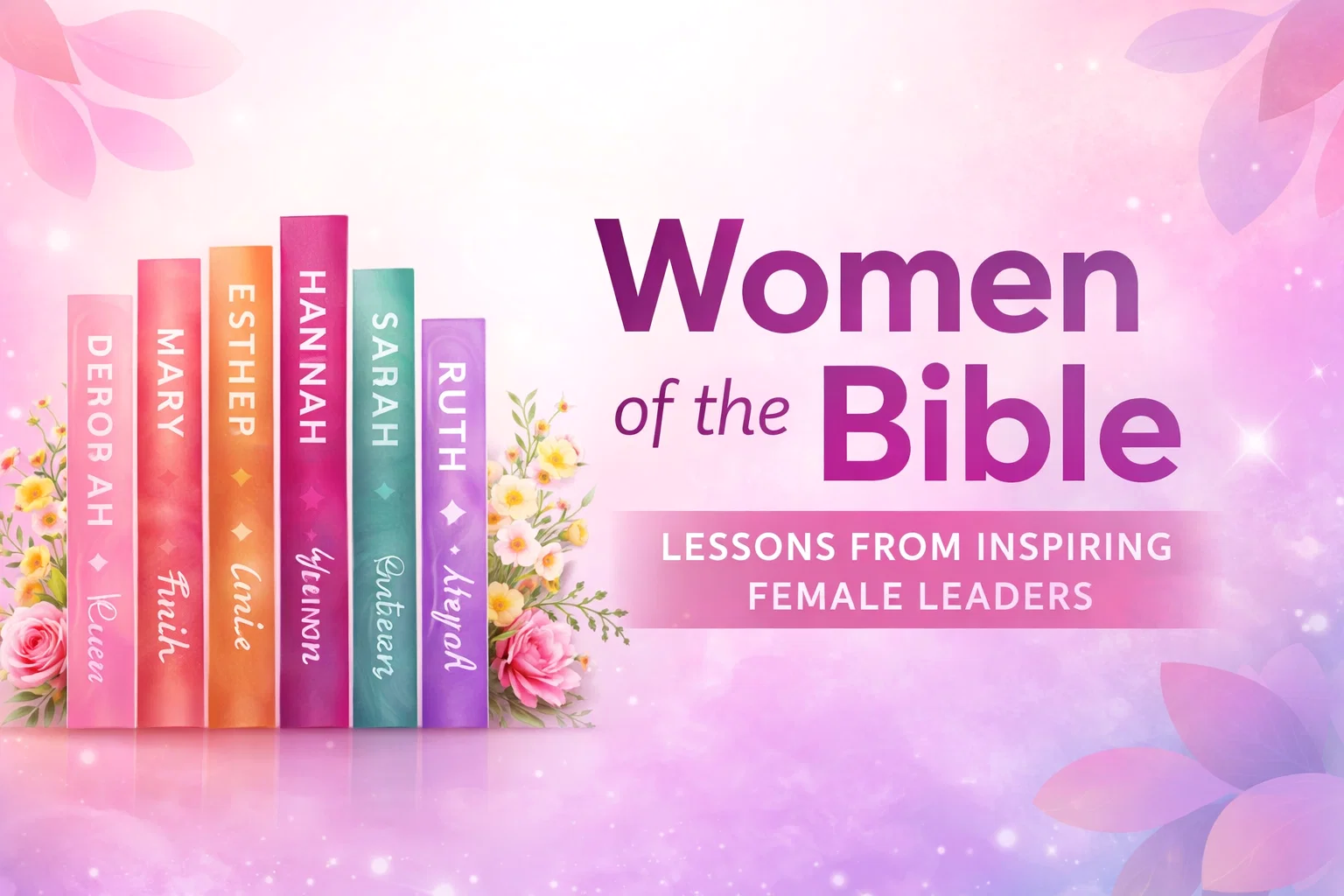
Women of the Bible Aesthetic Christian Faith Scripture Study Deborah Esther Ruth Mary
Walking through the stories of the Bible is like wandering through a vast, ancient library where every volume holds a secret to living a life of purpose. When we look at the women of the Bible, we are not just looking at historical figures; we are looking at mirrors of our own souls. The image of these beautifully bound books, each bearing the name of a woman and a defining characteristic, reminds us that our faith is built on the shoulders of those who came before us. From the courage of a judge to the quiet devotion of a mother, these women offer a roadmap for navigating the complexities of modern life with grace and strength.
The Power of a Name: Why These Stories Still Matter
The names Deborah, Mary, Esther, Miriam, Hannah, Sarah, and Ruth are more than just entries in a genealogical record. They represent archetypes of the human experience. In a world that often feels chaotic and disconnected, turning back to these foundational narratives provides a sense of grounding. Each woman faced unique challenges, social pressures, and moments of deep uncertainty. Yet, through their stories, we see a recurring theme of divine guidance and personal resilience. By studying their lives, we can identify which qualities we currently possess and which ones we need to cultivate further in our own spiritual journey.
Deborah: The Call to Bravery and Leadership
Deborah stands out as a beacon of strength and authority in the Old Testament. As a prophetess and a judge, she held a position of significant power at a time when such roles were rarely filled by women. Her story is not just about her ability to lead an army, but about her unwavering confidence in the direction she received. When we talk about being brave like Deborah, we are talking about the courage to speak the truth even when it is unpopular and the willingness to step into leadership when the community needs a guide. She reminds us that bravery is not the absence of fear, but the decision that something else is more important than fear.
Mary: A Foundation of Unshakable Faith
If Deborah represents outward strength, Mary represents the profound strength found in surrender. Her faith was not a passive thing; it was an active, soul-deep commitment to a path she did not fully understand. When she said yes to the unknown, she changed the course of history. In our daily lives, faith often looks like Mary’s story: trusting in the quiet moments and holding onto hope when the physical world seems to contradict our spiritual convictions. Her life teaches us that true faith is found in the heart’s willingness to be used for a higher purpose, regardless of the personal cost.
The Art of Leading and Worshiping Through Adversity
Leadership and worship are often seen as two different spheres, but the lives of Esther and Miriam show us how they are intricately linked. To lead is to serve, and to worship is to acknowledge the source of our strength. Both of these women used their unique positions to protect their people and honor their creator, often at great personal risk.
Esther: Strategic Leadership and Divine Timing
Esther’s story is a masterclass in poise and strategy. She was a woman who understood the power of influence and the importance of timing. Her famous phrase, for such a time as this, echoes through the centuries as a reminder that we are all placed in our specific circumstances for a reason. Leading like Esther means being prepared to act when the moment arises, using our resources and our voice to advocate for those who cannot speak for themselves. She shows us that leadership is often about the quiet preparation that happens behind the scenes before the public breakthrough occurs.
Miriam: Leading the Song of Worship
Miriam was a leader who used the power of celebration and worship to unify a nation. After the crossing of the Red Sea, she took up a timbrel and led the women in a dance of victory. Worship is a form of spiritual warfare; it shifts our focus from the problem to the provider. Miriam’s example encourages us to find our song even in the wilderness. When we choose to worship, we are declaring that our circumstances do not have the final say. Her legacy is one of joy, rhythm, and the infectious nature of a heart that is truly grateful.
The Interior Life: Prayer, Patience, and Loyalty
While some women of the Bible are known for their public exploits, others are celebrated for the depth of their interior lives. The qualities of prayer, patience, and loyalty are the quiet threads that hold the fabric of faith together. Hannah, Sarah, and Ruth demonstrate that the most significant battles are often won in the secret places of the heart and the home.
Hannah: The Persistence of a Praying Heart
Hannah’s story is one of the most poignant examples of raw, honest prayer in all of scripture. She didn’t offer polite, rehearsed words; she poured out her soul until she was breathless. Her life teaches us that God is not intimidated by our grief or our desperation. To pray like Hannah is to be persistent, to bring our deepest longings to the altar, and to trust that we are heard. She moved from a place of deep bitterness to a place of profound peace, proving that prayer changes the person as much as it changes the situation.
Sarah: The Long Walk of Patience
Sarah is a woman who had to wait. She waited decades for a promise to be fulfilled, navigating doubt and laughter along the way. Patience is perhaps the most difficult virtue to cultivate in a world that demands instant results. Sarah’s journey reminds us that God’s timing is rarely our own, but it is always perfect. Being patient like Sarah means holding onto a promise even when the evidence suggests it is too late. Her story is a testament to the fact that beauty can still bloom in the winter of our lives.
Ruth: The Unbreakable Bond of Loyalty
Ruth’s loyalty to Naomi is one of the most beautiful depictions of friendship and commitment in literature. She chose to leave her homeland and her comforts to support someone else in their time of need. This kind of loyalty is rare because it is sacrificial. Ruth didn’t ask what she would get out of the arrangement; she simply chose to stay. In our modern relationships, the spirit of Ruth calls us to be people of our word, to show up for others when it is inconvenient, and to build legacies through the simple act of staying faithful to our commitments.
Practical Ways to Embody These Traits Today
It is one thing to admire these women from a distance, but it is another thing entirely to weave their characteristics into our daily routines. We can start by identifying the season we are currently in. Are you in a season of waiting like Sarah? Or perhaps a season of bold action like Deborah? Understanding your current context helps you lean into the specific spiritual tools you need.
- Daily Journaling: Write down which woman you feel most like today and why. This helps bridge the gap between ancient text and modern experience.
- Affirmations: Use the keywords associated with these women. Tell yourself, I am brave like Deborah, or I am loyal like Ruth, to reinforce these identities.
- Study Groups: Discuss these stories with friends. Seeing how other people interpret the patience of Sarah or the leadership of Esther can provide fresh perspectives.
- Creative Expression: Much like the floral art in the image, use creativity to honor your faith. Whether it is through painting, gardening, or decorating, let your environment reflect your spiritual values.
Creating a Sacred Space for Reflection
The aesthetic of the books surrounded by flowers suggests that our spiritual life should be something we cultivate and cherish. You can create a small area in your home dedicated to this kind of reflection. A few books, a candle, and perhaps some fresh flowers can serve as a physical reminder of the internal growth you are pursuing. When you enter that space, you are stepping away from the noise of the world and into a lineage of faith that spans thousands of years.
Conclusion: Writing Your Own Chapter
The women of the Bible were not perfect people; they were real women with real fears and real flaws. What makes them legendary is not their perfection, but their willingness to be part of a story much larger than themselves. As you look at the names Deborah, Mary, Esther, Miriam, Hannah, Sarah, and Ruth, remember that you are part of that same continuum. Your life is a book that is currently being written, and you have the opportunity to choose the traits that will define your legacy.
Whether you are called to lead a nation or simply to lead your family with love, you can draw inspiration from these figures. You can be brave, you can be faithful, and you can be loyal. Most importantly, you can be yourself, knowing that your unique personality and circumstances are the very things through which light can shine. Let the stories of these women encourage you to live with intention, to worship with abandon, and to pray with a heart that never gives up. Your chapter is important, and the world is waiting to see the beauty you will bring to the story of faith.