How to Take Cute Aesthetic Notes Study Tips Ghibli Doodle Ideas for a Productive Glow Up
Transforming a cluttered notebook into a visually stunning masterpiece is more than just an exercise in aesthetics. It is a fundamental shift in how we approach learning and information retention. If you have ever looked at a page of messy, illegible handwriting and felt an immediate sense of dread, you are not alone. The way we present information to our brains matters. When we take the time to create cute, organized, and colorful notes, we are not just making art; we are building a roadmap for our memory. This guide will walk you through the essential steps to leveling up your note taking game, drawing inspiration from the whimsical world of Studio Ghibli and the most effective cognitive learning techniques available today.
The Psychology of Visual Learning and Color Coding
Before we dive into the pens and highlighters, it is important to understand why this method works. Our brains are naturally wired to respond to visual stimuli. Plain black text on a white background can often lead to cognitive fatigue, making it harder to distinguish between a minor detail and a critical concept. By introducing a structured color palette, you are effectively creating a visual hierarchy that allows your eyes to skip directly to the most important parts of the page.
Choosing Your Signature Palette
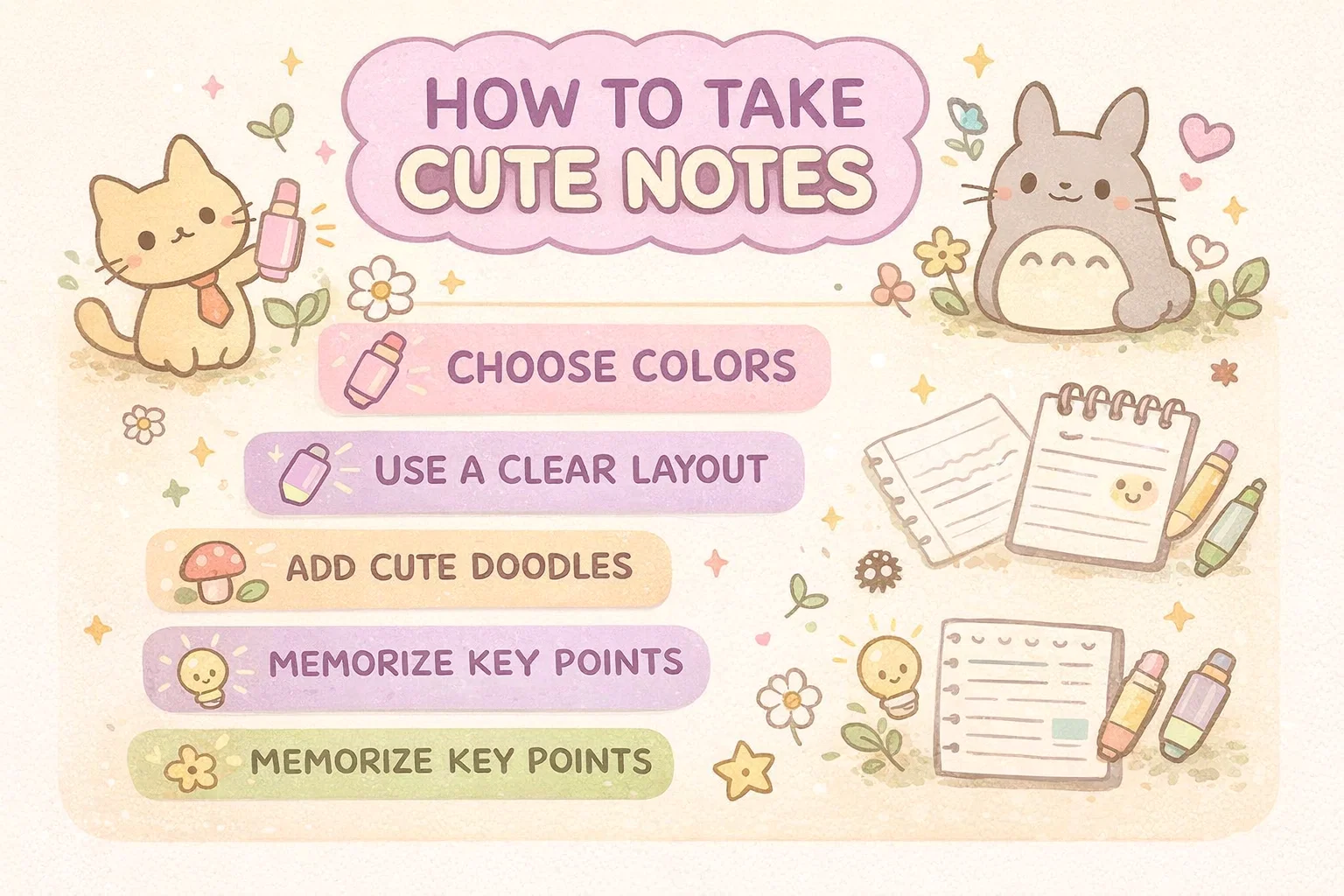
The first step in your journey to better notes is selecting a color scheme that resonates with you. Pastel highlighters are a favorite in the study community because they provide a soft, non-distracting pop of color. Instead of using colors at random, assign a specific meaning to each hue. For example, use violet for your main headings and subheadings to provide a clear structure. Yellow is traditionally the best choice for important facts or mnemonics because it is the first color the human eye notices. Green works beautifully for diagrams and flowcharts, evoking a sense of growth and connection. Finally, an orange or coral tone is perfect for clinical points or extra important details that require immediate attention during a quick review session.
Consistency is Key
The secret to a successful color coding system is consistency. If you decide that orange represents “test material,” stick to that rule throughout your entire semester. When you sit down for your final exam and try to recall a specific piece of information, your brain will often remember the color of the highlight before it remembers the exact words. This mental association is a powerful tool for memory retrieval.
Mastering the Layout for Maximum Clarity
One of the biggest mistakes students make is trying to cram as much information as possible onto a single page. This leads to a cluttered look that is overwhelming to read. To create truly aesthetic notes, you must embrace the concept of white space. White space, or negative space, acts as a breathing room for your thoughts. It prevents the page from feeling cramped and allows each individual block of information to stand out.
Dividing the Page into Blocks
Instead of writing in long, continuous paragraphs, try dividing your page into small, manageable blocks. You can use thin lines or even just physical distance to separate different topics. This modular approach makes it much easier to digest complex subjects. If you are studying biology, one block might be dedicated to the structure of a cell, while the next block focuses on its functions. By isolating these ideas, you reduce the risk of mental overlap and confusion.
The Power of Margins
Don’t be afraid to leave wide margins on the sides of your paper. These areas are perfect for adding quick dates, references to textbook pages, or even small personal reminders. A clean margin gives the entire page a professional and organized appearance, making you feel more like a scholar and less like someone just trying to survive a lecture.
Adding Personality with Ghibli-Style Doodles
Note taking should be a joyful process, and nothing adds charm like small, hand-drawn illustrations. Taking inspiration from the soft, nature-focused aesthetic of Studio Ghibli can turn a boring lecture into a creative session. These doodles serve a dual purpose: they make the page look beautiful and they provide a much-needed mental break during long study hours.
Simple Icons for Every Subject
You do not need to be a professional artist to add cute elements to your notes. Small, simple shapes can have a huge impact. Think about drawing tiny Totoro heads in the corners of your pages or adding little soot sprites near sections that were particularly challenging. Nature-inspired elements like leaves, mushrooms, and vines are incredibly easy to draw and add a cozy, organic feel to your notebook. Even a simple tea cup at the bottom of a page can serve as a reminder to take a break and hydrate.
Doodles as Mnemonic Devices
Sometimes, a doodle can actually help you remember a concept. If you are learning about the water cycle, a small, smiling cloud is a functional illustration. If you are memorizing a list of items, using a different tiny icon for each bullet point can help you visualize the list in your mind during a test. The goal is to make the information “sticky,” and visuals are the best glue available.
Essential Tips for Neat and Legible Handwriting
Even the best layout and the prettiest colors cannot save illegible handwriting. Developing a neat, small, and consistent script is a skill that takes practice but pays off immensely. When your handwriting is clear, your brain can process the information faster because it is not struggling to decode the letters.
Writing Small and Neat
Try to keep your letters uniform in size. Writing slightly smaller than usual often forces you to be more precise with your movements, resulting in a cleaner look. Use a fine-liner pen with a consistent ink flow to avoid smudges and blots. If you find your handwriting drifting upwards or downwards, use grid or dot-grid paper to help maintain a straight line.
The Magic of Bubble Headers
To make your topics really stand out, experiment with bubble headers. These are thick, rounded letters that you can color in or leave as outlines. They provide a bold contrast to your smaller body text and act as a visual anchor for the entire page. You can even add a slight shadow to one side of the letters to give them a three-dimensional effect. This small touch adds a professional “graphic design” feel to your personal notes.
Highlighting Strategy
A common trap is highlighting entire sentences or paragraphs. This defeats the purpose of the highlighter. Instead, focus on highlighting key words only. When you scan the page later, those specific terms should jump out at you, triggering the memory of the full concept. This selective highlighting forces you to actively engage with the material as you write, as you must decide what is truly essential and what is just fluff.
Advanced Memory Boost Tricks
Now that your notes look amazing, let’s make sure they are functional for long-term retention. Aesthetic notes are a form of active learning, but you can take it a step further with specific structural tricks designed to help the brain encode data.
Flowcharts with a Twist
Flowcharts are excellent for understanding processes, but they can often look clinical and dry. To match your new aesthetic, try drawing your flowcharts with organic shapes like vines or branches. Instead of rigid boxes and straight arrows, use curving lines and leaves to connect your ideas. This makes the information feel more like a living system and less like a static list. It is a fantastic way to visualize how one concept grows into another.
The Role of Mnemonics
Always leave space at the bottom of your blocks for mnemonics. These are short phrases or acronyms that help you remember complex lists. By writing these in a slightly different font or inside a decorative box, you give them the prominence they deserve. A well-placed mnemonic can be the difference between an A and a B on an exam.
Conclusion: Building a Sustainable Study Habit
Creating cute, aesthetic notes is not about perfection; it is about creating an environment where you actually want to spend time. When you enjoy the process of writing and decorating your pages, you are more likely to revisit them. This repeated exposure is the foundation of successful studying. By combining the organizational power of color coding, the clarity of a spacious layout, and the personal touch of Ghibli-inspired art, you are turning a mundane task into a rewarding creative outlet.
Remember that your style will evolve over time. Some days you might want a very minimalist look, while other days you might feel like filling every margin with mushrooms and tea cups. The most important thing is that these notes serve you. They are your personal toolkit for success. So, grab your favorite pastel highlighters, find a quiet spot, and start building a notebook that inspires you to learn every single day. Happy note taking!