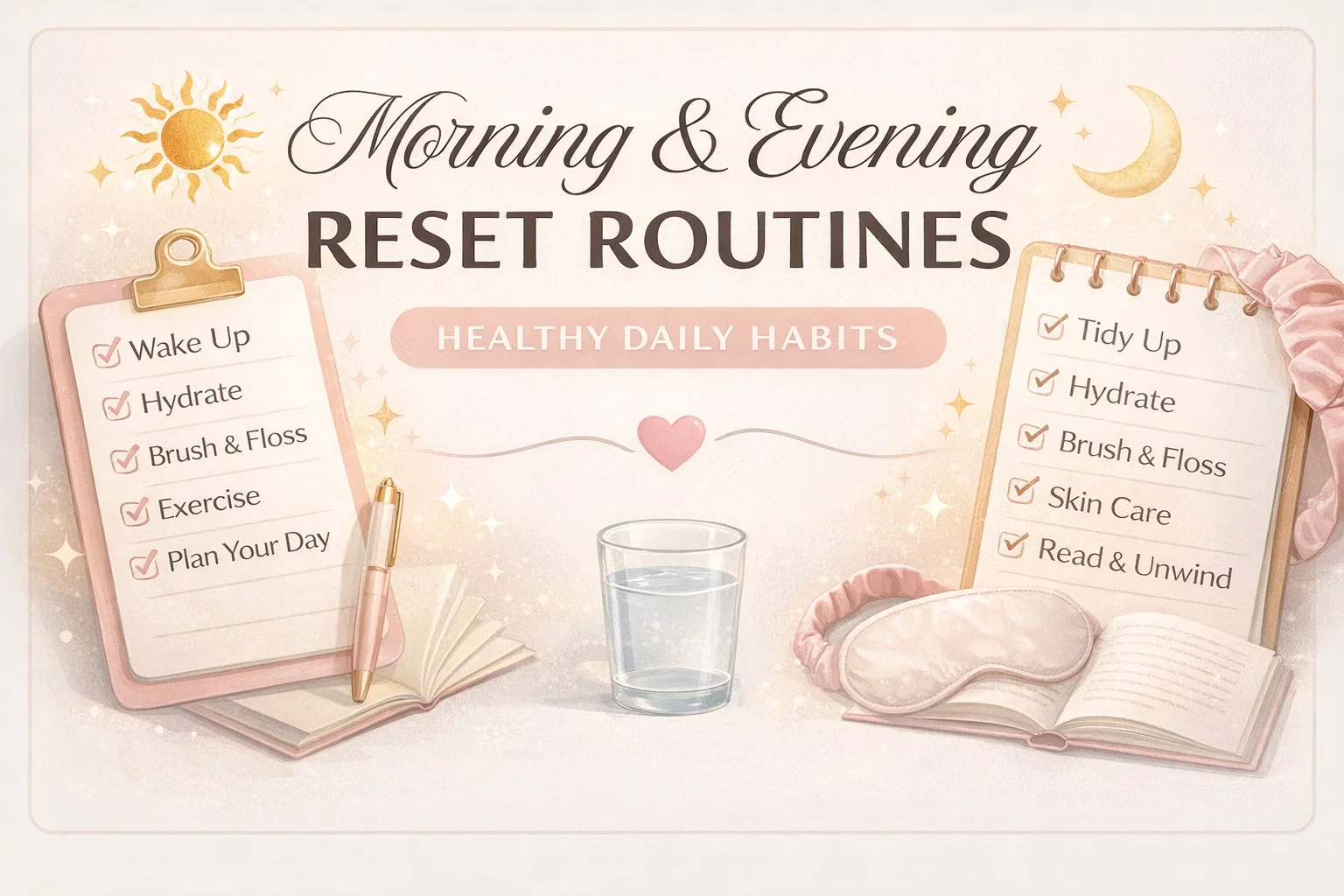
Daily Morning and Nightly Reset Routine Checklist Self-Care Habit Tracker Worksheet
Have you ever noticed how the quality of your entire day often depends on the first twenty minutes after you wake up? If you start by frantically checking notifications, your brain stays in reaction mode for hours. Conversely, starting with a gentle, structured routine sets a tone of intentionality. The same principle applies to your evening. How you close out your night determines how well you sleep and how ready you are to tackle the next morning. If you feel like your days are running you instead of you running your days, it is time to look at a daily reset routine.
Creating a consistent morning and night reset isn’t about being perfect. It is about creating a predictable structure that lowers your mental load. When you have a checklist, you stop wasting energy deciding what to do next. You simply follow the path you already designed for your future, more tired, or more stressed self. Let’s dive into why this specific routine is a total game changer for your productivity and mental wellbeing.
The Power of a Structured Morning Reset
A morning reset is not about cramming more productivity into your day. It is about preparing your body and mind to function at its best. Think of it like warming up an engine before driving. If you start cold, you are more likely to stall.
Aligning Body and Mind
The routine outlined in your checklist emphasizes both physical and spiritual health. Starting with hydration and vitamins is essential because your body is naturally dehydrated after seven or eight hours of sleep. Adding in prayer or meditation provides a moment of stillness before the chaos of the world rushes in. This balance between physical care and mental grounding is what makes a morning routine truly effective.
Movement as Energy
You do not need to hit the gym for two hours to benefit from morning movement. The suggestion of forty-five minutes of workout or stretching is ideal, but the key is consistency. Movement increases blood flow to the brain, releases endorphins, and helps you wake up naturally without relying solely on caffeine. By incorporating a quick tidy-up session immediately after, you create a clean, organized environment that helps you focus during work hours.
Mastering the Nightly Wind Down
Most of us fail at our mornings because we fail at our nights. If you stay up late scrolling on your phone, you will wake up feeling groggy, which makes the morning routine feel like a chore rather than a gift to yourself. A proper evening reset is about signaling to your brain that it is time to power down.
Planning for Tomorrow
One of the most anxiety-inducing things you can do is go to sleep wondering about your to-do list. When you plan your next day before you go to bed, you offload that mental pressure onto a piece of paper. This allows your subconscious to relax, knowing that you have a plan for the morning. You wake up knowing exactly where to start, which eliminates morning decision fatigue.
Creating a Restful Ritual
Your nighttime routine should be the antithesis of your workday. It should be slow, deliberate, and relaxing. This is where habits like reading, gentle stretching, and proper skincare come into play. These are not just chores; they are signals. When you go through these motions, you are telling your nervous system that it is safe to shift into rest mode. Over time, these actions become powerful triggers for better sleep.
Why Checklists Work for Habit Building
There is a psychological satisfaction in checking off a box. It provides a small dopamine hit that reinforces the behavior you want to keep. Using a visual tracker like the one in our featured image is a brilliant way to gamify your personal growth. It turns abstract goals into concrete actions.
- Consistency over intensity: Doing a 15-minute tidy-up every day is better than doing a four-hour deep clean once a month.
- Reduced decision fatigue: Knowing exactly what comes next frees up your brain for high-level creative work.
- Self-accountability: Seeing your progress on a page makes it harder to skip those small, healthy habits.
Common Pitfalls to Avoid
While a routine is helpful, it can become a source of stress if you become too rigid. Remember, these systems are meant to serve you, not the other way around. If you miss a day, do not throw the whole plan away. Just pick it back up at the next scheduled slot. The goal is to move closer to your ideal self, not to be a perfectionist.
Another pitfall is trying to change too much too fast. If your current morning routine consists of waking up five minutes before you need to leave, do not suddenly try to wake up two hours earlier to fit in a workout, meditation, and reading. Start small. Perhaps just begin by brushing and flossing, followed by a quick glass of water. Build your habit stack slowly to ensure it sticks long-term.
The Long-Term Benefits of Consistency
When you maintain a morning and night reset for weeks and months, the benefits compound. You will notice that you are less reactive to stress because you have built a foundation of calm. You will likely find that you sleep deeper because your brain isn’t racing, and your skin may even improve thanks to the consistency of a night routine. This is about building a lifestyle that supports your goals, rather than just surviving from one deadline to the next.
Remember that your environment plays a massive role in your ability to stick to these routines. Keep your checklist in a place where you will see it, perhaps on your bathroom mirror or on your nightstand. Make the tools for your success easy to access. If you want to journal, leave the journal and a pen out on your desk before you go to bed. If you want to do yoga, unroll your mat the night before.
Start Your Reset Today
There is no better time than now to take control of your daily rhythm. The beauty of these routines is that they are highly customizable. You can take the principles of the worksheet we analyzed and tailor them to your specific lifestyle. Maybe you need more time for reading, or perhaps your workout happens in the evening instead of the morning. That is perfectly fine.
The core message is to be intentional with your time. You are the architect of your day. By structuring your morning for success and your evening for recovery, you are giving yourself the best possible chance to live a productive, healthy, and peaceful life. Print out a copy of your own reset checklist, put it somewhere visible, and start showing up for yourself. You will be amazed at how much your life shifts when you stop leaving your day to chance.