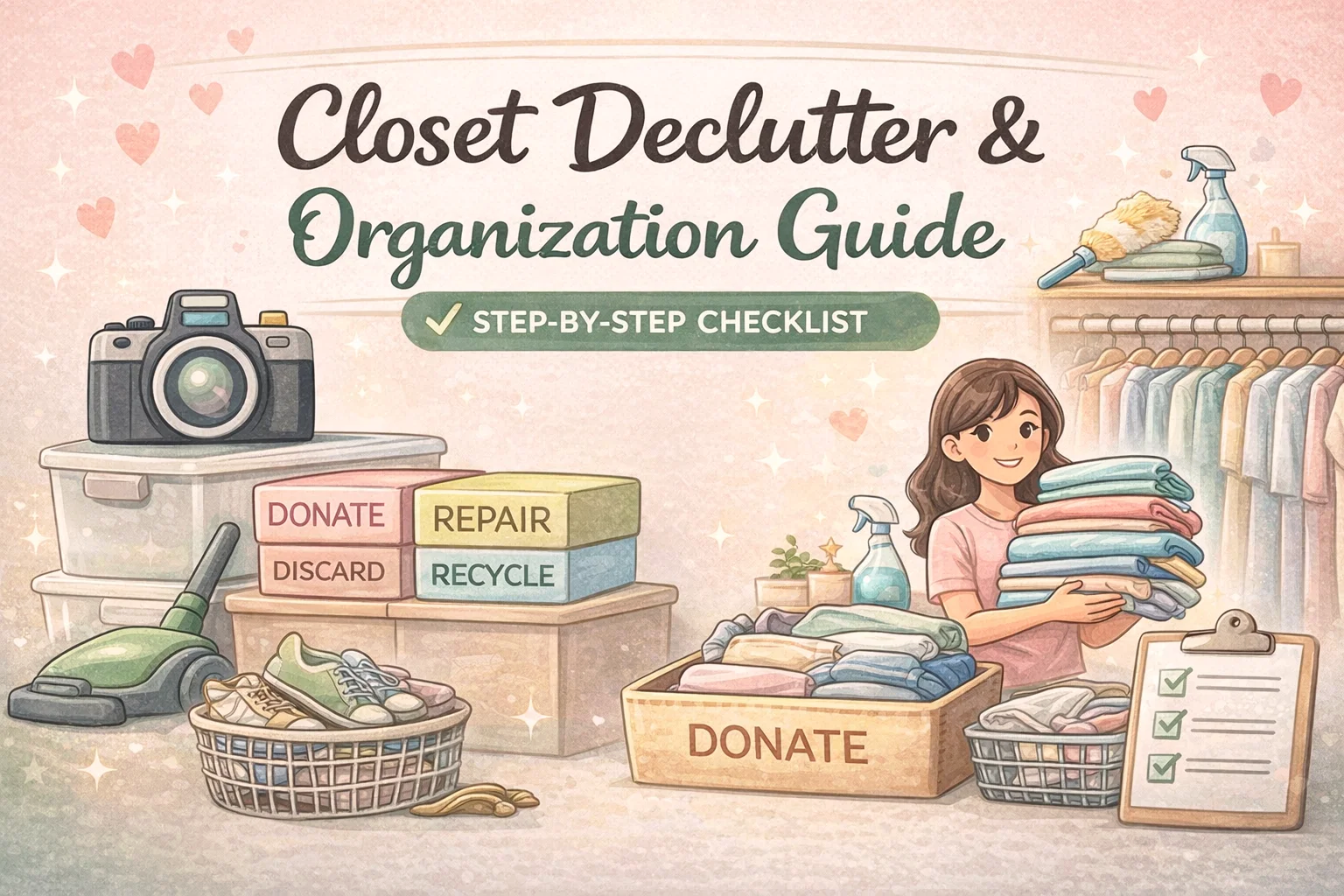
How to Declutter Organize Your Closet A Step-by-Step Checklist for a Tidy Wardrobe
Have you ever opened your closet doors only to feel a wave of immediate stress wash over you? You are certainly not alone. For many of us, the closet becomes a catch-all for every impulse buy, sentimental relic, and “I will wear this someday” outfit we own. But your wardrobe should be a sanctuary, a place that helps you start your day with confidence rather than a frantic search for a matching sock. Transforming a chaotic mess into a streamlined, curated collection is more than just a cleaning task; it is a way to reclaim your time and mental clarity. In this comprehensive guide, we are going through every stage of the decluttering process to help you build a closet that truly serves your lifestyle.
The Psychological Power of an Organized Closet
Before we dive into the bins and hangers, it is important to understand why we are doing this. A cluttered environment often leads to a cluttered mind. When your physical space is disorganized, your brain is constantly processing the visual noise, which can lead to increased cortisol levels and decision fatigue. By organizing your clothes, you are actually simplifying your morning routine and reducing the number of micro-decisions you have to make before you even have your first cup of coffee.
Moreover, an organized closet allows you to see what you actually own. How many times have you bought a basic black t-shirt only to find three similar ones buried at the back of a shelf? Decluttering is a financial win as much as it is an aesthetic one. It teaches you to shop your own closet first and identifies the real gaps in your wardrobe, preventing wasteful spending on items you already possess.
Phase 1: The Essential Prep Work
You cannot organize a mess; you have to remove the mess first. The most effective way to start is by clearing the slate entirely. This might feel overwhelming at first, but it is a vital step in seeing the true potential of your storage space.
Step 1: Snap a Before Picture
Do not skip this part. Taking a photo of your current closet serves two purposes. First, it provides a realistic look at the problem areas you need to address. Second, it provides an incredible sense of accomplishment once you finish. Looking back at the “before” image while standing in front of your newly polished wardrobe is the ultimate motivation to keep it that way.
Step 2: The Four Bin System
To keep the momentum going, you need a system for the items leaving your closet. Set up four distinct stations or boxes labeled: Donate, Repair, Discard, and Recycle. Having these categories ready prevents the “maybe” pile from growing too large. If an item is torn but fixable, it goes to Repair. If it is high quality but no longer fits your style, it goes to Donate. If it is stained or beyond saving, it goes to Recycle or Discard. This immediate sorting keeps the process moving fast.
Phase 2: The Deep Clean and Assessment
Once you have emptied every single item out of the closet, you are left with a blank canvas. This is the best time to perform the maintenance tasks we usually ignore when the shelves are full.
Deep Cleaning the Space
Dust tends to settle in the corners of shelves and inside drawer tracks. Use a microfiber cloth to wipe down every surface. Follow this up by vacuuming the floor thoroughly, including the baseboards. A clean environment makes the “new” closet feel premium and respected. If your closet smells a bit musty, this is also the perfect time to add a subtle cedar block or a lavender sachet to keep things fresh.
Checking Your Hardware
Take a look at your hangers. Are they a mismatched collection of wire, plastic, and broken wood? Hangers are the foundation of a good closet. Broken hangers should be discarded immediately. For a professional, high end look, consider investing in a uniform set of velvet or slimline hangers. They prevent clothes from slipping and take up significantly less space than bulky plastic alternatives, allowing you to fit more without the clutter.
Phase 3: The Art of Sorting and Decision Making
Now comes the most challenging part: deciding what gets to go back in. This requires a bit of ruthless honesty. As you go through your pile of clothes, ask yourself if the item fits your current body, if you have worn it in the last year, and if it makes you feel good when you put it on.
The Keeping vs. Donating Strategy
If you are struggling to let go, try the “one year rule.” If you haven’t reached for it in twelve months, you likely won’t reach for it in the next twelve. For sentimental items that you don’t wear but can’t bear to toss, consider moving them to a dedicated memory box in long term storage rather than letting them take up prime real estate in your daily closet.
Handling Repairs and Worn Out Items
Be honest about your “Repair” pile. If that missing button hasn’t been replaced in six months, will you really do it now? Set a deadline. If the items aren’t fixed within two weeks, they should be donated or recycled. For clothes that are truly worn out, stretched, or permanently stained, do not let them back into your space. They serve no purpose other than taking up room.
Phase 4: Functional Organizing Techniques
How you put things back is just as important as what you put back. You want to create a system that is intuitive so that you can maintain it long after the initial cleaning day is over.
Categorizing for Efficiency
There are two popular ways to organize: by category or by color. Organizing by category (dresses, tops, pants, skirts) is great for people who get dressed based on the type of event they are attending. Organizing by color within those categories adds a level of visual harmony that makes the closet look like a high end boutique. It also makes it much easier to find exactly what you are looking for at a glance.
Shoe Storage Solutions
Shoes are often the biggest source of closet chaos. Start by cleaning the shoes you decided to keep. Use a damp cloth to wipe away dirt so they don’t soil your clean shelves. Arrange them on racks or shelves with the pairs together. A pro tip for saving space on narrow shelves is to place one shoe facing forward and its mate facing backward. This “toe to heel” method allows you to fit more pairs on a single shelf.
Phase 5: Seasonal Rotation and Long Term Storage
Unless you live in a climate with no seasons, you likely have clothes that you only wear for part of the year. Keeping heavy parkas in your main closet during the height of summer is a waste of space.
The Seasonal Swap
Gather your off-season items and store them in labeled bins or vacuum sealed bags. These can be placed on the very top shelf of your closet or under the bed. Clearly label each bin with “Winter” or “Summer” so you aren’t digging through boxes six months from now. This rotation keeps your active wardrobe breathable and easy to navigate.
Final Laundry Check
Before any item is officially “put away” in its new home, ensure it is clean. This is especially true for items going into seasonal storage. Unseen stains or body oils can set over time and attract pests or cause permanent discoloration. If an item needs dry cleaning, set it aside in a dedicated bag and take it to the cleaners immediately.
Maintaining Your New Sanctuary
Congratulations! You have successfully decluttered and organized your closet. The key now is maintenance. Use the “one in, one out” rule: every time you buy a new piece of clothing, one old piece must be donated or sold. This prevents the slow creep of clutter from returning.
Once a week, take five minutes to re-hang anything that fell off a hanger or straighten up your shoe rack. These small habits ensure that your hard work lasts for years to come. Your closet is now a reflection of the person you are today, filled only with things that fit, look great, and make you feel amazing.
Conclusion
Decluttering your closet is a transformative experience that goes far beyond just tidying up a room. It is an act of self care that streamlines your life and gives you a fresh perspective on your personal style. By following this structured guide, you have turned a daunting task into a manageable series of wins. Enjoy the feeling of walking into your closet and seeing a curated selection of clothes that you truly love. You have earned this organized space, and the peace of mind that comes with it is the best accessory you could ever wear.