How to Use Broadleaf Plantain Natural Remedies for Bug Bites, Skin Care Healing Salves
Have you ever noticed a resilient little green plant pushing its way through the cracks of your driveway or carpets of your lawn? While many homeowners reach for the weed killer, seasoned herbalists and foragers see something else entirely. They see a powerhouse of healing known as Plantain (Plantago spp.). This isn’t the starchy banana-like fruit you find in the grocery store; this is the “herbal healer in your backyard,” a plant with a storied history and a list of medicinal uses that could rival a small pharmacy. Learning to identify and utilize this common green can change the way you look at your garden forever.
The Two Faces of Plantain: Broadleaf vs. Narrowleaf
Before you can start crafting your own home remedies, you need to know exactly what you are looking for. There are two primary species of plantain that are common in North America and Europe: Broadleaf Plantain (Plantago major) and Narrowleaf Plantain (Plantago lanceolata). Both are equally medicinal, but they have distinct visual profiles that make them easy to spot once you know the secret.
Identifying Broadleaf Plantain (Plantago major)
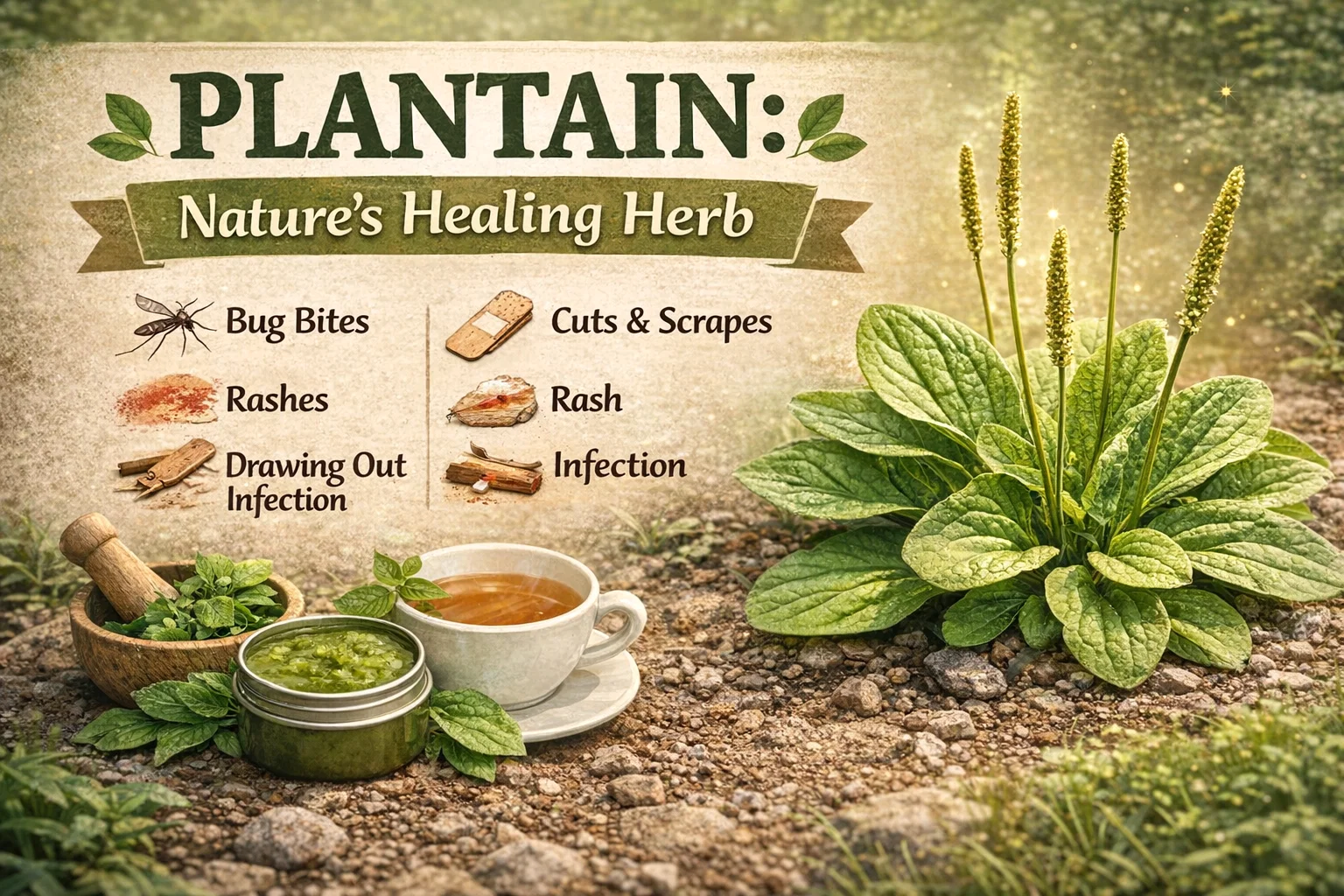
Broadleaf plantain is characterized by its wide, oval-shaped leaves that grow in a low-lying rosette. The most identifying feature of this plant is its veins. If you look closely at the leaf, you will see thick, fibrous veins that run parallel from the base of the stem all the way to the tip. If you snap a leaf stem, these veins often pull out like the strings in a stalk of celery. In the summer, it sends up long, green, spear-like seed stalks that look like miniature corn on the cob.
Identifying Narrowleaf Plantain (Plantago lanceolata)
Narrowleaf plantain, also known as ribwort or English plantain, has much longer, thinner leaves. As the name suggests, these leaves are lance-shaped and also feature those signature parallel veins. Its flower stalks are different too; they are usually taller and topped with a small, brownish cone that wears a “skirt” of tiny white flowers when in bloom. Both varieties love disturbed soil, meaning you will find them along paths, in the middle of your grass, or even in the gravel of a parking lot.
A History Written in Footsteps
The history of plantain is deeply intertwined with the history of human migration. Indigenous peoples in North America often referred to plantain as “White Man’s Footstep.” This name was given because the plant seemed to appear wherever European settlers traveled. The seeds are slightly sticky when wet, allowing them to cling to the boots of travelers and the hooves of livestock, effectively hitchhiking across continents.
While it may have arrived as an unintentional guest, it quickly became a staple in the colonial medicine cabinet. Because it thrives in areas where people live and walk, it was always within reach when someone sustained a cut or a bee sting while working in the fields. It is a rare example of a “weed” that was welcomed for its ability to provide immediate relief in a rugged environment.
Nature’s First Aid Kit: What It’s Used For
The beauty of plantain lies in its versatility. It is primarily known as a “vulnerary,” which is a fancy herbalist term for a plant that heals wounds. However, its properties go far beyond just closing up a scratch. It is anti-inflammatory, antimicrobial, and an “anodyne,” which means it helps to dull pain.
Soothing Bug Bites and Stings
If you are prone to mosquito bites or happen to step on a hidden yellow jacket nest, plantain is your best friend. It contains a compound called aucubin which has powerful anti-inflammatory effects. It works quickly to neutralize the itch and reduce the swelling of the bite. Many people find that applying plantain immediately can stop a bite from turning into a large, itchy welt.
Healing Cuts, Scrapes, and Abrasions
Because plantain is a mild coagulant, it helps to stop minor bleeding. More importantly, its antimicrobial properties help to keep the wound clean while it heals. It provides a protective layer over the skin, encouraging the cells to regenerate faster. This makes it a perfect ingredient for a natural “liquid bandage” or a healing salve.
Drawing Out Splinters and Infection
One of the most legendary uses of plantain is its ability to “draw” things out of the skin. Whether it is a deep splinter, a stinger from a bee, or even the toxins from a minor infection, plantain acts like a gentle vacuum. It helps to bring the foreign object or the fluid to the surface of the skin, making it much easier to remove and speeding up the recovery process.
How to Use Plantain: From Fresh to Prepared
You do not need an expensive laboratory to harness the power of this plant. In fact, some of the most effective ways to use it are also the simplest. Depending on your needs, you can use it fresh from the earth or preserve it for use during the winter months.
The Fresh Poultice (The “Spit” Poultice)
The most immediate way to use plantain is by making a fresh poultice. If you are out hiking and get a sting, simply find a clean plantain leaf, chew it up for a few seconds to break the cell walls and release the juices, and then apply that green mash directly to the affected area. While it might seem a bit primitive, the enzymes in your saliva actually help to activate some of the plant’s compounds. If you prefer a more modern approach, you can crush the leaves with a stone or pulse them in a blender with a tiny bit of water.
Creating a Plantain Salve
For a more shelf-stable remedy, you can create a healing balm. This involves infusing dried plantain leaves into a carrier oil like olive oil or coconut oil for several weeks. Once the oil has taken on a deep green color, you strain out the leaves and melt in a bit of beeswax. This salve is incredible for dry skin, rashes, diaper rash, and minor burns. It is a must-have for any natural medicine cabinet.
Soothing Herbal Tea
While most people think of plantain for external use, it is also beneficial when consumed. A tea made from the leaves is known to be very soothing for the digestive system and the urinary tract. It is rich in mucilage, which provides a cooling, lubricating effect on the internal linings of the body. This can be particularly helpful for those dealing with a dry cough or minor gut irritation.
The Benefits Beyond the Surface
When we look at the chemical makeup of plantain, it is easy to see why it works so well. It is packed with vitamins A, C, and K, as well as a high concentration of calcium and iron. This nutritional density makes it a great addition to salads when the leaves are young and tender in the spring.
Urinary and Respiratory Support
In traditional herbalism, plantain tea has been used to support urinary health due to its mild diuretic properties and its ability to soothe inflammation in the bladder. For the respiratory system, it acts as an expectorant, helping to clear out excess mucus while calming the irritation that leads to repetitive, dry coughing. It is a gentle yet effective ally for the changing seasons.
Growing Your Own Herbal Pharmacy
The best part about plantain is that you probably don’t even have to plant it. It is an opportunistic grower that thrives in poor soil. However, if you want to ensure a steady supply, you can easily cultivate it in a corner of your garden. It is a hardy perennial, meaning it will come back year after year.
If you are harvesting from the wild, the most important rule is to ensure the area has not been sprayed with pesticides or herbicides. Because plantain grows so close to the ground, it easily absorbs whatever chemicals are put on the lawn. Always look for plants in “clean” areas, away from busy roadsides where car exhaust might settle on the leaves. Harvest the leaves in the morning after the dew has dried but before the sun is too hot for the best concentration of medicinal oils.
A Sustainable and Accessible Healer
In a world where we are often disconnected from the sources of our medicine, plantain offers a way back to the basics. It is a plant that requires nothing from us but a bit of recognition. By learning to identify this common weed, you are gaining access to a free, effective, and sustainable source of first aid that is literally right under your feet.
Whether you are looking to treat a toddler’s scraped knee, soothe a nasty spider bite, or simply add some wild nutrition to your diet, plantain is the perfect entry point into the world of herbalism. It reminds us that nature provides exactly what we need, often in the places we least expect to find it.
Conclusion: Embrace the Backyard Healer
Next time you are out in your yard and see those broad, ribbed leaves peeking through the grass, don’t reach for the mower or the weed puller right away. Take a moment to appreciate the “White Man’s Footstep” for the incredible gift that it is. From its ability to draw out toxins to its soothing effect on irritated skin, plantain is a testament to the power of simple, natural remedies.
By keeping a few leaves on hand or a jar of salve in your cupboard, you are taking a step toward self-sufficiency and a deeper connection with the natural world. Start small, perhaps by making a simple poultice the next time a mosquito finds you, and witness the healing power of plantain for yourself. Your backyard is more than just a lawn; it is a living, breathing pharmacy waiting to be discovered.