Plantain Herb Guide How to Identify Use Plantago for Bug Bites, Skin Care Healing Salves
Nature often hides its greatest treasures in the most ordinary places. If you have ever looked at a crack in your sidewalk or a patch of grass in your backyard and seen a cluster of ribbed, green leaves, you might have dismissed it as just another weed. However, that humble plant is likely Plantain (Plantago spp.), a powerhouse of herbal medicine that has been used for centuries to heal the skin, soothe the gut, and provide relief from the tiny stings of daily life. Unlike the starchy cooking banana of the same name, this plant is a low-growing perennial that thrives wherever humans tread, earning it a reputation as one of the most accessible and effective natural remedies available to the modern forager.
Understanding the Basics of Plantago
To the untrained eye, the garden may seem like a chaotic collection of green, but once you learn to recognize Plantain, you will start seeing it everywhere. There are two primary varieties that foragers and herbalists typically seek out: Broadleaf Plantain (Plantago major) and Narrowleaf Plantain (Plantago lanceolata). While they look physically different, their medicinal properties are almost identical, making them interchangeable in most home remedies.
Broadleaf Plantain is easily identified by its wide, oval leaves that grow in a rosette pattern close to the ground. One of its most distinctive features is the thick, stringy veins that run vertically through the leaf, much like the strings in a stalk of celery. Narrowleaf Plantain, on the other hand, features long, slender, lance-like leaves that also possess those signature parallel veins. Both plants produce tall, leafless stalks tipped with small, inconspicuous flowers that eventually turn into seed heads. These plants are incredibly resilient, often surviving in high-traffic areas where other vegetation would be crushed. This toughness is a testament to the concentrated healing power contained within their fibers.
A History Known as White Mans Footstep
The history of Plantain is deeply intertwined with the history of human migration. Indigenous populations in North America originally dubbed the plant “White Man’s Footstep” because it seemed to appear wherever European settlers established themselves. The seeds of the Plantain are small and become slightly sticky when wet, allowing them to cling to the soles of boots, the hooves of livestock, and the wheels of wagons. As people moved across the continent, they inadvertently sowed the seeds of this medicinal herb.
Despite being an introduced species in many parts of the world, it was quickly embraced by various cultures for its undeniable utility. It was not just a hitchhiker; it was a traveling medicine chest. From ancient European herbals to traditional Indigenous practices, the plant earned its place as a “panacea” or “heal-all.” Its ability to thrive in disturbed soils meant that it was always available right when it was needed most, such as in the aftermath of a construction project or along a well-worn hiking trail.
The Science of Why Plantain Heals
What makes this backyard weed so effective? The leaves of the Plantain plant are rich in bioactive compounds including iridoid glycosides (specifically aucubin and catalpol), flavonoids, and mucilage. These components work together to provide a multi-faceted approach to healing. Aucubin, for example, has been studied for its antimicrobial and anti-inflammatory properties, which explains why the plant is so effective at preventing infection in minor wounds.
Additionally, Plantain contains high levels of tannins, which act as an astringent. This means it helps to contract skin tissue and stop bleeding. The presence of mucilage provides a soothing, demulcent effect, which is why it is so popular for treating internal irritations like coughs or digestive upset. When you apply Plantain to the skin, you are essentially applying a natural bandage that disinfects, reduces swelling, and promotes faster cellular regeneration.
Topical Uses: The Ultimate Skin Savior
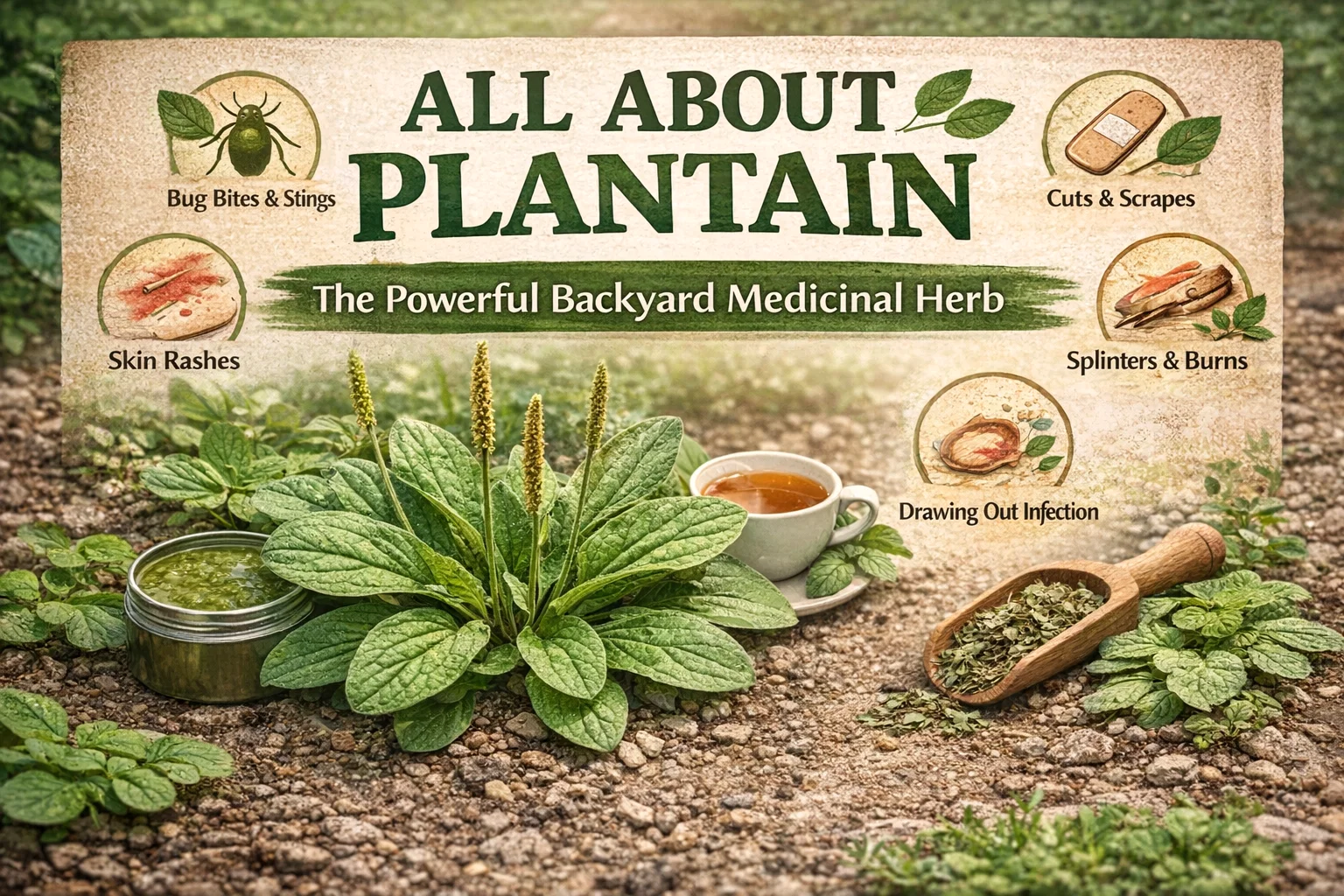
Perhaps the most famous use for Plantain is its ability to treat “bugs and bites.” If you have ever been stung by a bee or bitten by a mosquito while gardening, Plantain is your best friend. It is widely considered a “drawing herb,” meaning it has the unique ability to pull toxins, stingers, or even splinters out of the skin. It is remarkably effective at neutralizing the itch of poison ivy and the burning sensation of stinging nettle.
Treating Cuts, Scrapes, and Burns
Because of its antimicrobial properties, a fresh application of Plantain can help clean a minor scrape or cut when you are far from a first aid kit. For minor burns, the cooling nature of the leaf helps to draw out the heat and prevent blistering. It creates a protective barrier over the damaged skin, allowing the body’s natural healing processes to take place without interference from external bacteria.
Drawing Out Infections and Splinters
If you have a stubborn splinter or a small localized infection, such as a boil, Plantain can be used as a drawing poultice. By keeping the herb in contact with the skin for an extended period, it helps soften the tissue and physically “draw” the foreign object or pus toward the surface. This is an age-old remedy that remains one of the most effective ways to handle minor skin obstructions without invasive digging.
Internal Benefits: From Coughs to Digestion
While most people think of Plantain as a topical treatment, its benefits extend inside the body as well. The leaves are edible, especially when young and tender, and can be eaten raw in salads or cooked like spinach. However, most people prefer to consume it as a concentrated tea or infusion to address specific health concerns.
Soothing the Respiratory System
The demulcent properties of Plantain make it an excellent remedy for dry, hacking coughs. It coats the throat and reduces irritation, making it easier to breathe. In many traditional European medicines, Plantain syrup is a staple for treating bronchitis and other respiratory inflammations. It helps to thin mucus while simultaneously calming the inflamed lining of the airways.
Digestive and Urinary Support
Plantain tea is often used to soothe the digestive tract, particularly in cases of diarrhea or inflammatory bowel issues. Its astringent nature helps tone the gut lining, while the mucilage provides a soothing layer of protection. Furthermore, it has a mild diuretic effect, which can support urinary tract health by helping to flush out toxins and reduce irritation in the bladder.
How to Make a Fresh Spit Poultice
The most immediate way to use Plantain in the field is by making what is colloquially known as a “spit poultice.” This might sound unappealing, but it is the fastest way to activate the plant’s chemistry when you are outdoors. Simply find a clean leaf of Broadleaf or Narrowleaf Plantain, chew it briefly to break down the fibers and release the juices, and then apply the green mash directly to a bite or sting. The enzymes in your saliva actually help to further activate the plant’s compounds. Within minutes, the throbbing of a bee sting or the itch of a mosquito bite usually subsides.
Crafting Your Own Plantain Salve
For those who want to have the power of Plantain available year-round, making a healing balm or salve is the perfect weekend project. This allows you to preserve the medicinal qualities of the plant in a shelf-stable form that can be kept in your medicine cabinet or hiking bag.
- Step 1: Harvest and Dry. Pick fresh Plantain leaves on a dry day. Allow them to wilt and dry for 24 to 48 hours. Using fresh leaves directly in oil can lead to mold due to the water content, so drying them slightly is essential.
- Step 2: Infuse the Oil. Place the leaves in a glass jar and cover them with a carrier oil like olive oil, jojoba oil, or almond oil. You can use a slow infusion method (letting it sit for 4 to 6 weeks) or a warm infusion method (using a double boiler over low heat for several hours).
- Step 3: Strain. Use cheesecloth to strain out the plant material, leaving you with a deep green, medicated oil.
- Step 4: Thicken with Wax. Heat the oil gently and add beeswax pellets (usually about 1 ounce of wax per 4 ounces of oil). Once melted, pour the mixture into small tins or jars.
- Step 5: Cool and Set. Let the salve cool completely. You now have a potent healing balm for rashes, burns, and dry skin.
Identifying and Growing Plantain Safely
One of the beauties of Plantain is that you probably don’t need to grow it; it is likely already growing near you. However, foraging requires a level of responsibility. Always ensure you are harvesting from an area that has not been sprayed with pesticides, herbicides, or chemical fertilizers. Avoid collecting plants from the side of busy roads where they may have absorbed heavy metals from car exhaust.
If you want to cultivate it in your garden, it is incredibly easy. Plantain is not picky about soil quality and will grow in sun or partial shade. It is a wonderful addition to a dedicated medicinal herb garden or a “wild” corner of your yard. By letting a little bit of Plantain grow, you are providing a habitat for beneficial insects and ensuring you have a fresh supply of medicine whenever you need it.
Embracing the Wisdom of the Backyard
The story of Plantain is a reminder that we are surrounded by natural solutions if we only take the time to look. In a world of complex pharmaceuticals and expensive skincare, there is something deeply grounding about finding a leaf in your lawn that can heal a wound or stop an itch. It connects us to the history of our ancestors who relied on the land for their survival and well-being.
Whether you choose to make a professional-grade salve or simply remember to chew up a leaf the next time you encounter a bee, incorporating Plantain into your life is a step toward self-sufficiency and a deeper appreciation for the botanical world. It is more than just a weed; it is a resilient, traveling healer that has followed us across the globe, waiting patiently for us to recognize its value once again. So, next time you are out for a walk, keep an eye out for those ribbed green leaves. You might just find exactly what you need right at your feet.
Would you like me to provide a specific recipe for a Plantain and Lavender soothing tea or perhaps a more detailed guide on identifying poisonous look-alikes?