Nervous System Reset 10-Minute Restorative Yoga Childs Pose for Stress Anxiety Relief
In our modern world, we are often taught that being productive means staying in constant motion. We have been conditioned to believe that if we are not working, we should be working out, and if we are not working out, we should be learning a new skill. But what if the most productive thing you could do for your health today was to do absolutely nothing? The concept of a nervous system reset is gaining popularity for a very specific reason. We are living in a state of chronic overstimulation. Between the blue light of our screens, the endless pings of notifications, and the internal pressure to keep it all together, our bodies have forgotten how to truly rest.
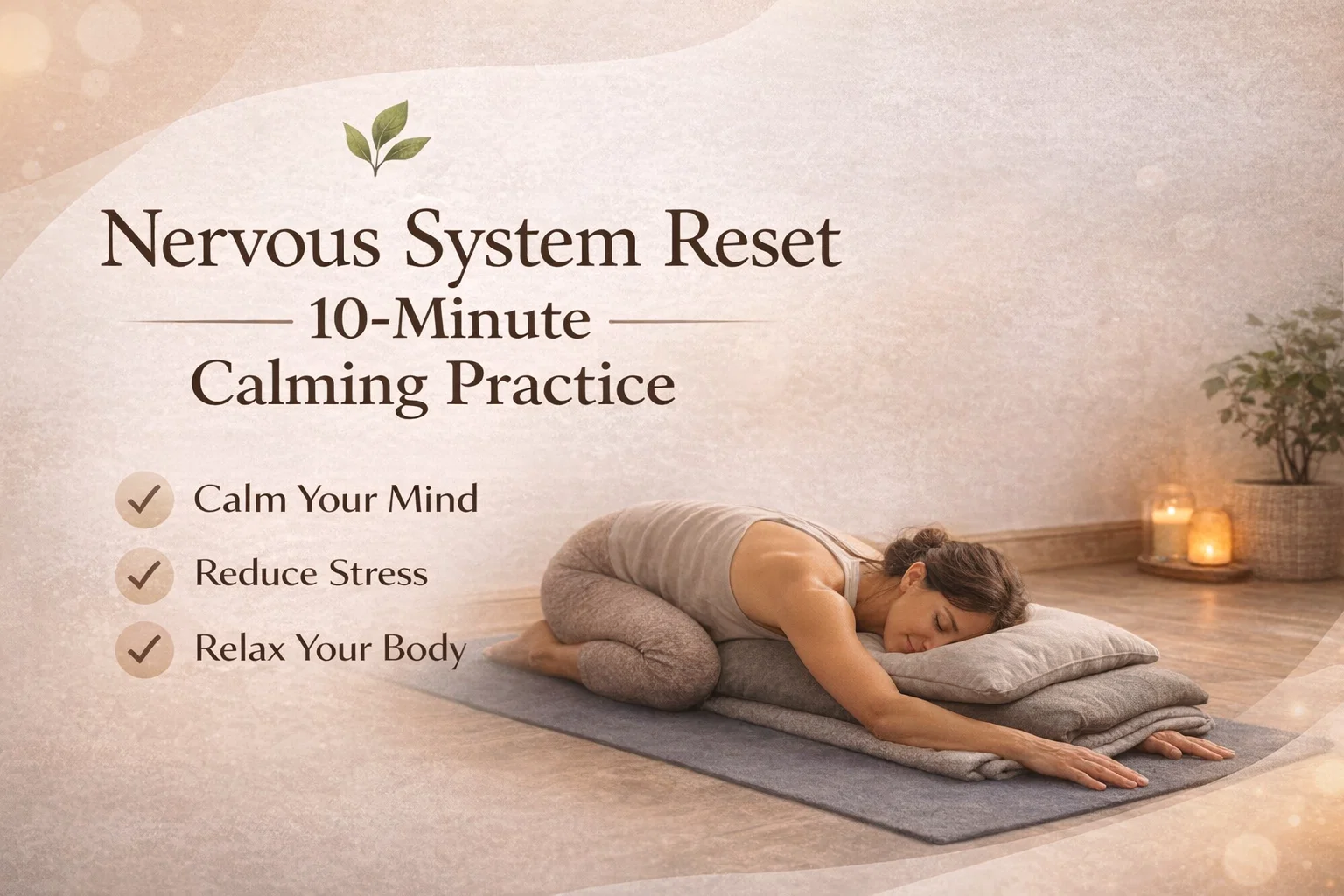
The image of the woman in a supported childs pose is not just a picture of a yoga stretch. It is a visual representation of nervous system hygiene. This practice is not about fitness, flexibility, or hitting a personal best. It is about biological safety. When we talk about resetting the nervous system, we are talking about shifting from the sympathetic nervous system, often called fight or flight, into the parasympathetic nervous system, known as rest and digest. This transition is where true healing begins.
Understanding the Difference Between Tired and Overstimulated
How many times have you said you were tired, only to lay in bed with your mind racing? This is a hallmark sign of overstimulation. Your muscles might be exhausted, but your brain is still scanning for threats, processing data, and worrying about tomorrow. When we are overstimulated, our bodies are flooded with cortisol and adrenaline. These hormones are great for escaping a predator, but they are devastating to our long term health when they never leave our system.
Most of us are not actually tired in the way we think we are. We are simply carrying too much input. We have too much thinking happening at once and we are spending too much energy holding it together. A nervous system reset provides a container where you can finally stop performing. It is a dedicated ten minute window where you tell your biology that the world can wait.
The Power of the Supported Childs Pose
The position shown in the image is a variation of Balasana, or Childs Pose, but with a crucial twist: the use of props. By placing a bolster or a stack of firm blankets under the chest and head, you provide the spine with total support. This is vital because when the spine feels supported, the brain receives a signal that it is safe to relax the muscles surrounding the vertebrae.
In this position, there is no stretching required. There is no forcing your body into a shape. It is a passive posture. You are simply letting gravity do the work. When you allow your body to be held by the floor and the cushions, your muscles begin to soften in a way they cannot during a standard gym session. This softening is the physical gateway to mental quiet.
Why 10 Minutes is the Magic Number
Many people try to relax for sixty seconds and get frustrated when they do not feel an immediate shift. Biology does not work on a microwave schedule. It takes time for the heart rate to slow down, for the breath to deepen naturally, and for the brain to stop its constant scanning. The recommendation to stay in this position for eight to ten minutes is based on the time it takes for the body to actually switch gears.
During the first few minutes, your mind will likely resist. You might think about your to do list or wonder if you are doing it right. This is normal. By minute five, the breath usually begins to lengthen without effort. By minute eight, you enter a state of deep physiological rest. This is the point where your nervous system begins to repair itself. This is why it is called nervous system hygiene. Just as you brush your teeth every day to prevent decay, you must rest your nervous system to prevent burnout.
The Role of Breath in the Reset
While the position is the foundation, your breath is the engine of the reset. You do not need to practice complex pranayama or forced breathing techniques. Instead, simply observe the breath. As you lay over the pillows, feel your ribcage expand against the support. Notice how the air fills the back of your lungs. As the body feels the physical support of the blankets, the breath naturally slows down. A slow, steady breath is the fastest way to hack your vagus nerve and tell your brain to turn off the alarm system.
The Concept of Nervous System Hygiene
We live in a culture that prioritizes yoga fitness. We see images of people in incredible handstands or deep backbends and we think that is what we need to be healthy. While exercise is important, it is often another form of stress on the body. Nervous system hygiene is the necessary counterweight to exercise. It is the practice of coming back home to yourself.
Nervous system hygiene means recognizing when you have had too much input. It means choosing a quiet room over a loud podcast. It means choosing ten minutes of stillness over another scroll through social media. When you prioritize this type of rest, you are not being lazy. You are maintaining the hardware of your body so that it can function properly when you actually need it.
Signs Your Nervous System Needs a Reset
- You feel “tired but wired” at the end of the day.
- Small noises or interruptions make you feel irrationally frustrated.
- You have trouble concentrating on one task at a time.
- Your muscles, especially in the jaw and shoulders, feel permanently clenched.
- You feel a sense of impending dread even when things are going well.
If any of these sound familiar, your nervous system is likely stuck in a high alert state. The good news is that you can fix this. You do not need a week long retreat or expensive equipment. You just need ten minutes and a few pillows.
Creating Your Sanctuary for Rest
To get the most out of your ten minute reset, environment matters. The image shows a soft, dimly lit room with candles. This is not just for aesthetics. Dim lighting helps reduce visual input, which further signals to the brain that it is time to wind down. If you can, find a quiet corner of your home where you will not be interrupted.
You can use a yoga bolster, but a few pillows from your bed or a folded sleeping bag work just as well. The goal is to create a height that allows your torso to rest comfortably without any strain in your lower back. You can even add a blanket over your back for a gentle weighted effect, which many people find incredibly grounding.
Step by Step Guide to the 10 Minute Reset
1. Place your pillows or bolster vertically on your mat or floor.
2. Sit on your heels with your knees wide, framing the end of the pillows.
3. Slowly lay your chest and belly down onto the support.
4. Turn your head to one side. You can switch sides halfway through.
5. Let your arms rest heavily on the floor beside the pillows.
6. Close your eyes and tell yourself: You are safe. You can let go now.
7. Set a timer for ten minutes so you do not have to check the clock.
Beyond the Mat: Bringing Calm into Daily Life
Once you start practicing these ten minute resets, you will begin to notice a shift in your daily life. You will become more aware of the moments when your body starts to tense up. You might find yourself taking a deep, conscious breath while waiting in traffic or feeling less reactive during a stressful meeting. This is because you are training your body to remember what “safe” feels like.
Healing does not always look like a massive breakthrough. Often, healing is the quiet, subtle shift that happens when we stop fighting against our own exhaustion. It is the moment when the brain stops scanning for threats and realizes that, in this moment, everything is okay.
A Note on Consistency
Like any form of hygiene, consistency is key. Doing this once a month will feel good, but doing it three to four times a week will change your life. It becomes a ritual of self respect. It is a way of saying to yourself: My peace is worth ten minutes of my time. In a world that keeps you switched on, this is how you come back home.
Conclusion: The Path to True Healing
In conclusion, resetting your nervous system is one of the most powerful acts of self care available to you. By stepping away from the “fitness” aspect of movement and leaning into the “hygiene” aspect of rest, you give your body the space it needs to repair itself. Whether you are dealing with chronic stress, anxiety, or just the general busyness of life, remember that you are allowed to let go. You do not have to hold it all together every second of the day.
The next time you feel the weight of the world on your shoulders, find your pillows, set your timer, and give yourself ten minutes of pure, uninterrupted safety. Breathe. Release. Reset. Your body will thank you for it, and your mind will find the clarity it has been searching for. Healing starts the moment you give yourself permission to stop.