5 Instant Anxiety Relief Hacks Grounding Techniques for Calm Focus
Have you ever felt like your body was suddenly operating on a manual that you never actually received? We have all been there. One moment you are going about your day, and the next, your heart is racing, your breath is shallow, and your mind feels like a browser with fifty tabs open at once. It is a common human experience, yet many of us feel completely powerless when these physical and emotional waves hit. The good news is that your biology is not actually working against you. In fact, your body has built-in systems designed to bring you back to a state of equilibrium. These are often called hidden emergency buttons, and once you know how to press them, you can regain control of your mental and physical state in less than a minute.
Understanding the Science of the Nervous System
To understand why these simple physical movements work so well, we have to look at the autonomic nervous system. This system is divided into two main branches: the sympathetic nervous system, which is your fight or flight response, and the parasympathetic nervous system, often referred to as the rest and digest system. When we feel anxious, disconnected, or overwhelmed, our sympathetic nervous system has taken the driver’s seat. It is trying to protect us from a perceived threat, even if that threat is just a long to-do list or a stressful email.
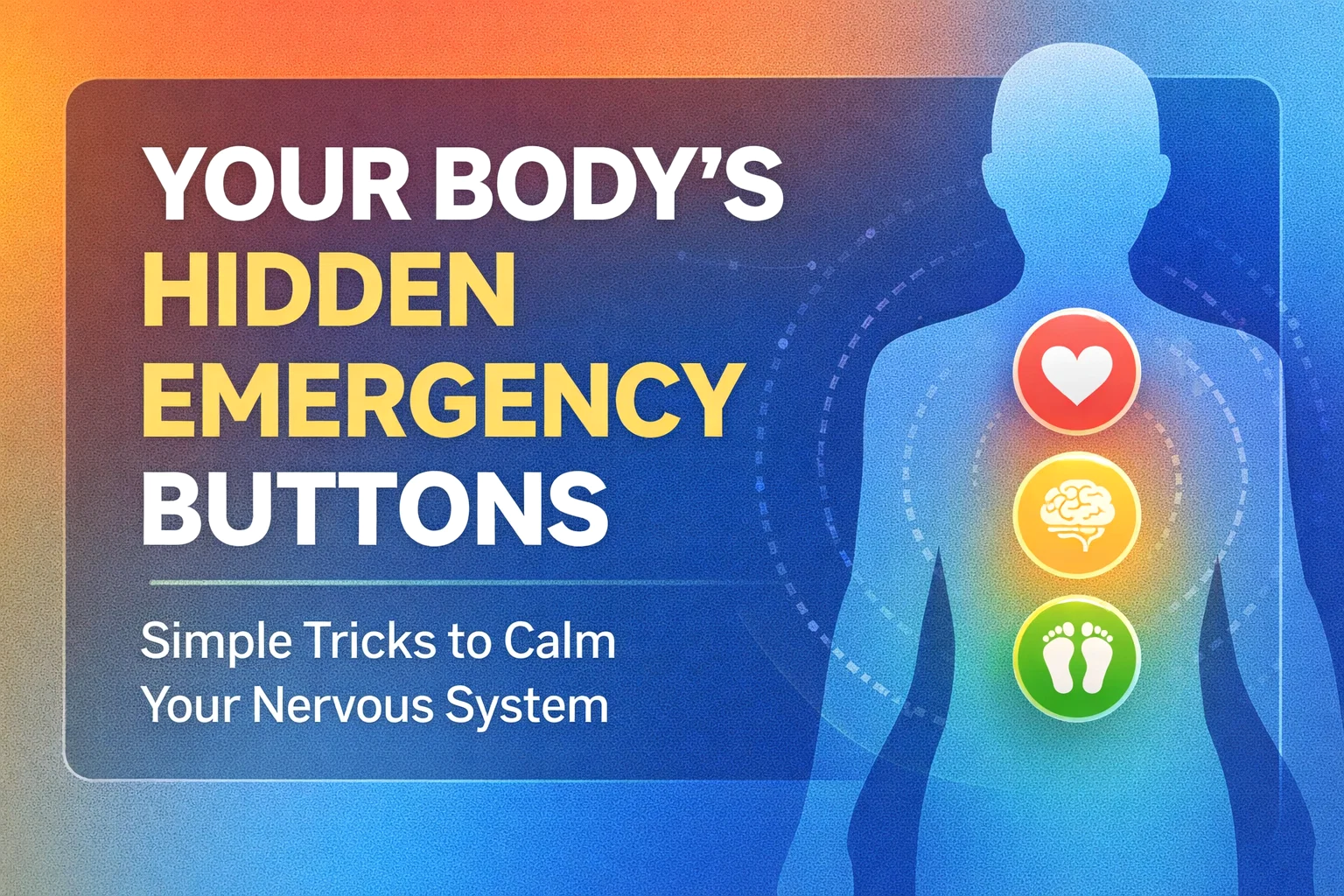
The emergency buttons mentioned in the visual guide work by manually overriding the sympathetic response. By performing specific physical actions, you send a signal to your brain that the environment is safe. This allows the parasympathetic nervous system to kick back in, slowing your heart rate and clearing the mental fog. It is a biological hack that bypasses the logic center of the brain and speaks directly to your survival instincts.
Button 1: Easing Chest Tightness with Nasal Breathing
One of the most frightening symptoms of stress is a tight chest. It can feel like an invisible weight is pressing down on you, making every breath feel labored. When this happens, the instinctive reaction is to gasp for air through the mouth, which actually tells the brain that you are in even more danger. To hit this reset button, you must change the input.
The Power of the Vagus Nerve
By placing one hand on your chest, you provide a tactile grounding point. Taking slow, rhythmic breaths through your nose for 30 seconds activates the vagus nerve. This nerve is the longest in the body and acts as a highway for communication between the brain and the heart. Nasal breathing increases carbon dioxide levels in the blood slightly, which helps dilate blood vessels and allows the heart to beat more efficiently. As you feel your hand rise and fall, the tightness begins to dissipate, replaced by a sense of rhythmic calm.
Button 2: Stopping Sudden Fear with Color Identification
Have you ever experienced a sudden jolt of panic for no apparent reason? This is often the amygdala, the brain’s alarm bell, firing off without a clear cause. In these moments, your brain is stuck in threat mode, scanning for predators that do not exist. To break this loop, you need to engage the prefrontal cortex, which is the logical, thinking part of your brain.
The color identification trick is a form of sensory grounding. By looking around and naming three distinct colors you see, you force your brain to switch from emotional processing to cognitive processing. You might notice the deep blue of a coffee mug, the vibrant green of a houseplant, or the soft grey of the carpet. This simple task requires enough focus to pull you out of the emotional spiral, effectively telling your brain that there is no immediate danger in your physical surroundings.
Button 3: Quieting a Racing Mind with Muscle Tension
A racing mind can feel like a runaway train. Thoughts move so quickly that you cannot catch a single one, leading to a state of mental exhaustion. While it seems counterintuitive to add more tension when you already feel stressed, the clench and release technique is incredibly effective for mental stillness.
The Mechanism of Progressive Relaxation
When you clench both fists tightly for 10 seconds, you are intentionally engaging your muscles. This creates a peak of tension that the body must eventually resolve. When you suddenly release that grip, the nervous system sends a massive wave of relaxation through the arms and into the rest of the body. This physical release often mirrors a mental release. It is as if you are physically squeezing out the excess energy that was fueling those racing thoughts. The sudden drop in physical tension acts as an anchor, pulling your awareness back into your body and away from the mental whirlwind.
Button 4: Overcoming Dissociation by Grounding Your Feet
Feeling disconnected or unreal, a sensation often called dissociation, is a protective mechanism the brain uses when it feels completely overwhelmed. It is as if the mind decides to check out because the current reality is too much to handle. To counter this, you need a strong, physical stimulus that reminds the brain exactly where the body is in space.
Stamping your feet lightly on the floor provides a direct impact that travels up the skeletal system. This sends a clear signal to the nervous system about your physical boundaries and your connection to the earth. It is a literal way of grounding yourself. The sensation of the floor against your soles and the vibration in your legs helps to anchor your consciousness back into the physical realm, making the world feel solid and real once again.
Button 5: Reclaiming Focus through Extended Exhales
Inability to focus is often a sign that the brain is overstimulated. When you are in a state of high arousal, your brain is trying to pay attention to everything at once, which means it pays attention to nothing effectively. To sharpen your focus, you need to lower the overall level of physiological arousal.
The Exhale Reset
Taking five slow nasal breaths with an extended exhale is one of the fastest ways to calm the brain. The inhale is associated with the sympathetic nervous system, while the exhale is linked to the parasympathetic. By making the exhale longer than the inhale, you are essentially leaning on the brakes of your nervous system. This specific breathing pattern improves heart rate variability and increases blood flow to the prefrontal cortex. As the brain calms down, its ability to filter out distractions and focus on a single task returns.
Incorporating These Tools into Daily Life
Knowing these techniques is only the first step. The real magic happens when you turn them into habits. You do not have to wait for a full blown panic attack to use these emergency buttons. In fact, using them during minor moments of stress can prevent those larger episodes from happening in the first place.
- Keep a Reminder: Since stress often makes us forget our coping strategies, keep a small note or an image of these steps on your phone or at your desk.
- Practice in Peace: Try these techniques when you are feeling calm. This builds the neural pathways so that when you are stressed, your body knows exactly what to do.
- Stack Your Habits: Pair a grounding technique with a daily activity, like taking five slow breaths every time you sit down at your computer.
Why Physical Grounding is Better than Just Thinking
Many people try to think their way out of stress. They tell themselves to just calm down or stop worrying. However, when the nervous system is highly activated, the logical brain is largely offline. This is why physical interventions are so much more powerful. You are communicating with your body in its own language. Instead of trying to convince yourself you are safe, you are showing yourself you are safe through physical sensation.
These techniques are accessible to everyone, regardless of fitness level or location. They are quiet, discreet, and require no special equipment. They represent a fundamental shift in how we approach mental health, moving away from just talking about feelings and moving toward actively managing our physiological state.
Conclusion: Empowerment through Body Awareness
The journey toward mental wellness is often built on small, consistent actions rather than giant leaps. Understanding that your body has these hidden emergency buttons provides a profound sense of agency. You are no longer a victim of your stress responses; you are an active participant in your own regulation. By practicing nasal breathing, color identification, muscle tension release, and physical grounding, you build a resilient nervous system capable of navigating the ups and downs of modern life.
Remember that it is perfectly normal for your body to react to the world around you. Your nervous system is just trying to look out for you. By using these tools, you are simply giving it a little guidance, helping it understand when the alarm is no longer needed. Start today by choosing just one of these techniques and testing it out. You might be surprised at just how quickly you can shift your internal weather from a storm to a calm, clear day.