6 Best Homemade Pickle Recipes – Easy, Crunchy Tangy DIY Pickling Guide
There is something incredibly satisfying about the distinct “pop” of a jar lid and the sharp, vinegary aroma that follows. Pickling is a culinary tradition that spans generations, turning simple garden harvests into tangy, crunchy treasures that can brighten any meal. While store-bought pickles are convenient, they often lack the depth of flavor and the satisfying snap of a homemade batch. Making your own pickles at home is surprisingly simple, requiring just a few basic pantry staples and your favorite fresh produce. From the classic garlic-dill cucumber to vibrant red onions and earthy beets, the possibilities for customization are endless.
The Basics of Quick Pickling
If you are new to the world of preservation, quick pickling (also known as refrigerator pickling) is the perfect place to start. Unlike traditional fermentation or water-bath canning, which requires specific equipment and long wait times, quick pickles are made by submerging vegetables in a brine of vinegar, water, salt, and sugar. This method relies on the acidity of the vinegar to preserve the vegetables and infuse them with flavor. The best part is that these jars can go straight into your refrigerator and are often ready to eat within just twenty-four hours.
The standard ratio for a balanced brine is usually equal parts water and vinegar. However, you can adjust this depending on your preference for tartness. White vinegar is a popular choice for its clean, sharp bite, but apple cider vinegar or rice vinegar can add a subtle sweetness and complexity to your jars. Salt is essential for drawing out moisture and enhancing flavor, while sugar helps to balance the acidity without making the pickles taste like dessert.
Essential Ingredients for the Perfect Crunch
The secret to a world-class pickle lies in the quality of the ingredients. Since there are so few components, each one plays a vital role in the final result. Starting with the freshest vegetables possible is non-negotiable. If you are using cucumbers, look for smaller, firm varieties like Kirbys or Persian cucumbers, as they have thinner skins and fewer seeds, which helps them stay crunchy after soaking in the brine.
Choosing Your Liquid Base
While water and white vinegar form the foundation, the type of water you use matters more than you might think. Filtered water is generally preferred because chlorine and minerals found in some tap water can sometimes interfere with the color and texture of the vegetables. When it comes to vinegar, ensure it has at least five percent acidity to provide the necessary preservative qualities.
Aromatic Additions and Spices
This is where you can truly get creative. Garlic cloves, black peppercorns, and mustard seeds are classic additions that provide a savory backbone. Fresh herbs like dill, rosemary, or thyme can add a garden-fresh aroma. For those who enjoy a bit of heat, red pepper flakes or sliced habaneros can turn a standard jar into a spicy masterpiece. Bay leaves are also a secret weapon in pickling; they contain tannins that help keep the vegetables firm and crisp over time.
Six Must-Try Recipes for Your Kitchen
To help you get started on your pickling journey, here are six versatile recipes that cover a wide range of flavors and textures. Each one follows a similar process: prep the vegetables, simmer the brine, and combine them in a clean glass jar.
1. Classic Pickled Cucumbers with Garlic and Dill
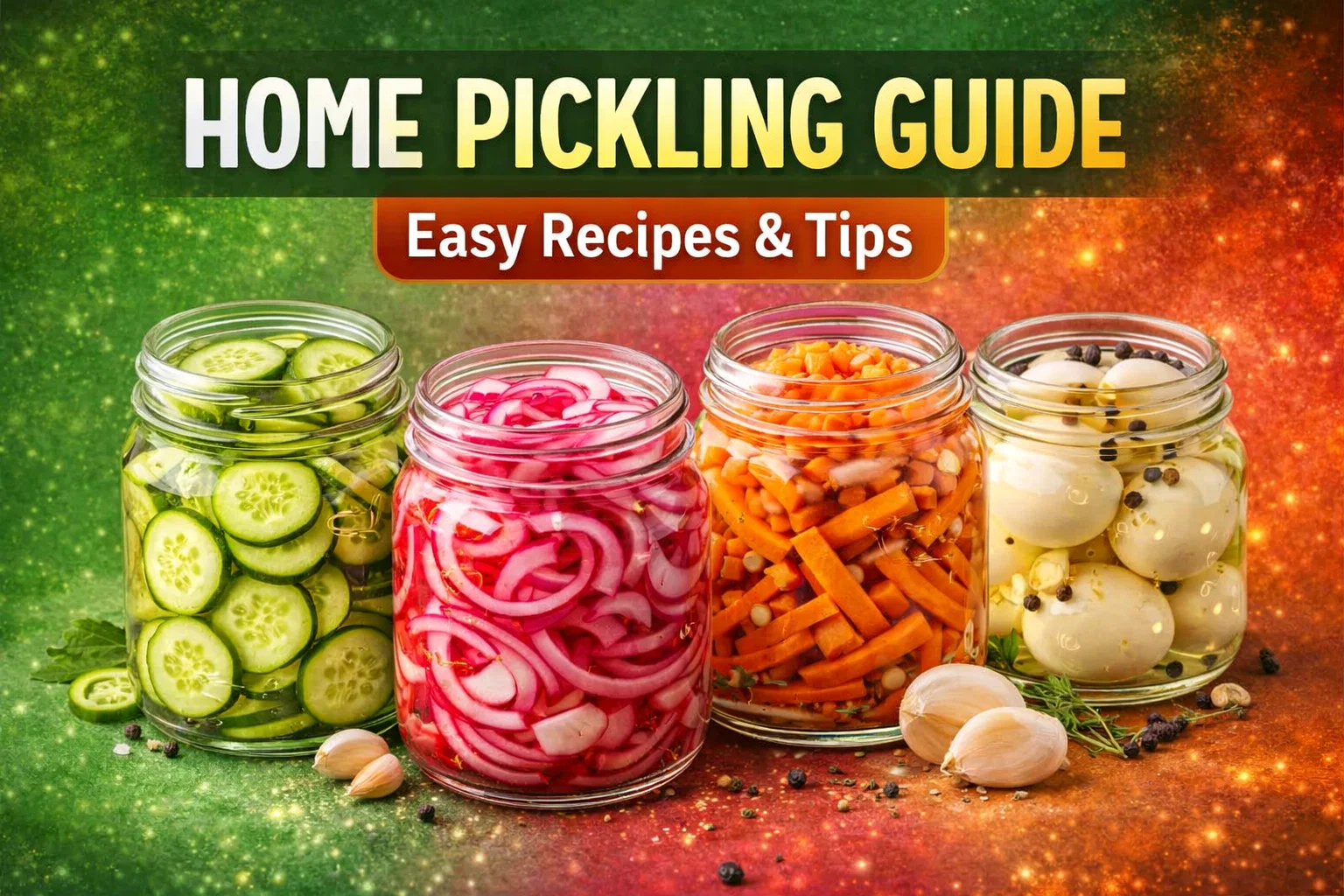
This is the gold standard of pickles. By combining five to six sliced cucumbers with a brine of white vinegar, water, salt, and sugar, you create a snack that is both refreshing and savory. Adding two cloves of garlic and a teaspoon of dill seeds provides that nostalgic deli-style flavor. These are perfect on burgers, chopped into potato salad, or eaten cold right out of the jar.
2. Sweet and Tangy Pickled Red Onions
Pickled red onions are the ultimate “glow-up” ingredient for almost any dish. When submerged in a brine with red peppercorns, they lose their sharp raw bite and transform into bright pink, crunchy ribbons. They are an essential topping for tacos, avocado toast, and grain bowls. Because they are sliced thinly, they soak up the brine quickly and can be ready in as little as thirty minutes.
3. Zesty Pickled Jalapeños
For those who love a kick of heat, homemade pickled jalapeños are a game changer. The vinegar helps to mellow the spice slightly while adding a bright tang that balances the peppers’ natural oil. Adding a few cloves of garlic to the jar enhances the savory notes. These are far superior to the canned versions found in stores and stay much crispier.
4. Crunchy and Tangy Pickled Carrots
Carrots are naturally sweet, making them a fantastic candidate for pickling. When sliced into sticks, they maintain a very satisfying snap. A brine with a slightly higher sugar content and a dash of dill seeds creates a snack that children and adults alike will enjoy. These are excellent additions to charcuterie boards or as a healthy side for a lunch wrap.
5. Earthy and Sweet Pickled Beets
Pickled beets offer a deep, rich flavor profile that is quite different from green vegetables. Boiling or roasting the beets before slicing and pickling them ensures they have a tender yet firm texture. A simple brine with a bay leaf allows the natural earthiness of the beets to shine. They pair beautifully with goat cheese and walnuts in a fresh salad.
6. Savory Pickled Eggs
A classic pub favorite, pickled eggs are a fantastic way to preserve protein. Hard-boiled and peeled eggs are submerged in a brine of vinegar, water, sugar, and salt, often accompanied by peppercorns and a bay leaf. Over a few days, the eggs absorb the tangy flavors of the liquid, resulting in a unique and savory snack that is perfect for on-the-go fueling.
Pro Tips for Pickling Success
While the process is straightforward, a few small details can elevate your pickles from good to great. First, always make sure your glass jars are thoroughly cleaned and dried before use. While refrigerator pickles do not require the sterile environment of long-term canning, a clean jar ensures your pickles stay fresh for several weeks.
- Keep them submerged: Ensure that all your vegetables are completely covered by the brine. Any pieces sticking out may soften or spoil faster.
- Let the brine cool slightly: Pouring boiling hot liquid directly onto delicate vegetables like cucumbers can sometimes cook them, leading to a softer texture. Letting the brine sit for a few minutes before pouring can help maintain that desired crunch.
- Experiment with vinegar: Try a blend of different vinegars. A mix of white and rice vinegar can create a softer, more nuanced acidity that works well with lighter vegetables.
- Give it time: While you can eat these within hours, the flavor truly develops after two or three days in the fridge. Patience is rewarded with a more complex taste.
Creative Ways to Use Your Pickles
Beyond snacking, homemade pickles can be used as a versatile ingredient in your daily cooking. The leftover brine is also a “liquid gold” that should never be thrown away. It can be used as a marinade for chicken, a secret ingredient in salad dressings, or even added to a Bloody Mary for an extra punch of flavor.
Try dicing pickled jalapeños into your cornbread batter for a spicy twist, or use the pickled onion liquid to quick-marinate thinly sliced cucumbers for a side salad. The acidity in pickles is a powerful tool for balancing rich or fatty foods, which is why they work so well with grilled meats and creamy cheeses. By having a variety of jars in your fridge, you always have a way to add a bright “zip” to your meals with zero extra cooking time.
Embracing the Season and Staying Sustainable
One of the most rewarding aspects of pickling is the ability to follow the seasons. In the spring, you might pickle asparagus or radishes. In the summer, it is all about cucumbers and peppers. By pickling, you are participating in a sustainable practice that reduces food waste. If you find yourself with too many vegetables from a garden or a grocery store sale, pickling gives them a second life that lasts for weeks.
This hobby also makes for thoughtful, handmade gifts. A beautifully packed jar of vibrant red onions or golden pickled carrots, tied with a bit of twine, is a wonderful gesture for friends and family. It shows care, creativity, and a connection to the traditional ways of the kitchen.
Conclusion: Start Your Pickling Adventure Today
Homemade pickling is a bridge between the garden and the table, offering a way to capture the freshness of produce in a concentrated, flavorful form. It is a low-stress, high-reward activity that encourages experimentation and rewards you with a fridge full of colorful, healthy snacks. Whether you are looking for a way to use up extra produce or you simply want to elevate your sandwich game, these six recipes provide a solid foundation for your culinary journey.
So, grab some jars, pick up some fresh vegetables at the market, and start simmering your brine. Once you experience the superior taste and crunch of a pickle made in your own kitchen, you may never find yourself in the condiment aisle of the grocery store again. Happy pickling!