How Cooking Time Affects Boiled Potatoes The Ultimate Potato Boiling Guide Tips
Mastering the humble potato is one of the most essential skills any home cook can develop. While it might seem like a simple task to just throw a pot of water on the stove and wait for things to soften up, the difference between a culinary masterpiece and a soggy mess often comes down to just a few minutes of boiling time. Understanding the science of potato textures allows you to elevate every meal, from the crunchiest roasted spuds to the cloud like consistency of a perfect mash. This guide will walk you through every stage of the boiling process so you never have to guess at the stove again.
The Science Behind the Perfect Boil
Potatoes are primarily made of water, starch, and cell walls held together by pectin. As you heat them in water, those starch granules absorb moisture and swell. Meanwhile, the pectin starts to break down, which is what causes the vegetable to soften. If you stop the process too early, the starch is still raw and crunchy. If you go too long, the cell walls collapse entirely, leaving you with a watery, disintegrated mess. The key is matching your boiling time to the specific dish you are preparing.
Choosing the Right Potato for the Job
Before you even turn on the burner, you need to select the right variety. Potatoes generally fall into two categories: waxy and starchy. Waxy potatoes, such as Red Bliss or New Potatoes, have less starch and more moisture. They hold their shape exceptionally well even after long boiling times, making them the gold standard for potato salads. Starchy potatoes, like the classic Russet, have a high starch content and a mealy texture when cooked. These are the ones you want for fluffy mashed potatoes or gnocchi because they break down easily and absorb butter and cream like a sponge. Yukon Gold potatoes sit right in the middle, offering a buttery flavor and a versatile texture that works for almost anything.
A Minute by Minute Breakdown of Potato Textures
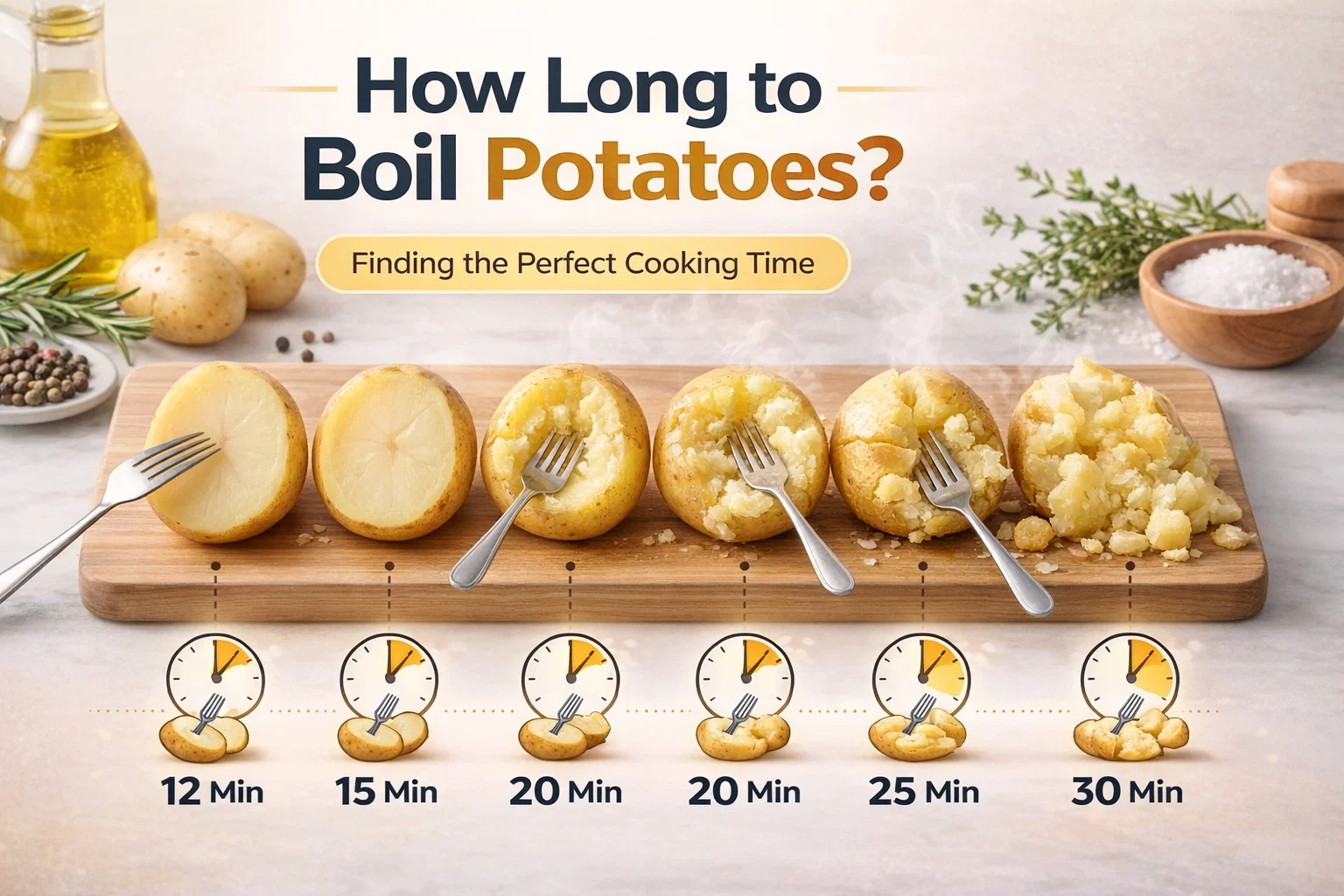
Timing is everything in the kitchen. Depending on how long your potatoes sit in that bubbling water, they will undergo a massive transformation. Here is what you can expect at each stage of the boiling process.
12 Minutes: The Underdone Stage
At the twelve minute mark, your potatoes are still quite firm. If you poke them with a fork, you will feel a significant amount of resistance in the center. While you would not want to eat these as a side dish on their own, this stage is actually very useful for certain recipes. If you are making a gratin or a scalloped potato dish where the slices will spend another forty five minutes in a hot oven with cream and cheese, this firm texture prevents them from turning into mush during the second cook.
15 Minutes: Par-Boiled and Perfectly Tender
The fifteen minute mark is the sweet spot for versatility. At this point, the potato has softened enough to lose its raw crunch but still maintains a very dense, solid structure. This is the ideal stage for potatoes that are destined for the roasting pan. By boiling them until they are just tender on the outside, you create a starchy surface that will crisp up beautifully in hot oil, while the inside remains creamy. If you are making a sturdy potato salad where you want clean, distinct cubes, this is when you should drain the pot.
20 Minutes: Soft and Crumbly
Once you hit twenty minutes, the internal structure of the potato begins to give way. The edges might start to look a little frayed, and a fork will slide in and out with almost no resistance. This is the peak time for mashing. Because the cells are starting to separate, you can easily crush the potato into a smooth consistency without having to overwork it. Overworking potatoes is what leads to a gluey, sticky texture, so boiling them until they are truly soft is a vital step for a light and airy mash.
25 Minutes and Beyond: The Overcooked Danger Zone
Crossing the twenty five minute threshold usually means you are heading toward overcooked territory. The potatoes become waterlogged, meaning they have absorbed too much liquid and lost their natural flavor. While this mushy state can be used as a thickener for hearty soups or mixed into a dough for gnocchi, it is generally undesirable for most standard preparations. At thirty minutes, most potatoes will simply disintegrate into the water, leaving you with very little to work with.
Pro Tips for Boiling Success
While timing is the most important factor, there are several professional techniques you can use to ensure your potatoes come out perfectly every time.
- Start with Cold Water: Never drop potatoes into already boiling water. The outside will cook much faster than the inside, leading to an uneven texture. Start them in a pot of cold water and bring everything up to a boil together.
- Salt the Water Heavily: This is your only chance to season the potato from the inside out. The water should be as salty as the sea.
- The Fork Test: Don’t just rely on the clock. Every potato is a different size. Use a fork to pierce the thickest part of the largest potato. If it slides off the fork easily, it is done.
- Drain and Dry: Once you drain the water, put the potatoes back in the hot pot for sixty seconds. This allows the excess surface moisture to evaporate as steam, which is the secret to a fluffier texture.
Matching Your Method to the Recipe
Think about the final goal of your dish before you set the timer. For a German style potato salad with a vinegar dressing, you want that 15 minute firm texture so the potatoes don’t break when you toss them. For a classic American mash with lots of garlic and butter, aim for 20 to 22 minutes to ensure every lump can be smoothed out. If you are making smashed potatoes that you plan to fry flat, look for that 18 to 20 minute window where they are soft enough to flatten but still hold together in one piece.
Common Mistakes to Avoid
Even experienced cooks can run into trouble with boiled potatoes. One of the biggest mistakes is boiling the water too vigorously. A rolling, violent boil can cause the potatoes to bang against each other and the sides of the pot, causing the delicate exterior to fall off before the middle is cooked. Aim for a gentle, steady simmer instead.
Another mistake is leaving the potatoes in the water after you have turned off the heat. Potatoes continue to cook in residual heat. If you leave them sitting in the hot water while you prepare other parts of the meal, they will quickly move from perfectly tender to falling apart. Always drain them immediately once they reach your desired consistency.
Conclusion: Bringing it All Together
The humble boiled potato is a canvas for so many incredible flavors. By paying close attention to the clock and understanding how the texture shifts from firm to crumbly, you gain total control over your cooking. Whether you are prepping for a summer barbecue or a cozy winter roast, remember that those few extra minutes make all the difference. Start with cold water, choose the right variety for your dish, and use the fork test to ensure success. With these tips in your culinary arsenal, you are well on your way to serving up the best potatoes your friends and family have ever tasted. Happy cooking!