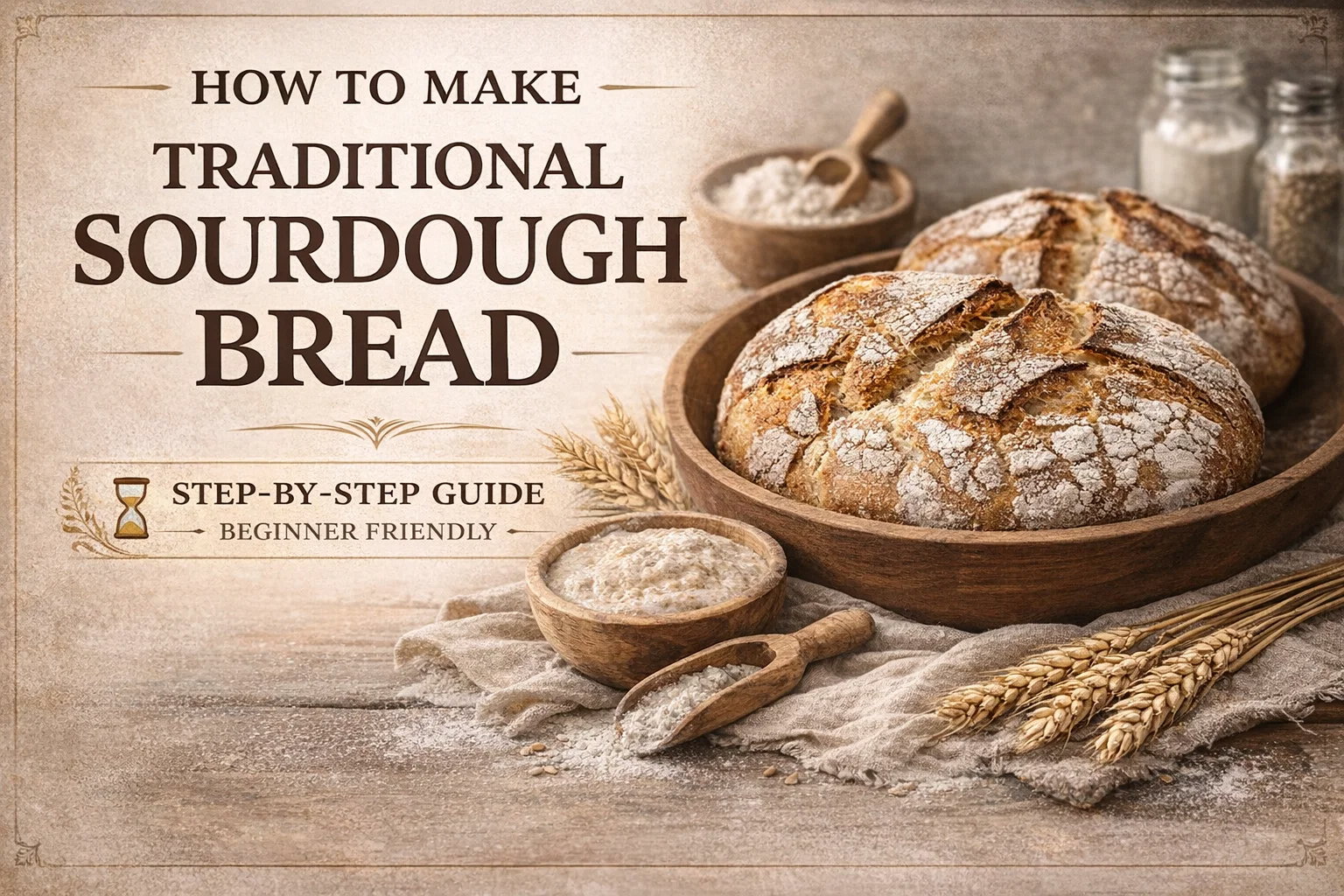
Authentic Traditional Sourdough Bread Recipe Easy Step-by-Step Homemade Sourdough Guide
There is something undeniably magical about the aroma of fresh sourdough bread wafting through a kitchen. It is a scent that carries hints of history, patience, and the simple joy of creating something nourishing from just flour, water, and salt. Unlike modern quick breads that rely on commercial yeast, traditional sourdough is a labor of love that utilizes the power of natural fermentation. This ancient method not only produces a distinct tangy flavor and a perfectly chewy texture but also transforms the act of baking into a mindful ritual. Whether you are a seasoned baker or a curious beginner, embarking on a sourdough journey is one of the most rewarding culinary adventures you can take.
In a world of fast food and instant gratification, sourdough stands as a testament to the beauty of the slow food movement. It requires us to slow down, observe the bubbles in our starter, and feel the elasticity of the dough as it develops. The result is a loaf that is not only delicious but also easier to digest and packed with character. In this comprehensive guide, we will dive deep into the traditional methods of sourdough baking, breaking down the science and the soul behind every crusty, golden loaf.
The Science and Soul of Natural Fermentation
At the heart of every great sourdough loaf is the starter, often referred to as the levain or mother. This is a living culture of wild yeast and beneficial bacteria that you nurture over time. When you mix flour and water and let it sit, you are capturing the microorganisms that naturally exist in the air and on the grain. Over several days of regular feeding, these microbes create a symbiotic environment that gives sourdough its famous rise and signature sour profile.
The fermentation process does more than just make the bread rise. As the wild yeast consumes the sugars in the flour, it produces carbon dioxide, while the lactic acid bacteria produce organic acids that contribute to the flavor and improve the shelf life of the bread. This long fermentation also helps break down gluten and phytic acid, making the nutrients in the wheat more bioavailable and the bread gentler on the gut. Understanding this biological dance is the first step toward becoming a master sourdough baker.
Essential Ingredients for the Perfect Loaf
One of the most beautiful aspects of traditional sourdough is its simplicity. You do not need a long list of additives or preservatives. In fact, you only need four basic components to create a masterpiece. For a standard recipe yielding two generous loaves, you will want to gather the following high quality ingredients.
- 500 grams of Bread Flour: Look for a flour with a high protein content, typically between 12 percent and 14 percent. This provides the strength needed to support the long rise and create that sought after chewy crumb.
- 300 grams of Sourdough Starter: Ensure your starter is active and bubbly. A good rule of thumb is to use it when it has doubled in size after its last feeding and passes the float test in a bowl of water.
- 350 milliliters of Water: Use room temperature water to keep the fermentation steady. If your tap water is heavily chlorinated, you might consider using filtered water to avoid inhibiting the yeast.
- 10 grams of Salt: Salt is crucial for more than just flavor. It controls the rate of fermentation and strengthens the gluten structure of the dough.
Step One: The Art of Mixing and Autolyse
The journey begins in a large mixing bowl. Start by combining your bread flour and water. Mix them together until no dry flour remains and you have a shaggy mass of dough. At this stage, you are going to let the dough rest for about 30 minutes. This period is known as the autolyse.
During the autolyse, the flour fully hydrates and the gluten begins to develop naturally without any kneading. This simple pause makes the dough much easier to handle in the subsequent steps. Once the rest period is over, it is time to add your active sourdough starter and the salt. Work these into the dough until they are fully incorporated. You will notice the texture change from a rough mass to something more cohesive and supple.
The First Rise: Patience and Aeration
The first rise, or bulk fermentation, is where the flavor truly develops. Cover your bowl with a damp cloth to prevent the surface from drying out and place it in a warm, draft free spot. This stage typically takes between 3 and 4 hours depending on the temperature of your kitchen.
Instead of traditional kneading, sourdough relies on a series of stretch and folds. Every 30 minutes, reach into the bowl, grab one side of the dough, pull it upward, and fold it over the center. Rotate the bowl and repeat this four times. These gentle movements build strength in the dough while preserving the delicate air bubbles created by the fermentation. By the end of the bulk fermentation, the dough should feel light, jiggly, and full of life.
Mastering the Stretch and Fold Technique
The goal of stretching and folding is to align the gluten strands into a strong network. When you first start, the dough might feel slack and tear easily. As you progress through the intervals, you will feel it become more resistant and elastic. This is a sign that the structure is becoming strong enough to hold the gases that will make the bread light and airy. Always use wet hands to prevent the dough from sticking to your fingers.
Shaping Your Loaves with Confidence
Once the first rise is complete, gently turn the dough onto a lightly floured surface. Using a bench scraper or a sharp knife, divide the dough into two equal pieces. Now comes the shaping, which is perhaps the most tactile and artistic part of the process. For a round loaf, or boule, fold the edges of the dough toward the center to create a ball, then flip it over so the seam side is down.
Using the friction of the work surface, gently pull the dough toward you to create tension on the outer skin. This tension is vital because it helps the bread keep its shape during the bake and encourages it to rise upward rather than spreading out flat. Aim for a smooth, taut surface without tearing the dough. Once shaped, let the loaves rest for a few minutes before moving to the next stage.
The Cold Proof: Developing Deep Flavor
While you can bake your bread right away, a secondary rise in the refrigerator is highly recommended. Place your shaped loaves into floured proofing baskets, also known as bannetons. If you do not have baskets, a bowl lined with a floured kitchen towel works perfectly well. Cover them and tuck them into the fridge for 12 to 16 hours.
This overnight cold proof serves two purposes. First, it slows down the yeast while allowing the bacteria to continue producing flavor, resulting in a deeper, more complex tang. Second, cold dough is much easier to score with a blade right before baking. The contrast between the cold dough and the hot oven also contributes to a better oven spring.
Baking to Perfection in a Dutch Oven
When you are ready to bake, preheat your oven to 250 degrees Celsius or 480 degrees Fahrenheit. Place a Dutch oven inside the oven while it preheats. The heavy walls of the Dutch oven retain heat beautifully, and the lid traps steam released by the dough, which is the secret to a professional, crispy crust.
Carefully transfer one loaf onto a piece of parchment paper. Use a very sharp blade or a dedicated bread lame to score the top of the dough. This intentional cut acts as a chimney, allowing the bread to expand in a controlled way. Carefully lower the dough into the hot Dutch oven, put the lid on, and bake for 20 minutes. After 20 minutes, remove the lid to reveal the pale, risen loaf. Continue baking uncovered for another 20 to 25 minutes until the crust is a deep, golden brown and the loaf sounds hollow when tapped on the bottom.
Alternative Baking Methods
If you do not own a Dutch oven, do not worry. You can achieve fantastic results using a baking stone or a heavy duty baking sheet. To mimic the steam of a Dutch oven, place a shallow pan of water on the bottom rack of your oven during the first half of the bake. This moisture keeps the crust soft during the initial rise, allowing the bread to reach its full volume before the outer layer sets and browns.
The Final Test: Cooling and Slicing
The hardest part of baking sourdough is the wait after it leaves the oven. It is tempting to slice into a warm loaf immediately, but the bread is actually still cooking on the inside. As it cools, the internal structure sets and the moisture redistributes. Slicing too early can result in a gummy, wet interior.
Place your loaves on a wire rack and let them cool completely, which usually takes about two hours. Once cooled, use a serrated bread knife to reveal the beautiful crumb inside. You should see a variety of air pockets and a soft, ivory colored interior that contrasts beautifully with the crunchy, dark crust. Serve it with a thick slab of salted butter, and you will understand why sourdough has been a staple of the human diet for millennia.
Chef Tips for Sourdough Success
Consistency is the key to mastering sourdough. To keep your starter healthy, feed it regularly with equal parts water and flour. If you are not baking every day, you can store your starter in the refrigerator and feed it once a week. Remember to discard about half of the starter before each feeding to prevent it from growing too large and becoming overly acidic.
Pay attention to the environment. On a hot, humid day, your dough will ferment much faster than on a cool winter morning. Use your senses more than your timer. Look for the dough to double in size, feel for the bubbles, and smell the developing aroma. Each loaf you bake is an opportunity to learn and refine your craft.
Conclusion: The Reward of the Bake
Baking traditional sourdough bread is a journey that connects us to the earth and to the generations of bakers who came before us. It is a process that cannot be rushed, requiring a blend of science, intuition, and patience. While the 24 hour timeline might seem daunting at first, the actual hands on work is minimal, and the reward is incomparable.
When you pull that golden brown loaf out of the oven, you are not just holding food; you are holding a handcrafted piece of edible art. From the first stir of the flour to the final satisfying crunch of the crust, sourdough baking nourishes both the body and the soul. So, feed your starter, roll up your sleeves, and embrace the slow, beautiful rhythm of the sourdough life. Happy baking.