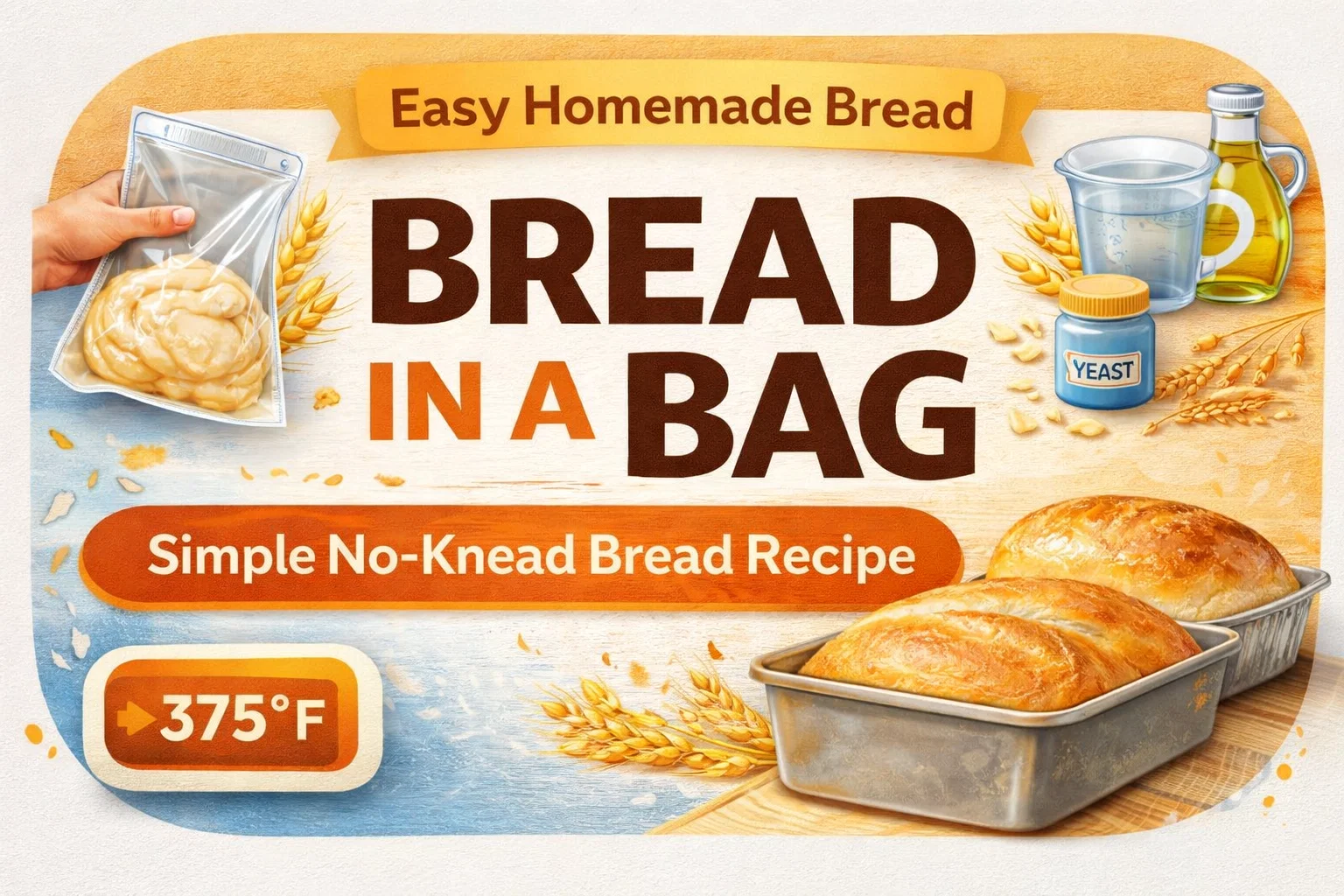
Easy Homemade Bread in a Bag Recipe Quick No-Mess Yeast Bread for Kids Families
There is something undeniably magical about the smell of fresh bread wafting through a home. It signals comfort, warmth, and a touch of old-fashioned tradition. However, for many busy parents and beginner bakers, the idea of traditional bread making feels overwhelming. The sticky counters, the hours of intense kneading, and the precise science often lead people back to the grocery store aisle for a processed loaf. That is where the genius of Bread in a Bag comes in. This method strips away the intimidation factor and replaces it with a fun, tactile, and remarkably clean process that anyone can master.
This recipe is more than just a culinary shortcut. It is a sensory experience that brings families together in the kitchen. By mixing and kneading your dough inside a simple gallon-sized resealable bag, you eliminate the biggest hurdle of home baking: the mess. In this guide, we are going to walk through every step of this foolproof recipe, explore why it works so well, and provide you with all the tips you need to go from a bag of flour to a golden, steaming loaf of perfection.
The Science of Bread in a Bag
You might wonder how a plastic bag can replace a heavy-duty stand mixer or a floured wooden board. The secret lies in the controlled environment of the bag. When you mix your flour, sugar, yeast, and warm water inside the bag, you are creating a concentrated micro-climate. The bag traps the heat from the warm water, which helps activate the yeast faster. This initial 10 minute rest period is crucial because it allows the yeast to bloom and begin consuming the sugars, creating the carbon dioxide bubbles that make bread light and airy.
Furthermore, kneading inside the bag is surprisingly effective at developing gluten. Gluten is the protein network that gives bread its structure and chew. Usually, this requires pushing and pulling the dough against a table. In a bag, the compression of the plastic against the dough provides enough resistance to strengthen those protein bonds without leaving your fingers coated in sticky paste. It is a cleaner, more efficient way to handle the early stages of dough development.
Gathering Your Simple Ingredients
One of the best parts about this specific recipe is that you likely already have everything you need in your pantry. There are no exotic grains or expensive equipment required. Here is a breakdown of what makes this loaf so delicious:
- All-Purpose Flour: This provides the perfect balance of protein for a soft yet sturdy loaf.
- Sugar: Not just for sweetness, the sugar acts as fuel for the yeast to ensure a great rise.
- Rapid-Rise Yeast: Using a package of instant or rapid-rise yeast ensures that your bread doubles in size quickly.
- Warm Water: Aim for 110 degrees Fahrenheit. Too cold and the yeast stays sleepy; too hot and you might kill it.
- Olive Oil: This adds a beautiful richness to the crumb and helps the crust stay tender.
- Salt: Essential for regulating the yeast and bringing out the natural flavors of the wheat.
Pro Tip: Checking Your Water Temperature
If you do not have a kitchen thermometer, you can test the water on the inside of your wrist. It should feel like very warm bath water but should never sting or feel uncomfortably hot. If the water is just right, your yeast will be happy and productive.
Step by Step: Making Magic Happen
Following the steps correctly ensures that your bread turns out consistent every single time. Let’s break down the process into manageable phases.
Phase 1: The Pre-Ferment
Start by opening your heavy-duty resealable bag. Add one cup of your flour, the sugar, the yeast, and the warm water. Seal the bag tightly, squeezing out most of the air first. Use your hands to squish the ingredients together until they form a slurry. Now comes the hard part: waiting. Set the bag aside for 10 minutes. During this time, you will notice the mixture becoming bubbly and frothy. This is the sign that your yeast is alive and well.
Phase 2: Adding Structure
Open the bag and add the olive oil, the salt, and the remaining two cups of flour. Again, seal the bag and begin to knead it with your hands. You are looking for the dough to pull away from the sides of the plastic. If it still looks very sticky after a few minutes, you can add a tablespoon of flour at a time, but be careful not to overdo it. A slightly tacky dough often results in a better rise than a dry, heavy dough.
Phase 3: The Rise and Bake
Once the dough has formed a solid ball, turn it out onto a lightly floured surface for just a moment. Give it a few quick, traditional kneads to smooth out the surface. Place it into a greased loaf pan. Cover it with a clean kitchen towel and let it sit in a warm, draft-free spot until it has doubled in size. This usually takes about 30 to 45 minutes depending on the temperature of your kitchen. Finally, bake at 375 degrees Fahrenheit for about 25 to 30 minutes until the top is a deep golden brown.
Why This is the Perfect Activity for Kids
If you are a parent or teacher, Bread in a Bag is an elite-tier educational activity. It combines chemistry, math, and sensory play all into one delicious afternoon. Children love the tactile sensation of squishing the bag, and because the mess is contained, you can actually relax while they play with their food. It teaches them where their food comes from and gives them a massive sense of accomplishment when they see a loaf of bread they “made” coming out of the oven.
You can use this as an opportunity to talk about how yeast is a living organism or how measuring ingredients correctly is vital for a successful outcome. Plus, the physical act of kneading is great for developing fine motor skills and hand strength in younger children.
Creative Variations to Try
Once you have mastered the basic recipe, the bag method is incredibly versatile. You can easily customize your loaf to suit your family’s tastes. Here are a few ideas to get you started:
Cinnamon Raisin Swirl
After the dough has finished its first “bag knead,” roll it out flat, sprinkle it with cinnamon and sugar, add a handful of raisins, and then roll it up before placing it in the pan. This creates a beautiful spiral and a sweet treat for breakfast.
Garlic and Herb Loaf
Add a teaspoon of garlic powder and two teaspoons of dried Italian herbs to the flour mixture. Before baking, brush the top with a little extra olive oil and sprinkle with flaky sea salt. This version is incredible when served alongside a bowl of hot pasta or soup.
Cheesy Bread
Fold in a half cup of shredded cheddar or parmesan cheese during the final kneading phase. The cheese melts into pockets within the bread, creating a savory and indulgent loaf that everyone will fight over.
Common Troubleshooting Tips
While this recipe is designed to be easy, baking can sometimes be finicky. If your bread didn’t turn out quite right, check these common issues.
If your bread did not rise, the most common culprit is the yeast. Check the expiration date on the packet. If the yeast is old, it won’t produce the gas needed to lift the dough. Another reason could be the water temperature. Remember that water over 120 degrees Fahrenheit will essentially cook the yeast, preventing it from working.
If the bread is too dense, you might have added too much flour. When measuring flour, use a spoon to scoop it into your measuring cup and then level it off with a knife. Never pack the flour down into the cup, as this can result in using significantly more than the recipe intends.
Conclusion: The Joy of Simple Baking
The Bread in a Bag method proves that you do not need a professional bakery or years of experience to create something truly wonderful. It removes the stress of cleanup and the fear of failure, making the art of baking accessible to everyone. Whether you are looking for a weekend project with your children, a quick way to prep fresh bread for dinner, or a simple introduction to the world of yeast, this recipe is your perfect starting point.
There is a unique satisfaction that comes from slicing into a loaf of bread that you created with your own hands. It tastes better, it’s healthier than store-bought options, and it fills your home with an aroma that simply cannot be bought. So, grab a bag, some flour, and a little bit of curiosity. You are only a few squishes away from your new favorite kitchen tradition. Happy baking!