How to Grow Hollyhocks Planting Guide for Edible Flowers Pollinator Gardens
Hollyhocks are the quintessential charm of a traditional cottage garden. With their towering heights and vibrant, saucer shaped blooms, they evoke a sense of nostalgia that few other plants can match. However, these majestic flowers are much more than just a pretty face in the backyard. From their role as a pollinator powerhouse to their surprising culinary and medicinal uses, hollyhocks are a versatile addition to any green space. If you have ever dreamed of a garden that feels like a fairy tale while providing tangible benefits for your kitchen and health, hollyhocks are the perfect candidate.
Understanding the Life Cycle: The Beauty of Biennials
One of the most important things to understand about hollyhocks is that they are biennials. Unlike annuals that complete their life cycle in one year or perennials that return year after year for many seasons, hollyhocks operate on a two year schedule. In the first year, the plant focuses all its energy on establishing a robust root system and a low growing rosette of leaves. You might feel a bit impatient during this stage, but this foundation is crucial for what comes next.
In the second year, the magic happens. The plant sends up those iconic, towering flower spikes that can reach heights of six to eight feet or even more. These spikes are covered in large, colorful blooms that open from the bottom up, providing a long lasting display of color throughout the mid summer months. Once the flowering is done, the plant will set seeds and often die back. However, because hollyhocks are excellent self seeders, they often give the impression of being perennials as new seedlings pop up to take the place of the old ones.
The Ideal Planting Environment: Sun and Space
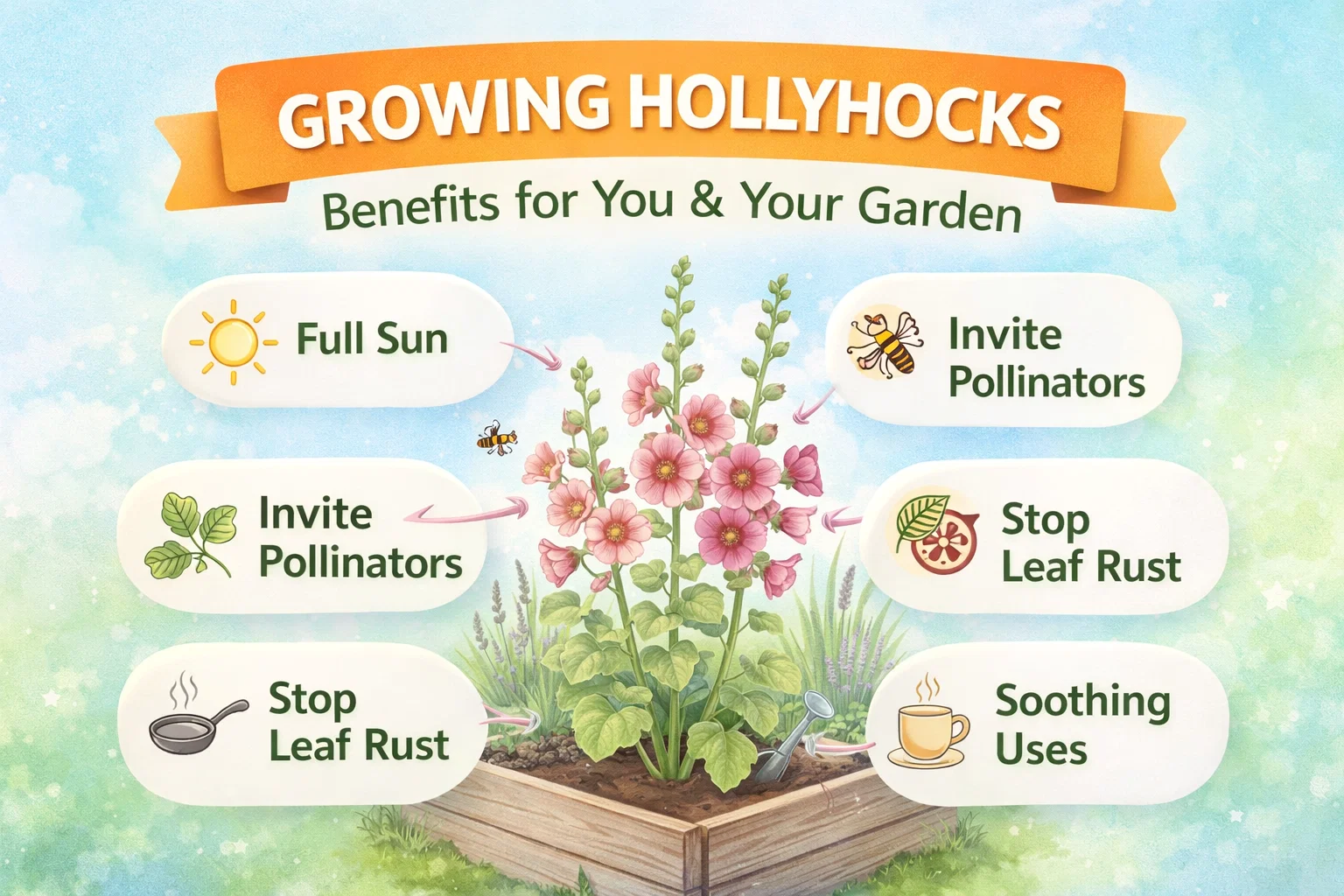
To get the most out of your hollyhocks, you need to start with the right location. These plants are sun worshippers through and through. They require at least six hours of full sun every day to grow strong, sturdy stems. Without enough light, the stalks may become leggy and weak, causing them to flop over under the weight of their own flowers. If you live in a particularly windy area, planting them against a fence or a wall can provide much needed support and protection.
Spacing is another critical factor. While it might be tempting to crowd them together for a dense look, hollyhocks need room to breathe. Aim for a distance of 18 to 24 inches between plants. This spacing ensures that each plant gets enough nutrients from the soil and, perhaps more importantly, allows for proper air circulation. Good airflow is the best defense against some of the common fungal issues that hollyhocks are known to face.
Soil Quality and Drainage
Hollyhocks are not overly picky about soil types, but they do insist on good drainage. They have deep taproots that help them find moisture and stabilize their tall frames, but if those roots sit in waterlogged soil, they will quickly rot. If you have heavy clay soil, consider adding organic matter like compost or planting them in raised beds to improve the drainage. When watering, it is always best to aim for the base of the plant. Keeping the foliage dry helps prevent the spread of diseases.
Inviting Pollinators: Creating a Wildlife Haven
If you want a buzzing, healthy garden, hollyhocks are like a five star hotel for beneficial insects. Their large, open blooms provide easy access to nectar and pollen for bees, butterflies, and even hummingbirds. Because they bloom at a time when some other spring flowers are fading, they provide a vital food source during the peak of the growing season.
Watching a bumblebee disappear inside a hollyhock bloom is one of the simple joys of gardening. By planting a row of these flowers, you are not just decorating your yard; you are supporting the local ecosystem. The presence of these pollinators will also benefit your vegetable garden, ensuring better yields for crops like tomatoes, squash, and cucumbers that rely on insect activity for fertilization.
Protecting Your Plants: Managing Leaf Rust
Every gardener who has grown hollyhocks has likely encountered the dreaded orange spots known as hollyhock rust. This fungal disease is the most common challenge for these plants. It usually starts on the lower leaves and can quickly spread upward, making the foliage look ragged and unsightly even if the flowers still look beautiful.
Prevention is the best strategy for managing rust. As mentioned earlier, proper spacing and avoiding overhead watering are key. If you notice infected leaves, pick them off immediately and dispose of them in the trash rather than the compost pile to prevent the spores from spreading. Some gardeners choose to plant shorter flowers in front of their hollyhocks to hide the lower foliage, which often looks the most weathered by mid summer. This way, you get the beauty of the tall spikes without worrying about the appearance of the bottom leaves.
The Edible Garden: From Petals to Seeds
Many people are surprised to learn that hollyhocks are entirely edible. They belong to the Malvaceae family, making them relatives of hibiscus and okra. This means you can transform your flower garden into a functional pantry with just a little bit of knowledge.
Using the Blooms in the Kitchen
The petals of hollyhock flowers have a very mild, slightly sweet flavor. They are perfect for adding a pop of color to summer salads or using as a decorative garnish for cakes and desserts. You can even crystallize them with sugar for a fancy treat. When harvesting blooms for eating, always ensure they have not been sprayed with chemical pesticides or fertilizers. It is best to pick them in the morning when they are at their freshest.
Cooking the Leaves and Seeds
The young, tender leaves of the hollyhock can be eaten raw in salads or sauteed just like spinach. They have a slightly mucilaginous quality, similar to okra, which makes them great for thickening soups and stews. As the leaves get older, they become tougher and more fibrous, so stick to the smaller, newer growth for the best culinary experience.
Even the seeds are useful! Once the flowers fade and the seed pods form, you can harvest the green seeds. These have a nutty flavor and a satisfying crunch. Some people enjoy toasting them in a pan with a bit of salt and oil to use as a topping for savory dishes or as a healthy snack on their own.
Medicinal Benefits: Soothing and Healing
Beyond the kitchen, hollyhocks have a long history in herbal medicine. The plant is rich in mucilage, a substance that becomes slippery when wet and is incredibly effective at soothing irritated tissues. This makes it a fantastic natural remedy for various ailments.
Dried hollyhock flowers and leaves can be brewed into a gentle herbal tea. This tea is often used to soothe a sore throat or a persistent dry cough. It acts as a demulcent, coating the throat and providing relief from inflammation. Additionally, the deep taproots of the hollyhock help improve soil structure, but they have also been used in traditional practices to create poultices for minor skin irritations.
Hollyhocks in Landscape Design
Because of their impressive height, hollyhocks serve a specific purpose in garden design. They are the perfect “back of the border” plant. Placing them behind shorter perennials or annuals creates a layered look that adds depth and vertical interest to your landscape. They are also excellent for screening unsightly areas, such as a plain shed wall or a chain link fence.
The variety of colors available today is staggering. From the classic pale pinks and whites to deep, dramatic maroons that look almost black, there is a hollyhock for every color palette. Mixing different varieties can create a wild, cottage style aesthetic, while sticking to a single color can look more modern and intentional.
Sustainable Gardening with Hollyhocks
In an era where sustainable gardening is more important than ever, hollyhocks fit right in. Because they are so easy to grow from seed and often self propagate, they require very little external input once established. Their deep roots make them relatively drought tolerant, meaning they don’t need constant watering like some more delicate ornamental flowers.
By saving the seeds from your own plants, you can continue the cycle year after year without ever having to buy new starts. This not only saves money but also allows you to develop a strain of plants that are perfectly adapted to your specific local climate and soil conditions. Simply wait for the seed pods to turn brown and dry on the stalk, then pop them open and store the seeds in a cool, dry place until you are ready to plant again.
Conclusion: Why You Should Plant Hollyhocks Today
Hollyhocks are more than just a nostalgic reminder of grandmother’s garden. They are hard working, multi functional plants that provide beauty, food, and medicine while supporting the environment. Whether you are an experienced gardener or a beginner looking for an easy win, these tall cottage flowers offer a rewarding experience from the moment you tuck the seed into the soil.
By giving them plenty of sun, enough space to breathe, and well drained soil, you can enjoy a spectacular vertical display that lasts all summer long. From the bees that will thank you for the nectar to the friends who will be impressed by your floral salads, the benefits of growing hollyhocks are endless. So, clear a spot along your sunny fence line and get ready to welcome these towering beauties into your garden. They are a true testament to the fact that the most traditional plants are often the most valuable ones we can grow.