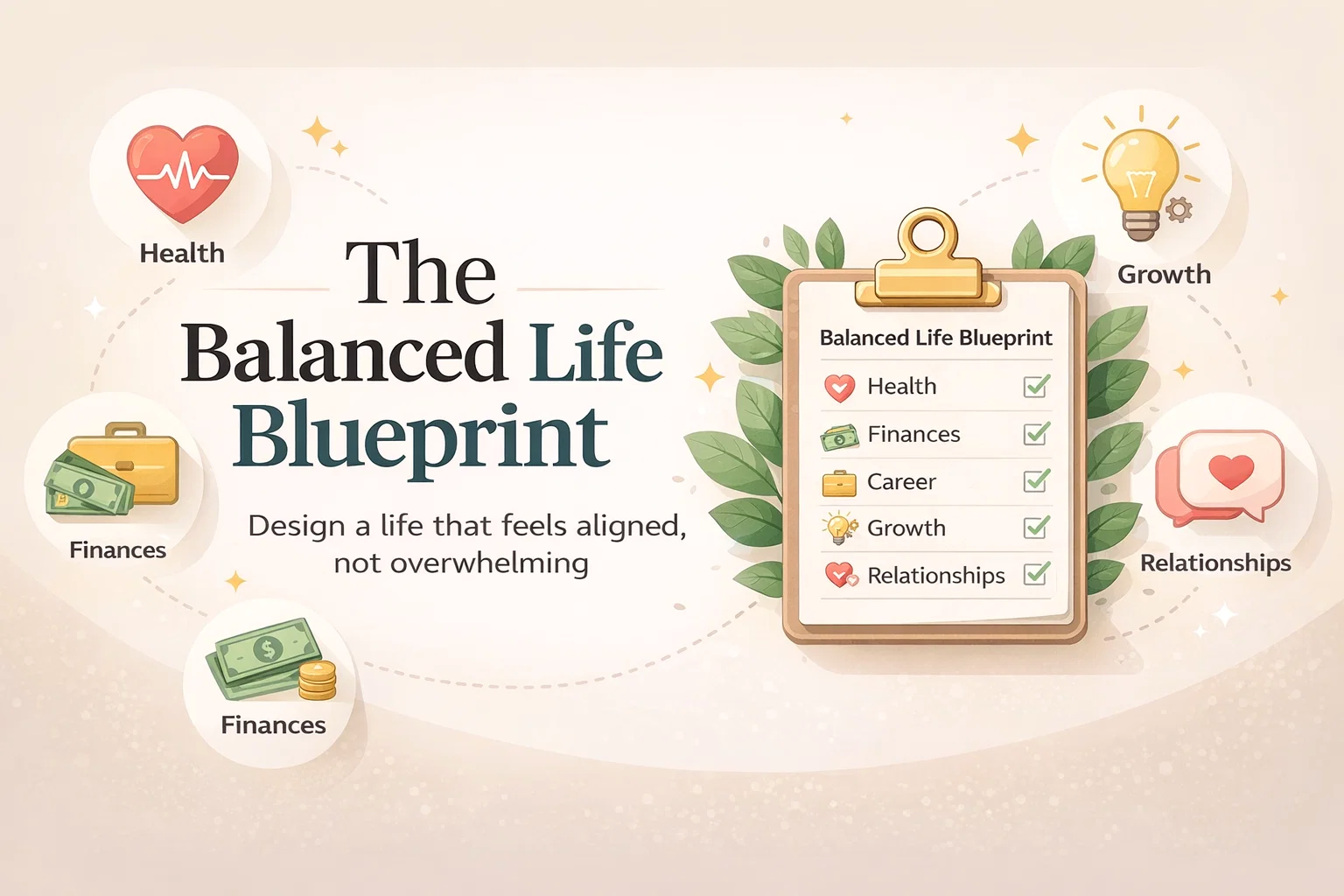
How to Design a Balanced Life Simple Blueprint for Goals, Daily Habits Mental Clarity
In a world that constantly demands more of our time, energy, and attention, it is incredibly easy to feel like you are spinning your wheels without actually moving forward. We often mistake being busy for being productive, and in the process, we sacrifice the very things that make life worth living: our health, our relationships, and our peace of mind. But what if you could redesign your days so they felt aligned rather than overwhelming? This is the core philosophy behind the Balanced Life Blueprint, a simple yet profound framework designed to help you reclaim your narrative and build a life that truly resonates with your values.
The Foundation of Real Change: Auditing Your Current Life
You cannot fix what you do not measure. This is a fundamental truth in business, and it is even more critical in personal development. The first step toward a balanced life is a radical, honest audit of where you stand right now. Think of this as a pulse check for your soul. By rating the key areas of your life on a scale of 1 to 10, you move away from vague feelings of dissatisfaction and toward concrete data points.
Consider your physical health. Are you fueling your body with intention, or are you running on caffeine and convenience? Look at your finances, your mental health, and your personal growth. Often, we focus so much on our careers that our “fun and creativity” or “social and community” scores drop to a 2 or a 3. By visualizing these gaps, you create the clarity necessary to start the renovation process. Awareness is the bridge between where you are and where you want to be.
Identifying the Leaks: Where is Your Energy Going?
Once you have a clear picture of your current state, it is time to look for the “leaks.” In any plumbing system, a small leak over time can cause massive structural damage. The same applies to your life. Energy leaks are those subtle, often unnoticed habits or commitments that drain your vitality. To find them, you must ask yourself some tough questions.
Where are you overgiving? Many of us suffer from the disease to please, saying yes to every request until we have nothing left for ourselves. What feels chaotic in your schedule? Is there a specific time of day or a recurring task that fills you with dread? By identifying what you are avoiding and what drains you weekly, you can begin to plug those holes. Remember, balance is not necessarily about adding more “good” things; it is about fixing what is currently misaligned.
The Power of Three: Choosing Core Priorities
One of the biggest mistakes people make when trying to improve their lives is trying to change everything at once. This is a one way ticket to burnout. The Balanced Life Blueprint suggests a much more sustainable approach: pick only three core priorities for the next 30 days. This concept of “depth over overwhelm” allows you to pour your focused energy into a few areas where you can actually see progress.
For example, you might choose health, finances, and personal growth. By narrowing your focus, you give yourself permission to let other areas sit on the back burner for a month. This does not mean you ignore your job or your family; it just means that your primary “improvement energy” is directed toward those three specific pillars. When you succeed in these areas, that momentum naturally spills over into the rest of your life.
Setting Standards Instead of Just Goals
We are often told to set “SMART” goals, but goals are merely outcomes. They are the destination on the map. Standards, on the other hand, are the daily behaviors that ensure you actually arrive at that destination. A goal is “I want to feel better.” A standard is “I sleep before 11:00 PM and move my body four times a week.”
When you shift your mindset from goals to standards, you change your identity. You stop being someone who is “trying” to get healthy and start being someone who “is” healthy because of the non-negotiable rules you live by. Standards remove the need for constant willpower because they become your default mode of operation. If your standard is to check your finances every Friday, it eventually becomes as automatic as brushing your teeth.
Building Ritual Anchors for Consistency
To make these standards stick, you need ritual anchors. An anchor is a small, weekly ritual attached to a specific priority. These act as the heartbeat of your new lifestyle. If your priority is growth, an anchor might be 10 minutes of daily reading. If it is finances, it might be a “money check-in” every Friday afternoon.
The beauty of a ritual anchor is its simplicity. It should be small enough that it feels almost impossible to skip. These tiny wins build self-trust. Over time, these small rituals accumulate, leading to massive shifts in your overall well-being. They provide a sense of rhythm to your week, giving you something to look forward to and a way to measure your commitment to yourself.
Protecting Your Energy with Boundaries
Balanced people are not lucky; they are disciplined with their boundaries. Protecting your energy is perhaps the most difficult but rewarding part of this blueprint. It requires you to create boundaries with your goals in mind. This means learning to say “no” faster and without the crushing weight of guilt.
In our digital age, this also means reducing “digital noise.” Constant notifications and the pressure to be “always on” are significant energy drains. Protecting your energy might mean setting a “no phones after 8:00 PM” rule or stopping the habit of overcommitting to social events that do not nourish you. Balance requires protection, not perfection. It is about creating a safe space for your priorities to thrive.
The Importance of Guilt-Free Rest
Part of protecting your energy is reclaiming the art of rest. We live in a culture that glamorizes the “grind,” but constant activity is not a badge of honor; it is a recipe for exhaustion. True balance includes periods of intentional, guilt-free rest. Whether it is a nap, a walk in nature, or simply sitting in silence, these moments of stillness allow your nervous system to reset. When you value rest as much as you value productivity, you become more effective in everything you do.
The Monthly Review: Adjusting Your Sails
The final step in the Balanced Life Blueprint is the monthly review. Life is dynamic, not static. What worked for you in January might not be what you need in June. Every month, take the time to sit down and ask yourself: What improved? What slipped? And most importantly, what needs my attention now?
This reflection page is where the real growth happens. It allows you to celebrate your wins, no matter how small, and pivot where necessary. If you found that your “health” priority was too ambitious, you can scale it back. If you realized you have more capacity for “social and community” goals, you can add them in. This monthly cadence ensures that you stay aligned with your evolving self.
Designing a Life That Feels Like Yours
The journey toward a balanced life is deeply personal. There is no one-size-fits-all solution, but there is a framework that can guide you. By auditing your life, identifying leaks, choosing core priorities, setting standards, building rituals, protecting your energy, and reviewing your progress, you move from a state of being overwhelmed to a state of being empowered.
Remember that the goal is not to reach a perfect state of equilibrium where nothing ever goes wrong. The goal is to create a life that feels aligned with who you are and who you want to become. It is about making conscious choices every day that honor your time and your energy. You have the power to design a life that feels good on the inside, not just one that looks good on the outside. Start today by picking one area to audit, and watch how the clarity transforms your world.