9 Life-Saving Aluminum Foil Hacks DIY Home Tips You Need to Try
Have you ever looked at that roll of aluminum foil in your kitchen drawer and thought of it as nothing more than a cover for leftovers? If so, you are missing out on one of the most versatile and powerful tools in your entire home. Aluminum foil is far more than just a food wrap; it is a metallic multi-tool that can solve everyday frustrations ranging from dull household tools to stubborn cleaning chores. In a world where we are constantly looking for specialized gadgets to fix specific problems, the humble roll of foil offers a low-cost, high-efficiency alternative that has been hiding in plain sight for decades.
Understanding the unique properties of aluminum foil is the first step toward unlocking its potential. Because it is highly conductive, incredibly malleable, and resistant to corrosion, it can be shaped and utilized in ways that plastic wrap or parchment paper simply cannot match. From the garage to the laundry room and the kitchen to the office, there are hidden applications for this shiny material that will save you both time and money. Let us dive deep into the world of aluminum foil hacks and explore how this simple kitchen staple can transform your daily routine.
The Science of Sharpness: Reviving Dull Scissors
We have all been there: you reach for your favorite pair of scissors to cut through a piece of fabric or a shipping box, only to find that they are chewing through the material rather than slicing it. Over time, friction and debris dull the blades of even the best scissors. Before you head to the store to buy a replacement or look for a professional sharpening service, reach for your aluminum foil. This is one of the oldest and most effective tricks in the book for a reason.
How the Foil Sharpening Technique Works
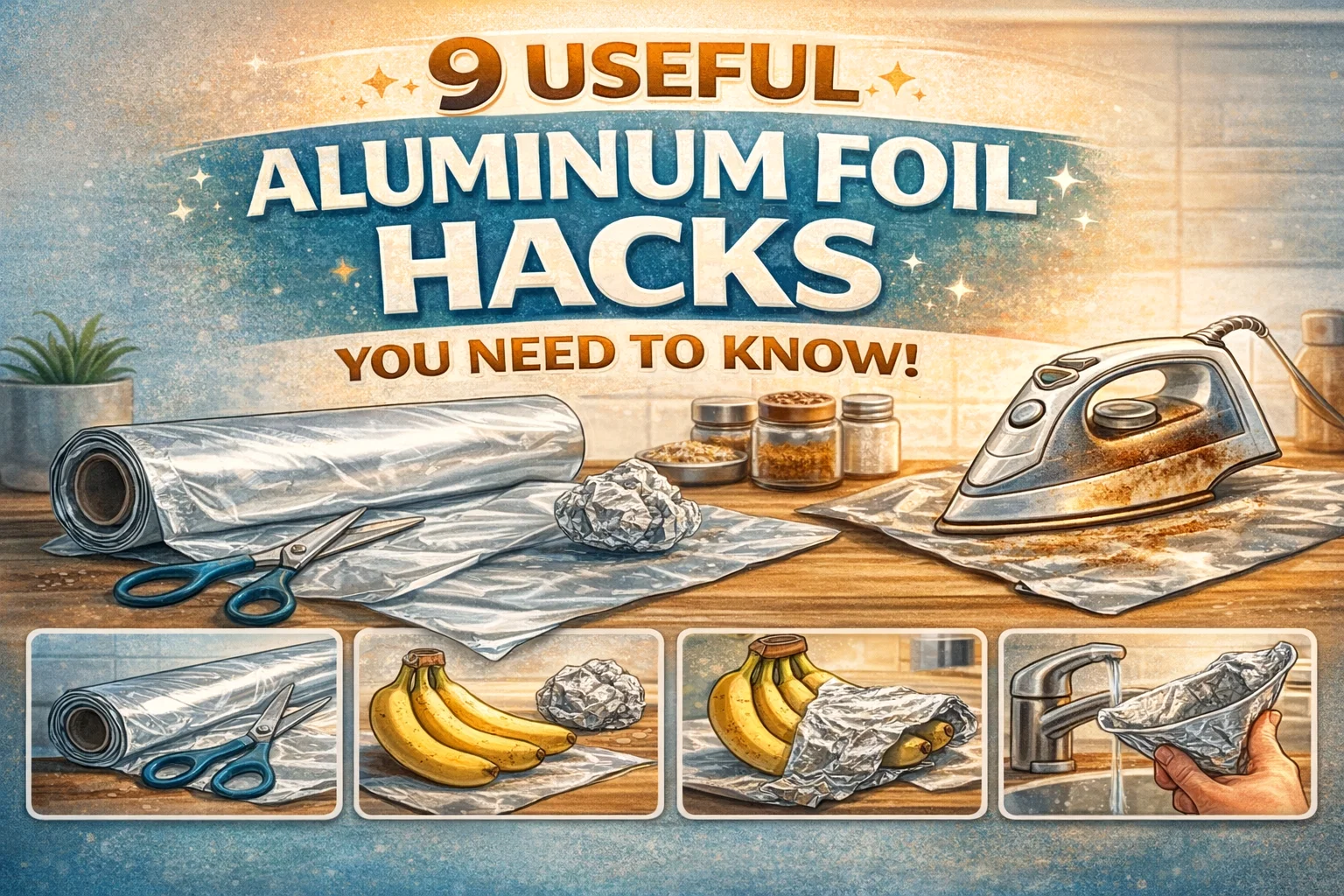
To sharpen your scissors, take a sheet of aluminum foil and fold it over several times until you have a thick, multilayered strip. Then, simply use your dull scissors to cut through the foil repeatedly. You should aim for about ten to twenty long strokes. As the blades pass through the layers of metal, the friction helps to hone the edges and remove microscopic burrs and nicks. While it is not quite the same as a professional grind, it provides an immediate improvement in cutting performance, making your scissors feel almost new again.
Restoring Your Wardrobe: The Secret to a Clean Iron
A dirty iron is a nightmare for anyone who values their clothing. Over time, starch, synthetic fibers, and mineral deposits from water can build up on the soleplate of your iron. This residue often turns brown or black and can snag on delicate fabrics or leave unsightly stains on a crisp white shirt. Cleaning an iron usually involves harsh chemicals or specialized cleaning sticks, but you can achieve a sparkling finish with just two ingredients: aluminum foil and common table salt.
The Salt and Foil Method for Soleplates
To clean your iron safely, lay a piece of aluminum foil on your ironing board. Sprinkle a generous amount of plain table salt across the surface of the foil. Turn your iron to a warm setting (ensure the steam function is turned off) and run the iron over the salt-covered foil. The salt acts as a mild abrasive that gently scrubs away the burnt-on gunk, while the aluminum foil provides a heat-resistant surface that helps distribute the friction evenly. Within minutes, the residue will transfer from the iron to the salt, leaving you with a smooth, clean surface that glides effortlessly over your laundry.
Quick Fixes for Electronics: The Battery Compartment Hack
Electronic devices often fail not because the internal components are broken, but because the battery connection has become loose. Over time, the small metal springs inside battery compartments can lose their tension or become compressed. This results in a “stack too small” situation where the battery does not make firm contact with the terminals, causing your remote control, flashlight, or toy to stop working intermittently.
Bridging the Gap with Conductivity
Since aluminum is an excellent conductor of electricity, it is the perfect material to bridge this gap. If you notice a battery is rattling or not fitting snugly, tear off a tiny piece of aluminum foil and fold it into a small, thick square. Place this foil pad between the battery and the spring terminal. The foil fills the empty space and ensures a solid electrical path, restoring power to your device instantly. This is a fantastic temporary fix that keeps your electronics running until you can properly tension the springs or replace the unit.
Winter Car Care: Protecting Your Windshield from Ice
Winter mornings are often defined by the frantic scraping of ice off a frozen windshield. It is a cold, tedious task that can make you late for work. While there are many commercial de-icers available, one of the most effective ways to prevent ice from forming in the first place is to use a physical barrier. If you do not have a dedicated car cover, a long sheet of aluminum foil can be a lifesaver during a frost or light snowstorm.
Preventing the Freeze Before It Starts
Before the temperature drops at night, lay a sheet of aluminum foil across your windshield and secure it under the windshield wipers. The foil acts as an insulator and prevents moisture from settling directly on the glass and freezing. In the morning, you simply peel away the foil, and the ice goes with it, leaving you with a clear view of the road. This saves your glass from the potential scratches caused by plastic scrapers and keeps your hands warm and dry.
Laundry Room Magic: Eliminating Static Electricity
Static cling is one of the most annoying parts of doing laundry, especially during the dry winter months. Clothes stick together, sparks fly when you touch the dryer, and lint seems to be magnetically attracted to everything you wear. While dryer sheets are the traditional solution, they are often filled with synthetic fragrances and chemicals that can irritate sensitive skin and leave a waxy buildup on your clothes and dryer sensor.
The Aluminum Foil Dryer Ball
A much cleaner and more sustainable alternative is the aluminum foil ball. Simply crumble up two or three pieces of foil into tight, fist-sized balls and toss them into the dryer with your wet clothes. As the clothes tumble, the aluminum balls help to discharge the static buildup by neutralizing the electrons. Unlike dryer sheets, these foil balls do not leave any scent or residue, and they can be reused for dozens of loads. When they start to look flat or lose their shape, you can simply toss them in the recycling bin and make new ones.
Reviving Metal Surfaces: Removing Rust from Chrome
Chrome fixtures in the kitchen and bathroom look stunning when they are shiny, but they are prone to developing rust spots and tarnish over time due to constant exposure to water and humidity. Many people assume that once chrome starts to pit or rust, it is permanently damaged. However, aluminum foil can actually chemically and physically restore the shine to your faucets, bumpers, and handles.
The Chemical Reaction of Foil and Chrome
To remove rust, crumble a piece of aluminum foil into a ball and dip it in a bit of water. Gently rub the wet foil over the rusted areas of the chrome. A fascinating process happens here: the aluminum is softer than the chrome, so it won’t scratch the surface, but it is hard enough to scrub away the rust. Furthermore, a chemical reaction occurs between the aluminum and the rust (iron oxide), creating a polished finish that fills in the tiny pits where the rust originated. Wipe the area with a clean cloth afterward, and you will be amazed at the mirror-like reflection that returns.
The Kitchen Powerhouse: Scouring and Preservation
The kitchen is where aluminum foil truly shines as a daily problem solver. Beyond its role in cooking, it can handle the dirty work that most sponges and brushes struggle to manage. If you have ever faced a glass casserole dish or a cast iron pan with stubborn, burnt-on food, you know that soaking is often not enough.
Scrubbing Food Stuck on Pans
When you have food stuck on pans, a ball of aluminum foil acts as a heavy-duty scouring pad. Because of its textured surface, it can easily scrape away carbonized food and grease. It is particularly effective on glass bakeware and oven racks where you need extra muscle. Simply soak the pan in warm, soapy water for a few minutes, then use the foil ball to scrub. Just be cautious not to use this method on non-stick coated pans, as the foil will definitely strip away the delicate coating.
Extending the Life of Your Produce
Waste is a major concern in the modern kitchen, and bananas are one of the most frequently wasted fruits because they ripen so quickly. Bananas release ethylene gas from their stems, which accelerates the ripening process for the entire bunch. To slow this down, wrap the stems of your bananas tightly in a small piece of aluminum foil. This prevents the gas from escaping and reaching the rest of the fruit, keeping your bananas yellow and firm for several days longer than usual.
Diy Tools: Creating a Custom Funnel
Have you ever found yourself needing to pour oil into a small engine or transfer spices into a narrow jar, only to realize you do not own a funnel? This is another scenario where the malleability of aluminum foil saves the day. Because foil can be shaped and will hold that shape, it is the perfect material for a disposable, custom-sized funnel.
Shaping Your Solution
Simply take a square of foil and roll it into a cone shape, leaving a hole of the desired size at the bottom. You can adjust the width of the top and the narrowness of the spout to fit whatever container you are working with. The best part is that once you are finished with a messy task, like pouring motor oil or paint, you can simply toss the “funnel” away without having to clean up a greasy mess. It is efficient, clean, and incredibly convenient.
Conclusion: The Ultimate Household Essential
As we have explored, aluminum foil is a silent hero in the household. Its unique combination of conductivity, malleability, and durability allows it to function as a sharpener, a cleaner, a conductor, and a protector. By incorporating these nine tricks into your lifestyle, you are not just saving money on specialized products; you are also adopting a more resourceful and creative approach to problem-solving.
The next time you reach for that silver roll, remember that you are holding more than just a kitchen wrap. You are holding a versatile tool capable of fixing your electronics, reviving your car, and keeping your kitchen spotless. These simple solutions for daily problems prove that sometimes the best technology isn’t a new app or a high-tech gadget, but a classic material used in innovative ways. Keep a roll handy, stay curious, and see what other problems you can solve with a little bit of foil and a lot of ingenuity.