Sodium Benefits for Cellular Hydration Energy Sea Salt vs Epsom Salt Guide
When we think about hydration, our minds almost instinctively jump to a tall glass of cool water. We have been told for decades that drinking eight glasses a day is the golden rule for health, yet so many of us still feel sluggish, brain-fogged, and perpetually thirsty despite hitting our daily water goals. The missing piece of the puzzle isn’t more water; it is the spark that allows that water to actually enter your cells. That spark is sodium. While salt has been demonized in modern nutrition circles, the truth is that your body is a bio-electrical machine, and sodium is one of its primary conductors. Without it, the water you drink simply passes through you, leaving your cells parched and your energy levels depleted.
The Science of Cellular Hydration
To understand why sodium is so critical, we have to look at the microscopic level of the human body. Every single one of our trillions of cells depends on a specific balance of minerals to function. Water alone is merely a carrier. It is the transport vehicle, but minerals are the drivers. If you drink plain, distilled, or highly filtered water without any mineral content, you are essentially providing the vehicle without the driver. This often leads to a Paradox of Dehydration where you are drinking plenty of fluid but your cells remain thirsty.
Sodium is a vital electrical mineral. It is not just table salt; it is a fundamental element that allows life to signal and function. Every time your heart beats, every time your muscles contract, and every time a thought flashes through your brain, sodium is involved. It works in a beautiful, rhythmic dance with other electrolytes to maintain the pressure and fluid balance that keeps us alive and energized.
The Sodium-Potassium Pump: Your Body’s Battery
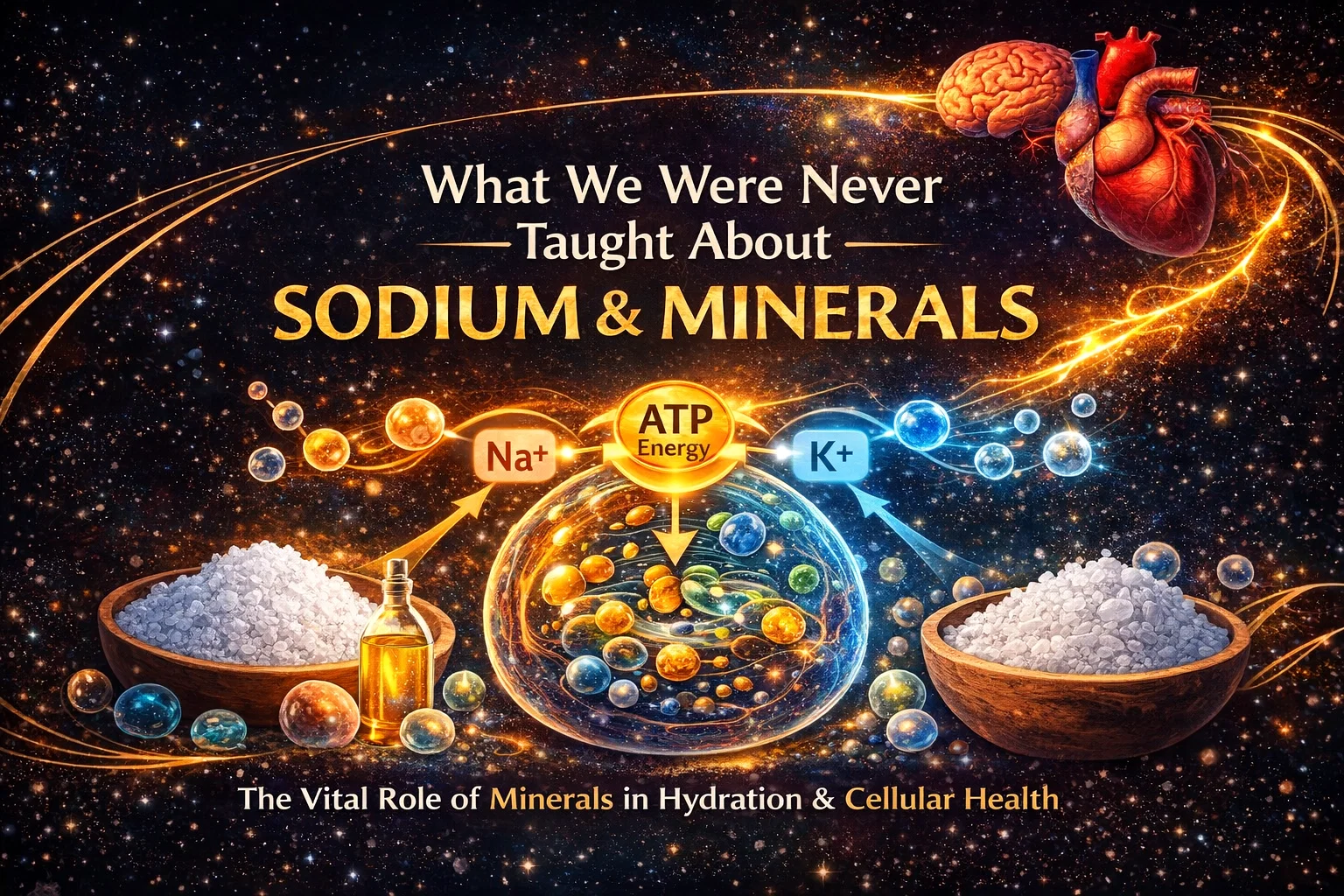
Inside every cell membrane, there is a mechanism known as the Sodium-Potassium Pump. This is perhaps one of the most important biological processes in the human body. To put it simply, sodium lives primarily outside the cell, while potassium lives primarily inside the cell. The pump uses energy, specifically ATP, to move these minerals back and forth. This movement creates an electrical charge, much like the positive and negative terminals on a battery.
This electrical gradient is what allows your nerves to send signals and your muscles to move. When your sodium levels are too low, this pump slows down. Your cellular battery begins to lose its charge. This is why a common symptom of salt deficiency is a profound sense of fatigue and weakness. By embracing the right kind of sodium, you are effectively plugging your body back into its power source, allowing for better communication between your brain and your physical systems.
Why Water Needs Minerals to Move
Nature never provides water in its pure, isolated form. In the wild, water flows over rocks and through soil, picking up a rich profile of minerals along the way. Our bodies evolved to recognize this mineralized water. When we consume sodium, it acts as a conductor. It pulls water into the spaces where it is needed most. This is why many athletes and high-performance individuals are now adding a pinch of high-quality sea salt to their water bottles. They have realized that energy moves where minerals exist.
The Difference Between Sea Salt and Epsom Salt
Many people get confused by the different types of salts available on the market, especially when it comes to therapeutic uses. It is vital to understand that not all salts are created equal, and they serve very different purposes in your wellness routine. Let us break down the two most common types: Sea Salt and Epsom Salt.
The Power of Sea Salt Exposure
Sea salt is a complex powerhouse. Unlike refined table salt, which is often stripped of its natural character and loaded with anti-caking agents, high-quality sea salt contains a broad spectrum of minerals. When you use sea salt, whether in your food or through mineral baths, you are providing your body with sodium, magnesium, calcium, and potassium. These minerals work together to balance and circulate fluids throughout your system.
Sea salt is recognized by the body as an internal balancer. It supports nerve health, boosts energy production, and helps regulate blood pressure by maintaining the correct volume of blood in your veins. It is the foundational mineral for anyone looking to optimize their physical performance and cognitive clarity.
The Benefits of Epsom Salt
On the other side of the spectrum, we have Epsom Salt. While it looks similar to sea salt, it is chemically very different. Epsom salt is actually Magnesium Sulfate. It is fantastic for muscle relaxation, calming the nervous system, and helping you wind down after a long day. If you have sore muscles or are feeling stressed, an Epsom salt bath is a miracle worker.
However, it is important to remember that Epsom salt does NOT contain sodium. While it is excellent for magnesium absorption through the skin, it will not solve the issues of cellular hydration or the electrical signaling that sodium provides. To achieve total body balance, you need the magnesium from Epsom salts and the sodium from sea salt. They are two different tools in your health toolkit.
How Sodium Supports Your Heart and Brain
The two organs that require the most electrical energy are the heart and the brain. It is no coincidence that these are the two areas most affected by mineral imbalances. Your brain is roughly 75 percent water, but that water is highly conductive because of the presence of electrolytes. Sodium helps maintain the blood-brain barrier and ensures that electrical impulses can travel across synapses without interruption.
Similarly, the heart is a muscular pump that relies on electrical signals to maintain a steady rhythm. These signals are generated by the flow of sodium and potassium in and out of the heart cells. When we are told to strictly avoid salt, we may unintentionally be making it harder for our heart to maintain its natural rhythm. While balance is key, the complete avoidance of sodium can be just as detrimental as overconsumption of the wrong kind of processed salt.
The Myth of Table Salt vs. Natural Minerals
We must make a clear distinction between the white, bleached table salt found in processed snacks and the mineral-rich salts found in nature. Table salt is often just Sodium Chloride, missing the trace minerals that help the body process sodium effectively. Furthermore, processed foods are packed with this refined salt, which can lead to inflammation and water retention.
When you switch to unrefined sea salt or Himalayan salt, you are getting a synergistic blend of minerals. These natural salts don’t cause the same harsh reactions in the body because the other minerals present help to buffer the sodium. This is what we mean when we say that sodium is a vital electrical mineral. It is part of a larger ecosystem of nutrients that work together to sustain life.
Signs You Might Need More Sodium
- Persistent Headaches: Often a sign of low blood volume or electrolyte imbalance.
- Muscle Cramps: When the sodium-potassium pump is struggling, muscles can’t relax or contract properly.
- Brain Fog: Lack of electrical conductivity in the brain leads to slow processing and mental fatigue.
- Dizziness When Standing: A common sign that your body is struggling to regulate blood pressure due to low salt.
- Cravings for Salty Foods: Your body is highly intelligent; if you are craving salt, it is usually because your cells are crying out for minerals.
Embracing a Mineral-Rich Lifestyle
Transitioning to a mineral-focused lifestyle is one of the simplest and most effective ways to upgrade your health. Start by looking at the quality of your water. If you drink highly purified water, consider adding a tiny pinch of sea salt or a few drops of liquid trace minerals back into it. This ensures that the water you drink is actually being absorbed rather than just flushing through your kidneys.
Next, evaluate your salt intake. Stop fearing the salt shaker if you are using high-quality, unrefined salt. Season your whole foods liberally. Your body knows how to handle natural minerals. Listen to your physical cues and notice how your energy levels change when you prioritize mineral balance over simple fluid intake.
Conclusion: The Spark of Life
In the end, we have to remember that water is the carrier, but minerals are the conductors. We are electrical beings, and our health depends on the strength of our internal current. Sodium is not the enemy; it is the vital mineral that allows our cells to signal, our hearts to beat, and our minds to think clearly. By understanding the roles of sodium and potassium, and recognizing the difference between sea salts and Epsom salts, you can take control of your hydration at a cellular level.
Stop simply drinking water and start hydrating your cells. When you provide your body with the minerals it needs, energy moves where it is supposed to go. You will feel more vibrant, more focused, and more alive. It is time to rethink what we have been taught about sodium and embrace it as the essential spark of life that it truly is.