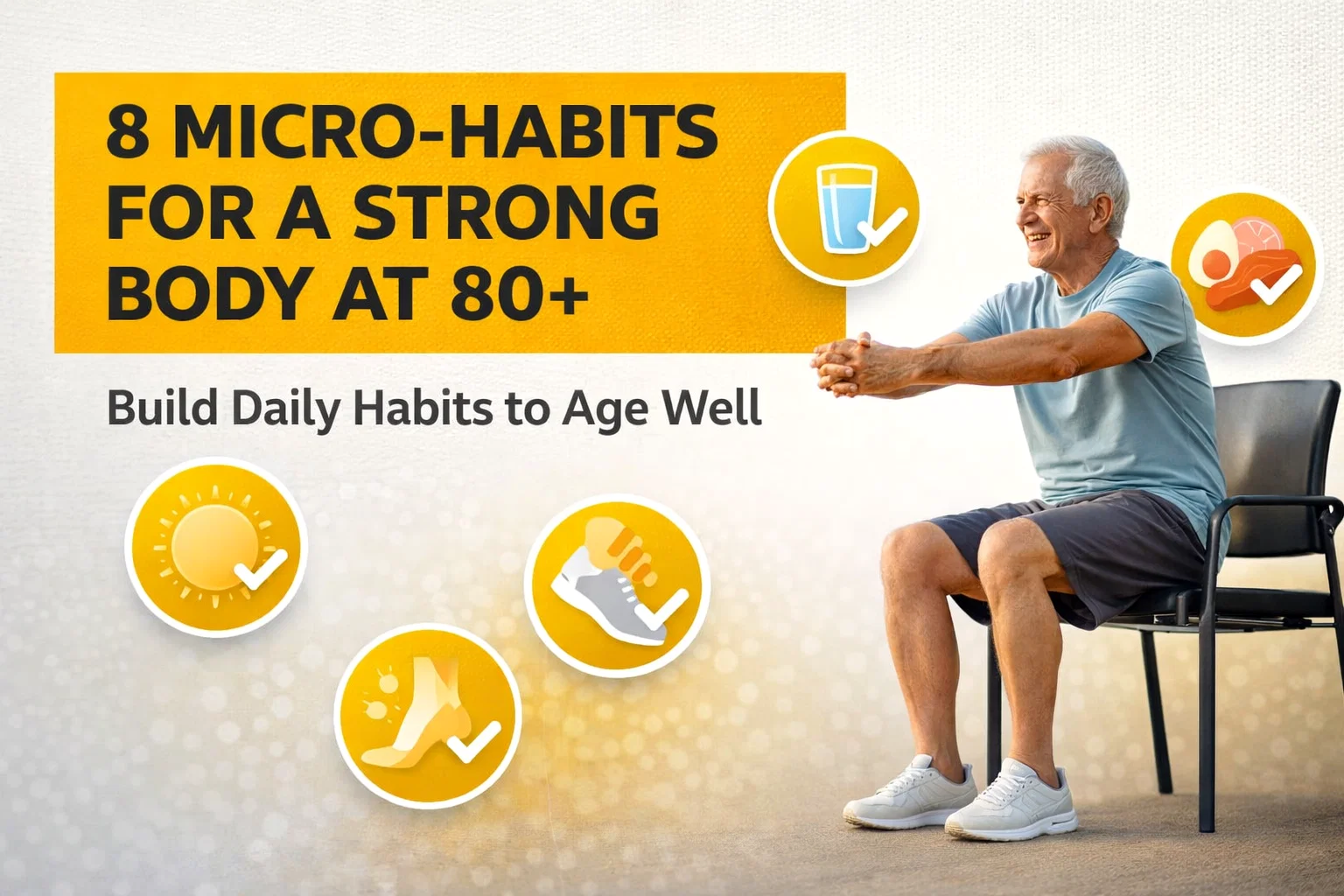
8 Morning Micro-Habits for a Strong Body at 80 Daily Longevity Strength Routine
Imagine your body as a high performance vehicle. When it is brand new, it runs smoothly with very little maintenance. But as the miles add up, the way you treat it every single morning determines whether it will stay on the road for a century or break down prematurely. Most people think that aging is a sudden cliff that we fall off once we hit sixty or seventy. In reality, the body does not break suddenly. It forgets strength slowly, one neglected day at a time. The good news is that you can remind your body how to stay strong through simple, intentional micro-habits that take less than fifteen minutes of your day. These small wins stack up over decades to create a foundation of mobility, independence, and vitality that will carry you well into your eighties and beyond.
The Power of Morning Hydration for Joint Longevity
The very first thing you do when you open your eyes sets the chemical tone for your entire day. During the night, your body undergoes a natural repair process, but it also loses a significant amount of moisture through breath and sweat. By the time you wake up, you are in a state of physiological drought. This is why the first micro-habit is simple: drink two full glasses of water immediately upon waking.
Why is this so critical for a strong body at eighty? Your joints rely on synovial fluid to stay lubricated. This fluid is primarily composed of water. When you are chronically dehydrated, your cartilage becomes more brittle and the friction between your bones increases. Over years, this “dry” movement leads to the wear and tear we commonly call osteoarthritis. By flooding your system with water first thing in the morning, you are essentially greasing the gears of your musculoskeletal system. It is a tiny investment that pays dividends in the form of pain-free movement as you age.
Building a Foundation from the Ground Up: Toe and Heel Walks
If you want to maintain your independence in your senior years, you must focus on your ankles and feet. Falls are one of the leading causes of injury in older adults, and most falls start with weak stabilizers in the lower leg. Spending just thirty seconds performing a toe walk followed by thirty seconds of a heel walk is a game changer for balance.
Toe walking strengthens the calves and the complex network of muscles in the arch of the foot. Heel walking, on the other hand, activates the tibialis anterior, the muscle on the front of your shin that helps you lift your toes. Strengthening these areas ensures that you have the “reactive” strength needed to catch yourself if you trip on a rug or a curb. Strong ankles equal fewer falls, and fewer falls mean a much longer period of independent living.
The Chair Squat: The King of Functional Longevity
If you could only do one exercise for the rest of your life to ensure you never end up in a nursing home, it would be the squat. Specifically, the chair squat is the ultimate test of functional independence. Think about it: almost every movement required for daily life involves a squatting motion, from getting out of a car to using the restroom or rising from a favorite armchair.
Performing twelve reps of a controlled chair squat every morning keeps your posterior chain engaged. It builds the glutes, quads, and core. As we age, muscle mass tends to waste away, a condition known as sarcopenia. By forcing your large muscle groups to work against gravity daily, you signal to your brain that this muscle is still needed. Your legs decide how long you stay independent, so give them a reason to stay strong.
The Hidden Connection Between Grip Strength and the Nervous System
It might seem strange to prioritize your hands when thinking about total body strength, but medical science has shown a profound correlation between grip strength and overall longevity. A weak grip is often a primary indicator of a weakening nervous system and declining cardiovascular health. In fact, many doctors now use grip tests as a “vital sign” for aging patients.
The micro-habit here is simple: grip something hard for sixty seconds. This could be a dedicated grip strengthener, a pull-up bar, or even a heavy book. This isometric contraction does more than just build forearm muscle; it stimulates the neural pathways between your brain and your extremities. It keeps your nervous system “loud” and clear, ensuring that your brain can effectively communicate with the rest of your body.
Releasing Tension with Neck Circles and Shoulder Rolls
Stiffness is often blamed on the calendar, but it is actually a product of neglect. In our modern world, we spend hours hunched over screens, which creates a “frozen” posture. Over time, the fascia around your neck and shoulders hardens, limiting your range of motion. This isn’t just an aesthetic issue; restricted mobility in the upper body can lead to chronic headaches and poor breathing mechanics.
Slow, intentional neck circles and shoulder rolls act as a reset button. They break up the “glue” that forms in your connective tissues overnight. By maintaining a full range of motion in your cervical spine and thoracic outlet, you ensure that blood flow to the brain remains optimal and that your posture stays upright rather than collapsing into the “hunched” look often associated with old age.
Fueling for Muscle Retention: Protein Before Sugar
Your metabolic health is the engine that drives your physical strength. One of the most common mistakes people make is starting their day with a glucose spike. Think of the traditional breakfast of cereal, toast, or fruit juice. This sends your insulin skyrocketing and sets you on a roller coaster of energy crashes throughout the day.
To keep a strong body at eighty, you must prioritize muscle protein synthesis. Muscle loss starts with poor morning habits. By consuming protein before any sugar or heavy carbohydrates at breakfast, you provide your body with the amino acids it needs to repair tissue. This “protein first” rule helps maintain lean muscle mass and keeps your blood sugar stable, which is essential for avoiding the systemic inflammation that breaks down joints and tissues over time.
The Secret of “Extra Time” Balance Training
Many people complain that they don’t have time to exercise. This is where the habit of standing on one leg while brushing your teeth becomes a superpower. You are already standing there for two minutes, so why not use that time to train your vestibular system? Balance is a “use it or lose it” skill. By challenging your equilibrium daily in a safe environment, you train your brain to process spatial information more efficiently. This micro-habit builds the stabilizer muscles in your hips and core without requiring a single second of “extra” time in your schedule.
Hormonal Reset through Sunlight and Deep Breathing
Finally, the last piece of the longevity puzzle is your internal chemistry. Spending ten minutes in the morning sunlight serves two purposes. First, the UV rays hitting your skin trigger the production of Vitamin D, which is essential for bone density. Second, the light entering your eyes resets your circadian rhythm, ensuring better sleep at night. Sleep is when your body produces growth hormones and repairs the damage of the day.
Pairing this sunlight with deep, diaphragmatic breathing helps move your body from a “fight or flight” sympathetic state into a “rest and digest” parasympathetic state. Stress is a catabolic force; it literally eats away at your muscle and bone over time. Deep breathing lowers cortisol levels, protecting your hard-earned strength and keeping your mood stable. It is a total system reset that takes almost no effort but yields massive results.
The Long Game: Why Micro-Habits Win
We often overcomplicate health. We look for the latest supplement or the most intense workout program, but the reality of aging gracefully is much simpler. It is about the things you do every single day when no one is watching. It is about the two glasses of water, the sixty seconds of gripping, and the ten minutes of sunlight. These actions may seem small, almost insignificant, in the moment. However, when multiplied by 365 days a year across several decades, they become the difference between a body that is breaking and a body that is thriving.
Your body is incredibly resilient, but it is also a master of efficiency. If you don’t use your balance, it will let it go. If you don’t challenge your muscles, it will let them wither. But if you provide these small, daily reminders of strength, your body will respond by staying capable, mobile, and vibrant. Start these eight micro-habits today. Don’t wait until you feel “old” to start caring for your future self. The person you will be at eighty is relying on the choices you make this morning.
Conclusion: Your Blueprint for Lasting Strength
In summary, achieving a strong body at eighty is not about luck or genetics; it is about consistency. By integrating these eight habits into your morning routine, you are taking proactive steps to safeguard your mobility and independence. You are choosing to hydrate your joints, strengthen your foundation, protect your muscles, and calm your nervous system. Remember, your body doesn’t break suddenly. It forgets strength slowly. Keep reminding it of what it is capable of, and it will carry you through a long, healthy, and active life. Start tomorrow morning: wake up, drink your water, and take that first step toward your strongest future self.