Best Cooking Oils vs. Toxic Seed Oils Healthy Fats Guide for Weight Loss Inflammation
Navigating the grocery store aisles can feel like walking through a nutritional minefield. One moment you are told that vegetable oils are heart healthy, and the next, you are hearing that they are the primary drivers of chronic inflammation. If you have ever felt confused about which fat to put in your frying pan, you are certainly not alone. The truth is that the type of oil you use for cooking is one of the most significant factors in determining the health profile of your home cooked meals. Some fats thrive under heat, while others become toxic the moment they touch a hot surface. By understanding the science of smoke points and fatty acid stability, you can transform your kitchen into a hub for wellness and vitality.
The Foundation of Healthy Cooking: Why Your Oil Choice Matters
Most of us focus on the ingredients we are cooking, such as organic kale or grass fed beef, but we often overlook the medium we use to cook them. Cooking oils are not just lubricants for your skillet; they are complex biological substances that react to heat, light, and oxygen. When an oil is heated past its stability point, it undergoes a process called oxidation. This chemical reaction creates polar compounds and free radicals that can damage your cells and trigger systemic inflammation throughout the body.
Choosing the right cooking fat is about more than just flavor. It is about protecting your metabolic health. Highly processed seed oils, often marketed as healthy alternatives to animal fats, are frequently high in Omega 6 fatty acids. While we need some Omega 6 in our diets, the modern Western diet is drastically overbalanced toward them, leading to an inflammatory state that can contribute to weight gain, skin issues, and even heart disease. On the other hand, traditional fats like butter, tallow, and coconut oil provide the structural stability needed for high heat cooking.
Top Tier Fats: What to Use for Better Health
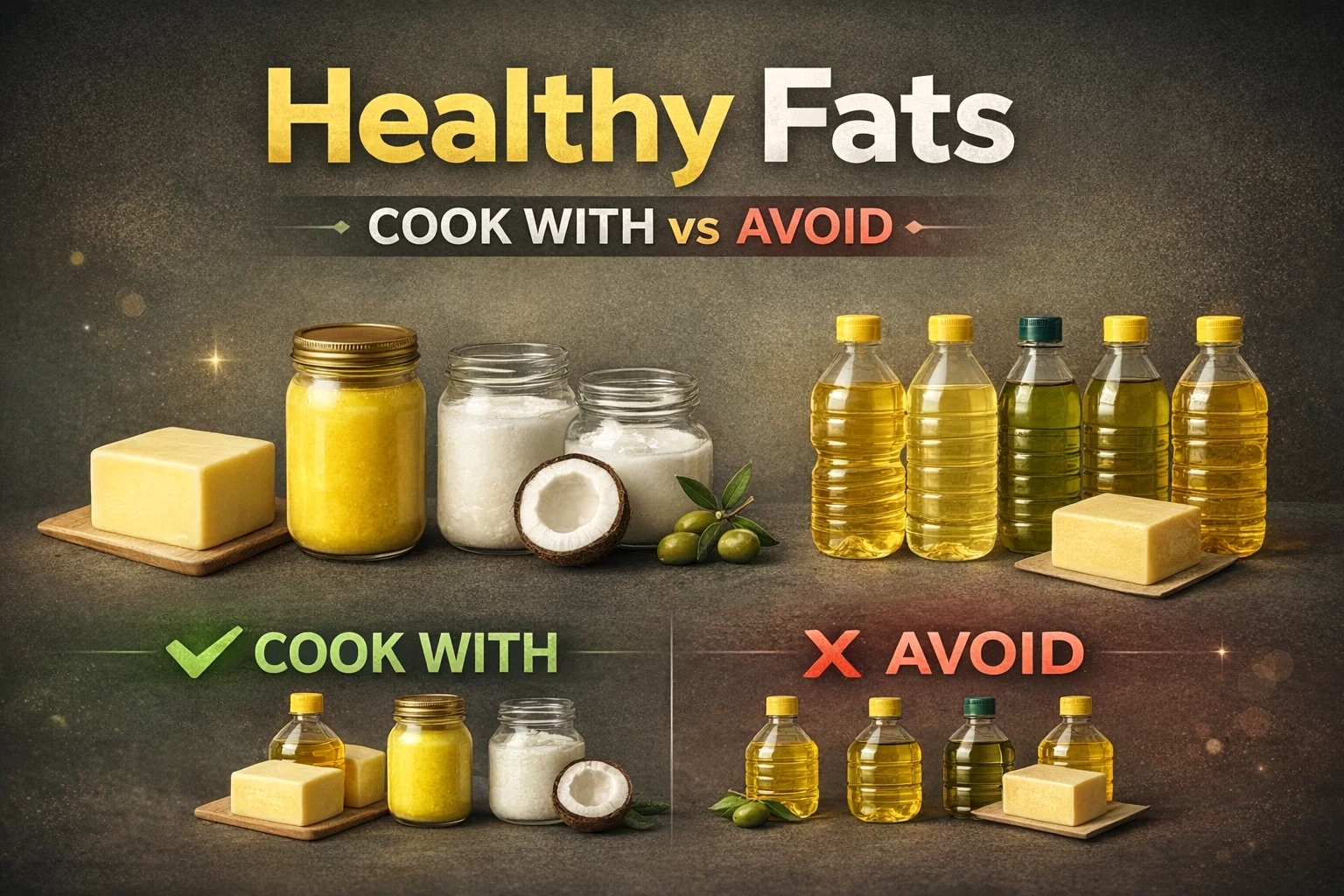
The image above highlights a selection of fats that have been used by humans for generations. These fats are prized for their stability and nutritional density. Let us dive into why these should be your primary choices in the kitchen.
The Golden Standard: Ghee and Butter
Butter has made a massive comeback in the health world, and for good reason. Real butter from grass fed cows is rich in fat soluble vitamins like A, D, E, and K2. These vitamins are essential for bone health and immune function. However, butter contains milk solids that can burn at high temperatures. This is where Ghee, or clarified butter, comes in. By removing the water and milk solids, Ghee achieves a very high smoke point, making it one of the safest and most delicious options for searing and sautéing.
Coconut Oil: The Metabolism Booster
Coconut oil is unique because it is composed mostly of Medium Chain Triglycerides or MCTs. Unlike long chain fats, MCTs are sent directly to the liver where they are used for immediate energy rather than being stored as fat. This makes coconut oil a favorite for those looking to support weight loss and cognitive function. Because it is highly saturated, it is incredibly resistant to heat damage, making it a reliable staple for almost any cooking method.
Beef Tallow: The Ancestral Superfood
Tallow, which is rendered beef fat, was the primary cooking fat in most households before the rise of the industrial seed oil industry. It is exceptionally stable and contains conjugated linoleic acid, a type of fat that has been linked to fat loss and anti inflammatory benefits. If you want the best tasting roasted potatoes or seared steaks, tallow provides a depth of flavor that plant oils simply cannot match.
Extra Virgin Olive Oil: The Heart Protector
While some debate its use in high heat cooking, Extra Virgin Olive Oil is undeniably one of the healthiest fats on the planet. It is loaded with polyphenols and antioxidants that protect the heart and reduce oxidative stress. For low to medium heat cooking or as a finishing oil, it is unbeatable. Just ensure you are buying high quality, cold pressed oil in dark glass bottles to ensure the nutrients remain intact.
The Red Zone: Why Seed Oils Are Ruining Your Health
On the flip side of the coin are the industrial seed oils. These are often labeled as vegetable oils, but they are actually derived from seeds through intense chemical processing, bleaching, and deodorizing. Here is why you should consider clearing them out of your pantry.
The Problem with Sunflower and Corn Oil
Sunflower and corn oils are extremely high in linoleic acid. When these oils are heated, they oxidize rapidly. Consuming oxidized fats is like putting “rusty” fuel into your body. This leads to increased inflammation in the arteries and can slow down your metabolism over time. Many people find that simply removing these oils from their diet leads to a significant reduction in joint pain and puffiness.
Canola Oil and Oxidative Stress
Canola oil is often praised for its low saturated fat content, but this is actually a weakness when it comes to cooking. Unsaturated fats are chemically unstable. The high heat extraction process used to create canola oil often leaves the oil rancid before it even reaches the grocery store shelf. When you cook with it, you are adding further oxidative stress to your system, which can damage DNA and cellular membranes.
The Hidden Danger of Plant Based Butters
Many vegan or plant based butter substitutes are marketed as healthy alternatives to dairy. However, a quick look at the ingredient label often reveals a blend of hydrogenated oils and emulsifiers. Hydrogenated fats are essentially trans fats, which are widely recognized as some of the most harmful substances you can ingest. Natural fats will always be superior to laboratory created substitutes.
Practical Tips for a Kitchen Detox
Transitioning to a healthier lifestyle does not have to happen overnight. You can start by making small, impactful changes to your cooking routine that will pay dividends for your long term health.
- Read Your Labels: Check the ingredients of your salad dressings, mayonnaises, and snacks. You will be surprised how often seed oils are hidden in “healthy” products.
- Choose Your Heat: Use Ghee, Tallow, or Coconut oil for frying and roasting. Save the Extra Virgin Olive Oil for dressings and light sautéing.
- Store Properly: Keep your oils in a cool, dark place. Light and heat can turn even a healthy oil rancid over time.
- Quality Matters: Whenever possible, opt for organic and grass fed sources. The quality of the animal’s life directly impacts the nutrient profile of the fat.
The Impact of Healthy Fats on Weight Loss
One of the biggest myths in nutrition is that eating fat makes you fat. In reality, healthy fats are essential for satiety. They trigger the release of hormones that tell your brain you are full, preventing overeating. When you replace inflammatory seed oils with stable, nutrient dense fats, you improve your insulin sensitivity. This makes it easier for your body to access stored body fat for fuel. Many people on ketogenic or paleo diets find that increasing their intake of healthy fats like butter and coconut oil actually accelerates their weight loss journey while improving their energy levels throughout the day.
Understanding Smoke Points and Cooking Science
To be a master of your kitchen, you need to understand the smoke point. This is the temperature at which an oil stops shimmering and starts smoking. At this point, the fat is breaking down and releasing acrolein, a substance that gives food a burnt, bitter taste and can be irritating to the lungs. Using a fat with a high smoke point, like Ghee (485 degrees Fahrenheit), ensures that your food stays nutritious and delicious even at high temperatures. Conversely, using an oil with a low smoke point for frying is a recipe for a toxic meal.
Conclusion: Empowering Your Health Through Choice
The journey to better health starts with the simple choices we make every single day. By swapping out inflammatory seed oils for traditional, stable fats, you are taking a powerful step toward reducing inflammation and protecting your metabolic health. Your body is built to process natural fats like butter, tallow, and olive oil, not the chemically altered industrial oils that have dominated the market for the last few decades. Next time you reach for the frying pan, remember that the fat you choose is the foundation of your meal. Embrace the rich flavors and incredible health benefits of real, natural fats, and your body will thank you for it. Save this guide as a reminder for your next grocery trip and start cooking your way to a more vibrant life.