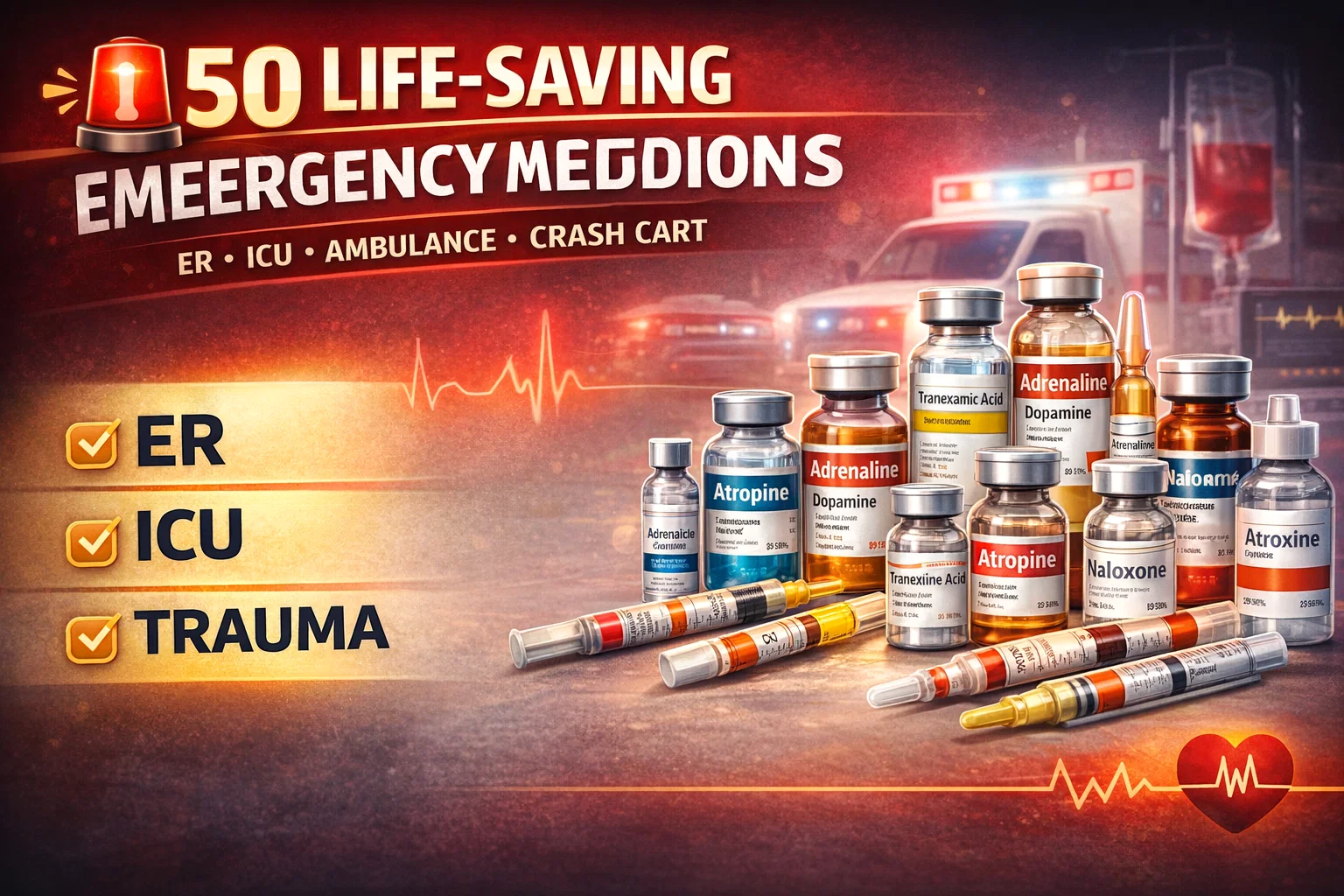
50 Life-Saving Emergency Medications Essential Crash Cart ICU Drug Guide
In the high-stakes environment of emergency medicine, critical care, and ambulance services, seconds truly count. When a patient arrives in cardiac arrest, enters respiratory failure, or suffers from severe trauma, clinicians do not have the luxury of time to search through textbooks. They rely on their training, their team, and the specialized contents of the crash cart. Understanding the pharmacology behind these life-saving medications is not just a requirement for passing board exams; it is a fundamental pillar of patient safety and effective intervention.
This guide dives into the essential medications that every healthcare professional working in acute care settings should be intimately familiar with. While this information is designed for educational awareness, it serves as a powerful reminder of how pharmacology dictates the course of critical care treatment. Always remember that these medications are potent tools that require precise dosing and must be administered strictly under medical supervision.
The Critical Role of Crash Cart Pharmacology
A crash cart is more than just a drawer filled with vials and syringes. It is a highly organized, standardized toolkit that allows a multidisciplinary team to act with lightning speed. The drugs housed within these carts are selected for their rapid onset and ability to stabilize life-threatening physiological instability. From managing lethal heart rhythms to reversing severe allergic reactions, these agents are the front line of defense in the ICU and ER.
Categories of Emergency Interventions
To master these drugs, it helps to categorize them by the type of emergency they are designed to treat. By grouping medications based on their physiological impact, you can better understand why specific agents are chosen during a resuscitation attempt.
Cardiac Arrest and Arrhythmias
When the heart stops or develops a life-threatening rhythm, the primary goal is to restore perfusion. Drugs like Epinephrine serve as the cornerstone of cardiac arrest protocols, working to increase coronary perfusion pressure. Other agents, such as Amiodarone and Lidocaine, are essential for correcting ventricular arrhythmias that prevent the heart from pumping effectively. Atropine is often utilized for symptomatic bradycardia, providing a critical boost to heart rate.
Managing Shock and Hypotension
Hypotension is a dangerous state where tissues are not receiving adequate blood flow. Vasopressors and inotropes are the workhorses here. Noradrenaline is frequently the first-line choice for septic shock, while Dopamine and Dobutamine are adjusted to influence heart rate and contractility based on the patient’s specific hemodynamic profile. Vasopressin and Phenylephrine provide additional options to increase vascular resistance when blood pressure remains stubbornly low.
Respiratory Emergencies
Airway stability is paramount. In situations like acute asthma exacerbations or anaphylaxis, medications that open the airways are vital. Salbutamol is a fast-acting bronchodilator, while Ipratropium often works in synergy to relieve obstruction. For severe inflammation, corticosteroids like Hydrocortisone and Dexamethasone are essential. In cases of opioid overdose, Naloxone acts as an immediate, life-saving antidote to reverse respiratory depression.
Addressing Trauma, Sepsis, and Overdose
The management of trauma requires a different set of priorities, focusing on hemorrhage control and volume replacement. Tranexamic Acid (TXA) is critical for stabilizing clots in bleeding patients. When dealing with sepsis, the prompt administration of broad-spectrum antibiotics like Meropenem or Ceftriaxone is a race against time. Furthermore, toxicology units rely on specialized antidotes such as N-acetylcysteine for acetaminophen toxicity or Activated Charcoal for specific ingestions to limit systemic absorption.
Core Principles for Healthcare Professionals
While having the right drug at the right time is important, it is the underlying knowledge that ensures patient safety. Healthcare providers must remain vigilant about several key factors:
- Dosing Precision: In emergencies, pediatric and adult dosing differ significantly. Always double-check calculations.
- Contraindications: A drug that saves one patient might be harmful to another with specific comorbidities or allergies.
- Compatibility: Not all drugs can be administered through the same IV line simultaneously. Understanding Y-site compatibility is vital.
- Continuous Monitoring: The administration of any emergency medication requires vigilant monitoring of vital signs, including heart rate, blood pressure, and oxygen saturation.
The Importance of Ongoing Education
Pharmacology is a dynamic field, and protocols frequently change based on the latest clinical research. Regularly reviewing these medications is not just about memorization; it is about building the mental reflexes required in high-stress scenarios. Whether you are a student preparing for clinical rotations or a seasoned ICU nurse staying updated on the latest standards, consistency is key.
Tools like the one outlined here act as excellent refreshers, but they should be used in conjunction with your facility’s specific protocols and formularies. Familiarity with the physical layout of your department’s crash cart can save precious seconds when a crisis occurs.
Conclusion
The ability to respond effectively in an emergency is a skill refined through preparation and study. By understanding the core medications used to combat cardiac arrest, shock, respiratory failure, and trauma, you are positioning yourself to be a more effective, confident, and reliable member of the healthcare team. Keep learning, keep practicing, and always maintain a focus on the patient at the center of these interventions. Your dedication to understanding these critical tools is exactly what makes the difference between tragedy and recovery.