Chalazion vs Stye Hordeolum Symptoms, Causes, and Treatment Guide for Eyelid Bumps
Dealing with a sudden, red bump on your eyelid can be both frustrating and a bit alarming. You wake up, look in the mirror, and notice a swelling that wasn’t there the night before. Your first instinct might be to panic or try to squeeze it like a blemish, but when it comes to your eyes, precision and knowledge are your best friends. Understanding the specific nature of these eyelid lumps is the secret to fast healing and avoiding unnecessary discomfort.
The two most common culprits behind these ocular nuisances are the chalazion and the hordeolum, more commonly known as a stye. While they might look remarkably similar to the untrained eye, they are fundamentally different in their origin, their symptoms, and how they should be treated. In this comprehensive guide, we are going to dive deep into the world of eyelid health to help you identify exactly what is happening with your skin and how to get your eyes back to feeling their best.
Decoding the Eyelid Bump: What is a Chalazion?
A chalazion is essentially a structural issue within the eyelid. Inside your upper and lower lids, you have tiny glands called Meibomian glands. These glands are responsible for producing a specific type of oil that coats the surface of your eyes, preventing your tears from evaporating too quickly. This keeps your eyes lubricated and comfortable throughout the day.
A chalazion occurs when one of these oil glands becomes blocked. Think of it like a tiny biological traffic jam. The oil continues to be produced but has nowhere to go, causing it to back up and form a firm, rubbery lump within the eyelid tissue. Because this is a mechanical blockage rather than an active bacterial invasion, a chalazion is typically non-infectious. This is a crucial distinction because it dictates the type of care required.
Recognizing the Symptoms of a Chalazion
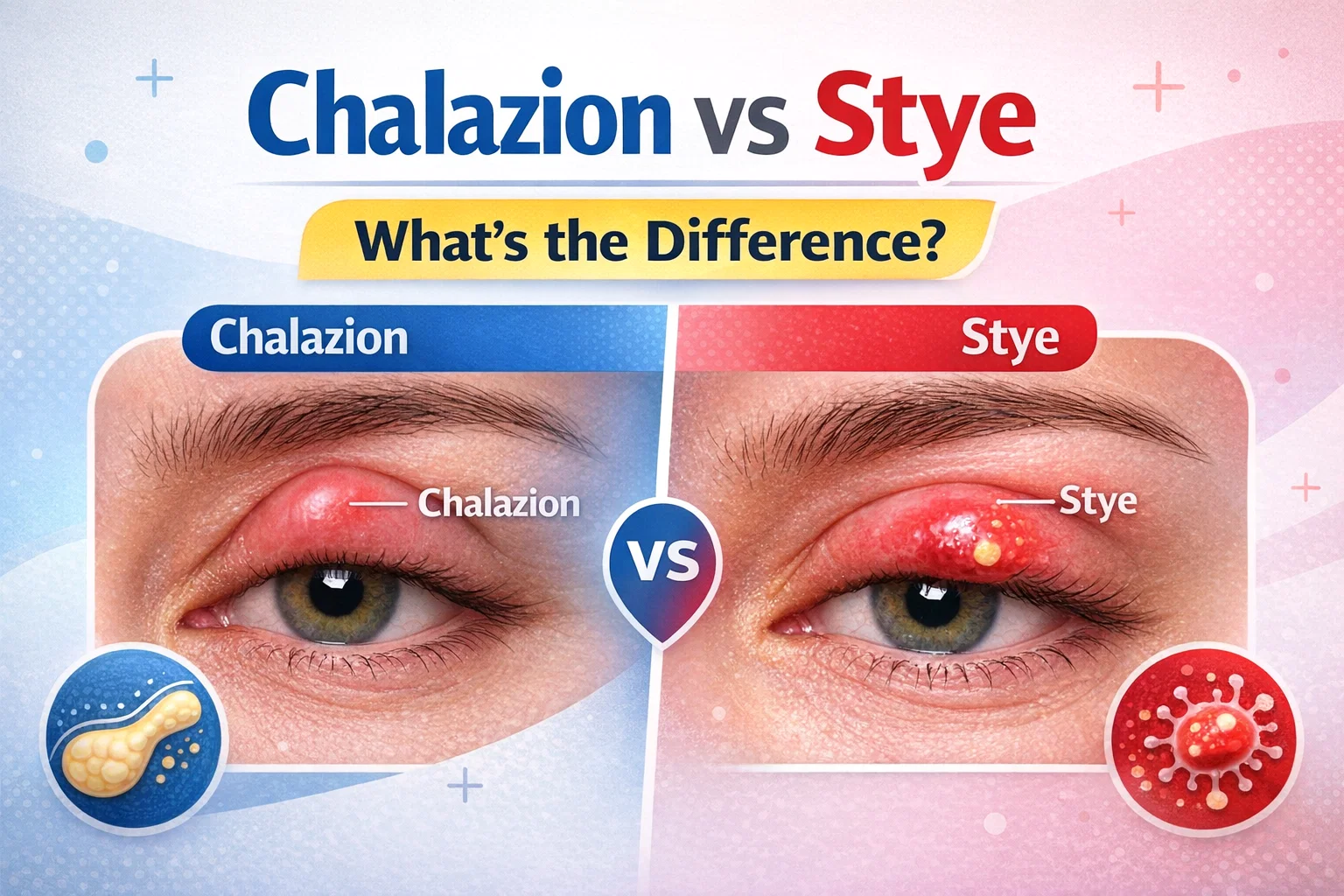
One of the most defining characteristics of a chalazion is its lack of pain. While the swelling might look dramatic and feel heavy, it usually does not hurt when you touch it. You might notice a gradual onset where the lump grows slowly over several days or even weeks. The redness associated with a chalazion is generally minimal, often confined to the area immediately surrounding the bump. If the chalazion grows large enough, it might even press against your eyeball, causing slightly blurred vision, but the primary sensation is one of fullness or a “heavy” eyelid rather than acute distress.
The Angry Intruder: Understanding the Stye (Hordeolum)
In contrast to the slow-developing chalazion, a stye or hordeolum is an acute bacterial infection. It usually involves the oil glands of the eyelid or the hair follicles of the eyelashes. Most styes are caused by Staphylococcus bacteria, which are common skin bacteria that occasionally find their way into a gland or follicle where they do not belong. Unlike the blockage-based chalazion, a stye is a localized battle between your immune system and an invading pathogen.
Styes come in two varieties: internal and external. An external stye starts at the base of your eyelash and looks much like a common pimple. An internal stye occurs inside the eyelid and is often more uncomfortable because of the pressure it exerts against the eye. Regardless of the type, a stye is an active infection that requires a different approach to management than a simple blockage.
How to Identify an Active Stye
The hallmark of a stye is pain. If the bump on your eyelid is tender to the touch or causes a stinging, throbbing sensation, you are likely dealing with a hordeolum. The onset is usually sudden, appearing almost overnight. You will often see marked redness, significant swelling, and a visible head or “point” of pus, similar to a whitehead on a pimple. Because it is an infection, the area may feel warm, and your eye might feel gritty or as if something is stuck inside it. Watery eyes and sensitivity to light are also common side effects of the inflammation caused by a stye.
Key Differences at a Glance
Distinguishing between these two conditions is vital for proper self-care. Let us look at the primary points of differentiation that can help you self-diagnose before consulting a professional.
- Pain Levels: A stye is painful and tender, while a chalazion is generally painless.
- Speed of Development: Styes appear suddenly, whereas chalazia develop slowly over time.
- Visual Appearance: A stye looks red and often contains pus. A chalazion appears as a firm, skin-colored or slightly pink, rubbery lump.
- Infection Status: A stye is an active bacterial infection. A chalazion is a non-infectious blockage of an oil gland.
- Discharge: You might see crusting or pus with a stye, but a chalazion usually involves no discharge at all.
Effective Home Treatments for Eyelid Bumps
The good news is that both conditions often respond well to conservative home care, especially if you catch them early. The primary goal of home treatment is to encourage the blockage to clear or the infection to drain naturally. However, the golden rule of eyelid care is to never, ever pop or squeeze a bump on your eye. This can spread infection deeper into the lid or even lead to a serious condition called cellulitis.
The Power of the Warm Compress
The single most effective tool in your arsenal is the warm compress. For a chalazion, the heat helps to soften the hardened oil within the Meibomian gland, allowing it to flow out and clear the blockage. For a stye, the heat increases blood flow to the area, helping your immune system fight the infection and encouraging the stye to come to a head and drain on its own.
To apply a compress correctly, soak a clean washcloth in warm water. It should be hot enough to be effective but not so hot that it burns the delicate skin of your eyelid. Place the cloth over your closed eye for 10 to 15 minutes, three to four times a day. As the cloth cools, re-soak it to maintain the temperature. Consistency is key here; doing this once a day is rarely enough to see significant progress.
Practicing Superior Lid Hygiene
Keeping the area clean is essential, especially when dealing with the bacterial nature of a stye. Use a gentle, tear-free baby shampoo or a specialized eyelid cleanser to wash your lashes and the edge of your eyelids. This removes crusting and prevents further bacterial buildup. If you wear makeup, it is time to take a break. Continued use of mascara or eyeliner can trap bacteria and worsen the blockage or infection. Furthermore, you should discard any eye makeup you were using when the bump appeared to avoid re-infecting yourself later.
When to Seek Professional Medical Advice
While home remedies are effective for many, there are times when medical intervention is absolutely necessary. If you notice that the swelling is spreading to your cheek or other parts of your face, this is a sign that the infection may be spreading. Severe pain, a significant change in your vision, or a bump that does not show signs of improvement after a week of consistent warm compresses are all red flags.
An eye doctor can provide several professional treatments. For a persistent stye, they may prescribe antibiotic eye drops or ointments to clear the infection. In some cases, a doctor might perform a minor procedure to incise and drain the stye in a sterile environment. For a stubborn chalazion that refuses to budge, a steroid injection can help reduce inflammation, or a simple surgical removal can be performed if the lump is affecting your vision or causing long-term cosmetic concerns.
Can a Stye Turn Into a Chalazion?
It is actually quite common for one to lead to the other. An internal stye that is caused by an infection in the Meibomian gland can eventually settle down. However, even after the bacterial infection is gone, the gland might remain blocked by inflammatory debris. When this happens, the painful, red stye transforms into a painless, firm chalazion. If you notice your painful bump has become a hard, painless lump, you have likely experienced this transition.
Prevention Strategies for Clearer Eyes
Preventing these issues is much easier than treating them. If you are prone to eyelid bumps, incorporating a few simple habits into your daily routine can make a world of difference. First and foremost, avoid touching your eyes throughout the day. Our hands carry a multitude of bacteria, and rubbing your eyes is an easy way to transplant those bacteria into your eyelid glands.
If you wear contact lenses, ensure your hygiene is impeccable. Wash your hands thoroughly before handling your lenses and follow the recommended cleaning and replacement schedule. For those who wear makeup, always remove every trace of eye cosmetics before going to sleep. Leaving makeup on overnight is a leading cause of blocked glands. Finally, if you have a condition like blepharitis or dry eye, managing those underlying issues with the help of your optometrist will significantly reduce the likelihood of developing a chalazion or stye.
Conclusion: Taking Control of Your Eyelid Health
While finding a bump on your eyelid can be an annoying interruption to your week, having the knowledge to identify it changes everything. By recognizing the difference between the painless, gradual chalazion and the tender, sudden stye, you can tailor your approach to get the best results. Remember that patience and heat are your best tools. Give your body the time it needs to heal, keep the area clean, and do not hesitate to reach out to a professional if things do not seem to be heading in the right direction.
Your eyes are your windows to the world, and keeping the “shutters” healthy is a vital part of your overall well-being. By practicing good lid hygiene and responding quickly to the first signs of swelling, you can ensure that your eyes stay bright, comfortable, and clear. Whether it is a simple blockage or a minor infection, you now have the roadmap to navigate your way back to ocular health with confidence.