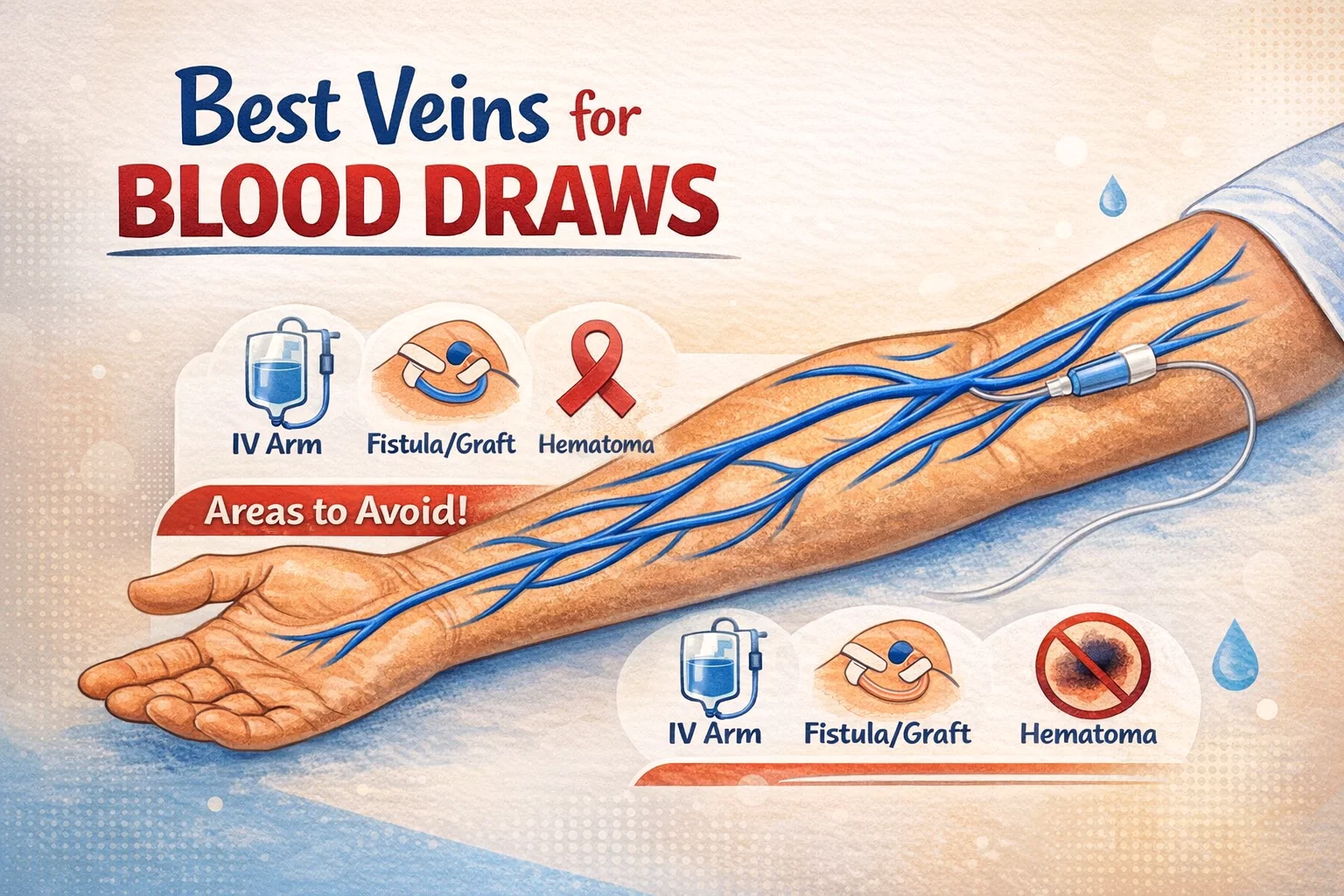
Phlebotomy Guide Best Veins for Blood Draws Areas to Avoid Infographic
Understanding the anatomy of the arm and the specific characteristics of various veins is a fundamental skill for any healthcare professional involved in venipuncture. Whether you are a nursing student just starting your clinical rotations or an experienced phlebotomist looking to refine your technique, identifying the right site for a blood draw is both an art and a science. The goal is always to maximize efficiency while minimizing patient discomfort and risk. By mastering the selection process, you ensure a higher success rate on the first attempt, which builds patient trust and streamlines clinical workflows.
The Anatomy of the Arm: Why Vein Selection Matters
Before reaching for the needle, it is crucial to understand the layout of the antecubital fossa and the dorsal aspect of the hand. The veins in these areas are preferred because they are generally accessible and large enough to accommodate various gauge needles. However, not all veins are created equal. Some are prone to rolling, some are buried deep beneath layers of tissue, and others sit dangerously close to nerves and arteries. Proper selection is the first step in preventing complications like hematomas, nerve injury, or accidental arterial puncture.
The Golden Standard: The Median Cubital Vein
If there is a superstar in the world of phlebotomy, it is undoubtedly the median cubital vein. Located in the center of the antecubital fossa (the crook of the elbow), this vein is the first choice for the majority of blood draws. Its popularity among practitioners is well earned for several reasons. First, it is typically the largest and most stable vein in the arm. Because it is well anchored by surrounding tissues, it is much less likely to “roll” away when the needle makes contact.
From the patient’s perspective, the median cubital is also the most desirable option. Because it sits in an area with fewer sensitive nerve endings compared to the inner or outer arm, it is generally the least painful site for a needle stick. For practitioners, its visibility and palpable depth make it a reliable target even in patients with difficult venous access. When you find a healthy median cubital vein, you are usually looking at a straightforward, successful procedure.
Exploring Secondary Options: The Cephalic Vein
In cases where the median cubital is not accessible or has been used recently, the cephalic vein serves as an excellent second choice. This vein runs along the lateral side (the thumb side) of the arm. While it is often quite large and easy to see, it does come with its own set of challenges that require a bit more finesse.
Managing the Lateral Approach
The cephalic vein is known for being slightly more prone to rolling than the median cubital. Because it sits on the outer edge of the arm, it is not always as tightly anchored by connective tissue. To successfully draw from the cephalic vein, a phlebotomist must use proper anchoring techniques, pulling the skin taut below the insertion site to keep the vein in place. Despite this tendency to move, it remains a highly viable option for both blood draws and IV starts because of its size and relative distance from major arteries.
Proceed with Caution: The Basilic Vein
On the medial side (the pinky side) of the arm lies the basilic vein. While it often looks tempting because it can appear large and prominent, it is considered a site that should be used with significant caution. Professional guidelines often suggest only attempting a draw from the basilic vein if the median cubital and cephalic options have been exhausted.
The Risks of Medial Venipuncture
The primary reason for the “caution” label on the basilic vein is its proximity to vital structures. It sits very close to the brachial artery and the median nerve. An accidental puncture of the artery can lead to rapid hematoma formation and requires immediate, prolonged pressure to control bleeding. Furthermore, hitting a nerve can cause the patient intense, shooting pain and potential long term damage. When using the basilic vein, it is imperative to palpate carefully to ensure you are not feeling a pulse, which would indicate an artery, and to maintain a shallow angle of entry.
Alternative Sites: Using the Dorsal Hand Veins
When the antecubital area is not an option due to scarring, recent draws, or specific patient conditions, the back of the hand offers a network of dorsal veins. These are often used as a last resort for blood draws but are common for IV fluid administration. While they are highly visible, they require a different approach and a higher level of patient communication.
The Sensitivity of Hand Draws
Drawing blood from the hand is notoriously more painful than drawing from the arm. The skin on the back of the hand is thin and packed with sensory nerves. Additionally, hand veins are smaller and have a high tendency to collapse under the pressure of a standard vacuum tube. For this reason, many professionals prefer using a “butterfly” needle (winged infusion set) with a smaller gauge and a syringe to manually control the pressure. This helps prevent the vein from “blowing” or collapsing during the procedure.
Critical Zones to Avoid: When to Say No
Part of being a skilled phlebotomist is knowing when NOT to draw blood from a specific area. Safety always comes first, and drawing from a compromised site can lead to inaccurate lab results or serious injury to the patient. Here are the most common areas that should be strictly avoided:
- The IV Arm: You should never draw blood from an arm that has an active IV infusion running. The fluids or medications being infused can dilute the blood sample, leading to dangerously inaccurate laboratory values. If no other site is available, the IV must be turned off by a nurse for a specific period, and the draw should occur below the IV site, though this is generally discouraged.
- Fistulas and Grafts: Patients undergoing dialysis often have a surgically created fistula or graft in their arm. You must never perform venipuncture or even take a blood pressure reading on this arm. These sites are a patient’s lifeline for treatment, and any damage to them can be catastrophic.
- Mastectomy Side: If a patient has had a mastectomy, especially one involving the removal of lymph nodes, blood draws should be avoided on that side. The lack of proper lymphatic drainage increases the risk of lymphedema and infection (cellulitis) in that limb.
- Hematomas and Scars: Drawing through a bruise (hematoma) can lead to sample contamination with old blood and is painful for the patient. Similarly, scarred or “sclerosed” veins from frequent use can be hard to penetrate and may not provide adequate blood flow.
Tips for Identifying a Good Vein
Finding a vein is not just about looking; it is about feeling. In the medical world, we call this palpation. A good vein should feel “bouncy” or “spongy” under your fingertip. It should have a certain resilience when pressed. If a vessel has a pulse, it is an artery, and you must stay away. If it feels hard or cord like, it is likely a sclerosed vein that will not yield a good sample.
Hydration and Warmth
If you are struggling to find a vein, there are a few tricks of the trade to help. Asking the patient to drink plenty of water before their appointment can significantly improve vein prominence. In the clinical setting, applying a warm compress to the area for a few minutes can cause vasodilation, making the veins larger and easier to hit. You can also allow the arm to hang below the level of the heart for a short time to let gravity help fill the vessels.
The Importance of Proper Anchoring
Even the best vein can result in a failed draw if it is not properly anchored. As we age, our skin loses elasticity, and veins become more “mobile.” By placing your thumb a few inches below the intended insertion site and pulling the skin taut toward the hand, you create a stable “track” for the needle. This prevents the vein from sliding to the side when the needle makes contact with the vessel wall.
Conclusion: Building Confidence in Venipuncture
Mastering blood draws is a journey that combines technical knowledge with tactile experience. By prioritizing the median cubital vein, being mindful of the risks associated with the basilic vein, and respecting the “do not draw” zones, you ensure the highest standard of patient care. Every patient is unique, and sometimes you will encounter difficult “sticks” that test your patience. However, by sticking to these anatomical principles and maintaining a calm, professional approach, you will find that your success rate and your patients’ comfort levels will improve significantly. Remember to always communicate with your patient, explain the process, and never hesitate to ask for a second opinion if a vein seems particularly challenging. Success in phlebotomy is as much about safety and preparation as it is about the needle itself.