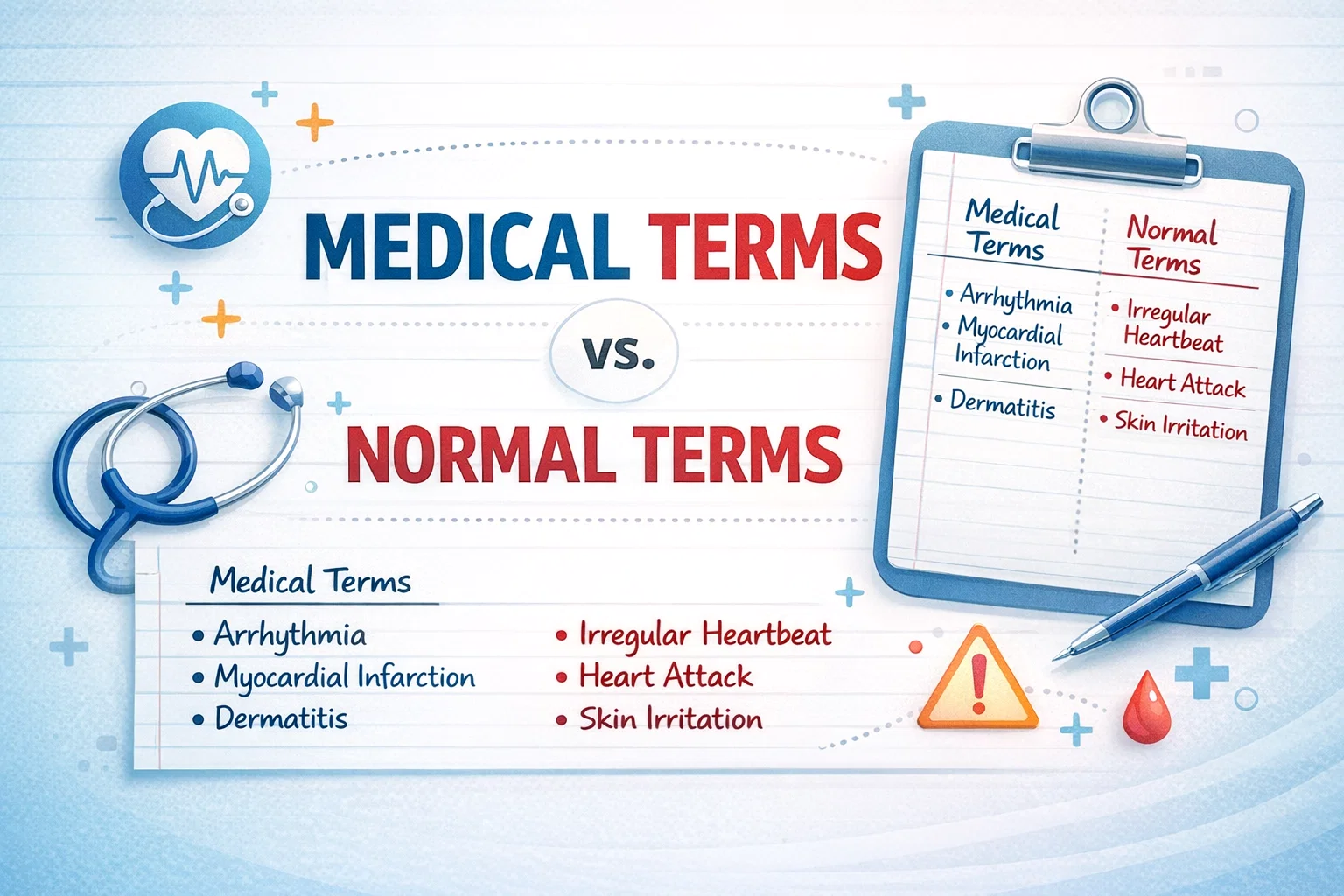
Medical Terms vs. Normal Terms A Quick Healthcare Vocabulary Cheat Sheet
Have you ever sat in a doctor’s office, listening intently while they rattled off a diagnosis, only to walk out to your car and realize you have absolutely no idea what they just said? You are certainly not alone. The healthcare world is filled with complex Latin and Greek-based terminology that acts like a secret code, often leaving patients feeling intimidated, confused, and disconnected from their own health journeys. Bridging that gap between professional medical jargon and the language we use in our daily lives is a vital step toward becoming a proactive, empowered patient.
Whether you are a student just starting your journey into the healthcare field, a caregiver managing a loved one’s health, or simply someone who wants to understand their own medical records better, having a clear translation of common terms is invaluable. This post breaks down some of the most common medical terms you might encounter, helping you navigate your next appointment with confidence and clarity.
Why Understanding Medical Terminology Matters
Communication is the cornerstone of effective healthcare. When there is a mismatch in vocabulary between a healthcare provider and a patient, it can lead to anxiety, misunderstanding of treatment plans, or even mistakes in following medical instructions. By learning the “normal” English equivalents for these technical terms, you gain a sense of agency.
Knowledge is, without a doubt, the best form of preventative care. When you understand the language, you can ask better questions, research your conditions with more precision, and feel more prepared when discussing your health. It shifts the dynamic from simply receiving information to actively participating in your own care team.
Breaking Down Common Healthcare Vocabulary
To help you get started, we have categorized a few areas of common terminology that you are likely to come across in everyday life. Understanding these prefixes, suffixes, and root words is a great way to decode other complex terms you might see in the future.
Cardiovascular and Heart Health
Conditions related to the heart and blood vessels are incredibly common, but the terms used to describe them can be overwhelming. For example, Angina is the medical term for chest pain, usually caused by reduced blood flow to the heart muscle. When you see a term like Atherosclerosis, it refers to the narrowing or blocking of arteries due to the buildup of plaque. Understanding these allows you to better grasp the importance of lifestyle changes such as diet and exercise.
Inflammatory and Infectious Conditions
Many medical terms ending in “-itis” simply refer to inflammation of a specific body part. For instance, Gastritis is inflammation of the stomach lining, while Pancreatitis indicates inflammation of the pancreas. Bronchitis is a common term for inflammation in the tubes that carry air to your lungs, which we often describe as a chest infection. Recognizing that the “-itis” suffix always points to inflammation can help you decipher dozens of other conditions immediately.
Neurological and Sensory Health
Terms like Encephalitis can sound scary, but it essentially means an infection of the brain. On the more common end of the spectrum, Conjunctivitis is the technical term for pink eye. These conditions affect our sensory systems, and knowing the standard terminology can help you act quickly when symptoms appear, ensuring you get the right care at the right time.
Tips for Better Communication with Your Doctor
Language is just one part of the puzzle. How you engage during your visit is equally important. Use these tips to bridge the communication gap:
- Write it down: Never hesitate to ask your doctor to write down the name of a condition or medication if you don’t recognize it.
- Don’t be afraid to ask for a “plain English” explanation: If a doctor uses a word you don’t know, it is perfectly acceptable to ask, “Could you explain what that means in simpler terms?”
- Bring a buddy: Sometimes, having a friend or family member in the room can help you remember details or hear explanations that you might miss while feeling overwhelmed.
- Verify with reliable sources: After your appointment, look up the terms in reputable, patient-focused health portals rather than relying solely on general internet searches.
Empowerment Through Education
The goal of understanding medical terminology is not for you to replace your doctor, but to foster a partnership. When you take the time to learn these concepts, you are demonstrating a commitment to your health that allows for more collaborative decision-making. It turns the doctor-patient relationship into a team effort.
Remember that every healthcare professional started exactly where you are, learning these terms for the first time. It is a language, and like any language, it takes practice and exposure to become fluent. Do not feel discouraged if you don’t memorize everything at once. Focus on the terms most relevant to your life and build your knowledge base gradually.
Conclusion
Navigating the healthcare system is rarely easy, but it becomes much more manageable when you have the right tools in your pocket. By demystifying medical jargon and translating it into plain, understandable terms, you take a massive step toward greater health literacy and personal empowerment. Whether you are dealing with a new diagnosis or just looking to improve your overall understanding of how your body functions, this foundation will serve you well for years to come.
Keep educating yourself, keep asking questions, and remember that you are the most important member of your own healthcare team. Knowledge is power, and when it comes to your health, that power is exactly what you need to live your best life.
Would you like me to create a printable PDF summary of these terms that you can keep in your medical folder for future reference?