Best Lymphatic Drainage Foods Lymph-Supporting vs Lymph-Blocking Diet
Have you ever woken up feeling unusually puffy, sluggish, or just a bit weighed down? While we often focus on heart health or gut health, there is a silent hero working behind the scenes that dictates how we feel from the inside out: the lymphatic system. This complex network of vessels and nodes acts as the body’s primary drainage system, filtering out waste and keeping our immune function sharp. However, when this system gets “clogged” due to poor dietary choices, the results show up on our skin, in our energy levels, and even in our clothes. Understanding the direct link between what we eat and how our lymph flows is the first step toward a total body reset.
The Vital Role of the Lymphatic System
Before diving into the specific foods that can make or break your health, it is important to understand what the lymphatic system actually does. Unlike the circulatory system, which has the heart to pump blood, the lymphatic system does not have its own pump. It relies on movement, breathing, and most importantly, the chemistry of the food we consume to stay fluid and functional. When the lymph is flowing well, it carries toxins away from your cells and delivers oxygen-rich nutrients where they are needed most.
When this process is interrupted, we experience what is known as lymphatic congestion. This can manifest as brain fog, chronic fatigue, digestive issues, and visible swelling in the face and limbs. By choosing lymph-supporting foods, you are essentially giving your body the tools it needs to perform its natural daily detox without the need for restrictive or harsh cleanses.
Top Lymph-Supporting Foods to Add to Your Plate
Transitioning to a diet that favors lymphatic drainage does not mean you have to sacrifice flavor. In fact, some of the most powerful foods for your lymph are also some of the most vibrant and delicious options available in nature. These foods work by reducing inflammation and providing the specific vitamins required for cellular repair.
The Power of Citrus and Lemon
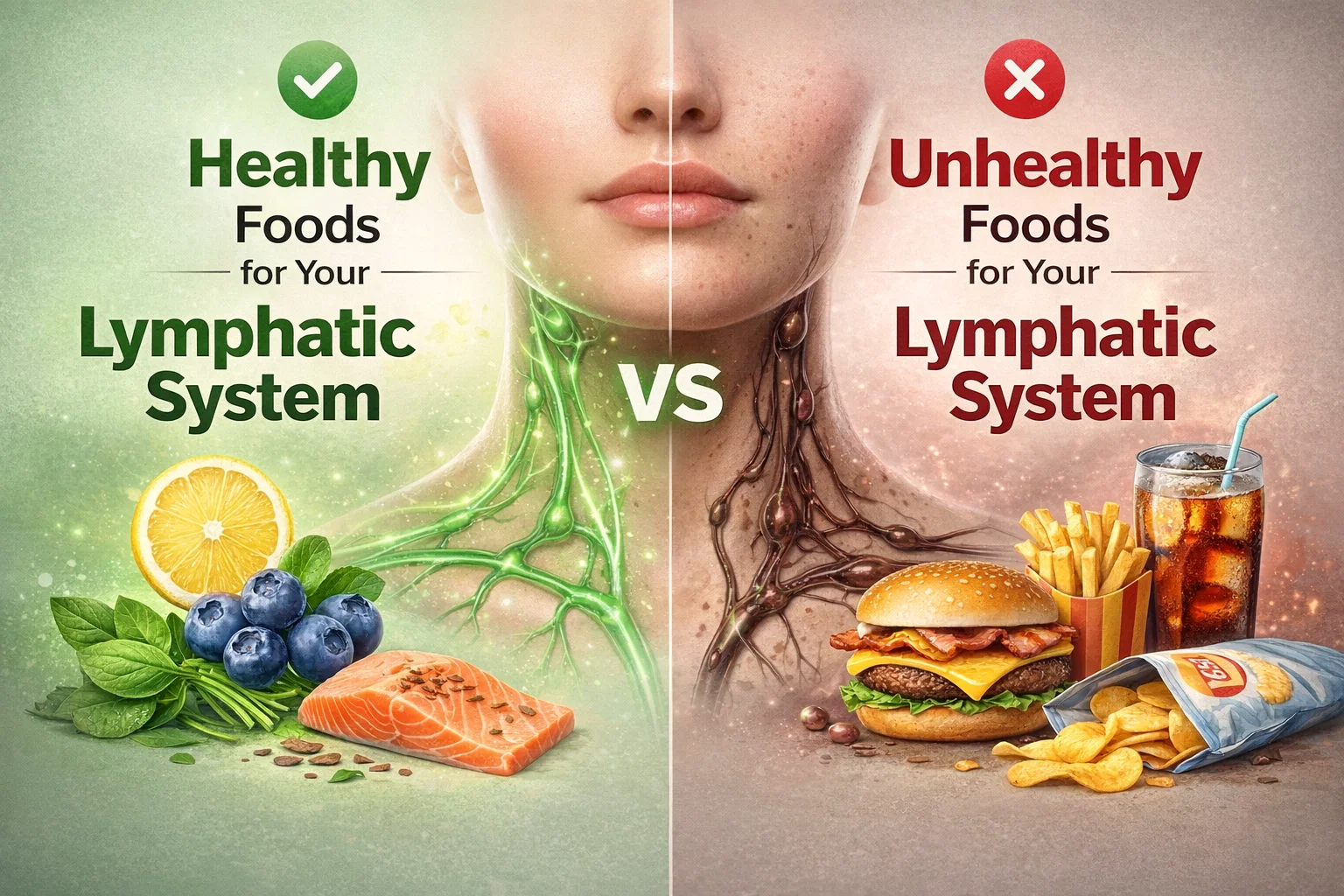
Starting your day with a simple slice of lemon in warm water is one of the oldest and most effective wellness rituals. Lemons are rich in Vitamin C, which is a cornerstone for immune function. Beyond that, the acidic nature of citrus actually has an alkalizing effect on the body once metabolized. This helps to thin the lymph fluid, making it easier for the body to transport waste products through the nodes and out of the system.
Antioxidant-Rich Blueberries
Blueberries are often called a superfood for a reason. They are packed with anthocyanins, which are potent antioxidants that give the berries their deep blue color. These compounds are incredible at reducing systemic inflammation. Since inflammation is one of the primary causes of “thick” or stagnant lymph, eating a handful of blueberries daily can help keep your internal drainage pipes clear and functioning at peak capacity.
Leafy Greens and Chlorophyll
Fresh leafy greens like spinach, kale, and even herbs like mint are the ultimate lymphatic fuel. These plants are rich in chlorophyll, the pigment that allows plants to turn sunlight into energy. In the human body, chlorophyll helps to purify the blood and support healthy lymph flow. It acts as a natural deodorizer and internal cleanser, ensuring that your fluid balance remains optimal throughout the day.
Essential Omega-3 Fatty Acids
Healthy fats are non-negotiable for a healthy body. Salmon and flax seeds are excellent sources of Omega-3 fatty acids, which are famous for their anti-inflammatory properties. These healthy fats help to lubricate the cellular membranes and ensure that the lymphatic vessels remain flexible. This prevents the “brittleness” that can sometimes occur in the vascular system, allowing for a smoother flow of nutrients and waste.
The Hidden Dangers: Lymph-Blocking Foods to Avoid
On the flip side of the coin, there are several common dietary staples that act like a “stop sign” for your lymphatic system. These foods contribute to inflammation, cause the body to retain excess fluid, and ultimately lead to that heavy, congested feeling that many of us struggle with daily.
Sugary Sodas and Cold Drinks
Processed sugar is perhaps the biggest enemy of a healthy immune system. When you consume sugary sodas or heavily sweetened cold drinks, your blood sugar spikes, triggering an inflammatory response. High sugar intake makes the lymph fluid more viscous and difficult to move. This congestion often leads to skin breakouts and a general feeling of lethargy as the body struggles to process the sudden chemical load.
Fast Food Burgers and Trans Fats
We all know that fast food is not great for the waistline, but its impact on the lymph is even more concerning. Burgers and fries are typically loaded with trans fats and excessive amounts of sodium. Trans fats are difficult for the body to break down and can actually damage the lining of the lymphatic vessels. Meanwhile, the high salt content causes the body to hold onto water, leading to the dreaded “salt bloat” and stagnant fluid retention.
Processed Meat Slices
Deli meats, sausages, and processed ham are often hidden sources of lymphatic stress. These products are filled with additives, nitrates, and preservatives designed to extend shelf life. Unfortunately, these chemicals are recognized as foreign invaders by your immune system. Your lymph nodes have to work overtime to filter these preservatives out of your bloodstream, which can lead to swollen nodes and a compromised immune response over time.
Potato Chips and Excess Salt
Snack foods like potato chips are a double threat. Not only are they often fried in unhealthy oils that promote inflammation, but the concentrated salt levels pull water out of your cells and into the interstitial spaces. This is the primary cause of fluid retention. If you notice that your rings feel tight or your ankles look swollen after a salty snack, your lymphatic system is sending you a clear signal that it is struggling to keep up.
How to Transition Your Diet for Better Flow
Making the switch from a lymph-blocking diet to a lymph-supporting one does not have to happen overnight. The best approach is one of “crowding out.” Instead of focusing on what you cannot have, focus on adding more of the good stuff. For every “blocking” food you remove, try to add two “supporting” foods.
- Swap Your Soda: Replace sugary drinks with sparkling water and a squeeze of fresh lime or lemon.
- Upgrade Your Snacks: Instead of reaching for a bag of chips, try a bowl of fresh blueberries or some flax seed crackers.
- Choose Whole Proteins: Move away from processed deli meats and opt for grilled salmon or plant-based proteins that are rich in healthy fats.
- Go Green: Aim to include at least one serving of dark leafy greens with every meal to keep the chlorophyll levels high.
The Connection Between Lymph and Skin Health
One of the most immediate benefits people notice when they change their diet to support the lymphatic system is a clearer complexion. Since the lymph is responsible for removing waste, a congested system often results in “toxic backup” that tries to exit through the skin. This can lead to acne, dullness, and premature aging. By eating anti-inflammatory foods, you are cleaning your body from the inside, which naturally results in a healthy, radiant glow on the outside. A “lymphatic diet” is essentially the best skincare routine you can ever invest in.
Conclusion: Small Changes, Big Results
Your health is a reflection of the small choices you make every single day. The lymphatic system is a resilient and hardworking part of your biology, but it needs the right fuel to do its job effectively. By prioritizing lemon, berries, leafy greens, and healthy fats while minimizing processed sugars and salts, you are giving your body the best possible chance to thrive. You will likely find that as your lymph begins to flow more freely, your energy returns, your skin clears up, and that feeling of puffiness becomes a thing of the past. Start today by making just one healthy swap, and your body will surely thank you for it. Remember, wellness is not about perfection; it is about supporting your body natural ability to heal and detoxify through the power of nutrition.