Hand Embroidery Flower Design Tutorial for Beginners DIY Floral Stitching Pattern
Have you ever looked at a plain piece of fabric and felt the sudden urge to transform it into something extraordinary? There is an undeniable magic in the art of hand embroidery. It is a craft that bridges the gap between ancient tradition and modern self expression. When you look at the intricate petals of a hand stitched flower, you are not just seeing thread on cloth; you are seeing hours of patience, a steady hand, and a creative soul at work. In today’s fast paced digital world, taking the time to slow down and pull a needle through fabric is more than just a hobby. It is a form of meditation that leaves you with a tangible, beautiful piece of art.
The Resurgence of Hand Embroidery in Modern DIY Culture
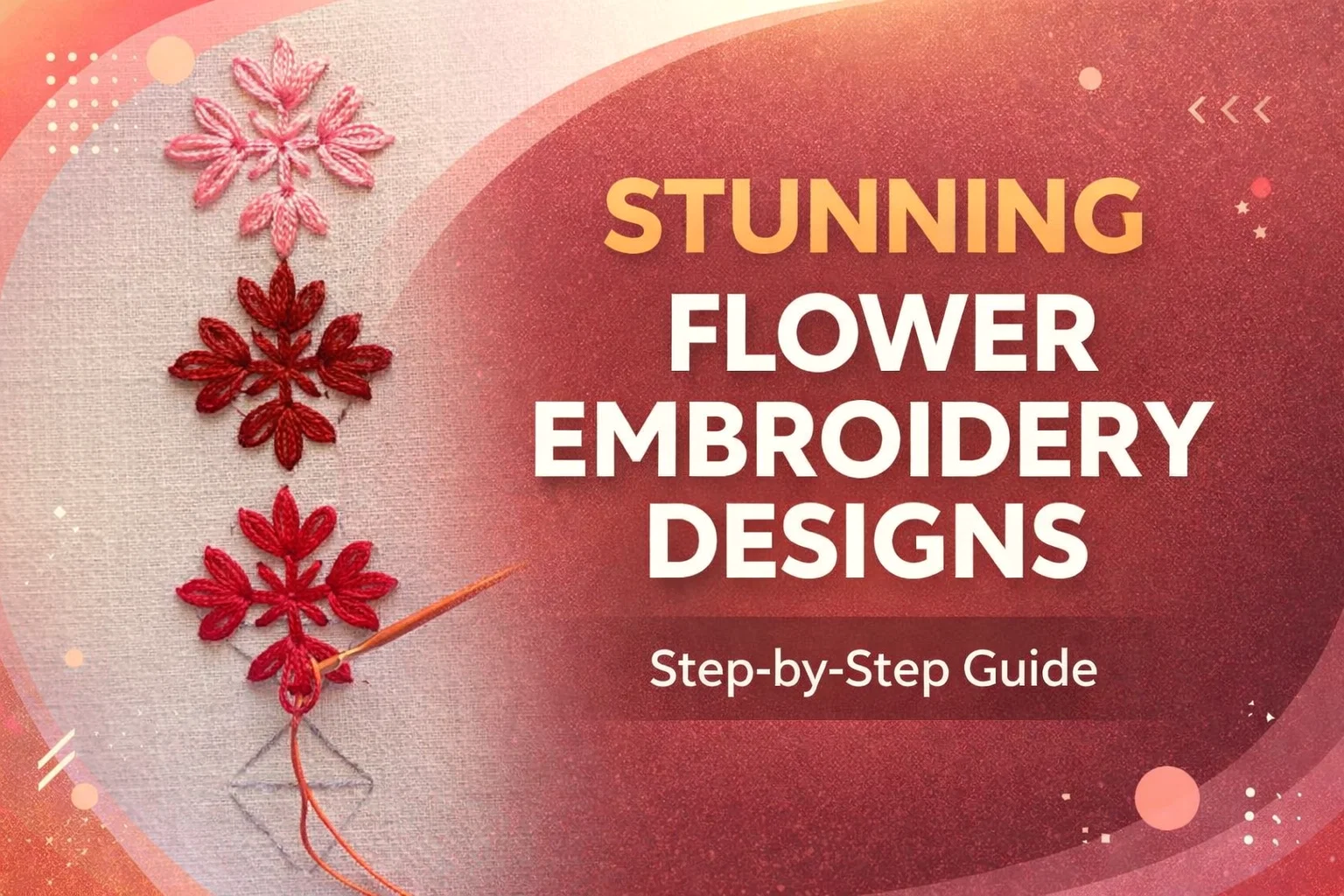
In recent years, we have witnessed a massive revival in textile arts. What was once seen as a Victorian pastime has become a staple of contemporary DIY fashion and home decor. People are moving away from mass produced items and looking for ways to inject personality into their belongings. Hand embroidery offers the perfect solution. Whether you are embellishing a denim jacket, adding a floral touch to a pillowcase, or creating a piece of hoop art to hang on your wall, the possibilities are endless. The image we are looking at today captures the very essence of this craft: the transition from a simple pencil sketch on linen to a vibrant, textured masterpiece.
Why Floral Motifs Remain a Timeless Choice
Flowers have always been the most popular subject in the world of embroidery. Their organic shapes are forgiving for beginners, yet they offer infinite complexity for master stitchers. The symmetrical, star like floral patterns seen in our featured image demonstrate how geometric precision can meet soft, organic aesthetics. By using varying shades of pink, deep burgundy, and bright coral, the artist creates a sense of depth and progression that draws the eye downward. Each stitch acts like a brushstroke, building volume and texture that you simply cannot achieve with a printing machine.
Deconstructing the Stitch: Understanding the Technique
To the untrained eye, embroidery can look intimidating. However, when you break it down, even the most complex designs are built from a few fundamental stitches. In the provided visual, we see a beautiful implementation of what appears to be the Lazy Daisy stitch or a variation of the Satin stitch used to create pointed petals. The beauty of these particular flowers lies in their repetition. By mastering one petal, you unlock the ability to create the entire blossom.
The Importance of Planning and Sketching
If you look closely at the bottom of the image, you will see the “skeleton” of the next flower. This is a crucial step that many beginners try to skip. Drawing your design with a heat erasable pen or a light pencil ensures that your proportions are correct before you commit with the thread. The diamond shape grid serves as a guide, ensuring each petal radiates from the center at the perfect angle. This balance is what gives the finished pieces their professional and polished look.
Choosing Your Materials: The Foundation of Quality Work
The quality of your finished embroidery project depends heavily on the tools you choose. You do not need a massive budget to start, but selecting the right materials will make the process much more enjoyable and the result much more durable.
- Fabric Selection: Notice the natural, slightly textured weave of the fabric in the image. This looks like a high quality linen or a heavy cotton blend. These fabrics are ideal because they have a tight enough weave to support the weight of the thread without puckering.
- The Thread: Embroidery floss comes in various types. For the vibrant, slightly shiny look seen here, a six strand cotton floss is standard. You can vary the thickness of your stitch by choosing how many strands to thread through your needle.
- Needles: An embroidery needle with a sharp point and a large eye is essential. It needs to glide through the fabric without leaving large holes or snagging the fibers.
The Role of Color Theory in Textile Art
One of the most striking aspects of the work in the image is the color progression. Starting with a soft, pale pink at the top, moving to a rich dark maroon, and then into a bright, energetic coral. This is a fantastic example of using a monochromatic or analogous color scheme to create visual interest. When planning your own project, think about the mood you want to evoke. Warm reds and pinks feel passionate and inviting, while blues and greens might feel more serene and botanical.
Step by Step: Bringing Your Embroidery Vision to Life
If you are inspired by the floral patterns in the image and want to try it yourself, here is a general roadmap to get you started on your own stitching journey.
Step 1: Prepare Your Fabric
Start by washing and drying your fabric to prevent any future shrinkage. Once dry, iron it flat. Any wrinkles in the fabric will be trapped once you start stitching, so a smooth surface is vital. Secure your fabric in an embroidery hoop. The goal is to have the fabric “drum tight” so the needle passes through easily without the cloth shifting.
Step 2: Transfer the Pattern
Using the image as inspiration, lightly sketch your geometric floral shapes. You can use a ruler to ensure the diamond guides are even. If you are not confident in your drawing skills, you can find many free templates online and trace them onto your fabric using a window as a light box.
Step 3: The Stitching Process
Begin from the center and work your way out. For the petals shown in the image, you would bring your needle up at the base of the petal and down at the tip, filling in the shape with parallel stitches. Keep your tension consistent. If you pull too hard, the fabric will bunch; if you leave it too loose, the stitches will look messy and might snag later.
The Therapeutic Benefits of Hand Stitching
Beyond the physical creation, hand embroidery is widely recognized for its mental health benefits. It is often referred to as “the new yoga.” The repetitive motion of the needle, the focus required to follow a pattern, and the tactile sensation of the thread all contribute to a flow state. This state of mind helps reduce anxiety and provides a sense of accomplishment. In an era of instant gratification, embroidery teaches us the value of the “slow movement.” It is a hobby where you can see your progress grow millimeter by millimeter, resulting in a deep sense of pride when the final knot is tied.
Creating a Dedicated Creative Space
To truly enjoy the process, try to set up a small corner of your home dedicated to your craft. Good lighting is the most important factor to prevent eye strain. A comfortable chair and a small table to hold your threads and scissors will make your stitching sessions much more relaxing. Many people find that listening to a podcast or soft music while they stitch enhances the experience even further.
Taking Your Skills Further: Beyond the Basic Flower
Once you have mastered the simple floral shapes seen in the image, you can begin to experiment. Perhaps you add small seed beads to the center of your flowers for a bit of sparkle, or you mix different types of thread like silk or wool to create varying textures. Embroidery is a lifelong learning process. There are hundreds of different stitches to explore, from the knotted French knot to the woven spider web rose.
Personalizing Your Wardrobe
One of the most rewarding ways to use these skills is through visible mending or upcycling. If you have a favorite pair of jeans with a small hole, you can stitch a flower like the ones in our image right over the tear. Not only do you save the garment from the landfill, but you also create a one of a kind piece of wearable art that tells a story.
Conclusion: Start Your Stitching Adventure Today
Hand embroidery is a beautiful journey that starts with a single stitch. The image of the pink and red flowers serves as a perfect reminder that with just some thread, a needle, and a bit of guidance, anyone can create something stunning. It is a craft that rewards patience and celebrates individuality. Whether you are looking to create a gift for a loved one, decorate your home, or simply find a way to unwind after a long day, embroidery is an accessible and deeply fulfilling path to take.
Do not worry about being perfect on your first try. The small imperfections in hand stitched items are what give them soul and character. So, grab a hoop, pick out your favorite colors of floss, and start bringing your own floral designs to life. You might be surprised at just how much joy a simple needle and thread can bring into your life. Happy stitching!