Regular Squat vs Yogi Squat Benefits for Strength, Flexibility, and Core Power
Mastering the art of the squat is one of the most transformative steps you can take in your physical wellness journey. Whether you are stepping onto a yoga mat for the first time or power through a high intensity interval training session, understanding the mechanics of how your body moves is essential. The squat is often called the king of exercises, but it is not a one size fits all movement. There are variations that cater to different goals, from building explosive strength to cultivating deep, meditative flexibility.
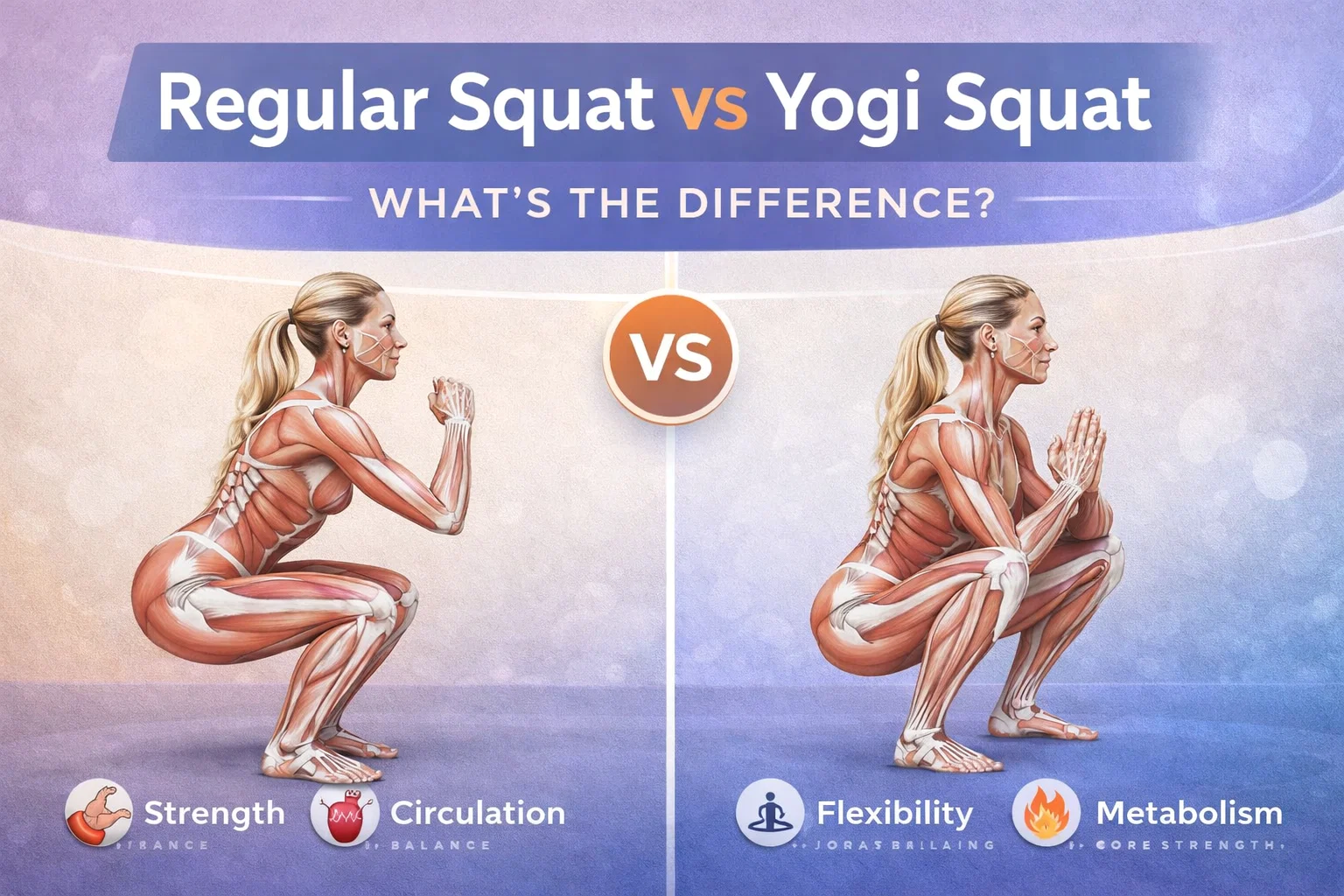
By comparing the regular squat and the yogi squat, also known as Malasana, we can see how a simple shift in depth and intention changes the entire physiological impact on the body. Both movements are fundamental to human mobility, yet they serve unique purposes in a well rounded routine. In this guide, we will dive deep into the specific benefits of each, how to perform them with perfect form, and why incorporating both into your lifestyle can lead to better posture, improved circulation, and a stronger core.
The Power of the Regular Squat for Total Body Strength
The regular squat is a staple in functional fitness for a reason. It mimics one of the most common movements we perform daily: sitting down and standing back up. However, when done with intention and proper alignment, it becomes a powerhouse for metabolic health and muscle toning. The primary focus of a standard squat is to build resilience in the lower body while maintaining a stable, upright torso.
One of the most immediate benefits of the regular squat is its ability to increase overall body strength. Because it engages the largest muscle groups in the body, including the quadriceps, hamstrings, and glutes, it triggers a significant hormonal response that aids in muscle growth and fat loss. Beyond the aesthetic benefits of toning the legs and butt, this movement is a cardiovascular hero. It improves circulation by forcing the heart to pump blood efficiently to the lower extremities and back up again.
Improving Balance and Functional Stability
Balance is a skill that often declines if we do not actively train it. The regular squat requires a high level of coordination between the ankles, knees, and hips. As you lower your center of gravity, your stabilizing muscles must fire rapidly to keep you from tilting forward or backward. This translates directly to better balance in everyday life, reducing the risk of injury as we age. It also targets the abdominal muscles, as your core must remain braced to protect the spine throughout the range of motion.
Transitioning to the Yogi Squat for Mobility and Zen
While the regular squat focuses on power, the yogi squat, or Malasana, is about opening and release. This is a deep, wide legged squat where the hips sink toward the floor, often lower than the knees. In many cultures, this is a natural resting position, but in modern society, we have lost much of the ankle and hip mobility required to hold it comfortably. Reclaiming this pose is a powerful way to undo the damage of prolonged sitting.
The yogi squat is a masterclass in flexibility. It stretches the thighs, groins, and lower back, creating space in the pelvic region. For those who struggle with tight hips, practicing this pose daily can feel like a revelation. It also encourages a unique type of core strength. Instead of just bracing for weight, the core must work to keep the chest lifted and the spine long while the lower body is in a state of deep flexion.
Boosting Metabolism and Aiding Digestion
One of the lesser known benefits of the yogi squat is its impact on the digestive system. The position of the legs against the lower abdomen provides a gentle massage to the internal organs. This can help stimulate the metabolic process and improve the efficiency of the digestive tract. Furthermore, the focus on deep, diaphragmatic breathing while holding a yogi squat helps to calm the nervous system, moving the body from a state of stress into a state of rest and digest.
Comparing the Muscle Engagement
Understanding which muscles are working in each variation helps you tailor your workout to your specific needs. In a regular squat, the engagement is highly active and concentric. You are working against gravity to drive the body upward, which places a heavy load on the quads and glutes. This is ideal for those looking to build muscle volume and bone density.
In contrast, the yogi squat emphasizes eccentric control and isometric holding. While the muscles are still working, there is a greater focus on the connective tissues and the lengthening of the muscle fibers. The pelvic floor also receives significant attention in the yogi squat, making it an excellent exercise for functional core health that goes beyond just the visible six pack muscles.
Perfecting Your Form: A Step by Step Guide
How to Perform a Regular Squat
- Stand with your feet shoulder width apart and toes pointing slightly outward.
- Keep your chest lifted and your gaze forward to maintain a neutral spine.
- Inhale as you begin to sit back, as if reaching for an invisible chair.
- Ensure your knees stay in line with your toes and do not cave inward.
- Lower until your thighs are parallel to the floor, then exhale as you drive through your heels to return to a standing position.
How to Perform a Yogi Squat
- Start with your feet slightly wider than your hips, with toes turned out significantly.
- Drop your hips low toward the ground, moving past the parallel point if your mobility allows.
- Bring your palms together at your heart center and use your elbows to gently press your knees open.
- Keep your weight back in your heels and lift through the crown of your head to lengthen your back.
- Hold the position for five to ten deep breaths, feeling the release in your lower back and hips.
The Impact on Posture and Spinal Health
Poor posture is a modern epidemic, largely due to the hours we spend hunched over screens. Both squat variations offer a remedy for this. The regular squat strengthens the erector spinae muscles that run along the back, helping you stand taller throughout the day. By reinforcing a strong foundation in the legs, the upper body does not have to overcompensate, which reduces tension in the neck and shoulders.
The yogi squat approaches posture from the perspective of decompression. Sitting in a deep squat allows the tailbone to drop and the lower vertebrae to spread apart. This creates a gentle traction effect that can alleviate lower back pain caused by compressed discs. When you combine the strength gained from regular squats with the length provided by yogi squats, you create a resilient and flexible spine that can handle the rigors of daily life.
Creating a Balanced Routine
You do not have to choose between being a gym enthusiast or a yogi. In fact, the most effective fitness plans incorporate elements of both. You might use regular squats during your active strength training days to boost your heart rate and build power. Then, use the yogi squat as part of your warm up or cool down to ensure your joints remain supple and your range of motion is not restricted by your muscle growth.
A great way to start is the 5 and 5 method. Perform five sets of ten regular squats to get the blood flowing and the muscles firing. Follow this with five minutes of cumulative holding in a yogi squat. You can break this up into one minute increments. Over time, you will notice that your regular squats become deeper and more stable because your hips have the flexibility provided by the yogi squat practice.
The Mental Benefits of Mindful Movement
Exercise is just as much about the mind as it is about the body. The regular squat requires focus and determination. Pushing through those last few repetitions builds mental toughness and confidence. It teaches you that you are capable of handling heavy loads and overcoming physical challenges.
On the other hand, the yogi squat encourages mindfulness and patience. Holding a deep stretch can be uncomfortable at first, and it requires you to breathe through the tension rather than fighting it. This teaches the brain how to stay calm in the face of discomfort, a skill that is incredibly valuable for managing stress outside of your workout. By integrating both styles, you develop a balanced psychological approach to health that prizes both effort and ease.
Conclusion
The journey toward a healthier body is paved with intentional movement. By understanding the distinction between the regular squat and the yogi squat, you unlock a more comprehensive approach to fitness. The regular squat provides the structural strength and metabolic boost needed to power through your day, while the yogi squat offers the flexibility and internal balance necessary for long term mobility. Together, they form a perfect synergy that supports your core, improves your posture, and enhances your overall quality of life. Start where you are, listen to your body, and enjoy the process of becoming stronger and more flexible with every single rep.