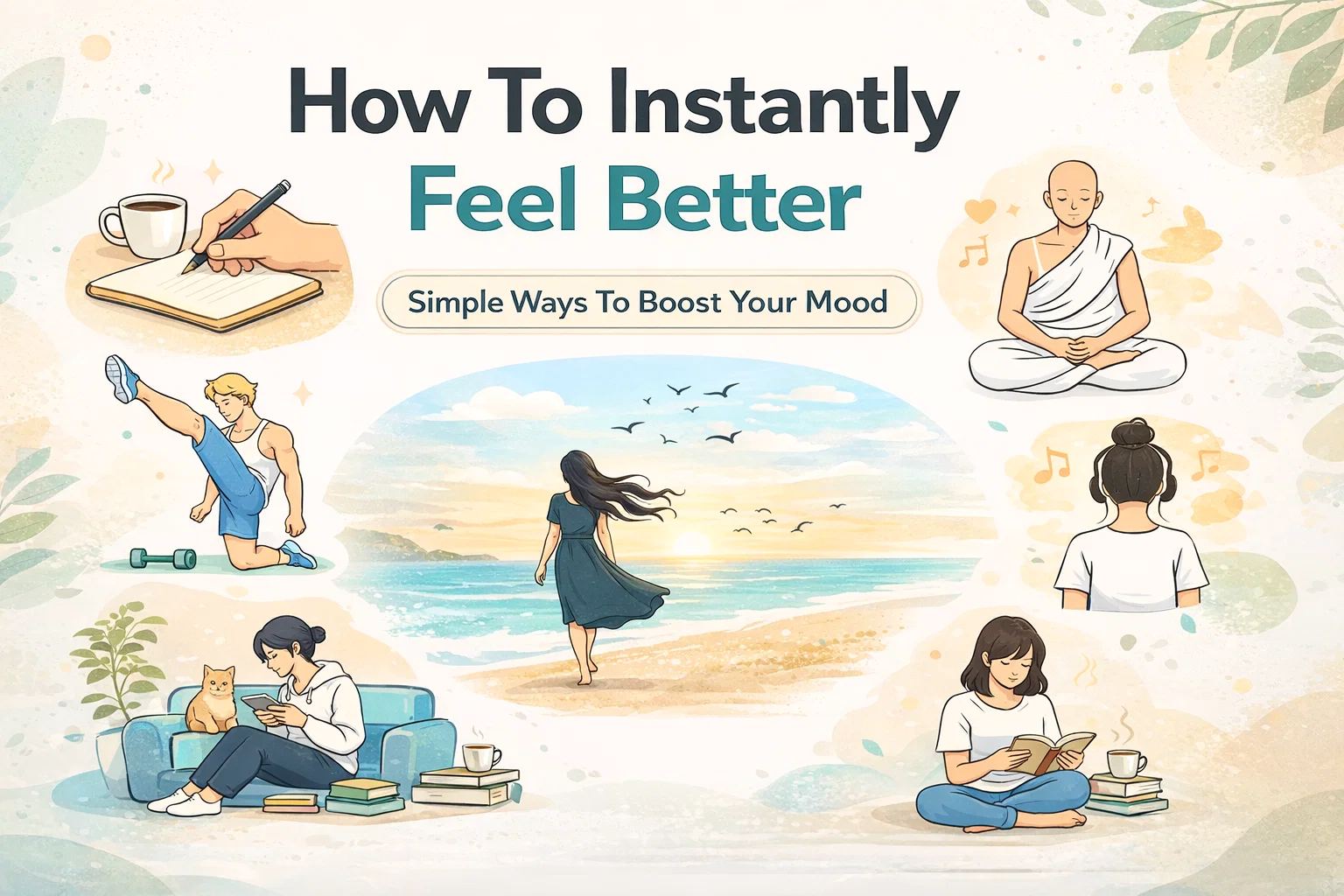
How To Instantly Feel Better 8 Simple Self Care Tips for Mental Wellness and Stress Relief
Life has a way of moving at a breakneck speed, often leaving us feeling scattered, exhausted, or stuck in a mental fog. We all face those moments where the weight of our responsibilities feels a bit too heavy, and our internal battery starts dipping into the red zone. The good news is that reclaiming your peace of mind does not always require a week long retreat or a complete lifestyle overhaul. Sometimes, the most profound shifts come from small, intentional actions that meet us exactly where we are in the moment.
Understanding how to navigate your emotions through simple self care practices is a superpower. When you can identify exactly what you are feeling and match it with a specific restorative activity, you stop being a passenger to your stress and start becoming the architect of your own well being. This guide explores eight essential ways to instantly feel better by aligning your actions with your current mental state.
Overcoming the Spiral of Overthinking through Writing
Overthinking is like having fifty browser tabs open at once while your mental processor is struggling to keep up. It creates a loop of “what ifs” and “should haves” that can lead to significant anxiety and decision fatigue. When your mind is racing, the best way to slow it down is to move those thoughts from the abstract space of your brain onto a physical or digital page.
The Power of the Brain Dump
Writing serves as an external hard drive for your mind. When you write down what is bothering you, you are forced to organize your thoughts into coherent sentences. This process alone can diminish the power those thoughts have over you. You might find that once a worry is staring back at you from a piece of paper, it looks much smaller and more manageable than it did when it was swirling around in your head.
Journaling for Clarity
You do not need to be a novelist to benefit from this practice. Simply grab a pen and a notebook and start writing whatever comes to mind. Do not worry about grammar, spelling, or making sense. The goal is to clear the clutter. Once the page is full, you often feel a sense of lightness, as if you have physically handed over your burdens to the paper.
The Essential Recovery of a Power Nap
In a culture that often prizes “hustle” above all else, admitting that you are tired can feel like a weakness. However, chronic fatigue is the enemy of productivity and happiness. When your body and mind are genuinely exhausted, the most productive thing you can do is absolutely nothing. A short, intentional nap can do wonders for your cognitive function and emotional regulation.
Why Short Naps Work
A nap of about 20 minutes allows your brain to enter the early stages of sleep without falling into a deep slumber. This prevents “sleep inertia,” that groggy feeling you get when you wake up from a long sleep. This quick reset can sharpen your focus, improve your mood, and give you the energy boost needed to finish your day strong. It is not about laziness; it is about strategic recovery.
Finding Stillness in an Anxious World
Anxiety often feels like a humming vibration in the background of everything we do. It keeps us focused on the future, worrying about things that have not happened yet. Meditation is the practice of bringing yourself back to the present moment. By focusing on your breath or a simple mantra, you can signal to your nervous system that you are safe in the here and now.
Simple Meditation Techniques
You do not need to sit on a mountain top for hours to meditate. Just five minutes of quiet sitting can change your physiological state. Focus on the sensation of air entering and leaving your nostrils. When your mind wanders—and it will—gently acknowledge the thought and return your focus to your breath. This simple act of returning to the center builds mental resilience over time.
Transforming Sadness into Physical Action
Sadness can feel heavy and stagnant, making you want to curl up and hide from the world. While it is important to honor your feelings, physical movement is one of the most effective ways to shift your internal chemistry. Exercise releases endorphins, the body’s natural mood lifters, which can provide a much needed relief from the weight of low spirits.
Moving Your Body to Change Your Mind
This does not mean you have to hit the gym for an intense session. Even light exercise, like stretching, yoga, or a quick set of bodyweight movements, can stimulate blood flow and oxygenate your brain. Movement breaks the physical stagnation of sadness and reminds you of your own strength and capability.
Walking Away from Stress
When stress levels peak, our environment can start to feel restrictive. The walls seem to close in, and the pile of work on the desk feels insurmountable. One of the quickest ways to break this tension is to change your scenery. Going for a walk, especially in a natural setting, provides a sensory reset that calms the mind.
The Benefits of a Mindful Walk
A walk combines bilateral stimulation of the brain with a change in perspective. As you move through space, your brain begins to process information more effectively. Pay attention to the sound of your feet on the ground, the feeling of the wind on your face, and the colors of the trees or buildings around you. This grounding exercise pulls you out of your internal stress loops and reconnects you with the world around you.
Taming Anger with the Rhythm of Music
Anger is a high energy emotion that often feels like it needs an outlet. If left unmanaged, it can lead to reactive behavior and frayed relationships. Music has a unique ability to influence our emotional state directly. By choosing the right sounds, you can channel that intense energy into something more constructive or calming.
Using Sound to Shift Your Frequency
Sometimes you need high energy music to match your anger and let it burn out. Other times, soothing instrumentals or ambient sounds can help lower your heart rate and cool your temper. Create playlists for different moods so that when you feel the heat of anger rising, you have a tool ready to help you regulate your response.
Combating Laziness by Reducing Screen Time
We often mistake “doomscrolling” for relaxation. We feel “lazy” or unmotivated, so we reach for our phones, only to end up feeling more drained than when we started. Digital overstimulation is a major contributor to feelings of lethargy. By putting the screen away, you allow your brain to exit the dopamine loop and find more meaningful forms of engagement.
Reclaiming Your Attention
Try setting a “digital sunset” or taking short breaks where your phone is in another room. When you remove the constant stream of notifications and curated images, you might find that you actually have plenty of energy for hobbies, conversation, or creative projects. Real rest rarely happens behind a backlit screen.
Healing Burnout through the Pages of a Book
Burnout is more than just being tired; it is a state of emotional, physical, and mental exhaustion caused by prolonged stress. When you are burnt out, your capacity to deal with real world problems is severely diminished. Reading offers a healthy form of escapism that allows your mind to rest while still staying engaged.
The Therapeutic Value of Reading
Unlike scrolling through social media, reading a book requires a deeper level of focus that can be incredibly meditative. Whether it is a piece of fiction that transports you to another world or a non fiction book that inspires new perspectives, reading slows down your heart rate and reduces stress levels. It provides a quiet sanctuary where you can recharge your mental batteries at your own pace.
Building Your Personal Self Care Toolkit
The key to making these tips work is self awareness. It starts with a simple check in: “How am I feeling right now?” Once you have the answer, you can select the right tool from your kit. If you are overthinking, reach for the notebook. If you are angry, reach for your headphones. If you are burnt out, pick up a book.
Creating Consistency
Self care is not a one time event; it is a lifestyle. By integrating these small practices into your daily routine, you build a foundation of wellness that makes it easier to handle the larger challenges of life. You do not have to wait until you are at a breaking point to take care of yourself. These instant fixes are even more effective when used as preventative maintenance.
Conclusion: Your Path to Instant Wellness
Reclaiming your happiness and mental clarity is a journey of a thousand small steps. By recognizing that different emotions require different responses, you empower yourself to navigate the ups and downs of life with grace and resilience. Remember that taking time for yourself is not selfish; it is essential. Whether it is a twenty minute nap, a walk around the block, or five minutes of deep breathing, these actions signal that you value your own well being.
Start today by choosing one of these strategies the next time you feel a dip in your mood. Observe how your body and mind respond to the shift. Over time, you will find that you have the power to instantly feel better, no matter what life throws your way. Keep exploring what works best for you and make your mental health a priority every single day.