Trauma in the Body Understanding Nervous System Survival Responses and Healing
Have you ever found yourself in a situation where your heart started racing, your chest tightened, or your mind went completely blank, even when there was no immediate, obvious danger? It is a disorienting experience, leaving many to wonder why they react so intensely to seemingly small triggers. The truth is, these reactions are not personal failings or dramatic outbursts. Instead, they are sophisticated, ancient survival mechanisms hardwired into your nervous system.
Trauma is often misunderstood as simply a bad memory that one should be able to “get over.” In reality, trauma lives in the body. It is a survival pattern that your nervous system developed long before you had the cognitive language to process what was happening to you. By understanding how the body holds onto these experiences, we can shift from a place of self-judgment to a place of compassion and healing.
Understanding Trauma as a Physiological Response
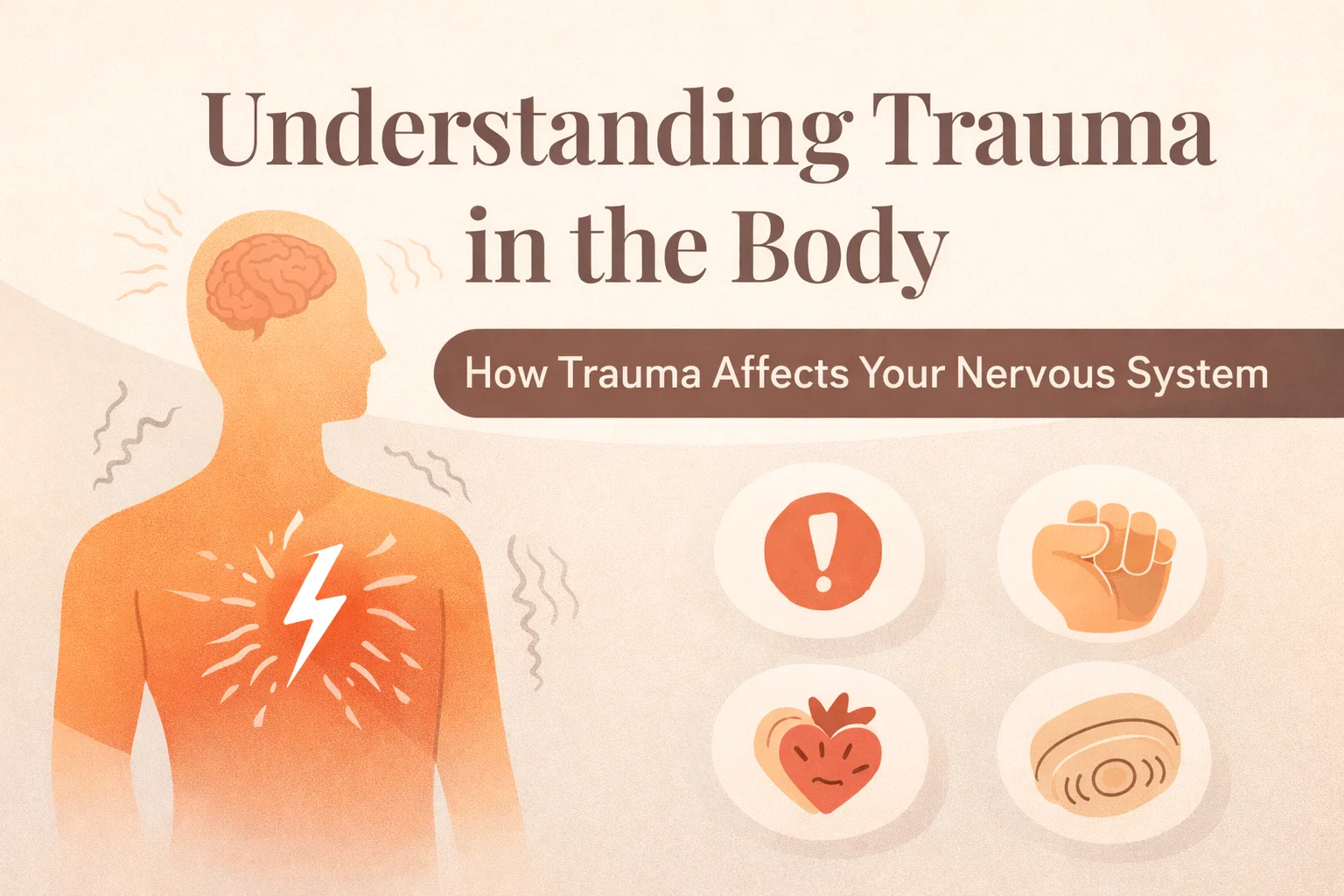
When we talk about trauma living in the body, we are referring to the autonomic nervous system. This system is responsible for our involuntary functions, including the fight, flight, freeze, and fawn responses. These are not choices we make; they are split-second, protective reflexes.
Shutterstock
Think of your nervous system as a security guard. When it perceives a threat, it doesn’t wait for your conscious brain to analyze the situation. It bypasses the logical centers to prioritize immediate survival. If you survived a difficult situation, your body learned how to do that effectively. However, the problem arises when that “security guard” stays on high alert long after the danger has passed, misinterpreting safe or neutral situations as active threats.
Recognizing the Signs in Your Body
Because these responses occur in the body, learning to identify the physical sensations is the first step toward regulation. Common indicators that your nervous system is in a survival mode include:
- Racing or pounding heart, often occurring without physical exertion.
- A sudden sense of being overwhelmed by emotions or sensations.
- Physical tension in the chest, stomach, or shoulders.
- Dissociation, often described as “spacing out” or feeling detached from reality.
- Numbness or a complete shutdown where you feel unable to connect with your emotions.
- Reacting impulsively before you have the chance to think.
- Feeling constantly on edge or being startled easily by loud noises or sudden movements.
Why Substances Often Become Coping Tools
It is common for trauma survivors to turn to substances to manage their internal states. When your nervous system is constantly stuck in a state of high alert, the resulting anxiety, pain, and “internal noise” can feel unbearable. Substances are often used not because a person lacks willpower, but because they provide a temporary, immediate way to soothe an overwhelmed nervous system.
This is not a sign of weakness. It is a desperate attempt to regulate a body that feels like it is constantly under attack. People often use substances to:
- Calm overwhelming anxiety.
- Numb physical or emotional pain that feels too intense to hold.
- Find a sense of comfort or relief when they cannot find it within themselves.
- Escape or create distance from traumatic memories or present-day triggers.
- Quiet the constant, racing internal noise.
- Create a false sense of stability or control over their environment.
Recognizing this dynamic is crucial. It changes the narrative from “what is wrong with me” to “what am I trying to soothe?” This shift is fundamental to moving away from shame and toward healing.
Survival Responses Are Not Personality Flaws
Society often mislabels trauma responses as personality flaws. Someone who is experiencing a freeze response might be called “lazy” or “unmotivated.” A person in a fight response might be labeled “aggressive,” while someone in a fawn response might be criticized for being “people-pleasing” or lacking boundaries. These labels are deeply harmful and inaccurate.
Shutterstock
What others see as a character trait is often a survival strategy. To foster healing, we must reframe these behaviors:
- Fight: A protective activation. The body is attempting to fend off a threat or establish power where it felt powerless.
- Flight: An urgent desire for escape. The system is trying to remove itself from a perceived danger.
- Freeze: An involuntary pause. When fight or flight is not possible, the body goes into a state of immobility to survive the overwhelming situation.
- Fawn: An attempt to appease to stay safe. By anticipating the needs of others, the person hopes to avoid conflict or further harm.
Your Body Can Learn Safety Again
The most important takeaway is that your body is not broken. It is a brilliant, adaptive system that kept you alive. And because it is adaptive, it can learn new patterns. Healing does not come from force; you cannot “think” your way out of a trauma response, and you cannot bully your nervous system into being calm.
Instead, healing comes from repeated, consistent moments of safety. It is about signaling to your body, over and over again, that the immediate threat has passed.
Practices for Nervous System Regulation
You can begin to retrain your body by incorporating small, intentional practices that promote a sense of security. Consider these approaches:
- Grounding: Techniques like the 5-4-3-2-1 method help pull your focus back to the present moment and your physical surroundings.
- Breathwork: Slow, deep exhalations can help stimulate the vagus nerve and tell your system it is safe to downshift.
- Sensory Tools: Utilizing weighted blankets, cold water on your face, or soothing textures can provide immediate sensory feedback.
- Gentle Movement: Practices like walking, stretching, or shaking out the body can help discharge pent-up energy from survival responses.
- Safe Connection: Being in the presence of someone who is calm and regulated can help co-regulate your own nervous system.
- Mindfulness: Learning to observe your thoughts and sensations without judgment creates space between your experiences and your reactions.
Building safety in your body is a slow process, but it is deeply rewarding. It involves learning to listen to your body instead of ignoring it.
Conclusion: A Path Forward
Trauma is a heavy burden to carry, but it does not have to be your permanent state. Your reactions—no matter how disruptive they may feel—make total sense in the context of what you have survived. They were the tools your system used to navigate a hostile environment.
Now, you have the opportunity to update those tools. By acknowledging that these responses are physiological rather than character-based, you open the door to true compassion. Start with small, manageable actions. Prioritize your comfort, listen to what your body needs to feel safe, and remember that you are allowed to move at your own pace. Your nervous system learned how to survive, and it can absolutely learn how to thrive.
Would you like me to create a list of five simple grounding exercises that you can practice anywhere to help manage a sudden surge of anxiety?