The Truth vs Lies Quote Why Truth Welcomes Questions Lies Fear Being Challenged
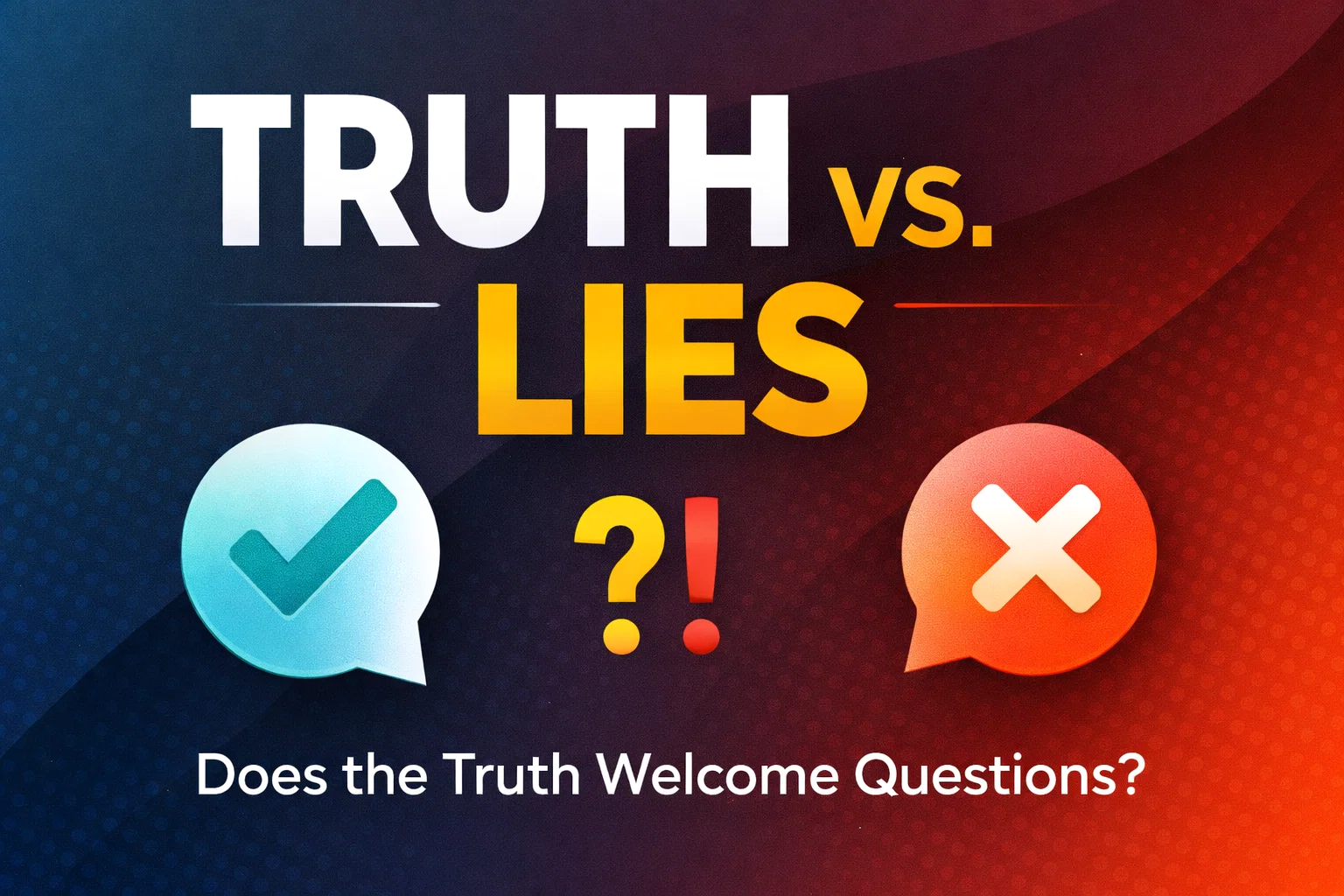
In a world saturated with digital noise, misleading headlines, and curated perfection, the concepts of truth and deception have never been more relevant. The image you see before you carries a profound message that strips away the complexity of human psychology: Truth does not mind being questioned, but a lie does not like being challenged. This simple yet deep observation serves as a compass for our personal lives, our professional relationships, and our broader understanding of the world around us. When we embrace the truth, we invite a sense of freedom that no fabrication can ever provide.
Understanding the fundamental difference between these two states of being is essential for anyone seeking a life of integrity. Truth is like a mountain. You can strike it with a hammer, you can climb it, or you can try to ignore it, but the mountain remains. A lie, however, is more like a house of cards. It requires a specific environment, constant maintenance, and a complete lack of external pressure to stay upright. In this exploration, we will dive into why truth thrives under scrutiny and why deception is so fragile.
The Resilient Nature of Truth
One of the most beautiful aspects of the truth is its inherent durability. When something is factually or morally true, it possesses a structural integrity that does not require defensive measures. If you ask a person who is telling the truth a hundred different questions, their answers will remain consistent because they are drawing from a single, unchanging source: reality. This is why the image suggests that truth does not mind being questioned. In fact, truth often welcomes the question because it provides an opportunity for further validation.
Scientific Inquiry and the Quest for Veracity
Think about the scientific method. At its core, science is a system built on the premise that the truth can withstand any amount of testing. Researchers spend years trying to disprove theories, and only those that survive the most rigorous challenges are accepted as scientific law. If a theory fails when questioned, it is discarded or refined. This transparency is what makes scientific progress possible. When we apply this same logic to our personal lives, we find that being honest allows us to live without the fear of being found out. There is an immense psychological relief in knowing that your reality is solid.
Building a Foundation on Transparency
In leadership and business, transparency is the ultimate currency. Leaders who are truthful do not need to hide behind complex jargon or deflect difficult questions from their teams. Instead, they encourage feedback and scrutiny because they know their core mission and their actions are aligned. This creates a culture of trust where employees feel safe to innovate and speak up. When the truth is the foundation, every question asked is simply a tool used to strengthen the structure of the organization.
The Fragility of Deception
On the flip side of the coin, we find the lie. Deception is a high maintenance endeavor. Because a lie is an artificial construct, it lacks the natural support of reality. This is why, as the image notes, a lie does not like being challenged. The moment a challenge arises, the person maintaining the lie must create new lies to support the original one. This creates a compounding effect that leads to significant mental and emotional stress. The “web of lies” is a common metaphor for a reason: it is easy to get tangled in your own threads.
The Defensive Mechanism of Lies
When a lie is challenged, the immediate reaction is often defensiveness, anger, or gaslighting. Since the lie cannot stand on its own merits, the person telling it must attack the questioner or the process of questioning itself. You may have noticed this in social interactions or public discourse. When someone is confronted with an inconsistency and they respond with hostility rather than clarity, it is often a sign that the foundation of their statement is unstable. Challenge feels like a threat because, for a lie, it is an existential threat.
The Cognitive Load of Dishonesty
Psychologically, lying is exhausting. It requires a significant amount of cognitive energy to remember what was said to whom and how to keep the narrative consistent with future events. This “cognitive load” can lead to anxiety, decreased productivity, and a general sense of unease. When we choose to live in a way that avoids the truth, we are essentially carrying a heavy weight that never goes away. The fear of the “challenge” is always lurking in the back of the mind, creating a barrier between the individual and true peace of mind.
Why Questions are the Ultimate Filter
If you are ever unsure about the validity of a situation, a person’s claims, or even your own beliefs, the best tool at your disposal is the question. Questions act as a filter that separates the gold from the sand. By asking “why,” “how,” and “what is the evidence,” you are putting the subject through a stress test. A healthy relationship, a solid business plan, or a true friendship will survive these questions and likely grow stronger because of them.
- Questions foster clarity: They help peel back the layers of a complex issue until the core truth is revealed.
- Questions expose inconsistency: Since lies struggle to stay consistent, repeated questioning eventually reveals the cracks.
- Questions empower the seeker: Instead of being a passive recipient of information, you become an active participant in defining your reality.
The Path to Personal Integrity
Embracing the message of this image requires a commitment to personal integrity. This means being willing to have your own beliefs and actions questioned. It can be uncomfortable to look inward and ask if we are being completely honest with ourselves, but this is where the most significant growth happens. If our personal values are “true,” they will survive our own self-reflection. If we find that we are defensive about certain parts of our lives, it may be an indication that we are holding onto a “lie” that needs to be released.
Living Without Fear
There is a unique kind of bravery in being completely honest. It means you have nothing to hide and, therefore, nothing to fear. When you live your life based on the truth, you don’t have to look over your shoulder. You don’t have to worry about who is talking to whom or whether a certain piece of information will come to light. You are free to focus your energy on positive goals, creativity, and connection. This freedom is the ultimate reward for choosing the path of truth.
Encouraging Truth in Others
We can also use this principle to improve our social circles and communities. By rewarding honesty and being patient with those who are seeking the truth, we create an environment where lies have no place to grow. If we react to the truth with grace, even when it is difficult to hear, we encourage others to be transparent with us. This reduces the “fear of challenge” and builds a more authentic world for everyone involved.
Conclusion: The Timeless Wisdom of Discernment
The vintage aesthetic of the image reminds us that this wisdom is timeless. Throughout history, those who stood for the truth were often the ones most willing to be questioned, while those who relied on deception sought to silence their critics. By remembering that truth does not mind being questioned and a lie does not like being challenged, you equip yourself with a powerful tool for discernment.
As you move forward, try to view questions not as attacks, but as invitations. If you are standing on the truth, you have nothing to lose and everything to gain from the conversation. If you find yourself avoiding a challenge, take a moment to pause and ask why. Embracing the truth might be harder in the short term, but it provides a peace and stability that a lie can never replicate. Let your life be an open book, confident in the knowledge that reality is your strongest ally.
Would you like me to create a social media caption or a set of keywords to help promote this blog post on your site?