5 Psychological Tricks to Make Anyone Spill Their Secrets Psychology Facts Mind Hacks
Have you ever found yourself in a conversation where you just knew the other person was holding back? We have all been there. Whether it is a friend with a juicy secret, a colleague with a hidden agenda, or a partner who is being uncharacteristically quiet, the desire to uncover the truth is a fundamental human instinct. Communication is the bridge between minds, but sometimes that bridge has a toll booth. To get across, you need more than just direct questions; you need a deep understanding of human psychology and the unique triggers that make different personality types feel compelled to share their inner thoughts.
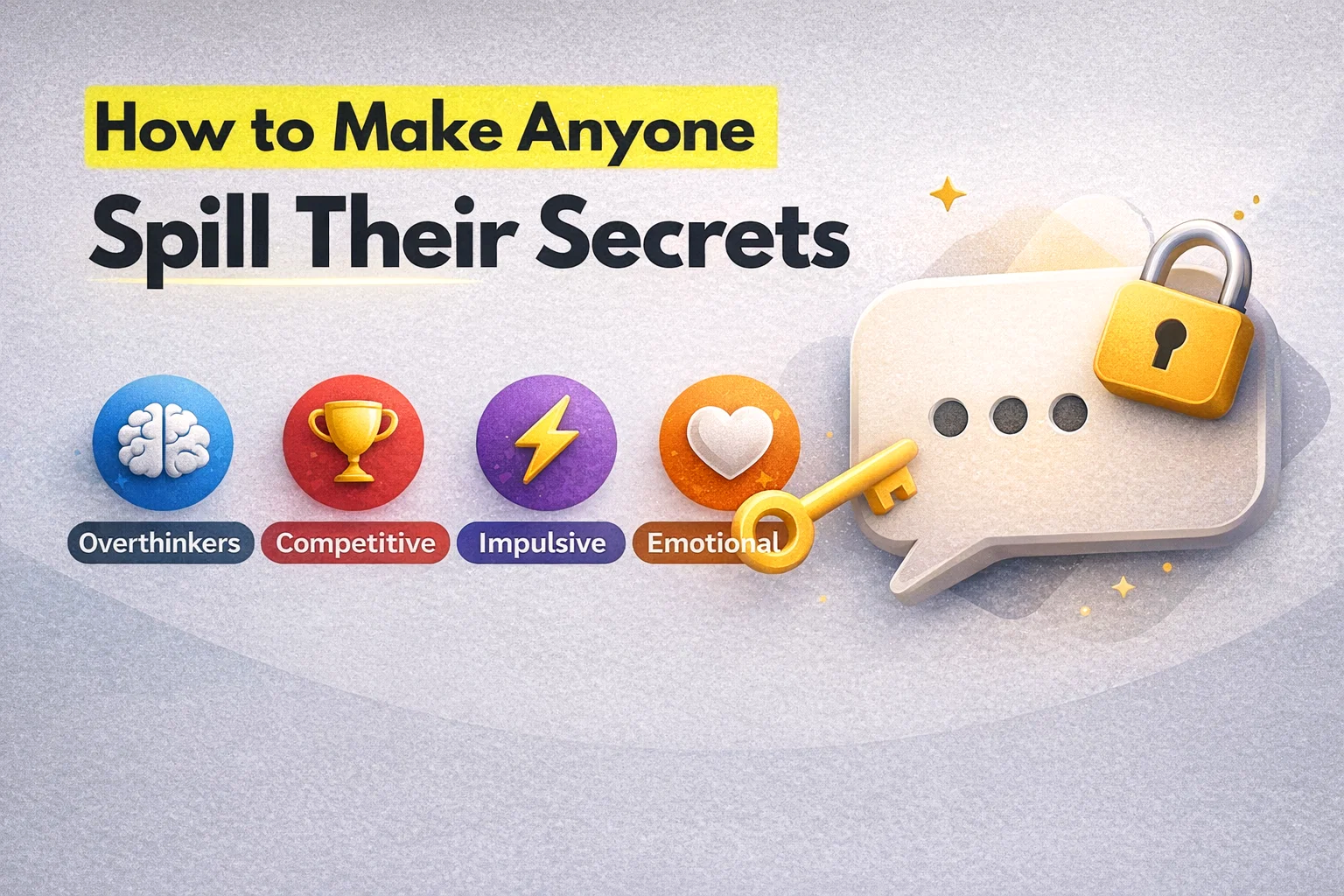
The image we are looking at today provides a fascinating roadmap into the world of social engineering and psychological triggers. It suggests that there is no one size fits all approach to getting people to talk. Instead, the secret lies in tailoring your communication style to the specific personality profile of the person standing in front of you. By understanding what motivates someone, whether it is their ego, their competitive nature, or their need for emotional validation, you can unlock doors that were previously bolted shut. In this deep dive, we are going to explore the science behind these “secret spilling” techniques and how you can use them ethically to build deeper connections and better understand the people in your life.
The Psychology of the Overthinker: Clarity Over Pressure
Overthinkers are a unique breed. Their minds are constantly racing, analyzing every word, gesture, and potential outcome of a conversation. If you pressure an overthinker, they are likely to shut down or give you a rehearsed, safe answer because they are afraid of saying the wrong thing. The image suggests a brilliant counter-intuitive approach: “No pressure, just curious.”
Why it Works
When you tell an overthinker there is no pressure, you are effectively disarming their internal alarm system. By framing your inquiry as simple curiosity, you lower the stakes of the interaction. Because overthinkers have a natural drive to be understood perfectly, they will often feel the need to explain their thoughts in meticulous detail to ensure there is no room for misinterpretation. They aren’t just giving you a secret; they are providing a clarification to put their own mind at ease.
How to Apply This
- Keep your body language relaxed and open.
- Use a soft, inquisitive tone rather than an accusatory one.
- Give them plenty of space to speak without interrupting their flow.
Challenging the Competitive Spirit: The Power of Reverse Psychology
Competitive individuals thrive on being right, being first, and being the best. For them, information is often seen as a form of currency or power. If you ask them for a secret directly, they might withhold it just to maintain that power dynamic. However, if you say, “I bet you won’t tell me,” the entire game changes.
The Thrill of the Challenge
This phrase taps directly into the competitive person’s need to prove others wrong. By suggesting that they are unable or unwilling to do something, you are issuing a silent challenge. Their desire to win the “bet” and prove their dominance or transparency often outweighs their desire to keep the secret. It is a classic move that turns a request for information into a contest of wills that they feel compelled to win.
Best Practices for Competitive Types
- Make the “bet” feel lighthearted so it doesn’t turn into a real confrontation.
- Acknowledge their “win” once they share the information to reinforce the positive interaction.
- Use this sparingly, as overusing it can make you seem manipulative.
Tapping Into the Impulsive Mind: The Hook of Curiosity
Impulsive people are driven by immediate gratification and the excitement of the moment. They often act before they think, and their curiosity is easily piqued. The phrase “You wouldn’t believe what I heard” is the ultimate bait for someone with an impulsive streak.
Creating an Information Gap
Psychologically, this creates what is known as an information gap. Human beings have a natural aversion to incomplete stories, and for an impulsive person, that itch needs to be scratched immediately. By hinting that you have exclusive or shocking information, you force them into a position where they must engage with you to find out what it is. In the process of trying to get the “tea” from you, they are much more likely to trade their own secrets as a form of social exchange.
Effective Execution
- Use an enthusiastic or shocked tone of voice.
- Wait for them to ask the follow up question rather than blurting it out.
- Be prepared to have a small “secret” of your own to trade to keep the momentum going.
The Emotional Connection: Relatability as a Key
Emotional individuals prioritize feelings, empathy, and deep personal connections. For them, sharing a secret is a significant act of vulnerability and trust. If they feel judged or misunderstood, they will retreat into their shell. The most effective way to reach them is through the phrase, “I get it, I have been there.”
The Safety of Shared Experience
Validation is the fastest way to an emotional person’s heart. By stating that you have experienced something similar, you are creating a “safe zone.” You are signaling that you are a peer, not a judge. When people feel that their emotions are validated and that they are not alone in their experiences, the barriers to sharing come down naturally. They open up not because they are being tricked, but because they feel a genuine sense of relatability and support.
Building Emotional Rapport
- Be sincere; people can usually tell when “I’ve been there” is a lie.
- Share a small, vulnerable detail of your own first to lead by example.
- Practice active listening by nodding and maintaining soft eye contact.
Engaging the Ego: The “Prove Me Wrong” Method
Egoistic individuals are often preoccupied with how they are perceived by others. They want to be seen as important, caring, or knowledgeable. If you suspect someone is egoistic, the phrase “I know you wouldn’t care, but…” is a powerful tool to get them talking.
The Need for Positive Perception
Most people with a large ego actually care deeply about appearing like a “good” or “invested” person. By suggesting that they are indifferent or uncaring, you are attacking their idealized self image. To defend that image, they will go out of their way to prove that they actually do care. This often involves them opening up, offering advice, or sharing personal details to demonstrate their depth and empathy. It is a subtle way of using their own pride to facilitate a deeper conversation.
How to Navigate Ego Dynamics
- Frame the “indifference” as a natural assumption so it doesn’t feel like a direct insult.
- Allow them to take the lead in the conversation once they start sharing.
- Give them the “hero” role in the story they are telling.
Ethical Considerations in Psychological Communication
While these techniques are incredibly effective, it is vital to discuss the ethics of using them. Influence is a double edged sword. When used with good intentions, these methods can help you resolve conflicts, support friends in need, and build stronger professional relationships. However, using them to manipulate people for selfish gain or to cause harm is a quick way to destroy trust permanently.
The Importance of Intent
Always ask yourself why you want this person to open up. Is it to help them? Is it to strengthen your bond? Or is it to get leverage over them? Genuine communication should always be the goal. These psychological triggers are best used as “icebreakers” to get past the initial awkwardness or defensive barriers that people naturally put up in social situations.
Maintaining Boundaries
Just because you know how to make someone spill their secrets doesn’t mean you always should. Respecting people’s privacy is a cornerstone of any healthy relationship. If someone clearly doesn’t want to talk about a specific topic even after you’ve used these techniques, it is important to back off and respect their boundaries.
Final Thoughts on Mastering the Art of Conversation
Mastering the art of getting people to open up is about more than just knowing the right phrases; it is about becoming a student of human nature. The world is filled with different personalities, each with their own fears, motivations, and communication styles. By learning to identify these traits in the people you meet, you can adapt your approach to make every interaction more meaningful and productive.
The techniques we discussed today, from challenging the competitive to validating the emotional, are tools in your social toolkit. They allow you to navigate complex social waters with grace and effectiveness. Remember that at the end of the day, people want to be understood and heard. Whether they are overthinking every detail or guarding their ego, they are looking for a connection. By using these psychological insights, you are simply helping them find the path to that connection more easily.
Next time you find yourself in a stagnant conversation or sensing that there is more beneath the surface, try identifying the personality type of the person you are with. Use the corresponding trigger and see what happens. You might be surprised at how quickly the walls come down and how much you can learn about the fascinating people in your world. Happy communicating!