How to Start Your Self Love Journey Give Yourself Grace and Let Go of the Past
Life has a funny way of throwing curveballs when we least expect them. You set a goal, you map out your path, and suddenly, the terrain changes. Whether it is a career setback, a relationship that didn’t work out, or a personal mistake that haunts your thoughts, the weight of unmet expectations can feel heavy. However, the true secret to resilience is not in avoiding the struggle, but in how you choose to grow through it. Learning to give yourself grace is the second essential step in reclaiming your peace. It is about acknowledging that while you cannot change the past, you have full control over how much of its weight you carry into your future.
The Art of Giving Yourself Grace
We are often our own harshest critics. When things go wrong, our internal monologue tends to shift toward blame and regret. We replay scenarios in our heads, thinking of all the things we should have said or done differently. But grace is the antidote to this cycle of self-punishment. Giving yourself grace means extending the same kindness and understanding to yourself that you would offer to a dear friend. It is an acknowledgment of your humanity and a realization that perfection is an impossible standard.
Grace does not mean ignoring your responsibilities or making excuses. Instead, it is a conscious decision to stop the internal bleeding. It is the bridge between where you are and where you want to be. When you choose grace, you create the mental space necessary to heal and strategize your next move without the cloud of shame hanging over your head.
How to Own Your Mistakes Without Letting Them Own You
Mistakes are inevitable, but they do not have to be terminal. The process of moving forward after a blunder requires a specific framework to ensure you are actually growing rather than just suppressing the guilt. Here is how you can effectively handle your own errors:
- Own It: Radical honesty is the first step. Acknowledge what happened without defensive behavior. When you take ownership, you take back the power that the mistake held over you.
- Apologize: If your actions affected others, a sincere apology is necessary. This clears the air and allows for external reconciliation, which is often a prerequisite for internal peace.
- Learn From It: Every failure is a data point. Ask yourself what the situation is trying to teach you. What can you do differently next time? Once the lesson is extracted, the mistake has served its purpose.
- Stop the Punishment: Once you have owned it, apologized, and learned, the debt is paid. Continuing to beat yourself up does not make you a better person; it only makes you a tired one.
Dealing with Being Wronged: The Power of Acceptance
Sometimes, the plans fall apart because of someone else’s actions. Being wronged can spark a fire of resentment that is hard to extinguish. Traditional advice often pushes for immediate forgiveness, but that can sometimes feel forced and insincere. True healing comes from a different place: the land of acceptance.
Acceptance is not the same as approval. You do not have to like what happened to accept that it occurred. When you accept the reality of a situation, you stop fighting with the past. You stop wishing things were different and start dealing with how they actually are. This shift in perspective is what allows you to finally put the baggage down.
Moving Beyond Forced Forgiveness
There is a common misconception that you must forgive someone to move on. While forgiveness is a beautiful goal, forcing it before you are ready can actually hinder your progress. If you are struggling to forgive, focus on these steps instead:
- Accept That It Happened: Stop the mental “what if” games. The event is part of your history now, but it does not have to be your identity.
- Accept How You Feel: If you are angry, be angry. If you are hurt, feel the hurt. Validating your own emotions is a vital part of the self love journey.
- Set Boundaries: You do not have to let someone hurt you twice. Protecting your peace is an act of self respect. You can accept what happened and still decide that the person no longer has a place in your inner circle.
Putting the Baggage Down: Walking Forward Lighter
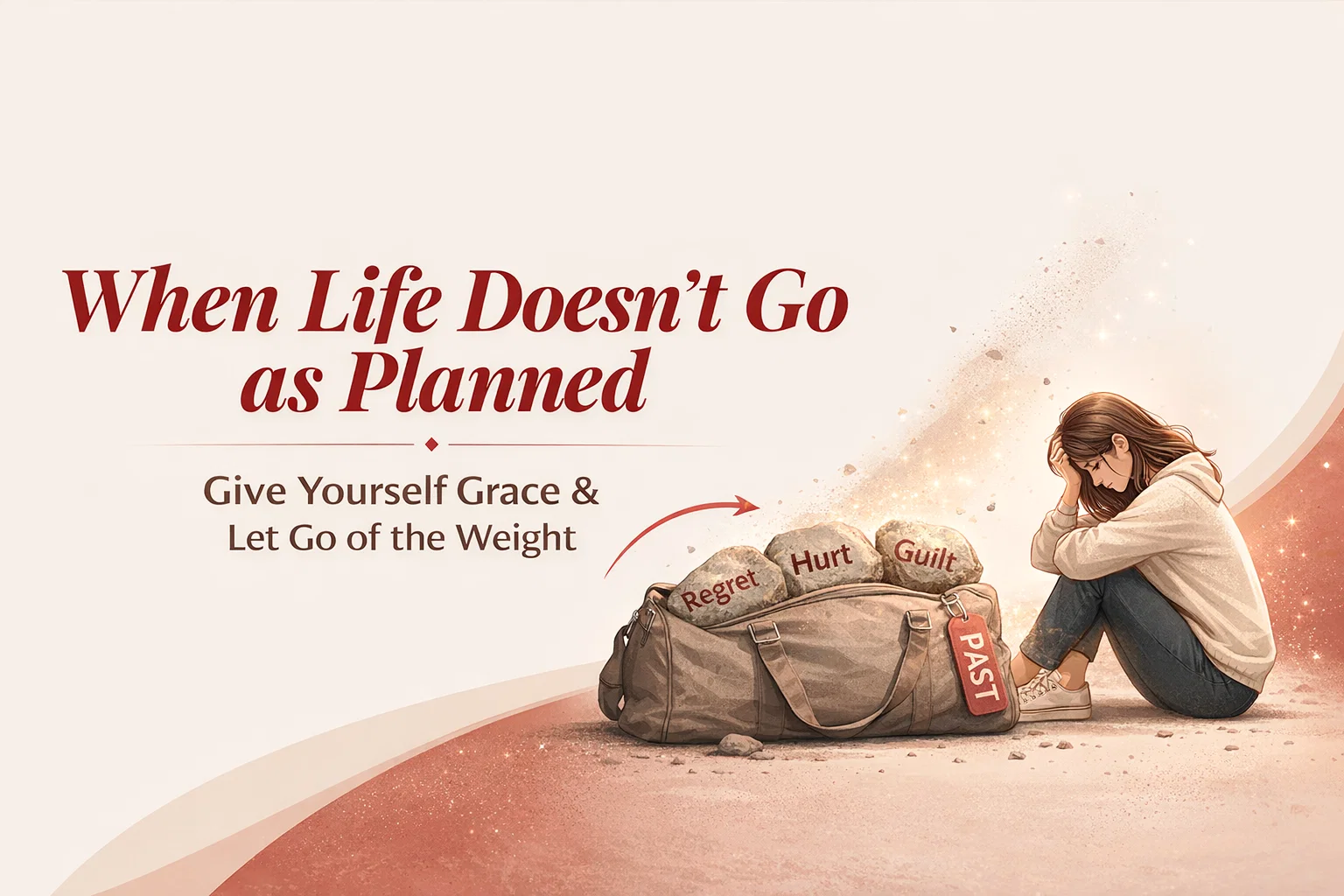
Imagine you are hiking up a mountain with a backpack full of heavy stones. Every time you dwell on a past mistake or harbor resentment, you add another stone. Eventually, the weight becomes so great that you stop moving altogether. Walking forward lighter requires a conscious decision to empty that bag.
The baggage we carry is often made of “shoulds” and “coulds.” I should have known better. They could have treated me with more respect. These thoughts are heavy, and they serve no functional purpose in your current life. Releasing them is not a one-time event but a daily practice of choosing the present over the past.
Practical Steps to Lighten Your Emotional Load
How do you actually “put the baggage down” in a practical, everyday sense? It starts with mindfulness. When you feel the weight of a past event creeping back in, pause and identify it. Label it as “old news” or “completed lesson.” By labeling the thought, you create distance between yourself and the emotion.
Another powerful technique is physical decluttering. Sometimes, our external environment reflects our internal state. Cleaning your space, journaling your thoughts to get them out of your head, or engaging in physical exercise can help shift the stagnant energy of the past. The goal is to create a sense of flow in your life where experiences move through you rather than getting stuck inside you.
Building a Future Based on Resilience, Not Regret
When you stop carrying the weight of everything that went wrong, you suddenly have the energy to build something new. Resilience is built in the moments when you choose to get back up after a fall. It is the muscle that grows every time you choose grace over guilt.
As you move forward, remember that your path does not have to be linear. There will be days when the baggage feels heavy again, and that is okay. The goal is not to be perfect, but to be persistent in your pursuit of peace. You are growing through the challenges, and that growth is making you stronger, wiser, and more capable than ever before.
The Importance of Self-Compassion in Long-Term Growth
Self-compassion is the fuel for long-term personal development. If you are constantly fueled by self-criticism, you will eventually burn out. However, if your growth is rooted in self-love and grace, you will have a bottomless well of motivation. Treat yourself with the same dignity you seek from others. Celebrate your small wins and be patient with your slow progress. You are a work in progress, and that is a beautiful thing to be.
Conclusion: Your Journey Starts Now
Life may not always go as planned, but the disruptions are often where the most significant growth happens. By giving yourself grace and refusing to carry the weight of the past forever, you open the door to a brighter, lighter future. You have the power to own your mistakes, accept your wounds, and move forward with your head held high. Do not let the shadows of yesterday darken the potential of today. Put the baggage down, take a deep breath, and start walking. Your journey toward a more resilient and peaceful self starts with a single step of grace. You are worthy of a life that feels light, and you have everything you need within you to create it.