Relax and Heal Art Therapy Circle of Control Activity for Mental Wellness and Self-Care
Have you ever felt like the weight of the entire world is resting on your shoulders? We have all been there. Whether it is a looming deadline at work, a misunderstanding with a friend, or simply the unpredictable nature of the weather, modern life has a way of making us feel like we are spinning out of control. It is easy to get caught up in the what-ifs and the actions of others, leaving us feeling drained and anxious. But what if there was a simple visual tool that could help you reclaim your peace of mind? Enter the Circle of Control, a transformative concept used in art therapy and cognitive behavioral coaching to help individuals distinguish between where their power lies and where it does not.
The beauty of this concept is its simplicity. By drawing a literal circle and categorizing your worries, you create a mental map that guides you back to yourself. This practice is not about ignoring the world around you; it is about choosing where to invest your limited time and energy. When we stop trying to control the uncontrollable, we free up massive amounts of mental space to focus on the things that actually lead to growth and happiness. Let us dive deep into how you can use this art therapy technique to heal, relax, and find your center again.
Understanding the Psychology of Control
At the heart of human anxiety is the desire for certainty. We want to know that our future is secure, that people like us, and that our efforts will always result in success. However, the reality of the human experience is that much of life is inherently uncertain. When we try to control things outside of our reach, we experience what psychologists call a high external locus of control. This often leads to feelings of helplessness and chronic stress.
Art therapy provides a unique bridge between these internal feelings and the external world. By taking a pen or brush to paper, you are engaging in a tactile activity that grounds you in the present moment. The act of creating a Circle of Control is a form of cognitive reframing. You are physically moving thoughts from the chaotic space of your mind into organized categories on a page. This process naturally lowers cortisol levels and helps the brain switch from a reactive state to a reflective one.
The Inner Circle: Where Your Power Resides
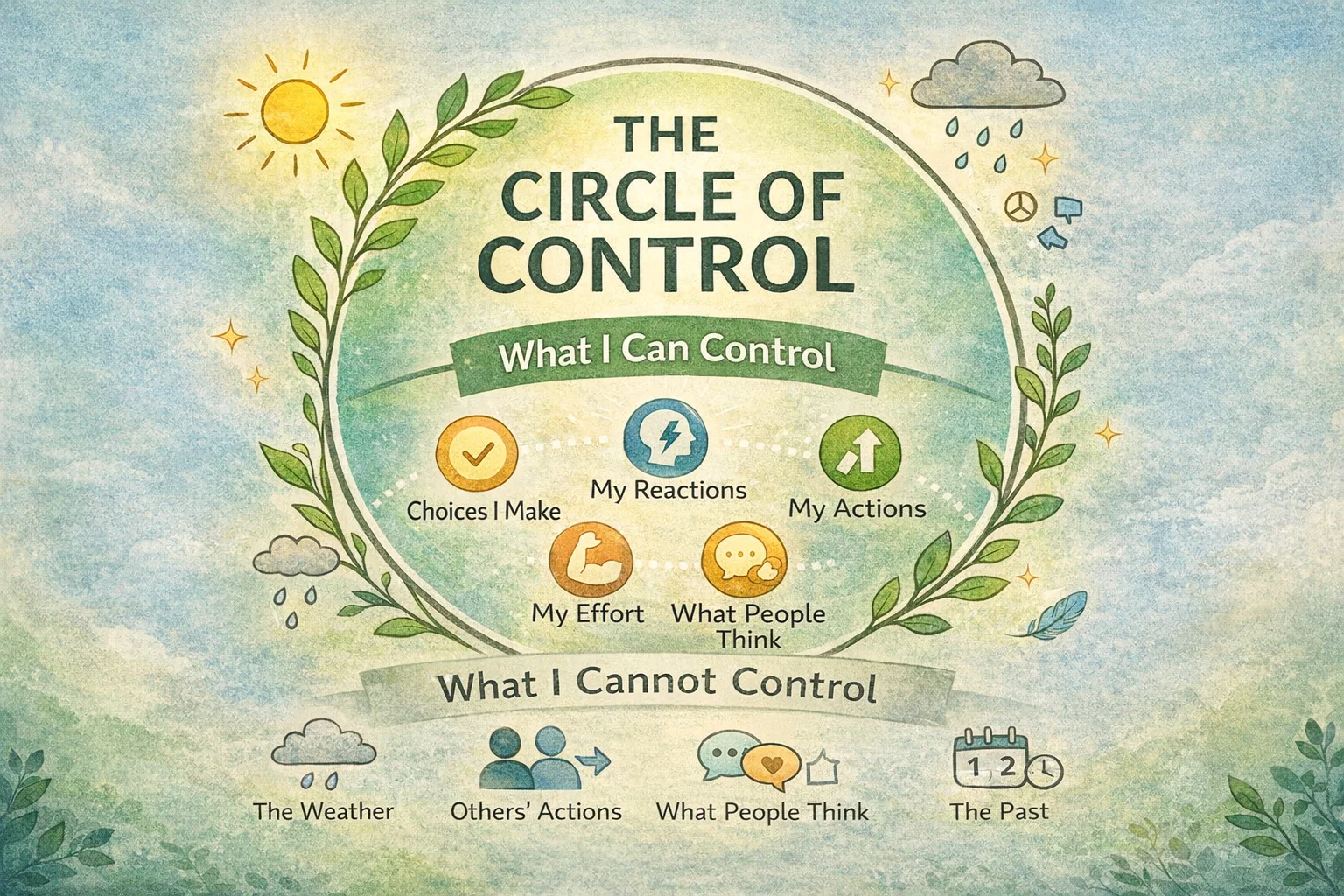
The inner circle represents your domain. These are the elements of your life that you have the direct power to change, improve, or manage. Recognizing these factors is incredibly empowering because it reminds you that you are the architect of your own experience. Even in the most difficult circumstances, there are always things within your grasp.
Your Effort and Attitude
You cannot always control the outcome of a project, but you can always control the effort you put into it. Similarly, while you cannot control every event that happens to you, you have the final say on your attitude toward those events. Choosing a growth mindset or a positive outlook is a daily practice that happens within your inner circle.
Your Words and Actions
The things you say to others and the actions you take in response to challenges are entirely yours. In moments of conflict, you have the choice to respond with kindness or to set a firm boundary. These choices define your character and influence your environment more than you might realize.
Self-Care and Boundaries
How you treat your body and mind is a fundamental part of your control. This includes getting enough sleep, eating nourishing food, and knowing when to say no to requests that drain your spirit. Taking care of yourself is not a luxury; it is a vital action within your circle that ensures you have the energy to handle everything else.
The Outer Space: Learning the Art of Letting Go
Outside of your circle lies a vast territory of things that you simply cannot influence. These are the factors that often cause us the most grief because we mistakenly believe that if we worry enough, we can change them. Learning to identify these “out-of-control” elements is the first step toward true relaxation and healing.
The Opinions and Beliefs of Others
We often spend hours agonizing over what someone else thinks of us or why they hold a certain belief. The truth is that another person thoughts are a product of their own history, biases, and experiences. You could be the most perfect version of yourself, and someone might still misunderstand you. Releasing the need to manage other people perceptions is one of the most liberating things you can do for your mental health.
Past Mistakes and Future Uncertainties
The past is a closed book, and the future has not been written yet. Many of us live in the “cannot control” zone by constantly ruminating on what we should have done differently or fearing what might happen tomorrow. Art therapy encourages you to stay in the now. By focusing on the page in front of you, you acknowledge the past and future without letting them dominate your current state of being.
Global Events and the Weather
It sounds simple, but how many times have we let a rainy day or a news headline ruin our mood? These are macro-level events that exist entirely outside our personal sphere of influence. While we can choose how we respond to them (staying inside with a book or volunteering for a cause), the events themselves are not ours to dictate.
How to Practice Art Therapy at Home
You do not need to be a professional artist to benefit from art therapy. The goal is expression, not perfection. To start your own Circle of Control exercise, you only need a few basic supplies and a quiet space where you can be alone with your thoughts.
Step 1: Create Your Workspace
Find a comfortable seat and gather a large piece of paper, some colored markers, and perhaps some watercolors or colored pencils. Setting the mood with soft music or a candle can help you transition into a creative headspace.
Step 2: Draw Your Circles
Draw a large circle in the center of your page. Leave plenty of room outside the circle as well. Label the inside “What I Can Control” and the area outside the circle “What I Cannot Control.”
Step 3: Externalize Your Thoughts
Start writing or drawing symbols for everything that is currently on your mind. If you are worried about a friend’s mood, place that outside the circle. If you are focused on finishing a book, place that inside. Use different colors to represent different emotions. You might use blue for things that make you feel calm and red for things that cause stress.
Step 4: Reflect and Breathe
Once your page is full, take a step back and look at it. Notice how much energy you have been spending on things outside the circle. Take a deep breath and consciously “give” those things away. Focus your eyes back on the center of the circle and think about one small action you can take today for something inside that space.
The Benefits of Regular Art Therapy
Engaging in art therapy activities like the Circle of Control offers long-term benefits for your nervous system. It is a proactive approach to mental health that builds resilience over time. When you make a habit of visualizing your boundaries, your brain becomes more efficient at filtering out unnecessary stressors.
- Reduced Anxiety: By narrowing your focus, you stop the “spiraling” effect of anxious thoughts.
- Increased Self-Awareness: You begin to recognize patterns in what triggers your stress.
- Emotional Regulation: Using colors and shapes allows you to process feelings that words might not be able to capture.
- Enhanced Problem-Solving: When you are calm and focused on your “can control” zone, you can think more clearly and creatively.
Integrating the Circle into Daily Life
The Circle of Control is not just a one-time art project; it is a philosophy for living. You can carry this mental image with you throughout your day. When you feel your heart rate start to rise because of a traffic jam or a difficult email, ask yourself: “Is this inside my circle?”
If the answer is no, take a breath and redirect your energy. Maybe you can control the music you listen to in the car, or you can control the professional tone you use in your email reply. By constantly gently guiding yourself back to the center, you cultivate a sense of agency and calm that becomes your new baseline.
Teaching the Concept to Children
This is also a wonderful activity to do with children. Kids often feel overwhelmed by school, social dynamics, and rules. Helping them draw their own circle can give them a sense of security and teach them emotional intelligence from a young age. It turns a scary, abstract feeling into a tangible, manageable drawing.
Conclusion: Embrace the Peace of Focus
Relieving stress and healing through art therapy is about returning to the essence of who you are. The image of the Circle of Control serves as a powerful reminder that while we cannot direct the wind, we can always adjust our sails. It encourages us to be kind to ourselves, to respect our limits, and to celebrate our personal power.
Next time you feel the fog of overwhelm creeping in, grab a piece of paper and start drawing. Let the colors flow and the lines guide you back to a place of clarity. You deserve to live a life where your energy is spent on things that nourish your soul and help you grow. Remember, your response, your effort, and your kindness are the true markers of your world. Focus on the center, let the rest fade into the background, and watch how your life begins to change for the better. Save this practice, share it with a friend, and start your journey toward a more mindful and controlled existence today.