Inspirational Life Lessons Quote Forget the Past Focus on Love and Growth Daily
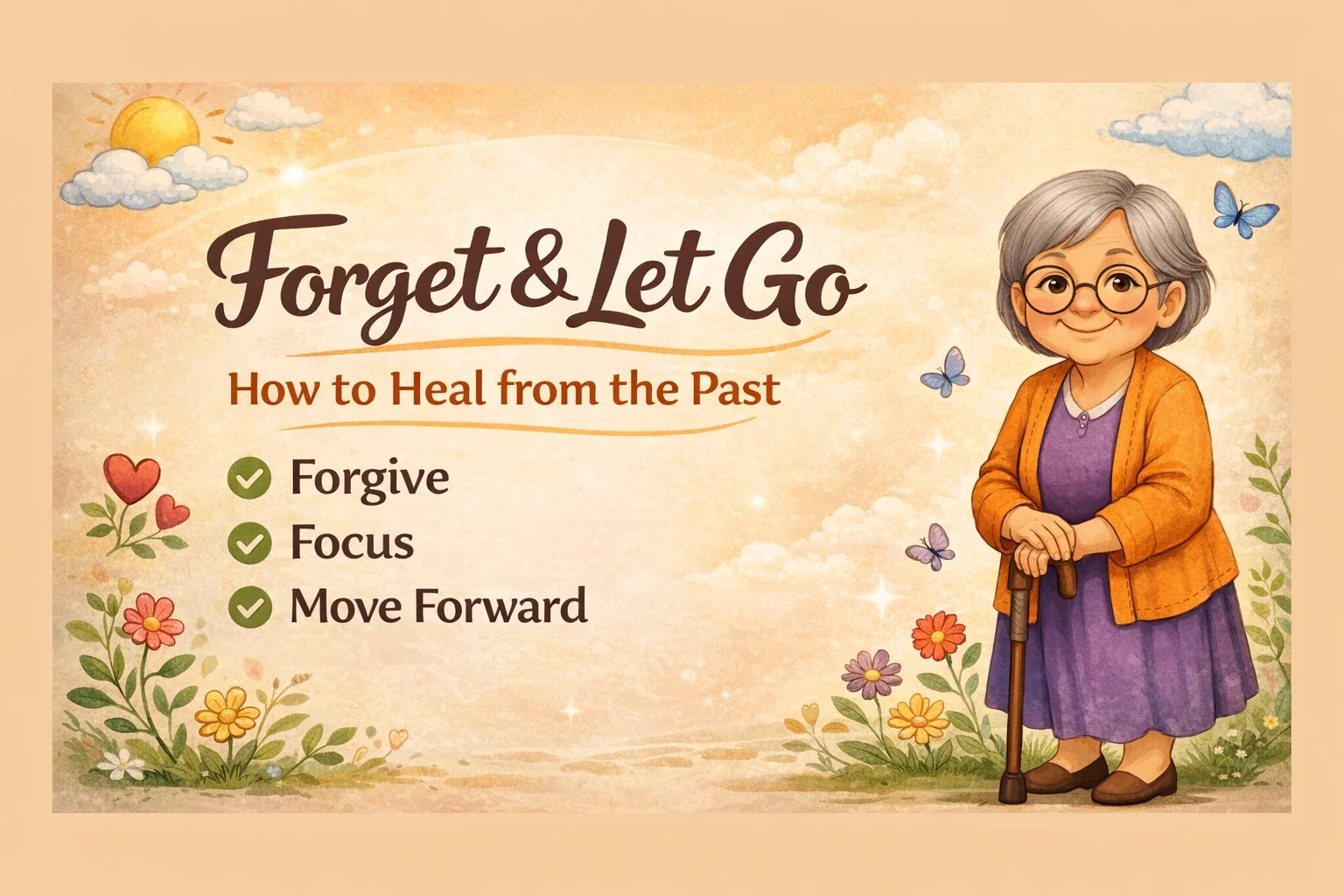
Finding peace in a fast paced world often feels like a monumental task. We carry the weight of yesterday’s arguments, the sting of past failures, and the anxiety of what might happen tomorrow. However, true emotional freedom comes from a simple yet profound shift in perspective. The image of a serene, smiling grandmother leaning on her cane serves as a beautiful visual metaphor for this journey. It reminds us that while age brings physical limitations, it also brings the invaluable gift of wisdom. This wisdom teaches us that happiness is not the absence of pain, but the ability to focus on what truly matters despite it.
The Power of Selective Memory: Why We Must Forget Who Hurt Us
Memory is a powerful tool, but it can also be a heavy burden. When we cling to the memory of those who hurt us, we essentially allow them to live in our heads rent free. Every time we replay a betrayal or a harsh word, we re-experience the emotional trauma as if it were happening all over again. Choosing to forget is not about developing amnesia; it is about releasing the emotional charge associated with the event.
Forgiveness is often misunderstood as an act of weakness or a way of saying that the hurtful behavior was acceptable. In reality, forgiveness is a radical act of self-care. By choosing to let go of the grudge, you are reclaiming your energy. You stop looking backward and start looking at the path ahead of you. This mental clearance is essential for making room for new, healthier relationships.
Recognizing the Weight of Resentment
Resentment acts like a slow-acting poison. It affects your physical health, your sleep patterns, and your ability to trust others. When you hold onto bitterness, you are the one suffering, not the person who caused the pain. Breaking this cycle requires a conscious decision to prioritize your own well-being over the desire for retribution or the need to be right.
Cherishing the Circle of Love: Gratitude for the Present
While we work on letting go of the negative, we must simultaneously amplify the positive. It is easy to take the people who love us for every day for granted. We get caught up in the routine and forget to acknowledge the steady support of a partner, the laughter of a friend, or the unconditional love of a family member. These are the people who form our safety net.
Shifting your focus toward gratitude changes the chemistry of your brain. When you actively look for reasons to be thankful for the people in your life, you become more resilient. You begin to realize that even on your worst days, you are not alone. This sense of belonging is a fundamental human need that, when fulfilled, provides a deep sense of security and joy.
Practicing Daily Appreciation
How can we ensure we don’t forget those who love us? It starts with small, intentional actions:
- Express it Verbally: Tell the people you care about how much they mean to you. A simple thank you goes a long way.
- Quality Time: Put away the phone and truly listen when someone is speaking to you. Presence is the greatest gift you can give.
- Small Gestures: A surprise note or a small act of kindness reinforces the bond of love and shows that you are paying attention.
Healing from the Past: Moving Beyond the Tears
The past has a way of haunting us through “what ifs” and “if onlys.” We look back at moments of sadness and wonder how things could have been different. While it is important to grieve losses, staying stuck in that grief prevents us from living the life that is currently unfolding. The past is a finished chapter; you cannot rewrite the pages, but you can certainly start a new one.
Focusing on the present that makes you smile is a form of mindfulness. It means noticing the warmth of the sun, the taste of your morning coffee, or the beauty of a flower in your garden. These small “micro-joys” are the building blocks of a happy life. When you string enough of these moments together, the shadow of the past begins to fade.
Techniques for Staying Grounded in the Now
If you find your mind wandering back to painful memories, try these grounding techniques to bring yourself back to the present:
First, use the 5-4-3-2-1 method. Identify five things you can see, four things you can touch, three things you can hear, two things you can smell, and one thing you can taste. This forces your brain to engage with your physical surroundings immediately. Second, practice deep breathing. Focusing on the sensation of air entering and leaving your body is a powerful way to calm the nervous system and quiet the mental chatter.
The Alchemy of Pain: Turning Hurt into Lessons
One of the most profound messages from the wise figure in the image is to forget the pain but remember the lessons. Every difficult experience we go through is a teacher in disguise. If we only focus on the hurt, we miss the opportunity for growth. However, if we look for the lesson, we transform our suffering into wisdom.
Pain tells us where our boundaries were crossed. It teaches us about our own strengths and weaknesses. It shows us what we value and what we are no longer willing to tolerate. When you extract the lesson from a painful situation, you ensure that you don’t have to repeat the same mistakes. You become more discerning, more compassionate, and more capable of navigating future challenges.
Reframing Your Narrative
Instead of seeing yourself as a victim of your circumstances, try to see yourself as a student of life. Ask yourself: What did this situation teach me about myself? How did I grow because of this challenge? What will I do differently next time? This shift from a victim mindset to a growth mindset is incredibly empowering. It puts you back in the driver’s seat of your own life.
The Wisdom of Aging: Perspective from the Golden Years
The choice of an elderly woman as the focal point of this message is intentional. Those who have lived long lives have seen cycles of joy and sorrow repeat many times. They know that the “end of the world” moments of youth are often just bumps in the road. They have learned that time truly does heal, provided we allow it to.
There is a certain lightness that comes with age for those who choose to live by these principles. When you no longer care about petty grievances and you have made peace with your past, you can truly enjoy the simple pleasures of life. This image encourages us to adopt that “elder wisdom” regardless of our chronological age. We can choose to be lighthearted, kind, and focused on the good right now.
Embracing Grace and Patience
Living this way requires grace for yourself and others. You won’t always succeed in forgetting the hurt immediately, and that is okay. The goal is progress, not perfection. Be patient with your healing process. Just as the grandmother in the image uses a cane for support, don’t be afraid to lean on your support systems or spiritual practices as you navigate your own emotional journey.
Conclusion: Building a Life of Joy and Purpose
The roadmap to a fulfilling life is deceptively simple: let go of the bad, cherish the good, stay in the moment, and learn from the hard times. By following these timeless principles, we create a sanctuary within ourselves that external circumstances cannot easily disturb. We stop being at the mercy of our memories and start being the architects of our happiness.
Take a cue from the smiling figure in the illustration. Stand tall, even if you need a little support. Look at the world with kindness in your eyes. Remember that every day is a fresh opportunity to focus on the love that surrounds you and the lessons that have shaped you. Life is too short to spend it looking in the rearview mirror. Turn your gaze forward, embrace the present, and let your smile be a reflection of the peace you have cultivated in your heart.