5 Ways to Manage Overwhelmed Feelings with the R.A.P.I.D. Mindfulness Method for Stress Relief
Life moves fast and often brings a whirlwind of emotions that can leave us feeling completely overwhelmed. Whether it is a demanding project at work, a tense conversation with a loved one, or simply the weight of a never-ending to-do list, our natural instinct is often to react instantly. However, reacting from a place of stress usually leads to decisions we regret later. This is where the power of a mindful pause comes into play. By learning how to slow down and process our internal state, we can transform our reactivity into intentional action. The R.A.P.I.D. method is a practical and effective framework designed to help you navigate these high-pressure moments with grace and clarity.
Understanding the Need for a Mindful Break
In our modern world, we are constantly bombarded with stimuli. Our brains are wired to detect threats, and in the past, this meant physical predators. Today, those threats have evolved into emails, notifications, and social pressures. When we feel under attack, our nervous system enters a state of fight or flight. This physiological response makes it nearly impossible to think logically because the prefrontal cortex, the part of the brain responsible for reasoning, essentially goes offline. Taking a mindful pause is not just a trendy concept; it is a biological necessity for maintaining emotional health and making sound choices.
The Science of the Stress Response
When you feel triggered, your body releases cortisol and adrenaline. Your heart rate increases, your muscles tense up, and your breathing becomes shallow. This state is designed for quick movement, not for nuanced problem-solving. By consciously choosing to stop and breathe, you signal to your nervous system that you are safe. This shift allows your body to move from the sympathetic nervous system, which handles stress, back to the parasympathetic nervous system, which handles rest and digestion. Once you are back in a state of equilibrium, you can look at the situation through a much clearer lens.
R Is for Relax: The Foundation of Calm
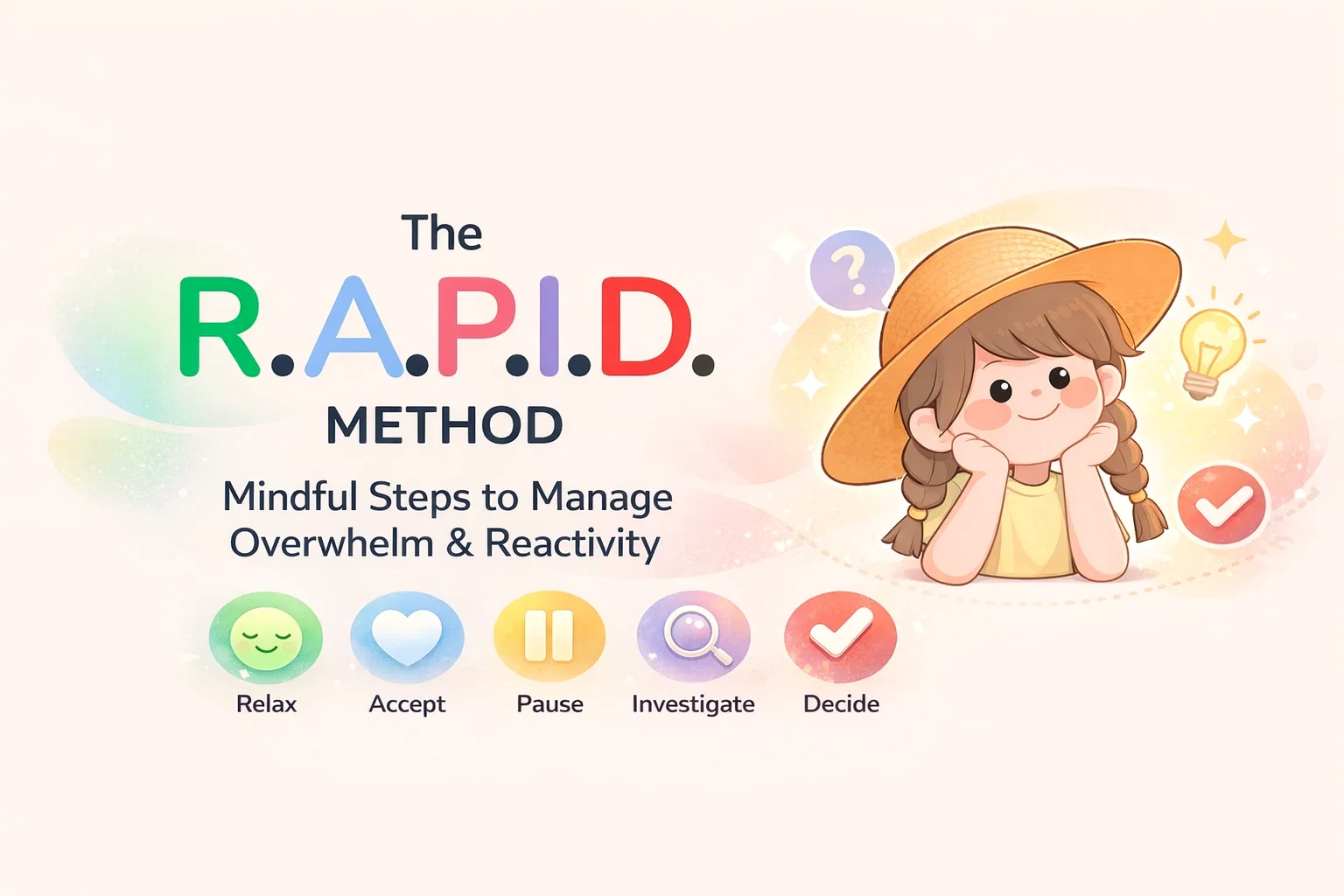
The first step in the R.A.P.I.D. method is to Relax. This might seem easier said than done when you are in the heat of the moment, but it begins with the body. You cannot think clearly when you are physically tense. To start, take a slow, deep breath. Focus on the sensation of the air entering your lungs and the feeling of your chest expanding. As you exhale, imagine the tension leaving your shoulders and jaw.
Allow your body to soften. When we are stressed, we often clench our fists or scrunch our brows without even realizing it. By intentionally relaxing these muscles, you send a message to your brain that the immediate danger has passed. This physical softening is the essential first step because it creates the space necessary for the mind to settle. Remember, calm must come first before any effective action can be taken.
A Is for Accept: Honoring Your Reality
Once you have physically settled, the next step is to Accept. This does not mean you have to like the situation or agree with what is happening. Instead, it means acknowledging exactly how you are feeling in this moment without judgment. Many of us try to push away negative emotions like anger, frustration, or anxiety because they feel uncomfortable. However, resisting an emotion only makes it persist longer and grow stronger.
Instead of saying I should not feel this way, try saying I am feeling very overwhelmed right now, and that is okay. By labeling the emotion, you take away some of its power over you. Acceptance is about being an honest observer of your own experience. When you stop fighting your feelings, you stop wasting energy on internal conflict and can instead focus that energy on resolving the actual problem at hand.
The Power of Non-Judgmental Awareness
Practicing acceptance requires a certain level of self-compassion. We are often our own harshest critics, especially when we feel we are losing control. By adopting a non-judgmental stance, you treat yourself with the same kindness you would offer a friend. This creates a safe internal environment where you can explore your thoughts and feelings without fear of self-criticism. This openness is vital for the deeper investigation that comes later in the process.
P Is for Pause: Creating Space Between Stimulus and Response
The Pause is perhaps the most critical component of this method. Between every stimulus and every response, there is a space. In that space lies our freedom and our power to choose our response. Usually, we jump straight from the trigger to the reaction, skipping the pause entirely. By stopping for a moment, you reclaim that power.
Give yourself a break to think things through. This might mean stepping away from your computer for five minutes, taking a walk around the block, or simply counting to ten before speaking. This time allows the initial wave of intense emotion to subside. It ensures that whatever you do next is a choice you are making consciously, rather than a knee-jerk reaction dictated by your hormones and habits.
I Is for Investigate: Asking the Right Questions
With the space created by the pause, you can now move into the Investigate phase. This is an intellectual and emotional deep dive into what is actually occurring. Instead of staying on the surface of the frustration, ask yourself specific questions to uncover the root cause of the distress. Some helpful questions include:
- What is really going on here? Try to separate the facts from your interpretations.
- What triggered this feeling? Was it a specific word someone said, a memory, or a physical sensation like hunger or fatigue?
- What is the best move for my long-term well-being? This shifts your focus from immediate relief to sustainable solutions.
Investigation helps you identify patterns in your behavior. Perhaps you notice that you always feel overwhelmed on Monday mornings, or that certain topics of conversation always make you defensive. Understanding these triggers allows you to prepare for them in the future and reduces their ability to catch you off guard.
D Is for Decide: Choosing Your Path Forward
The final step in the process is to Decide. Now that you have relaxed your body, accepted your feelings, paused for clarity, and investigated the situation, you are in the best possible position to make a choice. This decision should align with your goals, your personal values, and what is truly best for you and those around you.
Your decision might be to have a calm conversation with the person who upset you. It might be to set a firm boundary, or perhaps to let the situation go entirely because it is not worth your energy. Whatever the choice, it is now an empowered one. You are no longer a victim of your circumstances; you are the architect of your own responses. This sense of agency is incredibly rewarding and builds confidence in your ability to handle future challenges.
Integrating the R.A.P.I.D. Method into Daily Life
Like any skill, mindfulness takes practice. You might not remember to use the R.A.P.I.D. method every single time you feel stressed at first, and that is perfectly normal. The goal is progress, not perfection. You can start by practicing these steps during low-stakes situations, such as when you are stuck in traffic or waiting in a long line at the grocery store. As you become more familiar with the rhythm of the process, it will become easier to access during more significant life events.
Building a Mindful Routine
To make this method second nature, consider incorporating general mindfulness practices into your daily routine. This could include a morning meditation, a gratitude journal, or simply taking a few minutes each day to sit in silence. The more you practice being present in the calm moments, the easier it will be to find that presence when things get chaotic. Surrounding yourself with visual reminders, like a small note on your desk or a background on your phone, can also help keep these steps top of mind.
The Long-Term Benefits of Choosing Intention Over Reaction
Consistently using the R.A.P.I.D. method leads to profound changes in your life. You will likely find that your relationships improve because you are communicating more clearly and with less aggression. Your productivity may increase because you are spending less time spiraling in stress and more time taking effective action. Most importantly, your internal sense of peace will grow. You will develop a deep trust in yourself, knowing that no matter what life throws your way, you have the tools to handle it with composure.
Mindfulness is a journey of returning to yourself. It is about recognizing that while you cannot always control the world around you, you have absolute control over how you inhabit that world. By embracing the mindful pause, you open the door to a life that is more intentional, more balanced, and ultimately more fulfilling.
Conclusion: Your Path to Emotional Mastery
Mastering your emotions is not about suppressing them; it is about understanding and directing them. The R.A.P.I.D. method provides a clear, actionable roadmap for anyone looking to break free from the cycle of overwhelm and reactivity. By committing to Relaxing, Accepting, Pausing, Investigating, and Deciding, you are taking a significant step toward personal growth and emotional resilience. Start today by applying this method to the next small frustration you encounter. Over time, these small pauses will add up to a major transformation in how you experience your life. Remember, you have the power to choose your response, and that choice makes all the difference.