Overcoming Emotional Suppression How to Master Emotional Regulation Skills
We often carry a heavy weight that does not belong to us. It is the weight of expecting ourselves to be experts in things we were never taught. If you have ever felt like you are failing at being a human because you struggle to manage your temper, your sadness, or your overwhelming anxiety, this is for you. The truth is that emotional regulation is a skill, not an instinct. For many of us, the childhood curriculum for handling feelings was incredibly short. It consisted of exactly one lesson: shut it down.
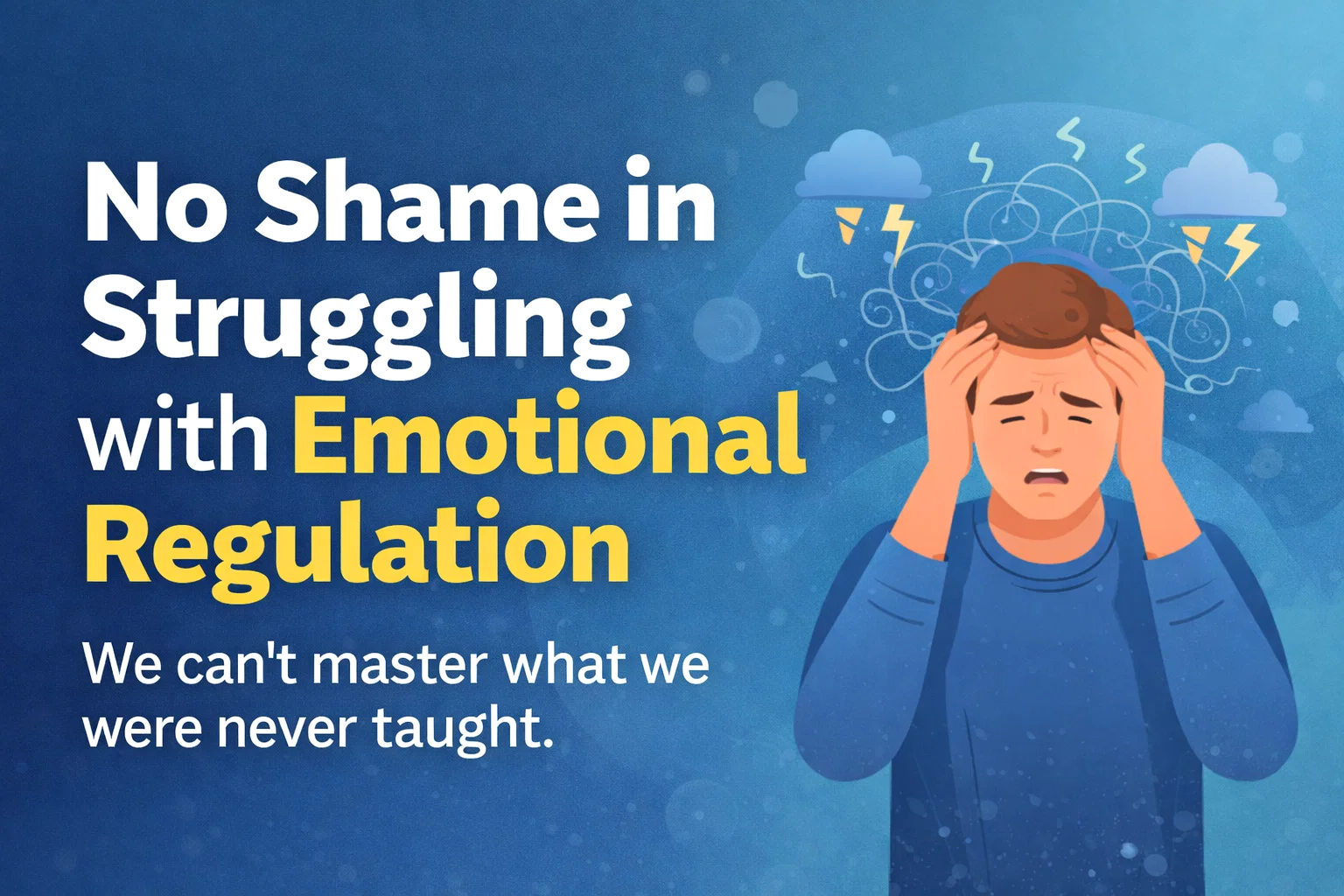
When we look at the words of Dr. Glenn Patrick Doyle, we find a profound validation of the struggle so many adults face today. We are essentially trying to build a complex architectural structure without ever having been given the blueprints or the tools. Acknowledging this is the first step toward true healing. It is not about making excuses, it is about finding the context for our current struggles so we can finally move forward with self-compassion instead of self-criticism.
The Myth of the Natural Emotional Expert
In our society, there is a pervasive myth that people should naturally know how to handle their feelings. We treat emotional intelligence as if it is something you are born with, like eye color. However, psychology tells us a very different story. Emotional regulation is a developmental milestone that requires co-regulation from a caregiver. This means that as children, we needed someone to sit with us in our big feelings, help us name them, and show us how to move through them safely.
If that did not happen, or if your environment punished you for showing “too much” emotion, your brain adapted. It learned that the only safe way to exist was to suppress, hide, or ignore what was happening inside. This is not a personal failure. It is a brilliant survival strategy that your younger self used to get through a difficult time. The problem is that as adults, these survival strategies often become the very things that hold us back from living full and connected lives.
Understanding the Shut Everything Down Method
Many households operate on a philosophy of silence. If you were crying, you might have been told to stop or you would be given something to cry about. If you were angry, you were sent to your room until you could be pleasant again. Over time, the message became clear: your internal world is a nuisance to others and a danger to your safety. So, you learned the trick of the trade. You learned to shut everything down.
The Cost of Emotional Suppression
While shutting down might keep the peace in the short term, it comes with a high price tag. When we suppress our emotions, we do not actually get rid of them. We simply store them in our bodies. This often leads to chronic stress, physical ailments, and a general sense of numbness. You cannot selectively numb emotions. When you shut down the pain and the anger, you also shut down your capacity for joy, creativity, and deep intimacy. You end up living a beige life, where everything is muted and nothing feels quite real.
The Explosion After the Shutdown
Another common side effect of the “shut it down” method is the eventual explosion. Think of your emotions like steam in a pressure cooker. If there is no vent to release the pressure gradually, the entire thing will eventually blow. People who struggle with suppression often find themselves having “out of nowhere” outbursts over small things. This leads to more shame, which leads to more suppression, and the cycle continues.
Breaking the Cycle of Shame
The image shared by Dr. Doyle hits on a vital point: there is zero shame in struggling with things you were never taught. Shame is the enemy of growth. When we feel ashamed of our emotional struggles, we hide them, which prevents us from seeking the help or the resources we need to improve. To break this cycle, we must replace shame with curiosity.
Instead of saying, “What is wrong with me that I am so angry?” try saying, “I notice I am feeling a lot of anger right now. I wonder what my body is trying to tell me?” This shift in perspective allows you to become an observer of your experience rather than a victim of it. It creates the space necessary to choose a new response rather than falling back on old, automated patterns.
Practical Steps for Learning Emotional Regulation
Since emotional regulation is a skill, it can be learned at any age. It takes practice, patience, and a lot of repetition. You are essentially re-parenting yourself and teaching your nervous system that it is finally safe to feel. Here are some foundational steps to begin that journey:
- The Power of Naming: Research shows that simply labeling an emotion can reduce the activity in the amygdala, the brain’s fear center. When you feel a surge of feeling, try to name it specifically. Are you frustrated, lonely, disappointed, or perhaps just tired?
- Body Awareness: Emotions are physical before they are mental. Start noticing where you feel tension. Is it in your jaw, your chest, or your stomach? Learning to recognize these physical cues gives you an early warning system.
- The 90 Second Rule: Neuroanatomist Jill Bolte Taylor suggests that the chemical process of an emotion lasts about 90 seconds. If you can breathe through that initial surge without feeding it with stories or judgments, it will often begin to dissipate on its own.
- Self-Compassion Pauses: When you catch yourself in a moment of struggle, stop and say to yourself, “This is a moment of suffering. Everyone feels this way sometimes. May I be kind to myself in this moment.”
Creating a New Supportive Environment
If you were never supported in consistently doing the work of emotional regulation, it is important to build that support system now. This might look like finding a therapist who specializes in somatic experiencing or dialectical behavior therapy. It might look like joining a support group where people speak openly about their mental health. Or, it might look like surrounding yourself with friends who value vulnerability and emotional honesty.
You do not have to do this alone. In fact, healing often happens in the context of safe relationships. By seeing others navigate their emotions with grace and self-honesty, you give yourself permission to do the same. You begin to see that big feelings are not something to be feared, but rather a natural part of the human experience that can be managed and understood.
Conclusion: It Is Never Too Late to Learn
The journey of unlearning the “shut down” response is not easy. There will be days when you fall back into old habits and days when the weight of your past feels overwhelming. But remember the core message: you are not broken. You are simply unskilled in an area where you were never given a teacher. Every time you choose to sit with a feeling instead of running from it, you are rewriting your internal script.
Be patient with yourself. You are learning a language that was kept from you for decades. With time and practice, you will find that you no longer need to shut everything down to be safe. You will discover a new sense of freedom, where you can experience the full spectrum of human emotion and still remain centered, whole, and at peace. You deserve to live a life where your feelings are your guides, not your enemies. Start today by giving yourself the grace you were denied as a child. You are doing the hard work, and that is something to be incredibly proud of.