9 Signs of Emotional Abuse How to Identify Toxic Behavior Protect Your Mental Well-being
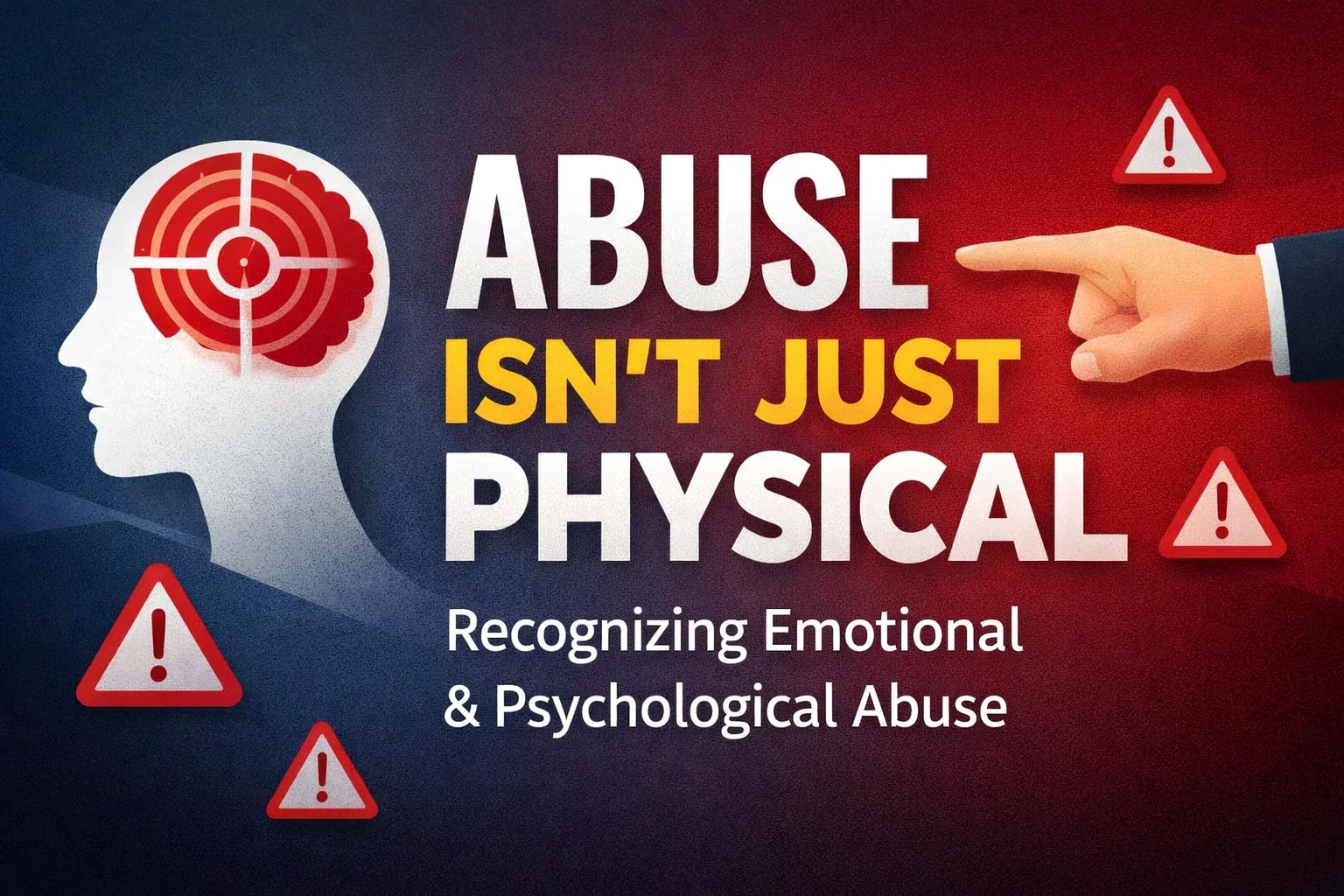
When we discuss the concept of abuse, the first images that usually come to mind are physical. We think of bruises, broken bones, or visible marks that tell a story of violence. However, there is a quieter, more insidious form of harm that leaves no physical scars but cuts just as deep. Emotional abuse is a pattern of behavior used to gain power and control over another person by chipping away at their self-esteem, reality, and independence. It often starts so subtly that you might not even realize it is happening until you feel completely lost within the relationship. If you have ever looked at your partner or a family member and felt a sudden, sharp realization that something is fundamentally wrong, you are not alone.
The image we are looking at today highlights a profound truth: abuse is also the quiet moments of humiliation, the constant criticism, and the subtle ways someone makes you doubt your own mind. Recognizing these red flags is not about pointing fingers or living in a state of fear; it is about reclaiming your power. It is about understanding that your feelings are valid and that you deserve to feel safe, respected, and loved in every interaction you have. In this guide, we will dive deep into the nine signs of emotional abuse and explore how you can move toward a life of healing and protection.
1. Public Humiliation and Making You the Punchline
One of the most common ways an emotional abuser asserts dominance is through public humiliation. This often starts under the guise of “teasing” or “just joking.” They might bring up your private insecurities in front of friends, family, or even strangers, watching as you squirm with discomfort. When you try to defend yourself or express that it hurt your feelings, they likely dismiss you by saying you are too sensitive or that you cannot take a joke.
The goal of this behavior is to make you feel small. By degrading you in front of others, the abuser creates a dynamic where they are the “funny” or “dominant” one while you are the “target.” This social isolation is powerful because it makes you feel like no one respects you, further tying your self-worth to the abuser’s approval. A healthy partner or friend should be your biggest advocate in public, not the person leading the charge against your dignity.
2. The Invasion of Personal Space and Boundaries
Boundaries are the invisible lines we draw to protect our mental and physical well-being. In a healthy relationship, these boundaries are respected without question. In an abusive one, they are viewed as obstacles to be overcome. An abuser might check your private messages, demand your passwords, or show up unannounced at your workplace. They might ignore your need for physical space, touching you or staying in your personal bubble even after you have asked them to stop.
This invasion is a tactic used to show you that you do not own yourself. By disregarding your “no,” they are communicating that their desires and curiosity are more important than your comfort. Over time, you might stop setting boundaries altogether because it feels easier than dealing with the conflict that arises when you try to protect your space. Remembering that you have a right to privacy and physical autonomy is a vital step in breaking this cycle.
3. The Weight of Constant Criticism
We all experience constructive feedback at times, but there is a massive difference between someone who wants to help you grow and someone who wants to tear you down. Constant criticism in an emotionally abusive relationship feels like a relentless stream of “helpful” advice that always leaves you feeling incapable. Whether it is how you dress, how you cook, your career choices, or the way you speak, nothing is ever good enough.
This tactic is designed to chip away at your self-esteem until you believe that you cannot do anything right without the abuser’s guidance. It creates a state of dependency where you constantly look to them for validation because you no longer trust your own abilities. If you find yourself second-guessing every decision you make because you are worried about their critique, it is a sign that the criticism has become a tool of control rather than a form of communication.
4. Gaslighting: Making You Feel Like the Fool One
Gaslighting is perhaps the most dangerous form of emotional abuse because it targets your perception of reality. It involves the abuser denying things they said or did, twisting facts to make you look wrong, or telling you that your memory is failing you. The phrase “making you feel like the fool one” perfectly describes the end result of gaslighting. You begin to doubt your own sanity and start trusting the abuser’s version of events over your own lived experience.
How to Identify Gaslighting in Action
- The Denial: “I never said that, you’re making things up again.”
- The Diversion: Changing the subject to your “flaws” whenever you bring up their behavior.
- The Trivializing: “You’re getting worked up over nothing; you’re just being dramatic.”
When you are gaslit, you lose your internal compass. You stop trusting your gut because you have been told so many times that your gut is wrong. Recovering from gaslighting involves learning to trust yourself again and acknowledging that your memory and feelings are valid data points that do not require someone else’s permission to be true.
5. Dismissing Your Thoughts and Feelings
In a supportive relationship, your partner or friend listens to your concerns and validates your emotions, even if they do not necessarily agree with your perspective. In an abusive dynamic, your thoughts and feelings are brushed off as unimportant. You might be told that you are “overdramatic,” “too emotional,” or “crazy.”
This dismissiveness is a way of silencing you. If your feelings are always “wrong” or “unimportant,” you eventually stop sharing them. This leads to profound emotional isolation. You start carrying your burdens alone because you know that expressing them will only result in being shut down. Your internal world is a rich and important place, and anyone who treats your emotions as an inconvenience is not treating you with the respect you deserve.
6. Shifting Blame: The Never-Ending Cycle
Accountability is a hallmark of maturity. However, an emotional abuser rarely, if ever, takes responsibility for their actions. If they yell at you, it is because you “pushed their buttons.” If they cheat, it is because you “werent attentive enough.” If they fail at something, it is because you “didn’t support them.”
By shifting the blame, the abuser ensures that they are always the victim and you are always the perpetrator. This leaves you in a constant state of trying to “fix” yourself or the relationship to prevent their bad behavior. You end up carrying the guilt for things you didn’t even do. Recognizing that you are not responsible for another adult’s choices or reactions is a major breakthrough in escaping emotional manipulation.
7. Weaponized Sarcasm and Biting Humor
Sarcasm can be a fun part of a relationship when it is mutual and lighthearted. However, it can also be weaponized. When sarcasm is used specifically to sting, insult, or belittle you, it is no longer a joke; it is abuse. This often happens in front of others or during sensitive conversations where you are looking for sincerity.
When you call out the hurtfulness of the comment, the abuser will often accuse you of having “no sense of humor.” This is a double-edged sword: they get to hurt you with the comment and then hurt you again by calling you boring or sensitive. It is important to distinguish between playful banter and comments meant to devalue you. If the “joke” always ends with you feeling bad about yourself, it is not a joke.
8. Extreme Control Over Your Life
While some signs of abuse are subtle, control is often quite overt once it takes root. An abuser may try to dictate who you see, what you wear, how you spend your money, and even how you spend your free time. They might use guilt (“If you loved me, you’d stay home”) or threats (“If you go out with them, don’t expect me to be here when you get back”) to keep you under their thumb.
This control is designed to isolate you from your support systems. The more isolated you are from friends and family, the more dependent you become on the abuser. They want to be the sole source of your information, affection, and resources. Reclaiming your independence—whether that means managing your own finances or rekindling old friendships—is a powerful act of defiance against a controlling partner.
9. Making You Doubt Yourself Constantly
The cumulative effect of all these behaviors is a deep-seated self-doubt. You might find yourself checking and re-checking your texts before sending them, wondering if a simple statement will trigger an argument. You might stop pursuing hobbies or goals because the “constant criticism” has convinced you that you will fail anyway.
This self-doubt is the abuser’s greatest victory because it means they no longer have to work as hard to control you; you are now controlling yourself on their behalf. Breaking this pattern requires a return to self-compassion. It involves looking in the mirror and remembering the version of yourself that existed before the relationship—the version that was confident, capable, and worthy of joy.
Moving Toward Healing and Protection
If you have read through these points and found yourself nodding along, please know that there is hope. The realization that you are in an abusive situation is painful, but it is also the first step toward freedom. You are not responsible for someone else’s abusive behavior, and you cannot “love” them into being a better person if they are unwilling to do the work themselves.
Steps to Reclaim Your Life
- Trust Your Gut: That feeling of “walking on eggshells” is your body telling you that you are not safe. Listen to it.
- Seek Support: Reach out to people you trust. Isolation is the abuser’s best friend, so connection is your best defense.
- Document the Patterns: Keep a private journal or notes on your phone about what is happening. When the gaslighting starts, you can refer back to your own records to stay grounded in reality.
- Prioritize Safety: If you feel the situation is escalating or becoming dangerous, reach out to local domestic violence resources or a therapist who specializes in trauma.
Healing is not a linear process. There will be days when you feel strong and days when you feel tempted to return to the familiar, even if it was painful. Be patient with yourself. You are unlearning a system of manipulation that was designed to keep you trapped. Every step you take away from toxicity is a step toward the healthy, respectful, and vibrant life you deserve.
Final Thoughts on Choosing Yourself
Recognizing emotional abuse is an act of bravery. It requires you to look at a difficult truth and choose your own well-being over a toxic dynamic. Remember that everyone deserves a relationship built on mutual respect, safety, and genuine kindness. You are not “too much,” you are not “crazy,” and you are certainly not “the fool one.” You are a person worthy of unconditional respect and a love that doesn’t hurt.
As you move forward, keep the “oh” moments of realization close to your heart. Let them be the fuel that drives you toward setting firmer boundaries and seeking the support you need. Whether it is through therapy, support groups, or simply surrounding yourself with people who lift you up, your journey toward a healthier you has already begun. Save this knowledge, share it with those who might need it, and always remember to prioritize your mental peace above all else.