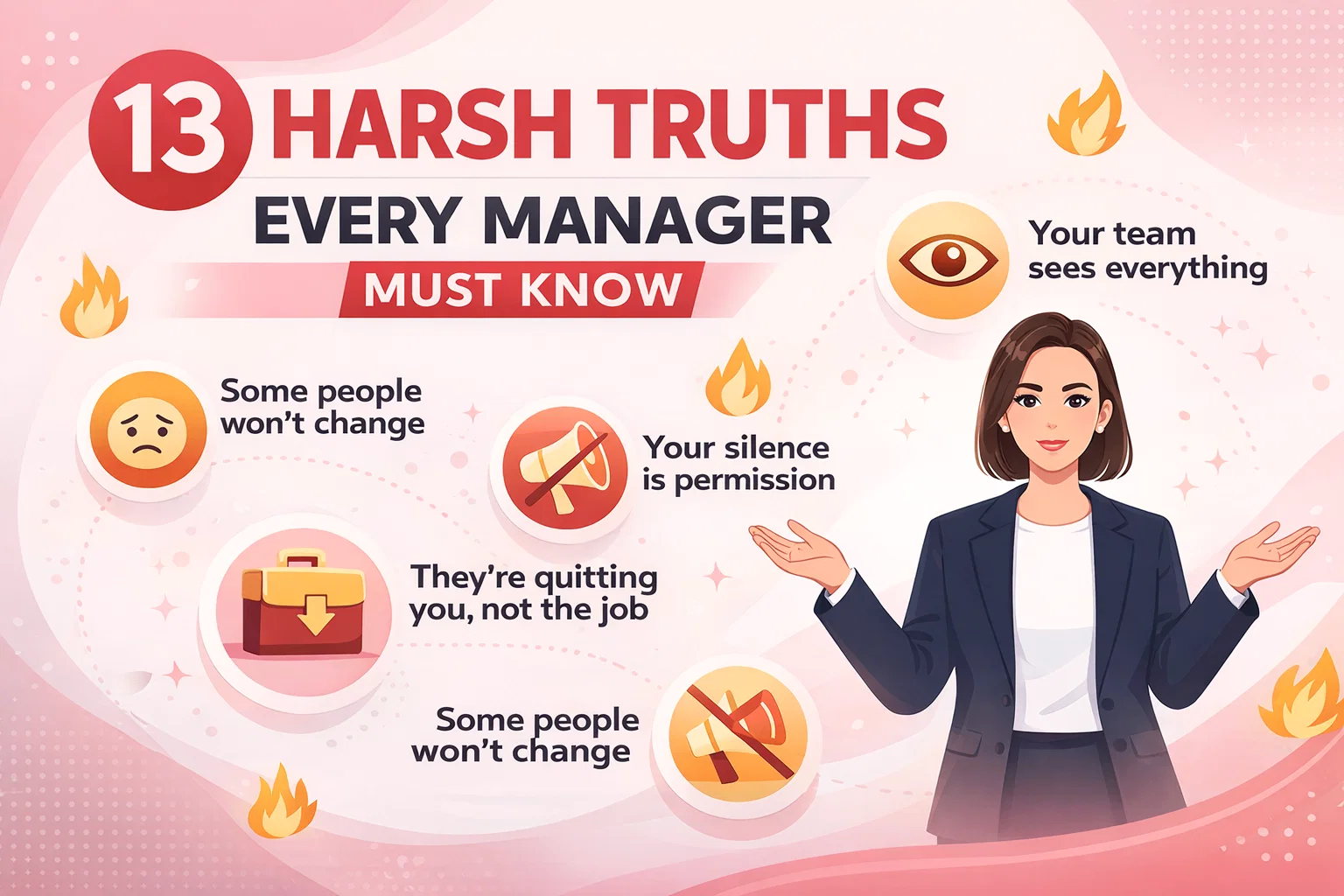
13 Harsh Truths Every Manager Must Know Leadership Tips Management Skills for Success
Stepping into a management role is often portrayed as the ultimate career milestone. It comes with a new title, a bump in salary, and the authority to make decisions. However, the reality of leadership is far more complex than a simple promotion. Behind the scenes, managers face a unique set of challenges that can make or break their professional reputation and their teams success. Understanding the unvarnished truths of the workplace is the first step toward becoming a leader people actually want to follow.
Many professionals spend years climbing the ladder only to find that the view from the top is different than they imagined. Leadership is not about being the boss; it is about taking care of those in your charge. If you are currently leading a team or aspiring to do so, these thirteen harsh truths will serve as your compass through the often turbulent waters of corporate management. Let us dive deep into the psychological and operational realities of being a manager in the modern world.
1. The Real Reason People Quit
You have likely heard the saying that employees do not quit jobs, they quit managers. While it sounds like a cliché, it remains one of the most accurate reflections of workplace dynamics. A bad manager can drive away top tier talent faster than any competitor can with a higher salary offer. High performers do not just want a paycheck; they want a supportive environment where their contributions are valued and their growth is prioritized.
When a manager is inconsistent, dismissive, or overly critical, the most talented individuals are the first to leave because they have the most options. Retaining your best people requires more than just administrative oversight. It requires a genuine commitment to their well-being and a realization that your behavior is the primary factor in their daily work experience.
2. The Transparency of Leadership
As a manager, you are constantly under a microscope. Your team sees everything. They notice when you say one thing but do another. They see when you play favorites or when you fail to follow through on a promise. This lack of privacy can be daunting, but it is a fundamental part of the role.
Your actions speak much louder than any mission statement or quarterly goal you present. If you want a culture of accountability, you must be the most accountable person in the room. Inconsistency breeds distrust, and once trust is lost, it is incredibly difficult to regain. Every interaction is an opportunity to reinforce your values or undermine them.
The Weight of Your Title
One of the most common misconceptions new managers have is that their title will automatically earn them respect. In reality, a title only gives you authority. Respect is something that must be earned every single day through consistent actions and integrity. Relying on hierarchy to get things done is a sign of weak leadership. True influence comes from the relationship you build with your team, not the nameplate on your desk.
3. You Are the Ceiling for Your Team
Your growth directly limits your teams potential. If you stop learning, stop evolving, or become stagnant in your ways, your team will eventually hit a wall. A manager who is unwilling to adapt to new technologies or management styles creates a bottleneck for everyone under them. To lead a high performing team, you must be a high performing individual who is committed to continuous self improvement.
Think of yourself as the lid on a jar. If the lid is low, the contents can only rise so far. By expanding your own skill set and emotional intelligence, you raise the ceiling for everyone else. This means seeking feedback, attending workshops, and staying curious about your industry. Your personal development is a service to your team.
4. Embracing the Villain Arc
This is perhaps the hardest truth to swallow: even if you do everything right, you will eventually be someone’s villain. Management involves making difficult decisions that will not please everyone. You might have to deny a vacation request, deliver a poor performance review, or implement a policy that is unpopular.
Perception is subjective. An employee who is struggling might view your attempts at coaching as harassment. Someone who was passed over for a promotion might view your choice as favoritism. You cannot control how others perceive you, but you can control your intentions and your fairness. Accept that you cannot be the hero in everyone’s story if you want to be an effective leader.
5. The Art and Struggle of Feedback
Providing feedback is a core responsibility, yet it rarely lands the way you intend it to. Everyone receives information differently based on their personality, past experiences, and current mental state. Your tone, the timing of the conversation, and the level of trust you have built all play a role in how your message is processed.
Some people need direct, blunt feedback to understand the gravity of a situation. Others require a more gentle, coaching centered approach. If you use a one size fits all method for communication, you will find that much of your advice falls on deaf ears. Learning to tailor your delivery is a skill that takes years to master, but it is essential for driving performance.
The People You Cannot Save
It is a noble goal to want to help every employee succeed, but the reality is that some people will not change. No matter how much you coach, mentor, or care for them, there will be individuals who are simply not a good fit for the role or the culture. As a manager, you must learn to recognize when your efforts are being wasted. It is better to transition a non performer out of the team than to let them drag down the productivity and morale of everyone else.
6. Silence as a Form of Permission
What you tolerate, you effectively endorse. If you see a team member being disrespectful or cutting corners and you say nothing, you are telling the rest of the team that this behavior is acceptable. Culture is shaped more by what a manager tolerates than by the motivational posters on the wall.
Being a leader means having the courage to have uncomfortable conversations the moment a standard is not met. Silence is often interpreted as agreement. To maintain a high standard of excellence, you must be willing to call out mediocrity and toxic behavior immediately. It is not about being a tyrant; it is about protecting the integrity of the team.
7. The Difference Between Liked and Respected
Many new managers fall into the trap of wanting to be everyone’s friend. While it is important to have a good rapport with your team, chasing popularity often comes at the expense of respect. If you are too focused on being liked, you will struggle to hold people accountable or make the hard calls that the job requires.
Leadership is not a popularity contest. It is about making the best decisions for the organization and the team as a whole. Often, the most respected leaders are the ones who are fair and consistent, even if they aren’t the most “fun” person in the office. Aim for respect first, and you will find that a healthy professional relationship follows naturally.
8. The Loneliness of the Role
Leadership is inherently lonely. When you move from being a peer to a manager, the dynamic of your workplace friendships changes instantly. You can no longer vent “sideways” to your colleagues about company problems, and you certainly cannot vent “down” to your subordinates. Doing so undermines your authority and creates unnecessary anxiety within the team.
You have to carry the weight of certain secrets and pressures alone. This is why it is crucial for managers to have a network of mentors or fellow leaders outside of their immediate team. You need a safe space to process your frustrations so that you can remain a pillar of stability for your employees.
9. Decision Making and Conflict
In the world of management, non decisions are actually decisions. When you avoid making a choice because it is difficult or controversial, you are choosing to let the situation stagnate. This drains trust and kills momentum. Your team looks to you for direction. Even a wrong decision can sometimes be better than no decision, as it allows the team to move forward and adjust course later.
Similarly, you cannot avoid conflict. Problems do not disappear just because you ignore them; they fester and grow into much larger issues. Addressing conflict early is like pulling a weed before it takes over the garden. It might be unpleasant in the moment, but it saves a massive amount of work and heartache down the road.
10. The Trap of Doing It All
You cannot do everyone’s job. Many managers get promoted because they were excellent at their previous technical roles, so they struggle to let go of the “doing” part of the work. This leads to micromanagement, which stifles employee growth and leads to manager burnout.
Your job is to lead, not to perform every task yourself. You must learn to trust your team and delegate effectively. If you cannot let go of control, the job will eventually control you. Effective leadership is about empowering others to do great work, which frees you up to focus on strategy and high level problem solving.
Final Thoughts on Leadership Mastery
Becoming an effective manager is a journey of self awareness and resilience. These thirteen harsh truths are not meant to discourage you, but rather to prepare you for the reality of the path ahead. Leadership is a demanding, often thankless job, but it is also incredibly rewarding when you see your team thrive and achieve goals they never thought possible.
By embracing these realities, you move away from the “boss” mindset and toward a true leadership philosophy. Focus on consistency, earn your respect through action, and never stop growing. The road might be lonely and filled with conflict, but with the right mindset, you can navigate it successfully and leave a lasting positive impact on the careers of everyone you lead.