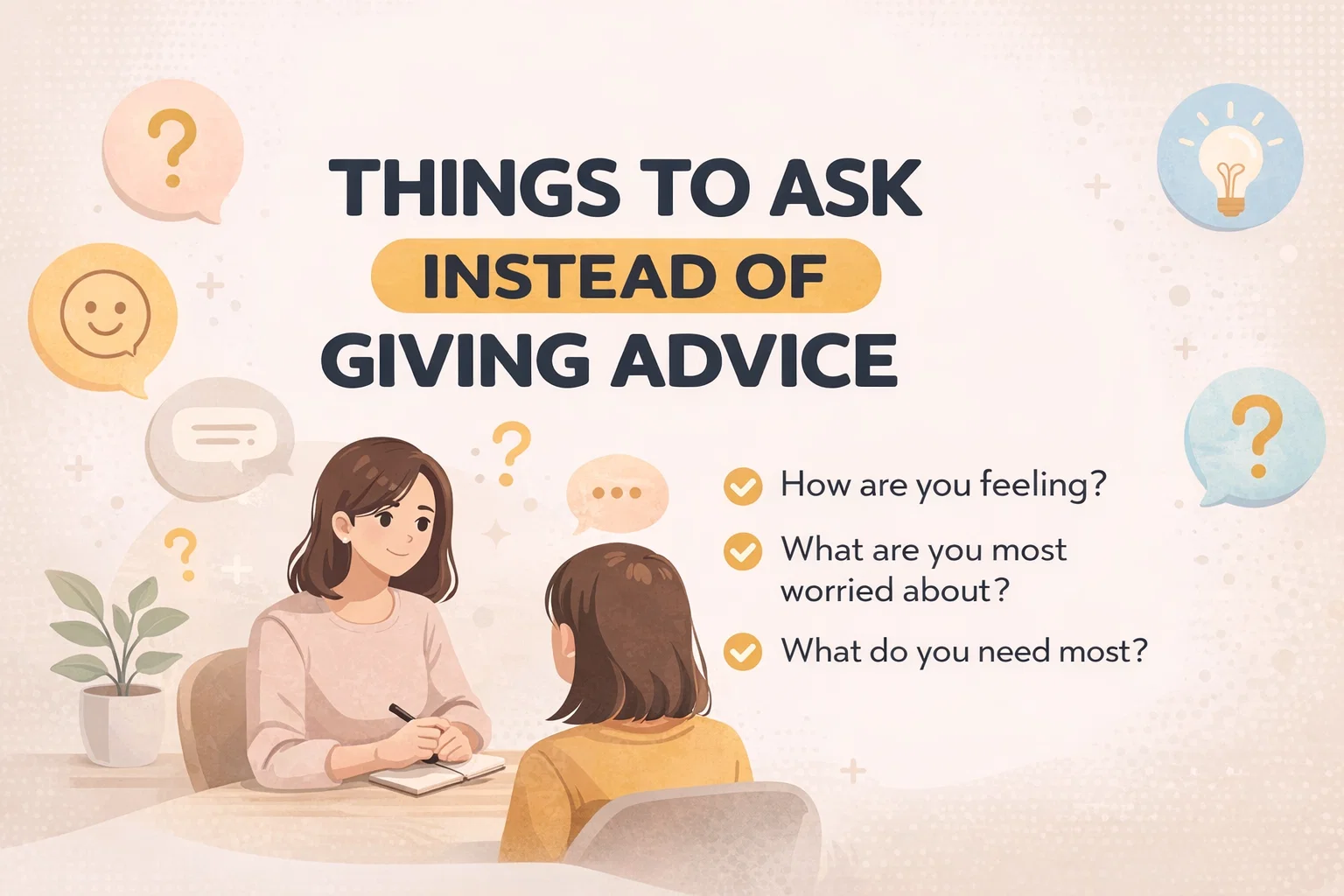
Mastering Empathy 4 Powerful Questions to Ask Instead of Giving Advice Today
We’ve all been there. A friend, family member, or colleague is pouring their heart out about a tough situation. They are struggling, maybe even a little lost. And our first instinct – the almost uncontrollable urge – is to jump in and “fix it.” We offer solutions, we brainstorm ideas, we say things like, “Well, if I were you…” We give advice. It comes from a place of love and a genuine desire to help, but is it always the most effective response? The image above powerfully reminds us that often, the most valuable thing we can offer isn’t an answer, but a question. It suggests that by resisting the impulse to give advice and instead, asking open-ended, supportive questions, we can create space for deeper connection, self-discovery, and more meaningful support. This simple shift in communication can truly be a superpower.
Think about the last time you received unsolicited advice. How did it feel? Did it instantly solve your problems and make you feel seen and heard? Or did it make you feel a little defensive, like you weren’t handling the situation well, or that your unique perspective wasn’t being fully appreciated? It’s a common experience. We live in a world that values quick fixes and problem-solving, and offering advice feels like we are actively doing something to help. But when we offer solutions immediately, we might be subtly signaling to the other person that we don’t believe they are capable of navigating their own challenges, or that we think we know what’s best for them, which can unintentionally disempower them.
The Pitfalls of Unsolicited Advice and the Power of Asking
So, why is giving advice so often our go-to response? For many of us, it’s a learned behavior, deeply ingrained from a young age. We are taught to be problem-solvers, to look for solutions, and to help others by offering our perspectives. Seeing someone we care about in pain or struggling triggers a strong empathic response in us, and we naturally want to fix whatever is causing that discomfort. Additionally, offering advice can give us a sense of control or competence, making us feel useful in a situation where we might otherwise feel helpless.
Unsolicited Advice: What It Is and What It Isn’t
It’s important to clarify what unsolicited advice is and isn’t. It’s not about withholding support or refusing to help. It’s specifically about offering solutions, suggestions, or “I would do…” statements before the other person has asked for them or has had the chance to fully explore their own thoughts and feelings. Sometimes, a simple, “What do you think I should do?” is a clear invitation for advice. In other instances, a person might genuinely be looking for options to consider. But more often than not, when someone is sharing a problem, they are simply looking for a supportive listener, a space to feel validated and understood. They might be looking to vent, to process their emotions, or simply to not feel alone in their struggle.
Why Shifting to Asking Questions is So Powerful
When we shift from giving advice to asking intentional questions, we completely change the dynamic of the conversation. Instead of being the expert problem-solver, we become a compassionate guide. Here’s why this approach can be so incredibly impactful:
- It Fosters Self-Reflection: By asking open-ended questions, we prompt the person to dig deeper into their own thoughts, feelings, and experiences. They are forced to consider different perspectives, understand their own needs, and explore potential solutions that resonate with them, not just with us.
- It Empowers the Individual: This approach subtly communicates that we trust their judgment and their ability to figure things out. Instead of making them feel dependent on our solutions, we empower them to find their own path forward, boosting their confidence and self-efficacy.
- It Strengthens Connections and Trust: Asking questions shows genuine interest and curiosity. It demonstrates that we are truly present and want to understand their unique perspective and experience, rather than just waiting for our turn to speak or to fix them. This builds a deeper sense of trust and vulnerability, essential for strong, healthy relationships.
- It Uncovers Underlying Issues: Often, the initial problem someone shares is just the tip of the iceberg. Intentional questions can help to peel back the layers and uncover deeper emotions, core values, and underlying issues that might not have been apparent at first.
- It Provides More Relevant Support: When we understand the full picture – the emotions, the concerns, the actual needs – we can offer support that is much more relevant, meaningful, and genuinely helpful to them.
Deeply Understanding the Four Powerful Questions
The image provides four key questions that serve as excellent starting points for this more empathetic, question-based approach to support. Let’s break down each one and explore why it’s so effective and how you might use it in your interactions.
1. How are you feeling about all of this?
This is arguably the most fundamental and crucial question to ask. So often, we get caught up in the details of the “what” and “how” of a situation and forget to check in on the “who” – the person going through it all. This question does a few powerful things:
- Validates and Centers the Person’s Experience: It immediately shifts the focus to their internal world, demonstrating that their feelings are important and worthy of attention. It signals that you are interested in them, not just the problem.
- Opens Up Space for Emotional Expression: Many people struggle to articulate their emotions or feel self-conscious doing so. By directly asking about their feelings, you give them permission and a safe space to name what they are experiencing – whether it’s sadness, anger, confusion, frustration, anxiety, or even a mix of emotions.
- Provides Critical Context: Understanding how someone feels about a situation completely changes the nature of the support they might need. For example, a person struggling with a career setback might need encouragement if they are feeling discouraged, but they might need validation and a space to vent if they are feeling angry about unfair treatment. You can’t truly help them without first understanding the emotional landscape.
Example in action: Imagine your partner comes home after a particularly stressful day at work, venting about a difficult project or a disagreement with a colleague. Instead of immediately offering solutions like, “Maybe you could talk to your boss,” or “You should have said…”, you could simply ask, “How are you feeling about all of this?” This question gives them a chance to share that they feel overwhelmed, unappreciated, or anxious, allowing you to offer a comforting hug or simply listen without judgment first, which might be exactly what they need in that moment.
2. What was the toughest part of this?
This question is fantastic because it helps the person narrow down their focus and identify the specific aspect of the situation that is causing them the most distress. A large, overwhelming problem can feel paralyzing. Breaking it down into its core challenges makes it feel more manageable, both for the person experiencing it and for you as you offer support. This question:
- Encourages Specificity and Deeper Reflection: Instead of ruminating on the entire situation as one big insurmountable obstacle, this question prompts them to pinpoint the exact moment, action, or feeling that was most difficult. This can lead to important insights and help them gain clarity on what is really bothering them.
- Shows Active Listening and Interest: Asking this question demonstrates that you are truly paying attention to the details of what they are sharing and want to understand their perspective on what makes the situation particularly challenging for them.
- Helps to Prioritize and Focus Efforts: Once you identify the toughest part, you can better understand where to direct your support. You can ask follow-up questions specifically about that aspect, or focus your empathetic responses on validating that particular challenge.
Example in action: Your friend is sharing that they are feeling incredibly overwhelmed by planning a large event or a complex project. They mention a dozen different things they need to do. Instead of suggesting organizational tools or offering to take over tasks right away, you could ask, “What was the toughest part of this?” They might respond that they are finding it difficult to coordinate with vendors, or that they feel particularly anxious about the financial aspects. Now you have a specific point of focus for your conversation and support, whether it’s brainstorm ideas together on how to communicate with vendors or simply validating how stressful financial planning can be.
3. What are you most concerned will happen?
This question is incredibly valuable because it helps to bring hidden anxieties and fears to the surface. Often, a person’s current distress is less about what has already happened and more about what they fear will happen as a result. By asking about their concerns, you open the door to discussing the worst-case scenarios, giving them a chance to voice their deepest anxieties and work through them. This question:
- Uncovers Underlying Fears and Motivated Reasoning: It helps to illuminate why the person is reacting the way they are and what is truly driving their emotional response. Understanding their fears can explain a lot about their decisions, behaviors, and resistance to certain ideas.
- Allows for Reality-Testing and Fear Mitigation: Simply giving voice to a fear can sometimes diminish its power. Once a fear is articulated, it can be examined more objectively. While we shouldn’t dismiss their fears, voicing them can lead to conversations that help them gain perspective, consider alternative outcomes, and develop coping strategies.
- Builds Trust through Vulnerability: Sharing their deepest concerns requires a significant amount of trust. By asking this question, you create a safe space for them to be truly vulnerable, which can greatly strengthen your connection.
Example in action: A colleague expresses hesitation about taking on a new leadership role, citing concerns about the added workload and responsibility. Instead of immediately encouraging them and telling them how capable they are, you could ask, “What are you most concerned will happen?” This might reveal that they are actually afraid of failing publicly, of disappointing their team, or of not being able to balance their work and personal life effectively. Now you can have a much more meaningful conversation about managing expectations, seeking mentorship, and setting boundaries, which are the real issues at hand, rather than just talking about general workload management.
4. What do you think you will need?
This final question is a masterclass in empowerment and collaborative problem-solving. After exploring feelings, challenges, and concerns, this question shifts the focus towards finding a path forward – but a path they define, not one you create for them. It signals your willingness to support them on their terms. This question:
- Prompts Them to Think Proactively and Solution-Oriented: By the time you get to this question, the person has hopefully had a chance to deeply process their experience. Now, you are inviting them to consider what actions, resources, or support would be genuinely helpful to them.
- Puts Them in the Driver’s Seat: It directly asks for their perspective on their own needs, reinforcing that they are capable of identifying what is best for them and that you respect their autonomy. It avoids the pitfall of assuming you know what they need, which is a key aspect of healthy, respectful communication.
- Allows You to Offer Targeted and Meaningful Support: Their answer might be surprisingly simple – a listening ear, a hug, help with brainstorming, specific resources, or maybe just some time and space. When you know exactly what they need, you can offer support that is incredibly impactful, rather than generic and potentially unhelpful.
Example in action: Your family member is going through a difficult breakup and has shared their feelings of sadness, identified the toughest parts of untangling their lives, and voiced their fears about being alone. When you ask, “What do you think you will need?”, they might say, “I just need someone to talk to when I’m feeling particularly lonely,” or “I could use some help figuring out logistics, but I need some space from my ex right now.” Their specific answers provide clear direction for how you can be a valuable support system for them during this challenging time.
Mastering the Art of Being a Question-Asker (and Resisting the Advice Trap!)
Making this shift from advice-giver to question-asker isn’t always easy. It requires conscious effort, self-awareness, and a lot of practice. Here are some key principles to keep in mind as you try to incorporate this approach into your relationships:
It All Starts with Deep, Intentional Listening
Before you can even ask a good question, you must first commit to truly listening. This means more than just hearing the words; it’s about paying attention to tone of voice, body language, and the underlying emotions being expressed. Here’s what deep listening looks like:
- Put Away Distractions: Turn off your phone, close your laptop, and give the other person your full, undivided attention.
- Make Eye Contact and Use Open Body Language: Signal that you are present and engaged. Nods and small verbal cues like “I see” or “Go on” can also be very effective.
- Listen without Formulating your Response: While they are talking, focus entirely on understanding their perspective, not on what you are going to say next or how you are going to fix the situation. This is perhaps the hardest part, but it’s crucial for truly deep listening.
- Listen for the Emotion behind the Words: Often, the feelings being expressed are more important than the specific details of the story. Pay attention to cues that reveal sadness, anger, fear, or other emotions.
Crafting Your Questions Mindfully
The best questions for this approach are open-ended – meaning they require more than a simple “yes” or “no” answer – and are free from judgment or implicit advice. They are truly designed for understanding, not fixing. Here are some key principles for crafting effective, empathetic questions:
- Avoid Questions that Start with “Why”: “Why” questions can sometimes feel accusatory or put people on the defensive, making them feel like they need to justify their feelings or actions. For example, instead of asking, “Why are you so upset about that?”, you could ask, “How are you feeling about that situation?”.
- Keep Questions Short and Simple: Don’t try to cram too much into one question or overcomplicate it. The four questions from the image are perfect examples of short, powerful, and effective inquiries.
- Focus on Their Experience, not Yours: Avoid comparisons or talking about similar experiences you’ve had, especially early in the conversation. This can shift the focus back to you and can sometimes diminish the other person’s unique experience. Remember, the goal is to fully understand their perspective.
- Be Genuinely Curious and Patient: Allow ample time and silence for them to think and respond after you ask a question. Don’t rush to fill the silence with another question or suggestion. True connection often happens in the quiet moments of thoughtful reflection.
Navigating the Inner Urge to Fix: Practicing Self-Restraint
The most challenging part of this whole approach is learning to resist the impulse to jump in with advice. It can feel uncomfortable to just sit with someone in their struggle without offering a solution. Here are some strategies to help you navigate this internal struggle:
- Name the Feeling: Acknowledge your own discomfort and your urge to offer advice. Remind yourself that this impulse comes from a good place but that the most helpful thing you can do right now is to be a question-asker and a compassionate listener.
- Acknowledge the Impulse Directly: Sometimes, simply saying something like, “My first instinct is to jump in with ideas, but I know that’s not always the most helpful thing. Let me just listen for a bit first,” can be incredibly powerful for both of you. It shows vulnerability and validates their experience by signaling that you see this is a difficult situation with no easy answers.
- Focus on Understanding as the Primary Goal: Reframe your objective. Instead of thinking, “I need to help them fix this,” think, “I need to fully understand their unique experience and perspective.” This shift in perspective makes it easier to resist the impulse to offer solutions and focus on deep listening and insightful questioning.
- Understand the Power of Just Being Present: Remember that sometimes, the most profoundly helpful thing you can do for someone is to simply be with them. Your presence, your willingness to listen, and your intentional, non-judgmental questioning are all powerful acts of compassion that can make a tremendous difference in someone’s life, even if you don’t offer a single solution.
Embracing a More Compassionate Way of Being
Integrating these powerful questions into your conversations and moving from advice-giver to question-asker can be a truly transformative experience, not just for the people you support but also for yourself. It requires a fundamental shift in perspective – away from being the expert problem-solver and towards being a compassionate guide on someone else’s journey of self-discovery.
This approach isn’t about being passive or unhelpful. On the contrary, it’s a dynamic and active form of support that empowers others, strengthens connections, and fosters deeper understanding. It allows you to offer assistance that is genuinely relevant and meaningful, building trust and vulnerability in all your relationships.
So, the next time someone you care about opens up to you about a struggle, pause. Take a deep breath. Resist the almost reflexive urge to offer advice or jump in with solutions. Instead, try offering one of these four simple, profound questions. You might be surprised by the power of what unfolds. Be patient with yourself as you practice this new way of interacting, and celebrate the deeper, more meaningful connections that you build along the way. Your willingness to listen, to be fully present, and to ask insightful, non-judgmental questions is a powerful act of compassion that has the potential to make a positive and lasting difference in the lives of those around you.