What to Do the Day Before an Exam 7 Aesthetic Study Tips Calm Revision Guide for Students
Preparing for an examination often feels like a race against the clock. Many students fall into the trap of thinking that the more they cram in those final twenty four hours, the better they will perform. However, the secret to peak academic performance actually lies in the opposite approach. A calm, structured, and intentional day before your exam can do more for your memory and confidence than a frantic all-nighter ever could. This guide explores the philosophy of choosing calm over cramming, ensuring that your brain is rested, your materials are organized, and your mindset is focused on success.
The Golden Rule: Say No to New Chapters
One of the most common mistakes students make is trying to learn brand new topics the day before a test. It is a natural impulse driven by fear, the feeling that you might have missed something crucial. But the reality is that your brain needs time to process and encode new information. Attempting to digest complex new concepts at the eleventh hour usually leads to confusion and can even interfere with the information you have already mastered.
Instead of chasing new data, focus entirely on revising what is already in your head. Revision is about strengthening existing neural pathways. When you review familiar material, you are moving it from your short term memory into a more stable state. This builds the confidence you need to tackle the exam paper. Remember that new info equals confusion during a high pressure situation, so keep your focus on your existing strengths.
Mastering the 2 Round Revision Method
To make your final study session effective without being exhausting, use a structured two round approach. This method ensures you cover the breadth of your syllabus while deeply engaging with the most important points.
Round 1: The Strategic Skim
In the first round, go through your notes and textbooks quickly. This is not the time for deep reading. Instead, you are looking for keywords, headings, and summarized points. The goal here is to refresh your mental map of the subject. Skimming helps your brain recognize the connections between different topics and reminds you of the overall structure of the course.
Round 2: Active Recall Without Looking
The second round is where the real magic happens. Close your notebook or cover your page and try to recall the key facts from memory. Active recall is one of the most powerful learning techniques available. By forcing your brain to retrieve information without the help of your notes, you are simulating the actual exam environment. If you can remember it now, you will likely remember it tomorrow morning.
The 20 Minute Rule for Silly Mistakes
We have all had that frustrating experience of losing marks on things we actually knew. Silly mistakes in formulas, definitions, or basic diagrams can be the difference between a good grade and a great one. Dedicate a specific, short block of time, perhaps just twenty minutes, to specifically target these areas.
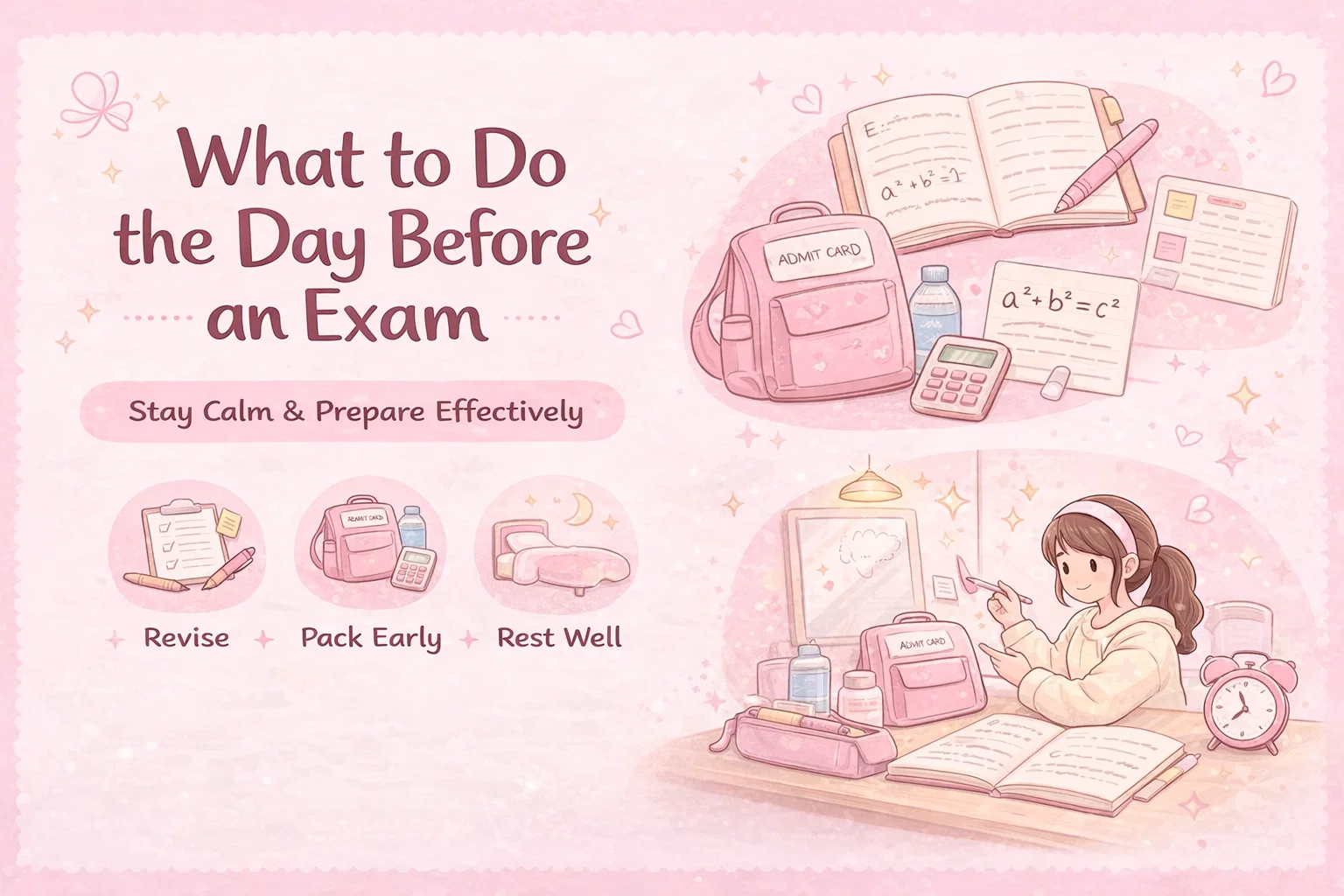
- Review Formulas: Quickly write down the essential equations for your subject to ensure the signs and variables are fresh in your mind.
- Double Check Definitions: Ensure you have the exact terminology right, as many examiners look for specific keywords.
- Sketch Diagrams: Do a quick practice run of any diagrams or charts you might need to reproduce.
By limiting this to a short window, you prevent yourself from spiraling into over analysis. It is a quick “polish” of your knowledge base that provides a significant safety net.
Eliminate Morning Panic by Packing Early
Your mental energy on the morning of the exam should be reserved entirely for the questions on the paper. You should not be wasting it hunting for a working pen or looking for your identification. Packing your bag the evening before is a simple act that provides immense psychological relief.
Create a checklist of essentials. This usually includes your admit card or hall ticket, several working pens (and pencils if needed), a bottle of water, and a calculator if the exam allows it. When you see your bag sitting by the door, ready to go, it sends a signal to your brain that the logistics are handled. This removes the “morning panic” and allows you to wake up with a sense of calm and readiness.
The Brain Lock Method: Teach to Learn
If you want to know if you truly understand a concept, try to explain it to someone else. This is often called the “Feynman Technique,” but it is also known as the brain lock method. When you teach a topic, you are forced to organize the information logically and simplify complex ideas.
You do not even need a real person to do this. You can teach your wall, your mirror, or even an imaginary friend. If you find yourself stumbling over your words or unable to explain a certain point clearly, you have found a gap in your knowledge. Go back to your notes, clarify that specific point, and try explaining it again. Once you can explain it simply, you truly know it.
The Science of Sleep and Memory
One of the most counterproductive things a student can do is sacrifice sleep for more study time. Science has proven time and again that memory formation and consolidation happen primarily during sleep. While you are resting, your brain is busy organizing the information you learned during the day and clearing out toxins.
Stop Studying One Hour Before Bed
Give your brain a “buffer zone.” Stop all academic work at least one hour before you plan to sleep. This allows your nervous system to wind down from the high alert state of studying. Avoid late night cramming because the stress hormones produced during frantic study sessions can actually block your ability to recall information later.
The Importance of the Night Reset
A “night reset” is a series of calming activities that prepare your body for rest. Take a warm shower or wash your face to physically wash away the day’s stress. Set your alarm so you don’t have to worry about oversleeping. Most importantly, aim to get to sleep on time. A rested brain is significantly more capable of complex problem solving and rapid recall than a tired, caffeine fueled one.
Creating a Positive Exam Mindset
Beyond the notes and the packing, your internal dialogue matters immensely. The day before the exam is a time for self encouragement. Instead of thinking about what you might have missed, think about how much you have already accomplished. Remind yourself that you have put in the work and that this exam is simply an opportunity to show what you know.
Visualizing success can also be helpful. Spend a few minutes imagining yourself sitting in the exam hall, feeling calm, and seeing questions that you know how to answer. This positive visualization helps reduce cortisol levels and keeps you in a “growth mindset” rather than a “threat mindset.”
Nourishing Your Body for Performance
What you eat and drink the day before can also impact your cognitive function. Avoid heavy, greasy meals that might make you feel sluggish or give you indigestion. Instead, opt for “brain foods” like complex carbohydrates, healthy fats, and proteins. Stay hydrated with water throughout the day, as even mild dehydration can lead to a loss of focus and headaches. Avoid excessive caffeine, especially in the afternoon and evening, as it can interfere with that crucial night of sleep.
Conclusion: Trust Your Preparation
The day before an exam is not about learning; it is about centering yourself. By following a structured revision plan, handling your logistics early, and prioritizing your physical well being, you are setting the stage for success. Transitioning from a state of “cramming” to a state of “calm” allows your brain to function at its highest potential.
Trust the hours of work you have put in over the past weeks and months. One day of frantic study cannot replace a semester of learning, but one day of calm preparation can certainly protect it. Follow your checklist, get your rest, and go into that exam room with your head held high. You have got this. Save these tips for your next finals week and notice the difference a calm mind makes.