How to Study with No Motivation Energy-Based Study Routine Low Pressure Methods for Students
Have you ever sat at your desk, staring at a blank page or a dense textbook, waiting for that magical spark of motivation to strike? We have all been there. The reality of student life is that motivation is a fickle friend. It shows up when you are well rested and excited, but it disappears the moment you feel overwhelmed or tired. The secret to consistent academic success is not found in chasing motivation, but in mastering the art of studying by energy levels. By shifting your mindset from I need to feel like it to What am I capable of right now, you can maintain progress even on your toughest days.
The Philosophy of Energy Based Studying
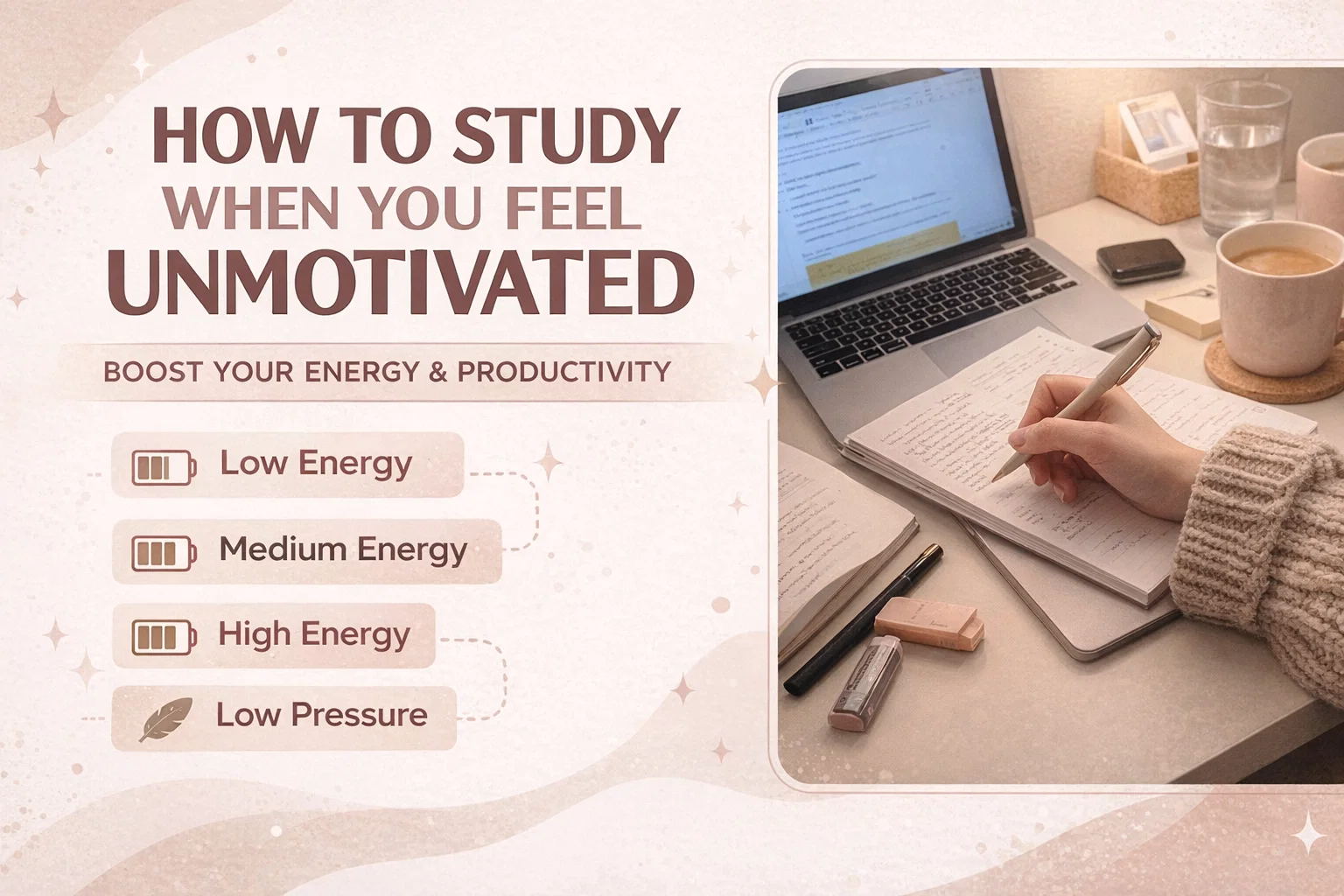
Traditional study advice often tells us to push through the pain and stick to a rigid schedule regardless of how we feel. However, this often leads to burnout and a complete lack of productivity. The image we are analyzing today highlights a revolutionary approach: matching your study tasks to your current energy level. This method recognizes that our cognitive capacity fluctuates throughout the day. Instead of fighting your biology, you work with it.
When you align your tasks with your energy, you reduce the friction of starting. If you have low energy, trying to write a complex essay will feel impossible. But if you shift that task to a high energy period and focus on simple reading during your low energy slump, you keep the momentum going. This is how students reach the top of their class without losing their sanity.
How to Identify Your Energy Levels
To implement this system, you first need to become an expert on yourself. Energy levels are generally categorized into three tiers: low, medium, and high. Recognizing where you fall at any given moment is the first step toward a more productive study session.
Low Energy: The Slow Burn
Low energy usually hits after a long day of classes, right after a heavy meal, or late at night. You might feel foggy, sleepy, or just generally uninspired. This is not the time to quit; it is the time to switch gears. Low energy tasks should be passive or highly structured to require minimal creative output.
Medium Energy: The Steady State
Medium energy is your baseline. You feel capable of working, but you might not have the intense focus required for brand new, difficult concepts. This is the perfect time for routine maintenance of your notes and reinforcing things you have already started learning.
High Energy: The Peak Performance
High energy is your golden hour. This is when your brain is sharp, your focus is laser thin, and you feel ready to tackle the world. These moments are precious and should be reserved for the most challenging, high impact tasks on your to do list.
Mastering the Low Energy Study Session
When you are feeling unmotivated and sluggish, the goal is to lower the barrier to entry. If a task feels too big, you will procrastinate. Here are the best ways to handle low energy periods:
- Prep your desk for 5 minutes: Sometimes the act of cleaning your space signals to your brain that it is time to work. A clear space leads to a clearer mind.
- Read through your notes: Don’t worry about memorizing every word. Just let the information flow over you to keep the concepts fresh.
- Highlight key concepts: This is a physical activity that keeps your hands moving and helps you identify what is important for later, deeper study.
- Review harder topics briefly: Familiarizing yourself with tough concepts during low energy periods makes them less intimidating when you tackle them during high energy periods.
Maximizing Medium Energy for Momentum
Medium energy is where the bulk of your work often happens. You have enough cognitive fuel to be productive, so use it to build your knowledge base. Techniques like blurting and mind mapping are excellent here. Blurting involves reading a page of notes, closing the book, and writing down everything you remember. It is an active process but doesn’t require the same intense pressure as a mock exam.
A short Pomodoro session is also highly effective during medium energy phases. Setting a timer for 30 minutes of focused work followed by a 5 minute break provides enough structure to keep you moving without feeling like an endless marathon.
Tackling High Energy Tasks for Maximum Results
When you feel that surge of clarity, do not waste it on easy tasks like checking emails or reorganizing your folders. This is the time for deep work. High energy tasks include:
- Practice questions: Testing yourself is the fastest way to learn, but it requires significant mental effort.
- Mock exams: Simulating the exam environment builds stamina and reveals your true weak points.
- Teaching out loud: If you can explain a concept to an imaginary audience, you truly understand it. This requires high level cognitive processing.
- Finishing complex notes: Completing those difficult diagrams or summary sheets is best done when your brain is firing on all cylinders.
The Low Pressure Methods That Actually Work
Sometimes the pressure to perform is what kills motivation. If you feel the weight of expectations crushing your ability to start, switch to low pressure methods. These are designed to feel easy while still providing high value. Active recall is the gold standard here. Even just asking yourself one or two questions about a topic while you walk to the kitchen is a form of active recall.
Quick notes and mind mapping are also great because they are visual and non linear. You don’t have to worry about perfect grammar or beautiful handwriting. The goal is simply to get the information out of your head and onto the paper in a way that makes sense to you.
Building Your Unmotivated Routine
On the days when motivation is absolutely zero, you need a pre programmed routine that takes the decision making out of the equation. This is your safety net. Your unmotivated routine should be divided into three clear phases.
Phase 1: Before Studying
The transition into study mode is the hardest part. Start by getting a refreshing drink like water or tea. Prepare your desk so that everything you need is within reach. Most importantly, put your phone in another room. Eliminating the temptation of social media is half the battle won.
Phase 2: While Studying
Lower your expectations. Tell yourself you will focus on understanding rather than memorizing. Use background music if it helps you focus, or embrace total silence if you find music distracting. Crucially, let go of aesthetic perfection. Your notes do not need to look like a Pinterest board to be effective.
Phase 3: After Studying
Always end with a reward. This trains your brain to associate studying with positive outcomes. Whether it is a small snack, an episode of your favorite show, or a walk outside, give yourself a guilt free break. You showed up when you didn’t want to, and that deserves recognition.
What to Avoid When You Feel Unmotivated
Just as there are things you should do, there are several traps you must avoid when your energy is low. Avoid re writing your notes just for the sake of it; this is passive learning that feels like work but doesn’t actually help you learn. Don’t force yourself into marathon study sessions when you are tired, as this only leads to resentment toward your subjects.
Avoid the “just for a little bit” social media trap. Five minutes on TikTok can easily turn into an hour, and the dopamine hit will make returning to your books even harder. Finally, stop multitasking. Focus on one small thing at a time. Doing one thing poorly is still better than doing five things not at all.
Conclusion: Consistency Over Intensity
Becoming a top student is not about being a genius or having endless reserves of willpower. It is about being smart with the energy you have. By categorizing your tasks into low, medium, and high energy buckets, you ensure that you are always making progress, no matter how you feel. Remember that a 15 minute low energy session is infinitely better than a zero minute session.
Next time you feel that heavy cloud of unmotivation, don’t beat yourself up. Take a deep breath, assess your energy, and choose a task that fits. Over time, this consistency builds into a habit that will carry you through your academic journey and beyond. You have the tools, the methods, and the routine. Now, simply start where you are.