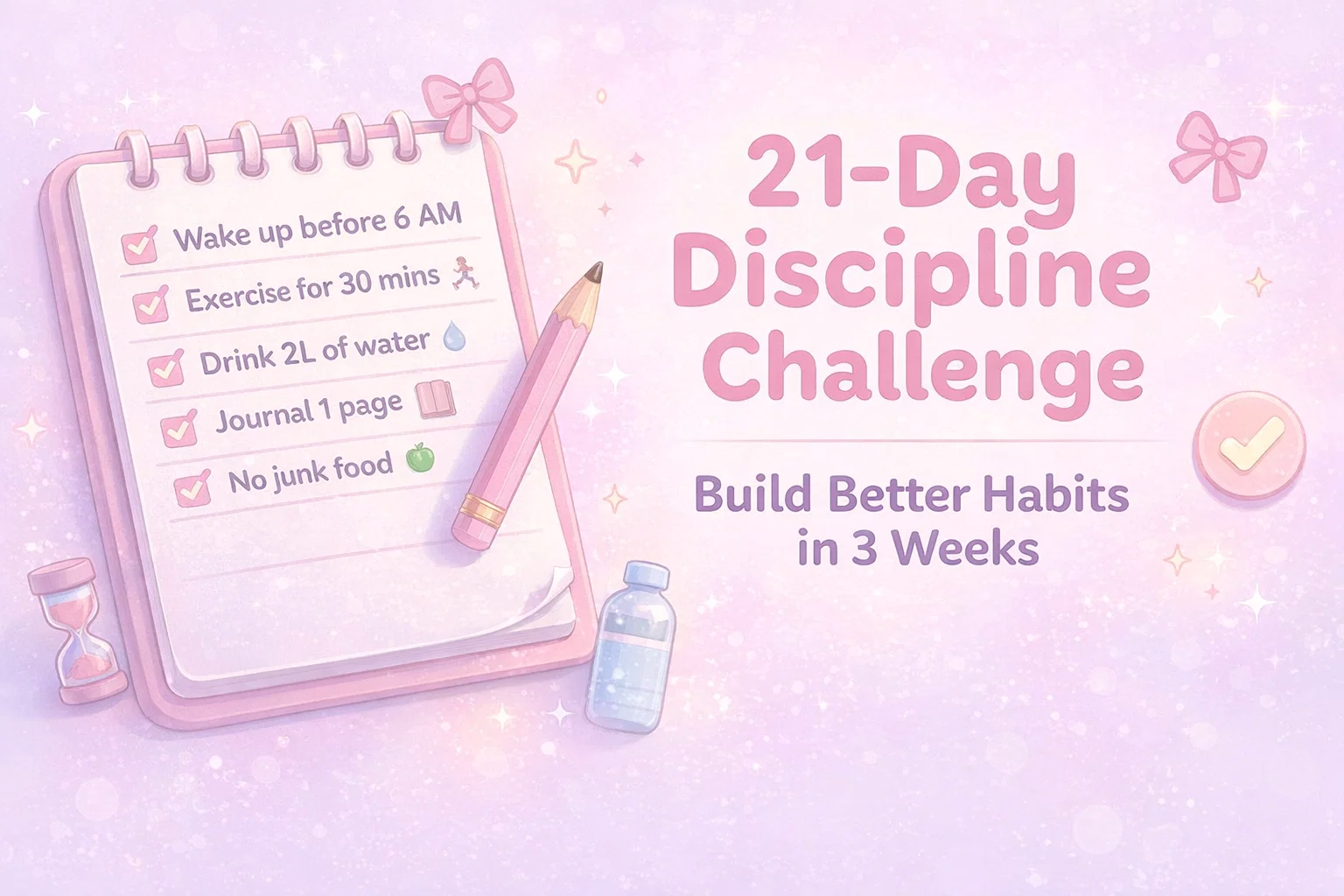
21-Day Discipline Challenge Aesthetic Habit Tracker for Personal Growth Daily Consistency
Starting a journey toward self-discipline is often compared to a marathon, but the reality is more like building a muscle. You do not wake up one day with an iron will; you cultivate it through repetitive, intentional actions that eventually become second nature. This 21-day discipline challenge is designed to be your roadmap, guiding you through a curated selection of habits that touch every part of your life, from physical health to mental clarity and environmental organization. By committing to these small wins, you are not just checking off a list; you are rewiring your brain for success and resilience.
The Power of the 21 Day Habit Cycle
There is a popular theory that it takes twenty-one days to form a new habit. While the exact timing can vary for everyone, this three-week window serves as a perfect psychological milestone. It is long enough to move past the initial novelty and face real resistance, yet short enough to feel attainable. When you look at a massive life overhaul, it feels daunting. However, when you look at twenty-one days of focused effort, it feels like a project you can actually complete. This challenge leverages that psychological sweet spot by introducing tasks that are manageable but impactful.
Why Discipline Outperforms Motivation
Many people wait until they feel motivated to start a workout or clean their house. The problem is that motivation is a feeling, and feelings are fickle. Discipline, on the other hand, is a commitment to the process regardless of how you feel. By following a structured challenge like this one, you remove the “decision fatigue” that often leads to procrastination. You no longer have to ask yourself what you should do to improve your life today; the plan is already laid out for you. This transition from “feeling like it” to “just doing it” is where true transformation happens.
Morning Mastery: Waking Up and Moving
The first few days of the challenge focus heavily on your morning routine. Waking up before 6 AM is a classic discipline staple for a reason. It gives you a head start on the world, allowing for a period of silence and focus before the demands of others begin to flood your inbox or your headspace. This extra hour or two is “found time” that can be used for the next critical task: exercise.
The Compound Effect of Daily Movement
Thirty minutes of exercise might not seem like much in the context of a whole day, but the physiological benefits are massive. Exercise releases endorphins, improves circulation, and sharpens your cognitive function. When you pair an early wake-up call with physical activity, you are essentially telling your body and mind that you are in control. This builds a momentum of “winning the morning” that carries you through the rest of the day. Whether it is a brisk walk, a yoga flow, or a high-intensity session, the goal is consistency over intensity during these twenty-one days.
Hydration and Nutrition: Fueling the Discipline
It is difficult to maintain a disciplined mind if your body is running on empty or junk. Day three and day five of the challenge address the physical pillars of wellness: hydration and clean eating. Drinking two liters of water a day ensures that your brain is properly hydrated, which directly affects your focus and energy levels. Dehydration often masks itself as fatigue or hunger, leading to poor choices later in the afternoon.
Breaking the Cycle of Junk Food
Eliminating junk food for a day is a test of willpower in our convenience-driven world. Processed sugars and fats provide a temporary spike in energy followed by a significant crash. By Choosing whole, nutrient-dense foods, you stabilize your blood sugar and maintain a steady stream of energy. This makes it much easier to stay disciplined in your work and other habits because you aren’t fighting the biological “brain fog” that comes with a poor diet.
Cultivating Inner Peace through Mindfulness
Discipline is not just about doing more; it is also about being more present. The challenge incorporates journaling, meditation, and gratitude to help you manage the internal landscape of your mind. Spending ten minutes in meditation or writing one page in a journal might feel “productive” in the traditional sense, but these activities are the secret sauce of high achievers. They provide the mental space needed to respond to stress rather than reacting to it.
The Role of Gratitude in Mental Toughness
Listing three things you are grateful for shifts your focus from what is lacking to what is abundant. This is a crucial part of discipline because a negative mindset often leads to burnout and giving up. When you practice gratitude, you build emotional resilience. You begin to see the challenge not as a chore, but as an opportunity for growth. This positive reinforcement makes it much easier to stick to the harder tasks on the list, like avoiding procrastination or facing a difficult study session.
Intellectual Growth and Focused Work
A significant portion of this 21-day plan is dedicated to sharpening your intellect. Reading ten pages a day and engaging in two hours of focused study are tasks designed to build your “focus muscle.” In an era of TikTok and short-form content, our attention spans are shrinking. Forcing yourself to sit down with a book or a complex subject for a set period is an act of rebellion against the distracted norm.
Deep Work and the End of Procrastination
The “No procrastination today” task on day thirteen is perhaps the most challenging. Procrastination is often a form of anxiety management; we avoid the task because we fear it will be difficult or that we won’t do it well. By setting a specific goal for focused study, you practice the art of “Deep Work.” This is the ability to concentrate without distraction on a cognitively demanding task. Mastering this skill will do more for your career and personal goals than almost any other habit on this list.
The Importance of an Organized Environment
Your external environment is often a reflection of your internal state. Day ten challenges you to “Clean your space.” Whether it is your desk, your bedroom, or your entire home, clearing physical clutter helps clear mental clutter. A disorganized space provides constant visual reminders of unfinished tasks, which drains your energy. When your space is clean, you feel a sense of calm and control that makes it easier to focus on your personal development goals.
Self-Care and Personal Presentation
Discipline often gets a reputation for being harsh, but true discipline includes self-care. Establishing a skincare routine and taking time to stretch before bed are acts of respect for your physical vessel. These habits remind you that the goal of this challenge is not just to work harder, but to live better. Stretching relaxes the nervous system and prepares the body for deep, restorative sleep, which is the foundation of the next day’s discipline.
The Power of Self-Compliments
Day fourteen asks you to compliment yourself. This might feel awkward at first, but your internal dialogue dictates your reality. If you are constantly criticizing yourself, you will eventually lose the desire to improve. By acknowledging your progress and your worth, you create a supportive internal environment. Self-discipline is much more sustainable when it comes from a place of self-love rather than self-loathing.
Digital Detox: Reclaiming Your Time
One of the most modern challenges to discipline is the constant pull of the digital world. A two-hour digital detox is a powerful way to reclaim your time and attention. We often spend hours mindlessly scrolling through social media, which leaves us feeling drained and unproductive. By stepping away from the screen, you allow your brain to enter a “default mode” where creativity and problem-solving flourish. This break helps break the dopamine-loop associated with notifications and likes, giving you back the mental energy needed for your 21-day journey.
The Final Stretch: Integrating the Habits
As you move through the final days of the challenge, you will notice that these tasks start to overlap. Your early wake-up provides time for meditation; your hydration supports your study sessions; and your clean space makes your skincare routine feel like a luxury. This is the integration phase, where the individual tasks start to form a cohesive lifestyle. You aren’t just doing a challenge anymore; you are living with intention.
Sustaining Momentum After Day 21
What happens when the three weeks are over? The goal of the 21-day discipline challenge isn’t to reach a finish line and stop. Instead, it is to show you what you are capable of. Use the momentum you have built to decide which habits served you best. Perhaps you keep the 6 AM wake-up and the daily reading, but you modify the study hours. The discipline you practiced during these three weeks is now a tool you can use for the rest of your life.
Conclusion: Your Journey Toward a Disciplined Life
True change does not happen in a single day of massive effort; it happens in the quiet consistency of small choices made daily. This 21-day discipline challenge is more than just a checklist; it is a transformative process that touches your mind, body, and spirit. By committing to these tasks, you have proven to yourself that you are the architect of your own habits. You have the power to wake up early, to fuel yourself with life-giving food, to sharpen your mind, and to treat yourself with the care you deserve. Carry this newfound strength forward, and remember that every day is a fresh opportunity to choose the person you want to become. You have already taken the hardest step by starting. Now, keep going.