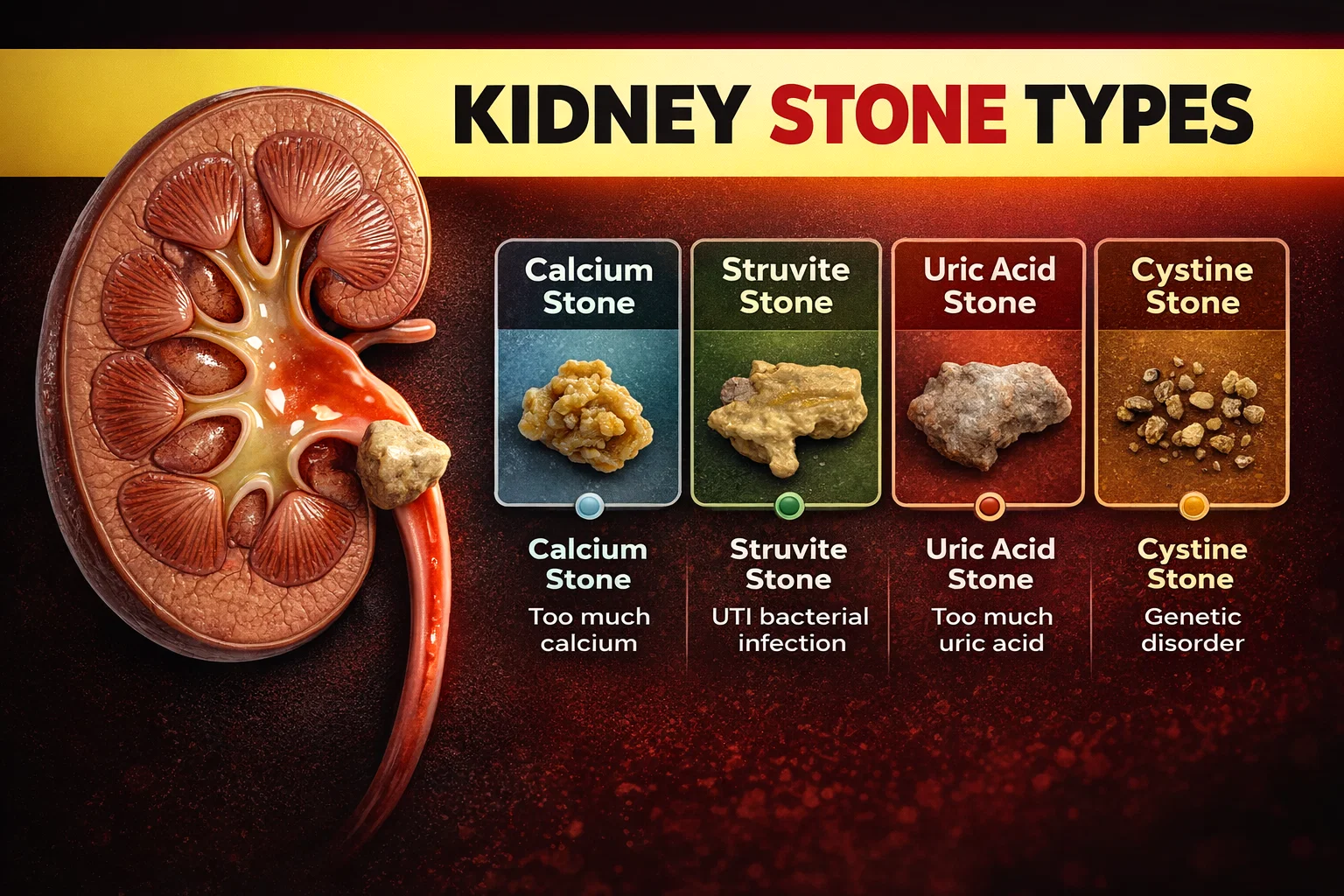
Different Types of Kidney Stones Renal Calculi
Kidney stones are often described as one of the most agonizing conditions a person can experience. If you have ever felt the sudden, sharp pain in your back or side that radiates to your lower abdomen, you know exactly how disruptive these tiny formations can be. But did you know that not all kidney stones are created equal? In the medical and anatomical world, these formations are known as renal calculi, and they come in several distinct varieties. Understanding the specific type of kidney stone you are dealing with is absolutely crucial for effective treatment, quick recovery, and long-term prevention.
The Science Behind the Stones
Before we explore the specific types, it helps to understand how a kidney stone forms in the first place. Your kidneys act as your body’s built-in filtration system. They work continuously to remove waste products and excess fluid from your blood to create urine. Sometimes, the concentration of certain crystal-forming substances in your urine becomes far too high. When the fluid in your urine cannot properly dilute these substances, they begin to stick together, forming microscopic crystals. Over time, these tiny crystals grow and fuse into larger, solid masses known as kidney stones.
Decoding the Four Main Types of Kidney Stones
Visualizing the differences between kidney stones can demystify why they happen and how they act inside the body. Let us break down the four primary types of kidney stones, what specifically causes them, and how they behave inside your delicate urinary tract.
Calcium Stones: The Everyday Offender
When we talk about kidney stones, calcium stones are usually what come to mind. They are by far the most common type, accounting for the vast majority of cases diagnosed worldwide. As the name heavily implies, these stones form when there is too much calcium in the urine. However, it is usually not calcium alone doing the damage. These stones most frequently form as calcium oxalate. Oxalate is a naturally occurring substance found in many delicious foods, including fruits, vegetables, nuts, and chocolate. Your liver also naturally produces oxalate.
Visually, calcium stones often appear as rough, jagged, yellowish-brown mineral deposits. Their highly irregular shape is part of what makes them so excruciating to pass through the delicate, narrow lining of the ureter. Dietary factors, high doses of vitamin D, intestinal bypass surgery, and several metabolic disorders can drastically increase the concentration of calcium or oxalate in urine. Prevention almost always involves staying well hydrated and finding a healthy balance for your calcium and oxalate intake.
Struvite Stones: The Infection Connection
Struvite stones have a very specific and fascinating origin story. Unlike other stones that form primarily from dietary or metabolic issues, struvite stones form as a direct response to a urinary tract infection. When there is too much bacteria from a UTI present in the urinary system, the environment becomes highly alkaline. This chemical shift allows struvite crystals to form and grow at an alarming rate.
These stones are particularly notorious because they can grow quite large very quickly. They sometimes fill the entire inner space of the kidney, creating what is known as a staghorn calculus. They often take on a pale, branching, almost coral-like appearance. Because they grow so exceptionally fast, they can sometimes cause very few warning symptoms until they become a massive medical problem. Women are generally more prone to struvite stones simply because they experience urinary tract infections more frequently than men. Treating the underlying bacterial infection promptly is the most critical step in managing and preventing struvite stones.
Uric Acid Stones: The Acidic Outcome
If your urine is consistently too acidic, you might be at high risk for developing uric acid stones. These stones form when there is simply too much uric acid in the urine. Uric acid is a normal waste product created when the body breaks down chemicals called purines. Purines are found naturally in your body but are also highly concentrated in certain everyday foods, particularly animal proteins like red meat, organ meats, and shellfish.
A uric acid stone typically looks like a solid, brownish, somewhat smoother rock compared to a jagged calcium stone. People who do not drink enough fluids, lose too much fluid through sweating or illness, eat a high-protein diet, or have a condition like gout are at a significantly higher risk for this type of stone. Additionally, certain genetic factors can make a person much more susceptible. Because these stones are radiolucent (meaning they do not show up well on traditional X-rays), doctors often have to use other imaging techniques like CT scans or specialized ultrasounds to locate them. Managing your diet and staying incredibly well-hydrated are your absolute best defenses here.
Cystine Stones: The Rare Genetic Link
The fourth and rarest type of kidney stone is the cystine stone. These form in people who have a hereditary disorder known as cystinuria. This genetic condition causes the kidneys to excrete an excessive amount of a specific amino acid called cystine into the urine. When there is too much cystine due to this genetic disorder, the amino acid struggles to dissolve, leading directly to the formation of stones.
Cystine stones often appear visually as dense clusters of small, yellowish, crystalline shapes. Because cystinuria is a lifelong genetic condition, individuals who form cystine stones usually start experiencing them at a very young age and will likely battle recurring stones throughout their entire lives. Managing cystine stones is uniquely challenging and often requires a dedicated, lifelong medical strategy involving heavy fluid intake, strict dietary modifications, and sometimes specific prescription medications to help keep the cystine fully dissolved in the urine.
Recognizing the Warning Signs
While the internal composition of these stones varies wildly, the physical symptoms they produce are often strikingly similar. A kidney stone usually will not cause any noticeable symptoms until it begins to move around within your kidney or passes down into your ureter. The ureter is the extremely narrow tube connecting the kidney and the bladder. If a stone becomes lodged in the ureters, it can completely block the flow of urine, causing the kidney to swell and the delicate ureter to violently spasm.
When this happens, you may experience the following distressing signs:
- Severe, sharp pain: This intense pain typically starts in the side and back, right below the ribs.
- Radiating pain: The pain often spreads downward to the lower abdomen and groin as the stone moves.
- Pain that comes in waves: The intensity of the pain can fluctuate dramatically, often described as coming in intense waves.
- Pain or burning during urination: This is a very common sign as the stone finally nears the bladder.
- Changes in urine: Your urine may appear pink, red, or brown due to microscopic or visible blood. It might also look very cloudy or smell uniquely foul.
- Nausea and vomiting: The intense, overwhelming pain can easily upset your stomach and cause physical sickness.
- Fever and chills: If an active infection is present, especially associated with struvite stones, you might develop a high fever and severe chills.
How Doctors Pinpoint the Problem
If you arrive at a clinic or emergency room with the classic, painful symptoms of a kidney stone, your medical team will move quickly to confirm the diagnosis and identify the exact stone’s location and size. This diagnostic process is crucial because it dictates the entire treatment plan. Doctors typically rely on a smart combination of blood tests, urine testing, and advanced medical imaging.
Blood tests can reveal if you have dangerously high levels of calcium or uric acid in your blood. These tests are essential for checking the overall health and function of your kidneys and ruling out other potential medical emergencies. Next, a comprehensive 24-hour urine collection test may be ordered. This detailed test requires you to collect your urine over two consecutive days. It helps doctors clearly see if you are actively excreting too many stone-forming minerals or if you severely lack stone-preventing substances.
Imaging is perhaps the most critical and revealing step. High-speed computerized tomography (CT) scans are currently the gold standard for spotting even the most microscopic stones in the urinary tract. Simple abdominal X-rays are also sometimes used, though they can easily miss smaller stones or those made of radiolucent materials like uric acid. Ultrasounds are another excellent, completely non-invasive option widely used to diagnose kidney stones. Once you finally pass a stone, your doctor will likely ask you to catch it using a fine strainer. Analyzing the physical stone in a laboratory is the absolute best way to determine its exact chemical makeup and to develop a highly targeted plan to stop them from ever coming back.
Proactive Steps for Optimal Kidney Health
Absolutely nobody wants to experience the pure agony of passing a kidney stone. The wonderful news is that you can take several proactive, everyday lifestyle steps to drastically minimize your risk of forming any of these four types of stones. Your daily lifestyle and dietary choices play an absolutely massive role in your overall kidney health.
Hydration is Your Ultimate Defense
The single most important and effective thing you can do to prevent kidney stones is to drink plenty of fluids every single day. Pure water is the undisputed champion here. When you drink enough water, your urine becomes highly diluted, which makes it incredibly difficult for floating minerals to crystallize and form hard stones. You should aim for at least eight to ten large glasses of water a day. If you happen to live in a hot, dry climate or exercise frequently and sweat heavily, you will absolutely need even more fluid intake. A fantastic daily rule of thumb is to look closely at the color of your urine. If it is consistently clear or a very pale yellow, you are likely drinking a sufficient amount of water.
Reevaluate Your Daily Diet
What you choose to eat directly and intensely impacts what your kidneys have to filter out. Depending on the exact type of stone your body is prone to creating, you might need to make very specific dietary adjustments.
- Monitor Sodium Intake: A diet very high in sodium can quickly trigger kidney stones because it artificially increases the amount of calcium floating in your urine. Try your best to limit heavily processed foods, canned soups, and excessively salty snacks.
- Balance Animal Protein: Eating too much red meat, poultry, eggs, and seafood dramatically boosts the level of uric acid in your body and could easily lead to kidney stones. A high-protein diet also significantly reduces levels of citrate, a helpful chemical in urine that actively helps prevent stones from forming.
- Do Not Avoid Calcium: It sounds entirely counterintuitive, but eating calcium-rich foods actually helps block dangerous oxalate from absorbing into your bloodstream. Just be extremely cautious with over-the-counter calcium supplements, as those can surprisingly increase your risk if not taken appropriately with food.
Taking Charge of Your Renal Health
Kidney stones are incredibly painful and disruptive, but they are also a highly studied medical condition with clear origins and highly reliable prevention strategies. By taking the time to understand the distinct biological differences between calcium, struvite, uric acid, and cystine stones, you are already taking a massive step toward better health literacy. The internal anatomy of our kidneys is undeniably complex, but the basic rules of maintenance remain wonderfully simple. Drink plenty of fresh water, eat a balanced and mindful diet, and always listen closely to what your body is telling you.
If you suspect you currently have a kidney stone, or if you have a painful history of them, always consult promptly with a healthcare professional or a specialized urologist. They can easily perform the necessary medical tests to determine exactly what type of stone you are dealing with and create a highly personalized prevention plan tailored just for your body. Your kidneys work tirelessly for you every single minute of every single day. Make sure you are actively giving them the support they desperately need to keep you healthy, active, and entirely stone-free for years to come.