3-Minute Hip Flexor Release to Reset Your Nervous System
If you are constantly feeling on edge, battling chronic fatigue, or dealing with unexplainable lower back tightness, the root of your problem might not be in your mind. It might be hiding deep within your hips. In our modern, fast-paced world, we spend countless hours sitting at desks, commuting, and navigating high-stress situations. All of this physical and emotional tension accumulates in a specific area of the body, creating a feedback loop of stress that is hard to break. But what if the secret to finding an overwhelming sense of peace in your body was as simple as lying down and doing absolutely nothing for three minutes?
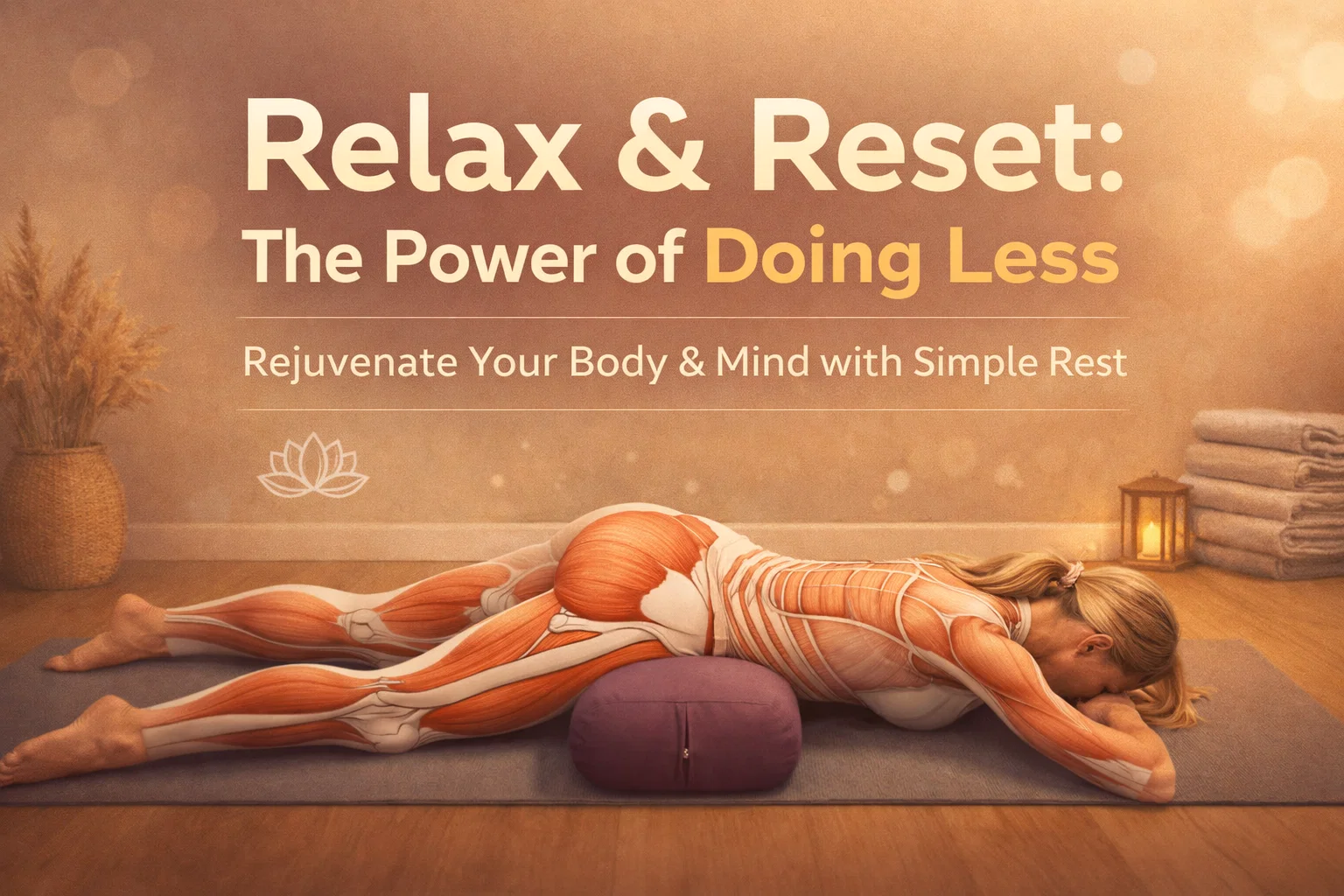
There is a powerful restorative yoga technique that involves laying over a bolster at your hip crease. This simple, passive posture allows your hip flexors to fully relax, sending an immediate signal of safety to your brain. Within minutes, your nervous system rejuvenates, shifting you out of survival mode and into a state of deep healing. Let us explore exactly why this specific hip release works and how you can use it to reset your mind and body.
The Hidden Connection Between Your Hips and Your Stress Levels
To understand why a simple hip stretch can induce such a profound sense of peace, we have to look at the anatomy of stress. The human body is incredibly intelligent, but its survival mechanisms have not quite caught up with modern life. When you experience stress, whether it is a looming deadline or a near-miss in traffic, your body prepares to fight or flee.
Meet the Psoas: The Muscle of the Soul
The primary muscle responsible for this physical reaction is the psoas major. The psoas is the deepest muscle in the human core. It attaches from the lower lumbar vertebrae, crosses through the pelvis, and connects to the top of the femur. It is the only muscle that connects your spine to your legs. Because of its central location and vital role in movement, Eastern philosophies often refer to the psoas as the muscle of the soul.
When your brain perceives a threat, it sends a signal to the psoas to contract, curling you into a fetal position to protect your vital organs. This is a brilliant evolutionary defense. However, because we face chronic, low-grade stress every single day, our psoas muscles remain in a constant state of mild contraction. Combine this with the fact that sitting in a chair for eight hours a day physically shortens the hip flexors, and you end up with a recipe for chronic pain and nervous system dysregulation.
Why We Store Emotional Weight in Our Pelvis
Because the psoas is so intimately connected to our fight-or-flight response, it literally holds onto unreleased stress and trauma. When the hip flexors are chronically tight, they continuously send danger signals back up to the brain via the central nervous system. This creates a vicious cycle. You feel stressed, your hips tighten, your tight hips signal the brain that you are in danger, and you feel even more stressed. Releasing this physical tension is often the most effective way to break the cycle and process stored emotional weight.
The 3-Minute Bolster Technique Explained
You do not need to be an advanced yogi or have hours of free time to experience the benefits of somatic healing. The beauty of this practice is that it requires absolutely no effort. You realize very quickly that all you need to do is less. Here is how to perform the restorative hip flexor release properly.
What You Will Need
- A yoga bolster: If you do not have a standard yoga bolster, you can easily use a firm couch cushion or tightly roll up two thick bath towels.
- A comfortable surface: A yoga mat or a soft rug works perfectly.
- A quiet environment: Dim the lights and ensure you will not be interrupted for a few minutes.
Step-by-Step Instructions
Getting into the posture correctly is essential for ensuring your muscles feel safe enough to let go. Follow these steps to find your perfect alignment.
Step 1: Position your prop. Place your bolster or rolled towels horizontally across the middle of your yoga mat.
Step 2: Align your hips. Carefully lay face down on the mat. Position your body so that the very top of your thighs and your frontal hip points rest directly over the center of the bolster. The bolster should sit snugly right at the hip crease.
Step 3: Adjust your upper body. You can stack your hands on top of each other and rest your forehead on them, creating a neutral spine for your neck. Alternatively, you can turn your head to one side and let your arms rest comfortably alongside your body.
Step 4: Relax your lower body. Allow your legs to extend long behind you. Let your heels flop out naturally to the sides, which encourages a subtle internal rotation of the thighs and further releases the lower back.
Step 5: Breathe and surrender. Set a timer for three to five minutes. Your only job now is to breathe deeply into your lower back and belly. With every exhale, imagine the dense musculature around your hips melting over the edges of the bolster like warm wax.
The Science of Somatic Healing and Nervous System Regulation
While you lay there doing nothing, a massive physiological shift is happening beneath the surface. This practice is a cornerstone of somatic healing, which focuses on the mind-body connection to release trauma and chronic stress.
Activating the Parasympathetic State
The human nervous system has two main operating modes. The sympathetic nervous system handles our fight-or-flight responses, while the parasympathetic nervous system governs rest and digest functions. By passively applying gentle, sustained pressure to the hip crease and stretching the shortened psoas, you stimulate the vagus nerve. The vagus nerve is the superhighway of the parasympathetic nervous system. As the physical tension in the hips releases, vagal tone increases, slowing your heart rate, lowering your blood pressure, and flooding your body with a profound sense of calm.
Why Doing Less is Actually Doing More
Many people try to fix tight hips with aggressive, active stretching like deep lunges. While active stretching has its place, it can sometimes backfire if your nervous system is highly activated. If a muscle feels forced into a stretch, it may actually contract further to protect itself from tearing. Restorative postures bypass this defense mechanism. By using a prop to fully support your body weight, gravity does all the work. The muscles realize they do not need to hold you up, allowing them to release deeply and permanently without triggering a defensive reflex.
Benefits of Daily Hip Flexor Relaxation
Incorporating just three minutes of this restorative posture into your daily routine can yield life-changing results for both your physical and mental health. Here is what you can expect when you commit to releasing your psoas regularly.
- Relief from Lower Back Pain: Because the psoas attaches to the lumbar spine, a tight psoas pulls the lower back out of alignment, causing compression and pain. Releasing the front of the hips instantly creates more space and relief in the lower back.
- Improved Posture: Chronically tight hip flexors pull your pelvis forward into an anterior tilt. Softening these muscles allows your pelvis to return to a neutral position, naturally improving your standing and sitting posture.
- Better Digestion: The deep core muscles massage your internal organs. When the psoas is rigid, digestion can become sluggish. Relaxing this area promotes better gut motility and reduces bloating.
- Deeper, More Restful Sleep: Practicing this posture right before bed signals to your brain that the day is over and it is safe to sleep. It drastically reduces the time it takes to fall asleep and improves the overall quality of your rest.
- Emotional Processing: It is incredibly common to feel a sudden wave of emotion, or even the urge to cry, during deep hip openers. This is a healthy, natural release of stored stagnant energy and emotional tension.
Tips for Maximizing Your Restorative Practice
To get the absolute most out of your three minutes on the bolster, keep a few important tips in mind. The physical posture is only half of the equation. Your mindset and breath are equally vital.
Focus on Diaphragmatic Breathing
Shallow chest breathing is a hallmark of the stress response. While laying on the bolster, intentionally direct your breath down into your belly. Feel your abdomen expand against the floor or the bolster with every inhale. This type of deep diaphragmatic breathing massages the vagus nerve and mechanically stretches the psoas from the inside out.
Prioritize Consistency Over Duration
You do not need to spend an hour in restorative yoga to see benefits. In fact, three to five minutes a day is far more effective than an hour once a month. Make it a non-negotiable part of your daily wind-down routine, perhaps right after you brush your teeth at night or immediately upon returning home from a stressful day at work.
Listen to Your Body
While this pose should feel like a relief, you might encounter some initial discomfort if your hips are extremely tight. It should feel like a deep, dull stretch, never a sharp or pinching pain. If the stretch feels too intense, use a softer, flatter cushion. The goal is complete surrender. If you are tensing up to tolerate the pose, the prop is too high.
Conclusion: Embrace the Power of Rest
We are constantly conditioned to believe that healing and progress require intense effort, hard work, and pushing through the pain. But your body does not always respond to force. Sometimes, the most powerful intervention is a purposeful pause. By taking just three minutes to lay over a bolster and nurture your hip flexors, you are offering yourself a radical act of self-care. You are choosing to step off the treadmill of chronic stress and giving your nervous system the vital rejuvenation it craves. Try this technique tonight, take a deep breath, and allow yourself to experience the profound, quiet peace of simply doing less.