How to Make Potions Choosing Herbs, Oils, and Crystals for Potion-Making Guide
Stepping into the world of potion making is like opening a door to an ancient realm where nature and intention collide. For centuries, practitioners of various traditions have turned to the earth to find the tools they need for healing, manifestation, and spiritual growth. This specific guide focuses on a crucial phase of the process: the selection of herbs, oils, and crystals. Understanding how these elements interact is not just about following a recipe; it is about building a relationship with the natural world. Whether you are a seasoned witch updating your Book of Shadows or a curious beginner looking to brew your first vial of moon water, mastering these foundational steps ensures your practice remains both safe and potent.
The Art of Selecting Herbs and Oils for Your Brew
The botanical kingdom is the heart of any potion. Herbs carry specific vibrations and chemical properties that can alter the energy of a liquid. However, before you start tossing dried lavender or cinnamon sticks into a pot, you must consider the physical application of your creation. The way you interact with a potion determines the safety protocols you must follow. A potion meant to be dabbed on the wrists as a perfume has different requirements than one meant to be consumed as a ritual tea.
Safety First: Topical vs. Edible Ingredients
If you are crafting a potion for topical use, your primary concern is skin sensitivity. Many plants that are safe to touch in their whole form can become irritants when concentrated. Conversely, if you intend to drink your potion, you must ensure every single ingredient is food grade and non toxic. Researching the toxicity of every herb is non negotiable. Foraging for your own ingredients is a rewarding way to connect with local flora, but it requires 100 percent certainty in identification. If you are unsure about a plant in the wild, it is always better to source your herbs from a reputable farmers market or grow them in your own garden where you can control the environment and the soil quality.
The Potency of Essential Oils
Essential oils are highly concentrated plant essences and must be handled with extreme care. A common mistake in beginner potion making is the internal consumption of essential oils. You should never drink essential oils, as they can cause severe internal damage. Even when using them topically, they must be heavily diluted with a base oil like jojoba, almond, or grapeseed oil. These carrier oils not only protect your skin from chemical burns but also help the scent and magical properties of the essential oil linger longer on the body.
Aligning Ingredients with Magical Intentions
Once safety is established, you can focus on the metaphysical side of potion making. Every ingredient has a history of magical associations. When you choose a component, you are essentially “programming” your potion with a specific goal. If your intention is to sharpen your psychic abilities or enhance your dream work, you would look for ingredients that correspond with the subconscious mind and the element of water.
Enhancing Psychic Abilities
A classic recipe for boosting intuition involves a base of moon water. Moon water is simply water that has been left out under the light of a full moon to absorb its lunar energy. To this, you might add dried jasmine for its connection to the spiritual realm and lavender to calm the conscious mind, allowing the third eye to open. Cinnamon sticks are often added to provide a “spark” of energy, acting as a catalyst to speed up the results of the brew. By layering these specific associations, you create a cohesive energetic profile that speaks directly to your goal.
Integrating Crystals into Your Potion Craft
Crystals are the bones of the earth, offering a stable and enduring energy to any magical work. Many practitioners like to submerge crystals directly into their potions to infuse the liquid with the stones unique vibrations. This is a powerful technique, but it requires a deep understanding of mineralogy. Not every stone is meant to be wet, and some can actually ruin a potion if added without care.
The Risks of Water and Salt
Some crystals are soft or porous and will literally dissolve if left in water for too long. Selenite, for example, is famous for softening when wet. Other stones may contain trace amounts of heavy metals or minerals that become toxic when submerged, making the potion dangerous to touch or drink. Additionally, many potions include salt for purification, but salt is highly abrasive and can damage the polished surface of softer gems. Always research the physical properties of your crystal before placing it in a liquid environment.
Safe Crystals for Beginners
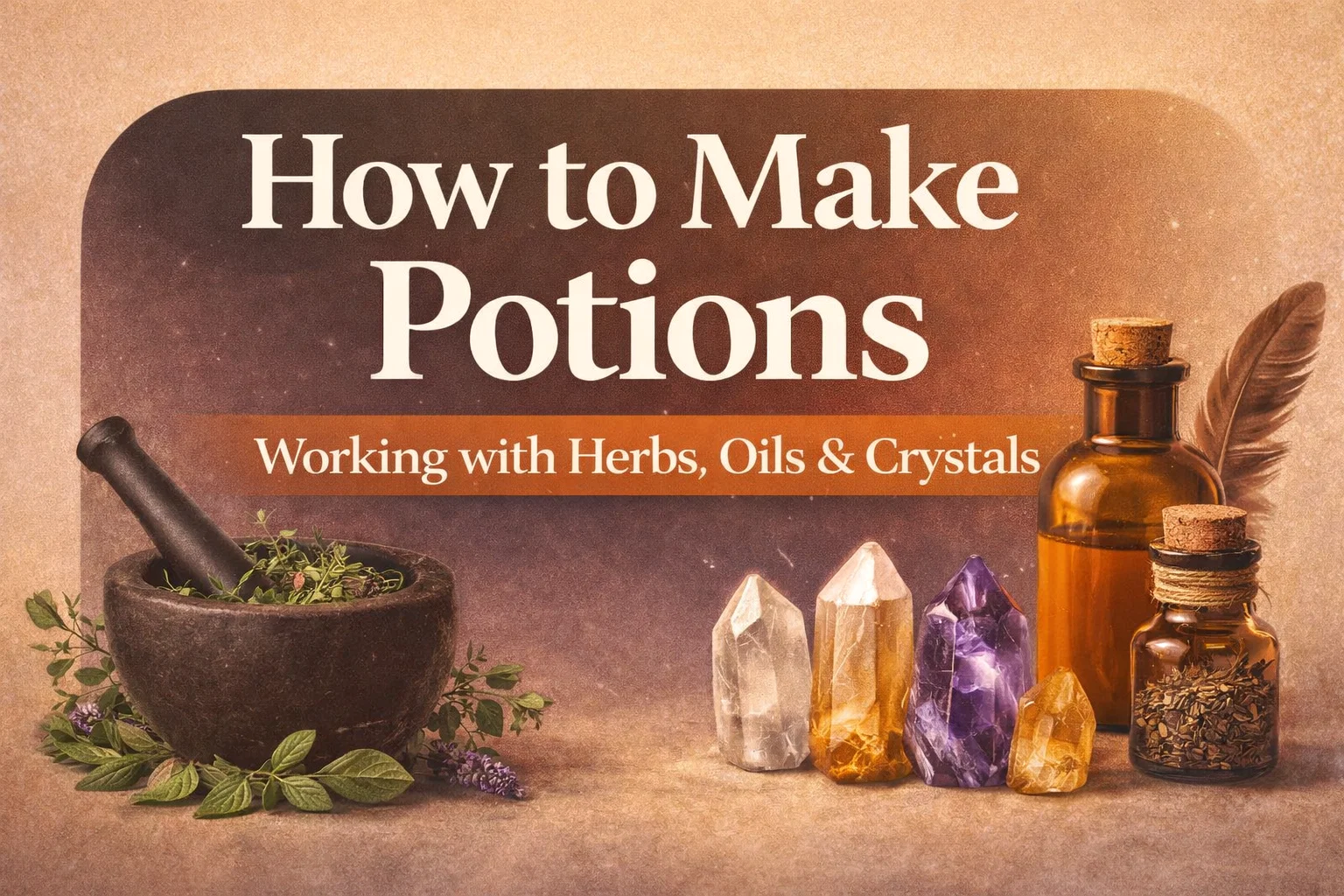
If you are just starting out, there are several “safe” stones that are generally hardy enough for potion making. Quartz crystals are the gold standard here. Clear quartz is an all purpose amplifier that can be programmed with any intention. Amethyst is excellent for peace and spiritual protection, while Citrine is often used for abundance and solar energy. Rose quartz is the go to stone for matters of the heart and self love. These varieties are durable and typically do not leach harmful substances into the water, making them perfect staples for your magical toolkit.
Best Practices for Your Magical Workspace
The environment in which you brew is just as important as the ingredients themselves. A cluttered space leads to a cluttered mind, which can dilute your focus. Before beginning your work, clear your station. Use a mortar and pestle to grind your herbs by hand, as this physical act helps pour your personal energy into the ingredients. Keep a journal or a Book of Shadows nearby to record your recipes, the moon phase, and how you felt during the process. This documentation allows you to track which combinations are most effective for you over time.
Sustainability and Ethics
As a modern practitioner, it is vital to consider the ethics of your ingredients. Sourcing crystals that are ethically mined and herbs that are not over harvested ensures that your magic is built on a foundation of respect for the earth. If a specific herb is endangered, look for a common substitute with similar magical properties. This mindful approach strengthens your connection to the natural world and ensures these resources are available for future generations of potion makers.
Final Thoughts on the Potion Making Journey
Mastering the art of potions is a lifelong journey of discovery. It is a practice that asks you to be both a scientist and a mystic, balancing the physical safety of your ingredients with the ethereal power of your intentions. By taking the time to research your herbs, dilute your oils, and choose your crystals with care, you create a safe and sacred space for transformation. Remember that the most potent ingredient in any potion is your own belief and the clarity of your purpose. As you continue to experiment and learn, your intuition will become your greatest guide. Keep your bottles labeled, your crystals cleansed, and your heart open to the magic that happens when we align ourselves with the rhythms of nature. Save these tips for your next brewing session and watch as your intentions take flight in every drop.