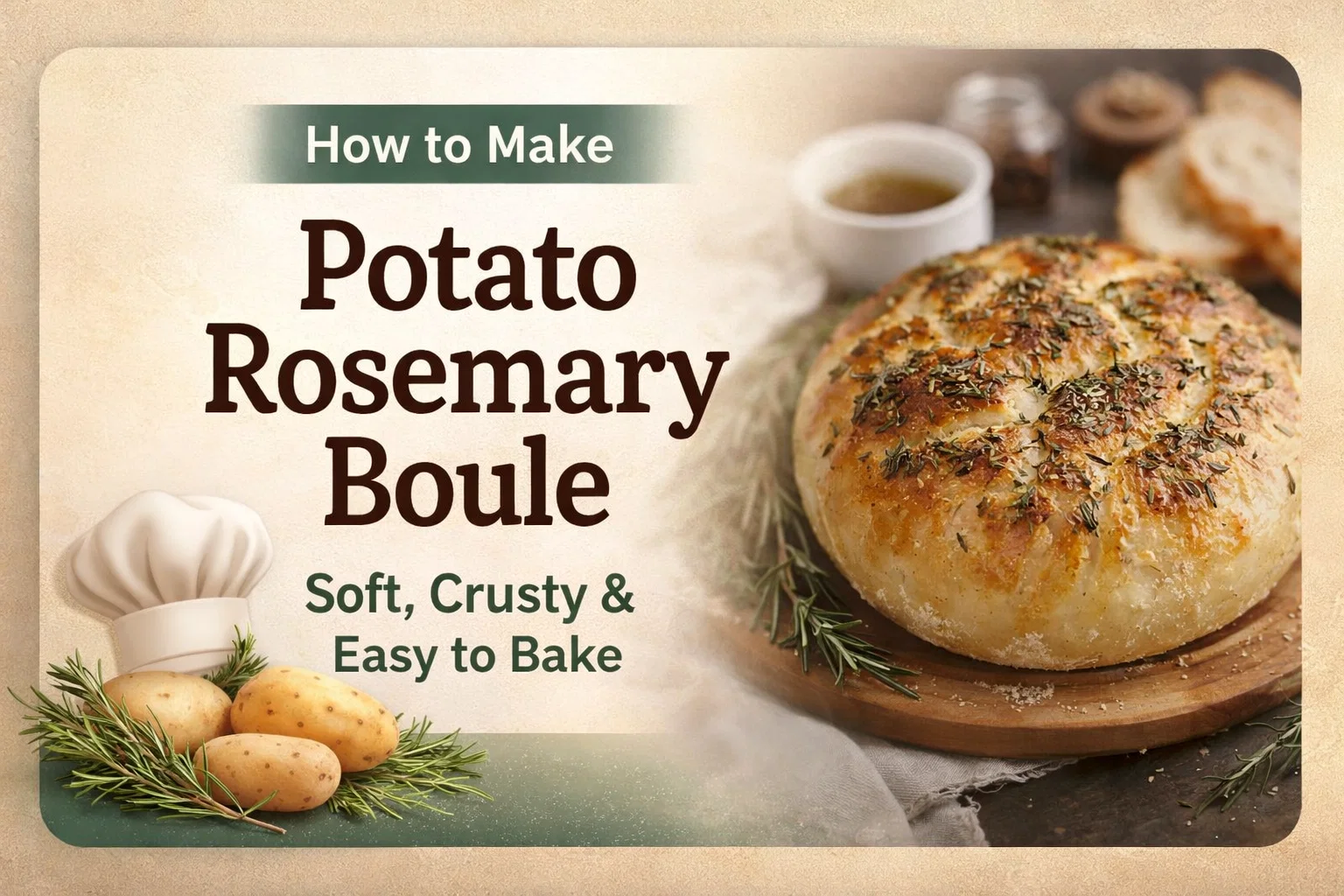
Rustic Potato Rosemary Boule Bread Recipe
There is truly nothing quite like the aroma of freshly baked bread wafting through your kitchen. It is a sensory experience that brings immense comfort and transforms a simple house into a welcoming home. If you have been searching for a bread recipe that is rustic, deeply flavorful, and incredibly forgiving for bakers of all skill levels, you have just found your new favorite weekend project. Today, we are diving deep into the art of making a magnificent Potato and Rosemary Boule. This artisan style loaf features an exceptionally soft and moist crumb, perfectly contrasted by a golden, crusty exterior. The fragrant, piney notes of fresh rosemary make it a delightful accompaniment to practically any meal you can imagine.
The Secret Ingredient: Why Put Potatoes in Bread?
You might be wondering why we are adding mashed potatoes to a bread dough. While it might sound unconventional to some, potato bread has a rich culinary history. Incorporating potatoes into yeast dough is a time honored baker’s secret for achieving a remarkably tender crumb. The starches present in potatoes behave differently than wheat starches. They attract and hold onto more water, which means your baked loaf will be significantly moister and will stay fresh much longer than a standard white loaf.
Furthermore, the subtle, earthy sweetness of the potato perfectly balances the savory, aromatic punch of the fresh rosemary. It does not make the bread taste like a baked potato. Instead, it elevates the texture to cloud like perfection while providing a rich, savory backbone that makes every single bite completely irresistible.
Gathering Your Ingredients
Before we begin getting our hands doughy, let us review the ingredients. You will need a few pantry staples, and ensuring they are of good quality will make a world of difference in your final boule. This recipe yields one beautiful, hearty loaf.
- 400 g bread flour: Bread flour has a higher protein content than all purpose flour, which is crucial for developing the gluten network that gives our boule its chewy, structured crumb.
- 100 g mashed potatoes: Ensure these are plain mashed potatoes without added milk or butter for the best hydration control in your dough. They must be completely cooled before mixing so they do not accidentally kill your yeast.
- 10 g salt: Salt is essential not just for flavor, but also for regulating the yeast’s activity and tightening the gluten structure.
- 7 g instant yeast: Instant yeast is fantastic because it does not require blooming in water first. You can mix it directly into your dry ingredients.
- 300 ml water: Use room temperature water. If your kitchen is very cold, slightly warm water is acceptable, but avoid hot water at all costs.
- 2 tbsp fresh rosemary: Fresh is absolutely key here. Chop it finely to release its natural oils. Dried rosemary will not provide the same vibrant flavor.
- 2 tbsp olive oil: This adds a lovely richness to the dough and helps create a supple texture.
Step by Step Guide to the Perfect Boule
Making artisan bread is a process of patience and love. The entire process will take about three and a half hours, but the vast majority of that is inactive resting time where the yeast does all the heavy lifting. Let us break down the steps to ensure your success.
Mixing and Kneading the Dough
Start by grabbing a large mixing bowl. Combine your dry ingredients first: the bread flour, salt, and instant yeast. Give them a quick whisk to ensure the yeast and salt are evenly distributed throughout the flour. Now, it is time to build the dough. Gradually add your room temperature water, the cooled mashed potatoes, and the olive oil. Use a wooden spoon or your hands to mix everything together until a shaggy, sticky dough forms. Do not worry if it looks a bit messy at this stage. That is exactly how it should look.
Once the dough comes together, turn it out onto a lightly floured work surface. Now begins the most crucial part of bread making: the kneading. Knead the dough for about 10 minutes. You are looking for a transformation. The dough will go from sticky and rough to smooth, supple, and highly elastic. If you gently poke the dough with your finger, it should spring back. Once you have reached this beautiful elastic stage, gently knead in your finely chopped fresh rosemary. Work it through the dough until the green flecks are evenly distributed, filling your kitchen with an incredible herbal fragrance.
The Magic of the Rise
Yeast needs a cozy environment to thrive. Lightly oil a clean bowl and place your kneaded dough inside, turning it once so the top is lightly coated in oil. This prevents the dough from drying out. Cover the bowl with a damp cloth or plastic wrap. Find a warm, draft free spot in your kitchen and let the dough rise for 1 to 2 hours. You are not strictly watching the clock here. You are watching the dough. It is ready for the next step when it has completely doubled in size.
Shaping and the Second Rise
Once your dough has doubled, gently punch it down to deflate the excess gas. Turn it out onto your work surface and shape it into a tight, round loaf, which bakers call a boule. Cupping your hands around the back of the dough and pulling it gently toward you creates surface tension, which helps the bread rise upward rather than spreading outward in the oven. Place your beautifully shaped boule onto a floured baking sheet or a piece of parchment paper. Cover it again with your damp cloth and let it rest for its second rise. This will take about 45 minutes, allowing the gluten to relax and the dough to puff up nicely before baking.
Baking to Golden Perfection
While your bread is undergoing its final rise, preheat your oven to 220 degrees Celsius or 430 degrees Fahrenheit. A hot oven is critical for getting that initial burst of upward growth known as oven spring. Carefully transfer your loaf into the hot oven. Bake for 25 to 30 minutes. You will know your potato and rosemary boule is perfectly baked when the crust turns a deep, beautiful golden brown. For extra certainty, carefully take the bread out of the oven and tap the bottom of the loaf. If it sounds hollow, your bread is fully baked and ready.
The Hardest Part: Cooling
It is incredibly tempting to slice into a piping hot loaf of bread, especially when it smells this good. However, you must resist the urge. Transfer your freshly baked boule to a wire cooling rack and let it cool completely. Bread continues to bake and set from the residual heat even after it leaves the oven. Cutting into it too soon will result in a gummy, wet interior and will ruin that beautiful crumb you worked so hard to build. Patience is your best friend here.
Serving Suggestions for Your Artisan Loaf
Once your Potato and Rosemary Boule is fully cooled, the culinary possibilities are endless. Because of its savory, herbaceous flavor profile, this bread is a natural partner for hearty, comforting meals. Serve thick slices alongside a steaming bowl of roasted tomato basil soup or a rich, slow cooked beef stew. It is perfect for swiping up every last drop of gravy or sauce on your plate.
It also makes phenomenal sandwiches. Imagine a gourmet grilled cheese with sharp cheddar and caramelized onions, perfectly pressed between two slices of this rosemary infused bread. Or, keep it wonderfully simple. Toast a thick slice, rub it with a raw clove of garlic while it is still hot, and drizzle it with high quality extra virgin olive oil. A sprinkle of flaky sea salt is all you need for an unforgettable snack.
Storage and Freezing Tips
Thanks to the mashed potatoes, this bread will stay moist for a few days at room temperature. Keep it stored in a paper bag or a bread box to maintain the crust. Wrapping it tightly in plastic will make the crust soft and slightly chewy. If you do not plan to eat the entire loaf within three days, it freezes beautifully. Slice the bread completely, place pieces of parchment paper between the slices, and store them in a heavy duty freezer bag. This way, you can easily pull out individual slices and pop them directly into the toaster whenever a craving strikes.
Conclusion
Baking your own artisan bread from scratch is one of the most rewarding culinary projects you can undertake. This Potato and Rosemary Boule is the perfect recipe to build your confidence in the kitchen. The addition of mashed potatoes guarantees a foolproof, soft texture, while the fresh rosemary provides a bakery quality flavor profile that will impress your family and friends. Gather your ingredients, clear some counter space, and enjoy the therapeutic process of kneading and baking. Your kitchen will smell divine, and your taste buds will thank you. Happy baking!