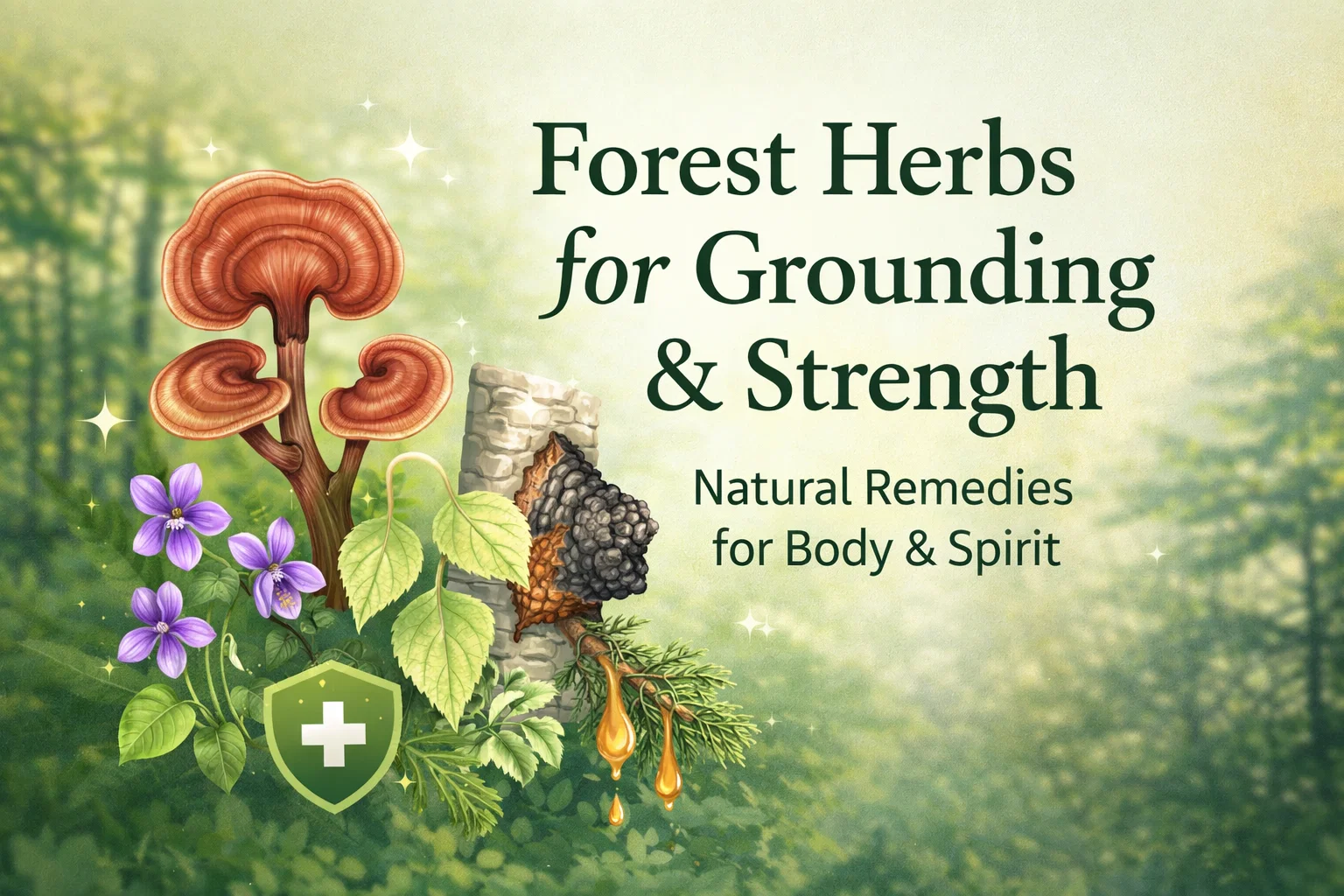
Woodland Wellness Guide Forest Herbs for Grounding Natural Strength
Stepping into a deep, mossy forest often feels like entering a natural cathedral. The air is cooler, the sounds are muffled by a thick carpet of pine needles, and there is an immediate sense of peace that settles over the nervous system. This is not just a feeling; it is a physiological response to the complex chemical and spiritual environment of the woods. For centuries, our ancestors looked to these shaded groves not just for timber and shade, but for a medicine cabinet that was as diverse as it was potent. Today, we are seeing a massive resurgence in what many call woodland wellness, the intentional practice of using forest herbs and fungi to ground the body and fortify the spirit.
The image we are exploring highlights a beautiful array of earth grown remedies that have been used for generations to support everything from immune function to skin health. From the tough, woody exterior of the Chaga mushroom to the delicate, heart shaped leaves of Wood Sorrel, the forest offers a spectrum of healing. Understanding these plants is about more than just identification; it is about rebuilding a lost connection with the natural world and learning how to use these gifts safely and respectfully.
The Foundations of Grounding and Strength
In our modern, high speed world, the concept of grounding has moved from a niche spiritual practice to a vital health necessity. Grounding, or earthing, is the practice of reconnecting with the earth’s natural energy. When we talk about forest herbs for grounding, we are looking for plants and fungi that help stabilize the nervous system and bring us back into our bodies. These are often the bitters, the adaptogens, and the minerals that provide a steady foundation for our health.
Strength, in the context of woodland wellness, is not just about physical muscle. It is about resilience. It is the ability of the immune system to ward off seasonal threats and the capacity of the mind to remain calm under pressure. By incorporating specific woodland elements like Reishi or Pine Resin into our routines, we are essentially borrowing the hardiness of the forest to bolster our own internal defenses.
Reishi Mushroom: The Queen of Immortality
Reishi is perhaps one of the most famous medicinal mushrooms in the world, often referred to in traditional Chinese medicine as the mushroom of immortality. As shown in our guide, Reishi is a primary tool for immune support and stress balance. It grows as a bracket fungus on decaying hardwood trees, sporting a shiny, lacquered cap that looks almost like polished wood.
How Reishi Supports the Body
Reishi is an adaptogen, which means it helps the body adapt to stress. Unlike a stimulant that gives you a quick burst of energy followed by a crash, Reishi works quietly in the background to regulate the adrenal system. This makes it an incredible ally for those dealing with chronic fatigue or anxiety. It does not force the body in one direction; rather, it encourages a state of homeostasis.
Common Forms of Use
- Powder: Easily added to morning coffee or smoothies for a functional boost.
- Tea: Slicing the dried mushroom and simmering it for several hours extracts the beneficial beta-glucans.
- Tincture: A dual extraction method using both water and alcohol ensures you get the full spectrum of medicinal compounds.
The Protective Power of Chaga
While Reishi is known for its graceful appearance, Chaga is quite the opposite. It looks like a burnt piece of charcoal or a rough protrusion on the side of a birch tree. Despite its rugged exterior, Chaga is one of the densest sources of antioxidants found in nature. It is a slow growing fungus that absorbs the nutrients of the birch tree over decades, concentrating them into a powerful medicinal tool.
Chaga is primarily used for vitality and systemic support. It is rich in melanin, which is great for skin health, and contains high levels of superoxide dismutase, an enzyme that repairs cells and reduces damage from free radicals. Drinking Chaga tea feels grounding because it has an earthy, slightly vanilla like flavor that pairs perfectly with the quietude of a forest morning.
Birch Leaf: The Gentle Detoxifier
The birch tree is a pillar of the woodland ecosystem, and every part of it has a use. Birch leaves are particularly valued for their ability to provide a gentle detox. They act as a mild diuretic, helping the kidneys flush out toxins without the harshness of synthetic alternatives. This makes birch leaf tea an excellent choice for those looking to support their skin from the inside out, as clear skin is often a reflection of a healthy internal filtration system.
Internal and External Benefits
Beyond drinking it as a tea, dried birch leaves can be used in herbal baths. The tannins and essential oils in the leaves help soothe itchy skin and reduce inflammation. It is a wonderful example of how woodland wellness covers both the internal spirit and the external body.
Wild Violet and Wood Sorrel: The Forest Floor Gems
If you look down while walking through a shaded woodland, you are likely to spot the delicate purple of the Wild Violet or the bright green clover like leaves of Wood Sorrel. These plants may be small, but they are nutritional powerhouses.
Wild Violet for Lymphatic Health
Wild Violet is often used for soothing the skin and supporting the lymphatic system. The leaves and flowers are rich in mucilage, which provides a cooling, slippery effect that is incredibly healing for dry or irritated tissues. In traditional herbalism, violets are seen as a gentle mover of fluids, helping to clear congestion in the body.
Wood Sorrel for Digestion
Wood Sorrel is instantly recognizable by its sour, lemony taste. This acidity comes from oxalic acid, which makes it a fantastic refreshing tonic. It has been used historically as a digestion aid, helping to stimulate the production of digestive juices. Because of its bright flavor, it is often enjoyed as a fresh leaf snack during a hike or steeped into a cooling summer tea.
Pine Resin and Sweet Fern: Ancient Grounding Tools
The scent of a pine forest is enough to lower cortisol levels, but the resin itself offers even deeper benefits. Pine resin is the tree’s immune system; it seals wounds and prevents infection. Humans have used this for millennia to create salves for wound care and balms for respiratory comfort. Applying a pine scented balm to the chest can help open the airways and provide a sense of deep, rooted calm.
Sweet Fern, which is not actually a true fern but a low shrub, is another incredible tool for grounding the nerves. It has a spicy, aromatic scent that is deeply nostalgic for many. Using Sweet Fern in a tea can help calm an upset stomach while simultaneously settling a scattered mind. It is the definition of a grounding herb, pulling your focus back to the present moment.
A Note on Safety and Respect
When we look at plants like the Yew Tip, it is vital to remember that not all forest plants are meant for consumption. As noted in the guide, the Yew is often an illustrative or symbolic plant in folklore, representing renewal and the cycle of life. However, many parts of the Yew are highly toxic. This highlights the most important rule of woodland wellness: never consume a plant or mushroom unless you are 100 percent certain of its identification and its safety profile.
Foraging should always be done with a spirit of reciprocity. Never take more than you need, and always ensure that the local population of the plant can sustain the harvest. By acting as stewards of the forest, we ensure that these medicinal gifts are available for future generations.
Forest Thyme and Respiratory Care
While we often think of Thyme as a kitchen herb, Forest Thyme (or wild thyme) is a hardy survivor that thrives in rocky, wooded clearings. It is a premier herb for respiratory support. Its volatile oils, such as thymol, are powerful antimicrobials that help clear the lungs and soothe a persistent cough. Whether used as a tea, a dried herb in cooking, or an essential oil for steam inhalation, it is a staple for any natural medicine chest.
Integrating Woodland Wellness into Modern Life
You do not need to live in a cabin in the woods to benefit from these remedies. The beauty of these forest gifts is that they can be integrated into even the most urban lifestyle. Starting your day with a cup of Reishi tea, using a Pine Resin salve on dry winter skin, or taking a moment to appreciate the symbolism of the Yew tree can all serve as touchpoints to the natural world.
These practices remind us that we are not separate from nature. We are part of it. When we use these herbs for grounding and strength, we are engaging in a dialogue with the earth that is as old as humanity itself. We are learning to listen to the quiet wisdom of the trees and the resilient power of the soil.
Conclusion: Finding Your Path to the Woods
The journey into woodland wellness is a deeply personal one. For some, it begins with a curiosity about the mushrooms growing in their backyard. For others, it starts with a need for a more natural approach to stress management. Whatever your entry point, the forest is a generous teacher. By exploring the uses of Reishi, Chaga, Birch, and the many other herbs we have discussed, you are taking a step toward a more grounded and resilient version of yourself.
Take the time to learn, to smell the damp earth, and to taste the sharp zest of the sorrel. The strength of the forest is waiting for you, offered freely in every leaf, resin drop, and fungal growth. As you incorporate these earth grown remedies into your life, may you find the grounding you seek and the strength you need to navigate the world with grace and vitality.