15 Signs It Is Time To Walk Away From A Toxic Relationship Or Friendship
Taking the step to walk away from a relationship or friendship that no longer serves your well-being is one of the most courageous acts of self-care you can perform. It is often a quiet, painful process, but it is the foundation upon which a healthier, more authentic life is built. When you find yourself constantly questioning your worth or feeling drained after every interaction, it is a clear signal from your inner self that something is misaligned. Understanding these red flags is not about pointing fingers or dwelling on negativity; it is about reclaiming your energy and making room for connections that actually nourish your soul.
Recognizing the Patterns of Emotional Exhaustion
Often, the signs that a relationship has become toxic are not explosive or obvious. Instead, they manifest as a slow erosion of your confidence and happiness. You might notice that you are walking on eggshells, carefully filtering your words to avoid a conflict that seems inevitable anyway. This constant state of hyper-vigilance is exhausting and can lead to significant stress. When your emotions are treated as a burden or an invitation for an argument rather than a bridge for understanding, the communication lines have effectively broken down.
A healthy connection should feel like a safe harbor. If you find that expressing your heart and mind consistently leads to being shamed or silenced, you are being denied the basic right of being seen and heard. This dynamic creates a lopsided environment where one person’s needs dominate, leaving the other feeling invisible. Recognizing this pattern is the first step toward liberation.
The Subtle Art of Manipulation and Gaslighting
Gaslighting is a particularly damaging form of emotional abuse because it targets your perception of reality. It involves someone denying your experiences, trivializing your feelings, or twisting facts to make you doubt your own sanity. In a friendship or romantic partnership, this can look like being told you are being too sensitive or that an event you clearly remember never actually happened. Over time, this makes you lose trust in your own intuition.
Stonewalling and the Withdrawal of Love
Communication is the lifeblood of any bond. Stonewalling occurs when one person shuts down, refuses to respond, or physically leaves the room to avoid addressing an issue. This is a power move designed to leave the other person feeling abandoned and desperate for resolution. When love is used as a tool for negotiation—withheld when you don’t comply and granted only when you please the other person—it ceases to be love and becomes a form of control. Real love is consistent and does not require you to jump through hoops to earn it.
The Trap of Playing the Victim
Have you ever tried to bring up a concern, only to have the other person turn it around so that they are the ones who ended up hurt? This is a classic tactic used to avoid accountability. By playing the victim, they effectively shut down the conversation about their behavior and force you into a position where you have to comfort them. This prevents any real growth or healing from occurring within the relationship because the root issues are never addressed.
Assessing Energetic Reciprocity and Support
Every relationship requires a balance of give and take. While there will always be seasons where one person needs more support than the other, the overall trajectory should feel equal. Energetic reciprocity means that both parties are invested in the other’s happiness and success. If you are the only one reaching out, the only one listening, and the only one making sacrifices, you are essentially in a relationship with a ghost.
Support goes beyond just being there during the hard times. It also means being a cheerleader during the good times. A true friend or partner celebrates your wins as if they were their own. If you notice a hint of jealousy or a tendency for them to make fun of you to boost their own ego, it indicates a deep-seated insecurity that they are taking out on you. You deserve to be surrounded by people who are genuinely happy for your progress.
The Importance of Boundaries in Your Healing Journey
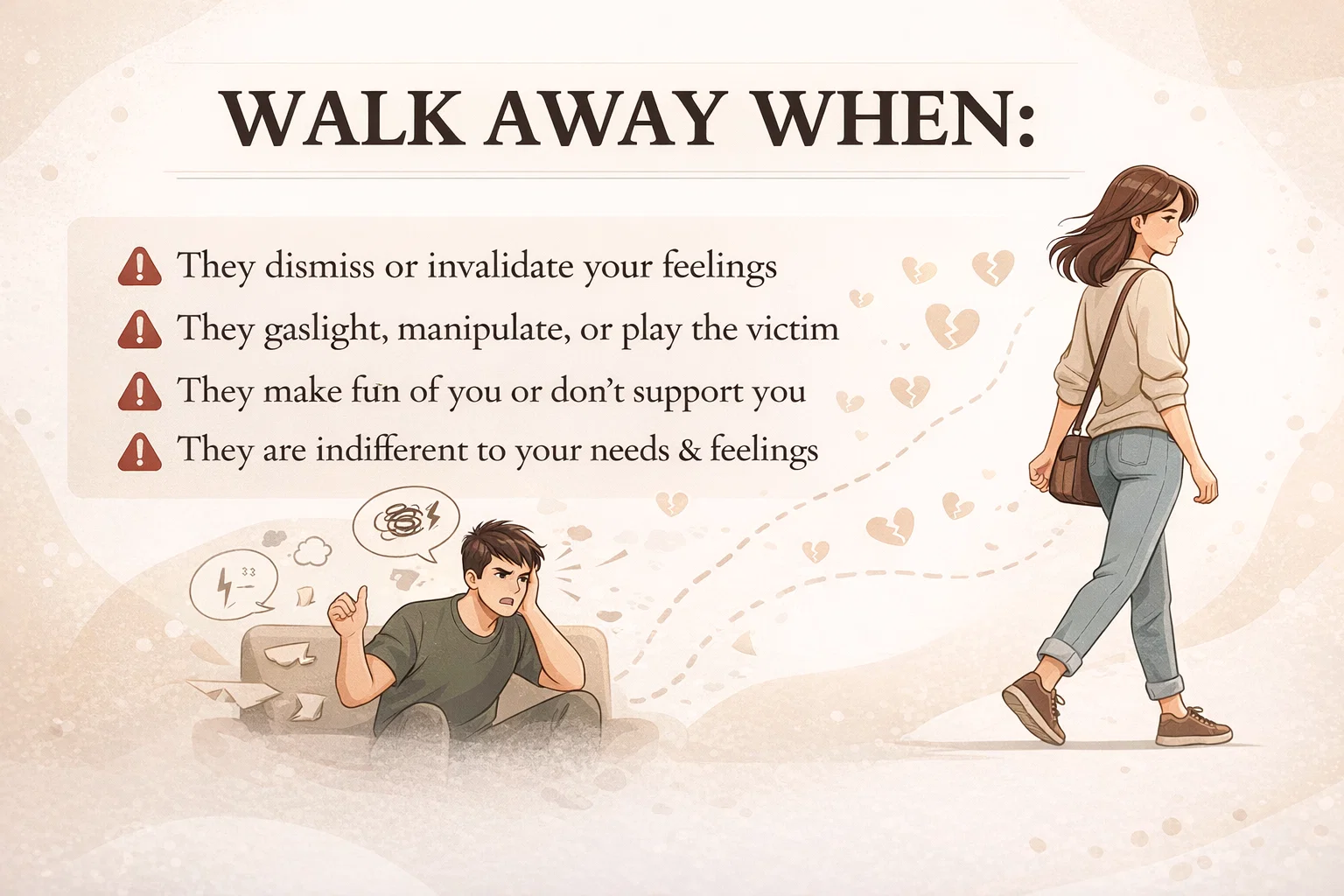
Setting boundaries is often misunderstood as a way to shut people out, but in reality, boundaries are the gates that keep your peace protected. They define what you will and will not tolerate. When you begin to recognize the signs mentioned in the image—like being talked about behind your back or being dismissed—setting a boundary might mean limiting your time with that person or ending the connection entirely. It is a way of telling yourself that your mental health is a priority.
Learning to Trust Your Intuition Again
After being in an environment where your feelings were invalidated, your internal compass might feel a bit broken. Healing involves relearning how to listen to that small, still voice inside you. If your gut tells you that someone is being indifferent to your presence or is hurting you more than they are healing you, believe it. Your body often reacts to toxicity before your mind can even process the logic behind it. Pay attention to how you feel after spending time with specific individuals. Do you feel inspired and energized, or do you feel heavy and depleted?
The Role of Empathy and Vulnerability
Vulnerability is the foundation of intimacy. When you open up about your fears or dreams, you are handing someone a piece of your heart. A person who is unwilling to show empathy when you are in this vulnerable state is not a safe person to hold that heart. Empathy requires someone to step outside of their own perspective and sit with you in yours. Without it, the relationship remains superficial and ultimately unsatisfying.
Steps to Gracefully Walk Away
Walking away doesn’t always have to be a dramatic event. Sometimes, it is a gradual fading out as you choose to invest your energy elsewhere. However, in cases of extreme manipulation or gaslighting, a firm and clear break may be necessary for your safety and sanity. Here are a few ways to navigate this transition:
- Acknowledge the Truth: Stop making excuses for their behavior. See the relationship for what it actually is, not for the potential you wish it had.
- Seek External Support: Talk to a therapist, a trusted mentor, or a neutral friend who can provide a reality check and emotional support.
- Practice Self-Compassion: It is okay to grieve the loss of a relationship, even a toxic one. You are losing a part of your daily life, and that requires time to process.
- Focus on Your Growth: Use the newfound time and energy to dive into hobbies, career goals, or self-improvement practices that make you feel alive.
Creating Space for Healthy Connections
The most beautiful part of walking away from what hurts is the space it creates for what heals. When you stop pouring your energy into a bottomless pit of a toxic relationship, you suddenly have an abundance of love and attention to give to yourself and to those who truly appreciate you. You will begin to attract people who respect your boundaries, celebrate your successes, and offer empathy without being asked. These are the connections that will help you grow into the best version of yourself.
It is important to remember that you are not responsible for fixing another person. You cannot love someone into treating you better if they are committed to misunderstanding you. Your only responsibility is to your own path and your own peace. As you move forward, carry the lessons you learned without the bitterness. Every difficult relationship is a teacher that shows you exactly what you do not want, making it much easier to identify exactly what you do want.
Cultivating a Life of Peace and Reciprocity
Life is too short to spend it defending your emotions or begging for basic respect. By choosing to walk away when the signs are clear, you are making a profound statement about your value. You are saying that you deserve more than just being tolerated; you deserve to be cherished. This shift in mindset changes the way you interact with the world and sets a new standard for every future relationship you enter.
Focus on building a community of people who mirror the qualities you strive to embody. Look for those who are kind, accountable, and supportive. When you find these individuals, nurture those bonds with the same intensity you once used to try and save toxic ones. You will find that healthy relationships are much easier to maintain because they are built on a foundation of mutual desire for the other’s well-being.
Conclusion: Choosing Yourself is the Ultimate Victory
At the end of the day, the most important relationship you will ever have is the one with yourself. If a friendship or partnership requires you to shrink, hide, or suffer in silence, it is far too expensive. Walking away is not a sign of failure; it is a sign of growth. It shows that you have reached a level of maturity where you can recognize when a situation is no longer healthy and have the strength to leave it behind.
Trust the process of letting go. It might feel lonely at first, but that silence is where you will find your voice again. Embrace the journey of healing, stay firm in your boundaries, and never settle for less than the love and respect you give to others. Your peace is your power, and protecting it is the best gift you can ever give to yourself. Keep moving forward, keep choosing your health, and keep believing that better, brighter connections are waiting for you just around the corner.