Therapist-Created 2-Minute Journal Prompts for Overthinking
Have you ever felt completely trapped in a cycle of endless thoughts? You are definitely not alone. Overthinking is a common struggle that can drain your energy, increase your stress levels, and leave you feeling completely paralyzed. When your brain is spinning through worst case scenarios or replaying past conversations, finding a way to hit the pause button is absolutely essential. Many mental health professionals recommend journaling as a powerful tool to untangle those racing thoughts. However, the idea of sitting down to write pages of deep reflections can feel overwhelming when you are already anxious. That is exactly why a quick, two-minute journaling flow designed by a therapist is an absolute game changer. It offers a structured, bite-sized way to regain control and find peace in the present moment.
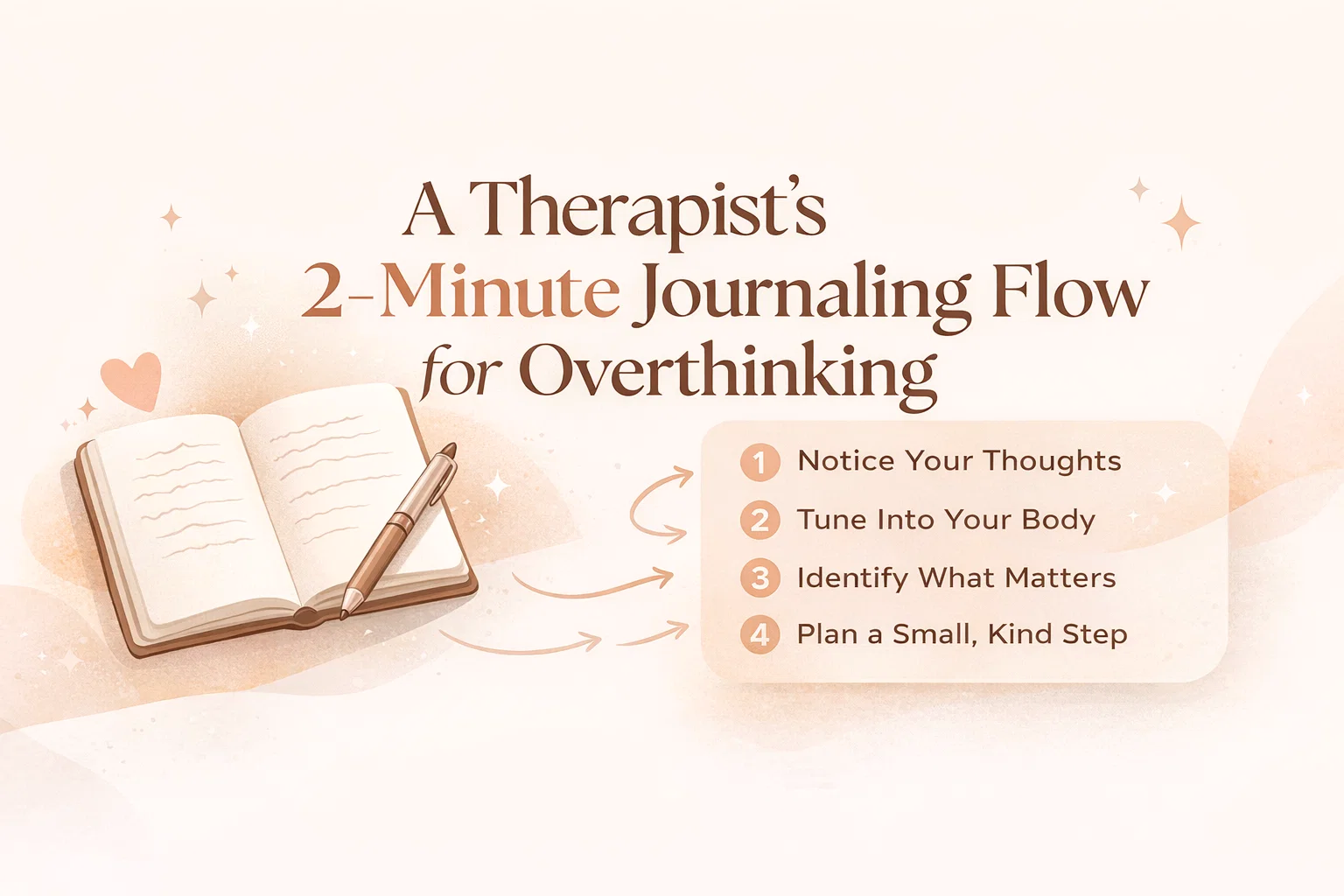
Today, we are going to dive deep into a brilliant, therapist-created journaling method specifically designed to stop overthinking in its tracks. This simple four-step process takes only a couple of minutes but packs a massive punch when it comes to regulating your nervous system and bringing you back to reality. Grab a pen and your favorite notebook, and let us explore how you can break free from the mental loop.
Understanding the Overthinking Trap and Why Journaling Works
Before we get into the specific flow, it helps to understand what is actually happening when we overthink. Overthinking is often a protective mechanism. Your brain is trying to keep you safe by anticipating problems and trying to solve them in advance. The issue is that this mechanism can easily go into overdrive, creating problems that do not even exist yet. This constant mental churning activates your body’s stress response, releasing cortisol and making you feel physically agitated.
Journaling acts as a pressure valve for your mind. When you take the swirling, chaotic thoughts out of your head and put them onto paper, they lose some of their power. You move from experiencing the thoughts to observing them. This psychological distance is crucial for emotional regulation. The specific two-minute flow we are discussing today is highly effective because it moves you sequentially from your busy mind, down into your physical body, towards your core values, and finally into actionable reality.
The Two-Minute Therapist-Backed Journaling Flow
This flow is designed to be quick, accessible, and highly effective. You do not need to worry about perfect grammar or writing beautiful prose. The goal is simply to get the information out. Here is the four-step breakdown of this transformative practice.
Step 1: Tune Into Your Thoughts
The Prompt: “Right now, my mind is telling me…”
The very first step to breaking an overthinking spiral is to simply acknowledge what is happening without judgment. Often, we try to fight our anxious thoughts or push them away, which only makes them louder. By writing down exactly what your mind is saying, you are validating your internal experience. Finish the sentence honestly. For example, you might write, “Right now, my mind is telling me that I am going to fail this upcoming presentation and everyone will judge me.”
This step externalizes the anxiety. Seeing the thought on paper helps you realize that it is just a thought, not an absolute fact. It is a narrative your brain has constructed, and recognizing that is the first step toward dismantling it.
Step 2: Check In With Your Body
The Prompt: “In my body, I notice…”
Anxiety and overthinking do not just live in your head; they manifest intensely in your physical body. When your mind races, your body reacts. You might experience a tight chest, shallow breathing, clenched jaw, or tension in your shoulders. The second step of this flow brings your awareness down from the cognitive level to the somatic level.
Complete the sentence by doing a quick scan from your head to your toes. You could write, “In my body, I notice that my shoulders are practically touching my ears and my stomach feels tied in knots.” This somatic awareness is a powerful grounding technique. By focusing on physical sensations, you anchor yourself in the present moment, which interrupts the future-focused worry of your overactive mind.
Step 3: Anchor Yourself in Your Values
The Prompt: “What matters to me in this situation is…”
Once you have acknowledged your thoughts and grounded yourself in your body, it is time to shift your perspective. Overthinking often causes us to fixate on details that do not actually matter in the grand scheme of things. This third step helps you zoom out and reconnect with your core values.
Ask yourself what is genuinely important right now. If you are stressing about a work project, perhaps what matters is “doing my honest best and learning from the process.” If you are overthinking a social interaction, maybe what matters is “being an authentic and kind friend.” Realigning with your values cuts through the noise of anxiety and gives you a clear, meaningful direction to focus on instead of the endless “what ifs.”
Step 4: Identify One Tiny Next Step
The Prompt: “A 1% kind step I can take is…”
Overthinking thrives on paralysis. When we are overwhelmed by options or potential outcomes, we do nothing at all. The antidote to this paralysis is action, but it must be incredibly small, manageable action. Do not try to solve the entire problem at once. Instead, look for a micro-step. We call it a 1% step.
This step should be gentle and achievable. It could be as simple as, “A 1% kind step I can take is to drink a glass of water,” or “A 1% kind step I can take is to close my laptop for five minutes and stretch.” By taking one tiny, positive action, you break the cycle of stagnation, rebuild your momentum, and prove to yourself that you have agency over your situation.
The Secret Ingredient: Radical Self-Compassion
While the four steps above are the core of the journaling flow, there is an incredible bonus tip that therapists highly recommend to supercharge this practice. It involves how you close out your journaling session.
The Closing Thought: “Thank you, mind, for trying to protect me.”
It is incredibly common to feel frustrated with ourselves when we overthink. We get mad at our brains for causing us stress. However, fighting yourself only adds another layer of suffering. Instead, try offering yourself a moment of radical self-compassion. Remember that your mind is simply doing its job by trying to keep you safe from perceived threats.
By ending your journaling moment with a compassionate line like “Thank you, mind, for trying to protect me,” you shift your internal dialogue. Over time, this consistent practice rewires your brain. It replaces the harsh, critical inner voice with a new, gentler habit of self-talk. You learn to treat yourself with the same kindness and understanding you would offer a good friend who was feeling overwhelmed.
Making This Two-Minute Practice a Daily Habit
The beauty of this journaling flow is its brevity. Because it only takes two minutes, it is incredibly easy to weave into your daily routine. Here are a few tips for making this practice a consistent habit.
- Keep a dedicated notebook handy: Place a small journal and a pen on your nightstand, your desk, or even in your bag. Having the tools readily available removes the friction of starting.
- Use it as a transition ritual: Try doing this flow when you transition between major parts of your day, such as right after finishing work or just before getting into bed. It helps clear the mental slate.
- Do not wait for a crisis: While this is a great tool for acute anxiety, it is also wonderful for daily mental maintenance. Practice it even on good days to build your emotional resilience.
- Utilize the notes app on your phone: If you do not have a notebook with you when a wave of overthinking hits, just type the four prompts into your phone. The mechanism of externalizing the thoughts works just as well digitally.
Conclusion
Overthinking does not have to be a life sentence. While it is a very natural human tendency, you absolutely have the power to manage it and reclaim your mental space. This therapist-created, two-minute journaling flow offers a highly practical, actionable roadmap for those moments when your brain feels like an overwhelming place to be.
By systematically moving through your thoughts, your physical sensations, your core values, and a tiny next step, you effectively short-circuit the anxiety loop. Adding that final touch of self-compassion ensures that you are treating yourself with the kindness you deserve along the way. The next time you feel the familiar spiral of overthinking starting to pull you in, grab a piece of paper and try these prompts. You might be amazed at how quickly just two minutes of intentional writing can help you notice your patterns, break free from the mental clutter, and find your way back to calm.