6 Evening Habits to Lower Cortisol and Reduce Stress Naturally Hormonal Balance Tips
Have you ever felt completely exhausted by the end of the workday, yet the moment your head hits the pillow, your mind starts racing? This “wired but tired” phenomenon is a classic sign that your cortisol levels are out of sync. Cortisol, often referred to as the body’s primary stress hormone, follows a natural rhythm that should peak in the morning to wake you up and gradually decline as the sun sets. However, in our modern world of blue light, late-night snacking, and endless notifications, that natural rhythm is often disrupted. When cortisol stays high in the evening, it prevents the production of melatonin, leaving you restless and stressed.
The good news is that you can retrain your nervous system. By implementing a few intentional, science-backed evening habits, you can signal to your brain and body that it is safe to downshift. Whether you are dealing with hormonal imbalances, gut issues, or just general burnout, these six easy evening habits provide a roadmap to restorative sleep and a calmer life. Let’s dive deep into how you can balance your cortisol tonight for a better version of yourself tomorrow.
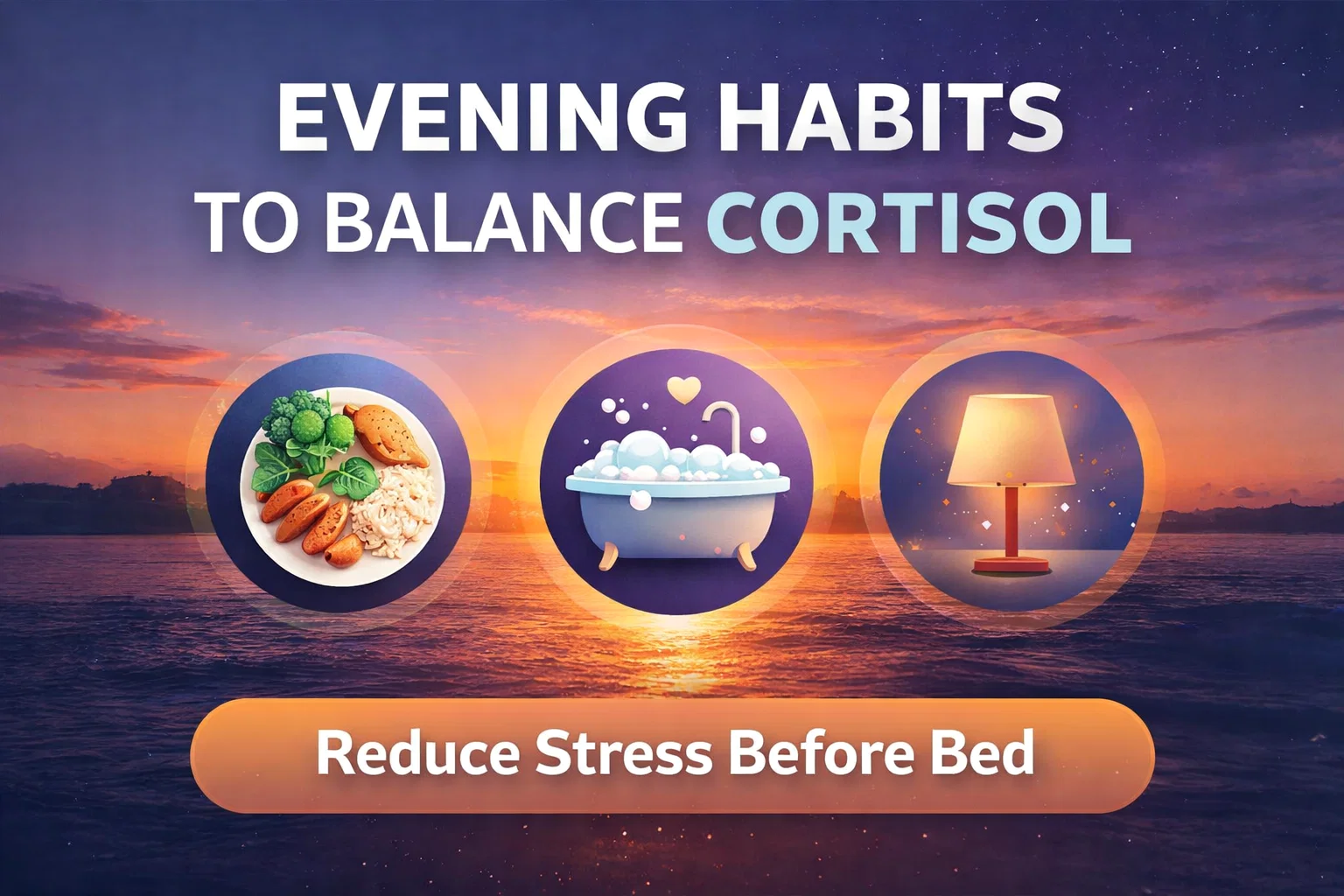
1. Start With a Balanced Dinner Plate
Your journey to a calm evening actually begins at the dinner table. What you eat and when you eat it plays a massive role in how your body manages stress. Aiming to eat your final meal of the day between 5:00 PM and 6:00 PM gives your body ample time to digest before you lie down. This prevents the digestive system from competing with your sleep cycle for energy.
The Power of Macros for Hormonal Harmony
To keep cortisol stable, your dinner should be a balance of high-quality protein, healthy fats, and complex carbohydrates. Protein provides the amino acids necessary for tissue repair, while healthy fats support hormone production. Complex carbohydrates, such as sweet potatoes or quinoa, are particularly important in the evening because they help stimulate the production of serotonin, which is the precursor to melatonin.
The “Kitchen Closed” Ritual
One of the most effective ways to lower mental stress is to immediately clean up the kitchen after eating. When you “tuck in” the kitchen for the night, you create a psychological boundary. A clean space means your brain doesn’t have to process a “to-do” list of dirty dishes the next morning, allowing you to fully transition into relaxation mode.
2. Indulge in a Warm Bath or Shower
Water has a profound effect on the nervous system. A warm bath or shower in the evening does more than just get you clean; it assists in the thermoregulation process that prepares your body for sleep. As you soak in warm water, your blood vessels dilate, and when you step out into the cooler air of your bedroom, your core body temperature drops. This drop is a biological trigger that tells your brain it is time to sleep.
The Benefits of Dry Brushing
Before you step into the water, consider dry brushing your skin. This ancient wellness practice involves using a natural fiber brush in upward strokes toward the heart. It stimulates lymphatic drainage and boosts circulation, helping your body process toxins. It is an incredible way to ground yourself and bring your awareness back into your physical body after a long day of mental work.
Enhance Your Soak with Magnesium and Lavender
To maximize the cortisol-lowering effects of your bath, add magnesium salts (like Epsom salts or magnesium flakes) and a few drops of lavender essential oil. Magnesium is known as the relaxation mineral, and it is easily absorbed through the skin. It helps to soothe sore muscles and calm the nervous system. Lavender oil provides an aromatherapeutic benefit that has been shown in various studies to reduce anxiety and improve sleep quality.
3. Swap Overhead Lights for Warm Lamps
Light is the most powerful regulator of your internal biological clock. Our ancestors evolved with the rising and setting of the sun, but today, we are constantly bombarded by artificial light. Overhead LED lights and the blue light emitted from smartphones and televisions trick your brain into thinking it is still noon, which keeps cortisol levels high and suppresses melatonin.
Creating a “Golden Hour” Indoors
As soon as the sun goes down, turn off the harsh overhead lights in your home. Instead, rely on small lamps with warm-toned bulbs. Salt lamps or amber-tinted bulbs are excellent choices for creating a cozy, cave-like environment. This soft lighting signals to your pineal gland that the day is ending.
The Digital Sunset
Commit to putting your phone away at least one hour before bed. If you must use electronics, ensure you have blue light filters enabled. However, the best practice is to replace scrolling with a physical book or a calming hobby. This break from the digital world prevents the dopamine spikes and comparison traps that often trigger late-night stress spikes.
4. Optimize Your Nutrients Before Bed
Sometimes, our bodies need a little extra support from specific nutrients to successfully transition into a deep sleep state. Modern lifestyles often deplete us of the very minerals and herbs that help us manage stress naturally.
Key Supplements for Relaxation
- Magnesium Glycinate: This specific form of magnesium is highly bioavailable and particularly effective for promoting relaxation and sleep without the laxative effect of other forms.
- Omega 3: Healthy fats are essential for brain health and reducing systemic inflammation, which in turn helps keep cortisol in check.
- Inositol: This carbohydrate-like molecule helps balance chemicals in the body and can be very effective for those who struggle with “racing thoughts” at night.
- Ashwagandha: As an adaptogenic herb, ashwagandha helps the body adapt to stress and has been shown to significantly lower cortisol levels over time.
- L-Theanine: Often found in green tea, this amino acid promotes a state of “relaxed alertness,” helping you wind down without feeling groggy.
The Magnesium Foot Spray Trick
If you don’t want to take an oral supplement, try spraying magnesium oil on the bottom of your feet. The skin on the soles of your feet is highly absorbent, allowing the magnesium to enter your bloodstream quickly. Many people find that this simple habit leads to more vivid dreams and a deeper, more restorative sleep.
5. Watch the Sunset and Reflect
Nature is the ultimate cortisol regulator. Watching the sunset is not just a romantic idea; it is a physiological necessity for many. The specific wavelengths of light present during sunset help to reset your circadian rhythm.
Fresh Air and Mindful Breathing
Take a few minutes to step outside and breathe the fresh evening air. Deep, diaphragmatic breathing activates the vagus nerve, which is the “on switch” for your parasympathetic nervous system (the rest and digest mode). Even five minutes of intentional breathing outdoors can significantly lower your heart rate and stress levels.
The Power of the To-Do List and Gratitude
A major source of evening cortisol spikes is “anticipatory stress” about the following day. To combat this, write down your to-do list for tomorrow before you finish your evening routine. Once it is on paper, your brain no longer feels the need to keep looping through those tasks. Follow this by writing down three things you are grateful for. Shifting your focus from what needs to be done to what has gone well creates a positive emotional state that is conducive to sleep.
6. Legs Up the Wall Pose
This simple yoga posture, known as Viparita Karani, is perhaps the most powerful restorative tool you can use at home. It requires zero equipment and offers immediate benefits for your hormones, gut, and reproductive system.
How to Do It Properly
Find a clear wall space, sit as close to the wall as possible, and swing your legs up so they are resting vertically against the wall while your back remains flat on the floor. You can place a small pillow under your hips for extra comfort. Stay in this position for 10 to 15 minutes while breathing deeply.
Why It Works for Cortisol
By reversing the flow of blood, you encourage lymphatic drainage and take the pressure off your heart. This pose triggers a deep relaxation response that lowers cortisol almost instantly. It is particularly beneficial for women balancing their hormones, as it improves circulation to the pelvic region and helps soothe the digestive system, which is often tied to our stress responses.
Conclusion: Building Your Sustainable Routine
Balancing your cortisol isn’t about doing everything perfectly every single night. It is about creating a rhythm that feels nourishing rather than like another chore. You might start by just picking two of these habits—perhaps swapping your lights for lamps and trying the “legs up the wall” pose. Over time, you will notice that your body begins to crave these rituals.
When you take the time to lower your stress levels in the evening, you aren’t just improving your sleep. You are improving your mood, your metabolism, and your long-term health. By respecting your body’s natural need for a slow descent into the night, you empower yourself to wake up with genuine energy and a clear mind. Start tonight, listen to your body, and enjoy the peace that comes with a balanced internal world.