3 Types of Leaders That Shape Team Culture Toxic vs Nice vs Kind Leader Comparison
Great leadership is often the invisible thread that holds a team together or the heavy weight that pulls it apart. When we look at the modern workplace, we see a wide spectrum of management styles, but most leaders fall into one of three distinct categories. Understanding these archetypes is not just about labeling your boss; it is about recognizing the cultural footprint you are leaving as a leader yourself. The way you handle a mistake, deliver feedback, or react to a missed deadline defines whether your team feels empowered, ignored, or oppressed.
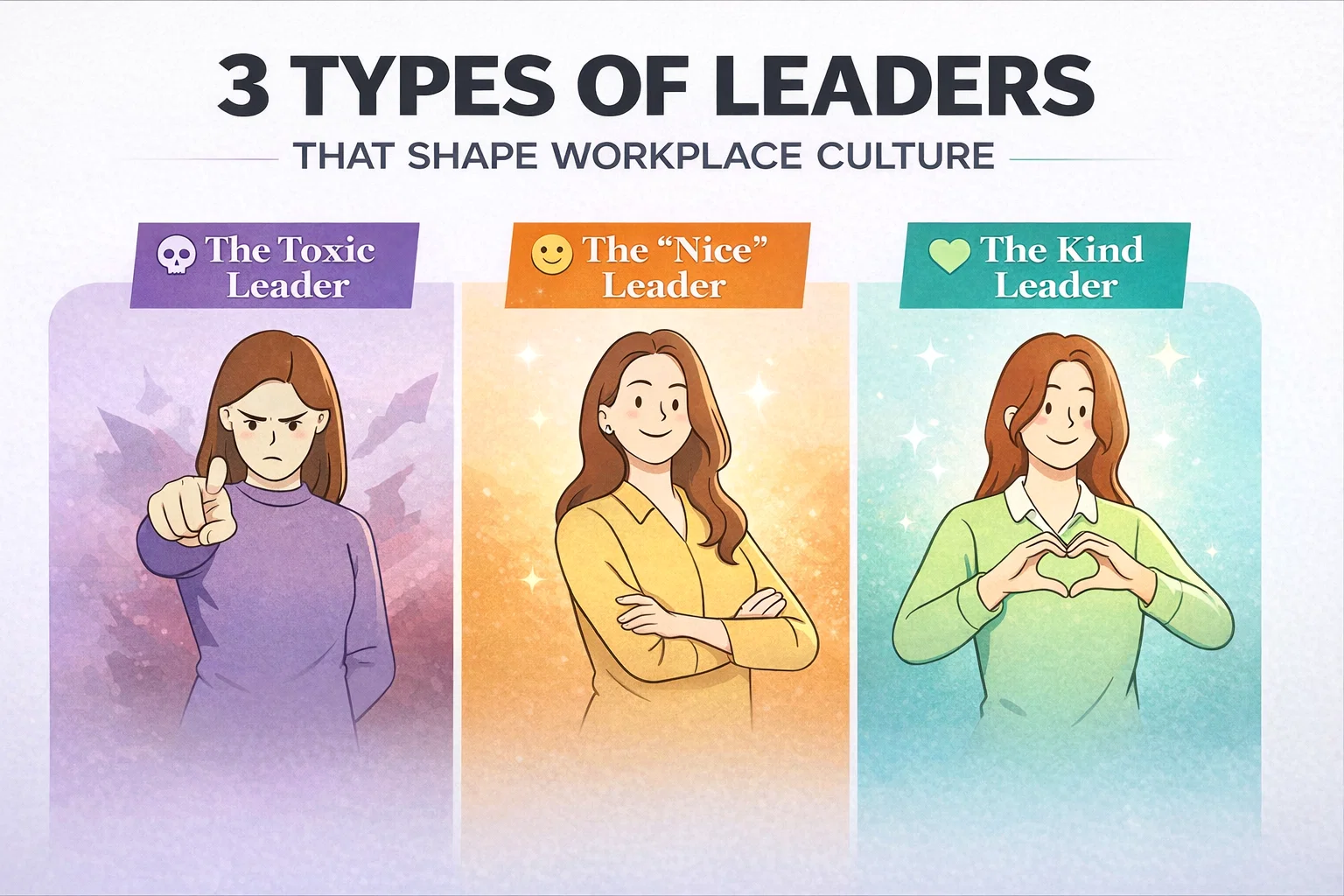
The differences between being toxic, nice, and kind are subtle yet profound. While a toxic leader is easy to spot through their trail of burnout and high turnover, the distinction between a nice leader and a kind leader is where most people get tripped up. Being nice often feels like the right path, but it can lead to stagnation and confusion. Being kind, on the other hand, involves the bravery to be honest while maintaining deep empathy. Let us dive deep into these three types of leaders and how they shape the culture around them.
The Toxic Leader: Leading Through Fear and Control
The toxic leader is the archetype that most employees fear the most. This individual operates from a place of insecurity, often masked by a thin veil of authority and dominance. Their primary currency is fear. In an environment led by a toxic manager, team members spend more time worrying about how to protect themselves from blame than they do actually innovating or producing high-quality work.
The Culture of Perfectionism and Blame
One of the most damaging traits of a toxic leader is the demand for absolute perfection without providing the necessary roadmap to achieve it. They set impossibly high bars but offer zero constructive feedback. When things go wrong, as they inevitably do in any business, the toxic leader is the first to point fingers. They take all the credit for the wins and distribute all the blame for the losses. This creates a culture where employees become terrified of making mistakes, leading to a complete lack of risk taking and creativity.
Focusing on Numbers Over People
For a toxic leader, employees are not humans with lives and emotions; they are simply resources or line items on a spreadsheet. This leader focuses almost exclusively on output and metrics. While data is important for any business, ignoring the human element leads to a culture of 24/7 hustle. This relentless pressure eventually results in massive burnout. When a leader shuts down any ideas that are not their own, they effectively silence the collective intelligence of the team, leaving everyone feeling undervalued and disposable.
The Nice Leader: The Trap of People Pleasing
At first glance, the nice leader seems like a breath of fresh air compared to the toxic one. They are friendly, they want everyone to be happy, and they are generally well liked. However, being nice is not the same as being effective. In fact, nice leaders can often be just as damaging to a team’s long term health as toxic ones, though for very different reasons. The core issue with the nice leader is that they prioritize being liked over being respected.
The Avoidance of Necessary Conflict
Conflict is a natural and necessary part of a growing business. It is through healthy debate and the clashing of ideas that the best solutions are born. The nice leader, however, avoids conflict at all costs. They hate the idea of making someone feel uncomfortable or being the bearer of bad news. Because they cannot say no, they often agree to every request, which leads to overcommitment and eventual burnout for themselves and their team. By trying to keep the peace, they allow underlying issues to fester until they become unmanageable.
Creating Comfort Instead of Growth
A nice leader will praise everyone, even when the work is subpar. While this might feel good in the moment, it is ultimately a disservice to the employee. Without honest feedback, people cannot grow. This leader creates a culture of comfort, but comfort is the enemy of excellence. By staying silent to protect feelings, they are actually preventing their team members from reaching their full potential. A team led by a nice leader often feels stagnant, as there is no drive for improvement or accountability.
[Image comparing the feedback loops of a nice leader versus a kind leader]
The Kind Leader: Leading with Empathy and Clarity
The kind leader is the gold standard for modern management. This individual understands that leadership is a balance between high standards and deep human empathy. Unlike the nice leader, the kind leader is not afraid of the truth. They understand that the most respectful thing you can do for an employee is to be clear about where they stand and how they can improve. They lead with clarity, ensuring that everyone knows the mission and their specific role in achieving it.
The Power of Radical Responsibility
In the world of a kind leader, credit is shared and responsibility is owned. When the team succeeds, the leader shines the spotlight on the contributors. When the team fails, the leader steps up and takes responsibility for the outcome. This creates a psychological safety net that allows team members to take risks. Because the kind leader treats mistakes as lessons rather than failures, the team feels empowered to experiment and innovate without the looming shadow of punishment.
Investing in Human Growth
Kind leaders listen to understand, not just to respond. They take a genuine interest in the career trajectory of each individual on their team. They are willing to have the hard conversations, but they do so with a foundation of respect. This balance of high standards and real rest ensures that the team remains productive without sacrificing their mental health. By investing in each person’s growth, the kind leader builds a loyal, high performing culture that can weather any storm.
The Long Term Impact on Team Culture
The type of leader at the top acts as a thermostat for the entire organization. A toxic leader sets the temperature to a boiling point of stress and anxiety. A nice leader sets it to a lukewarm, stagnant environment where no one truly knows where they stand. A kind leader, however, creates a climate that is sustainable, challenging, and deeply rewarding.
Why Culture Matters for the Bottom Line
Culture is not just a buzzword; it has a direct impact on the success of the business. Teams led by kind leaders have lower turnover rates, higher engagement scores, and better problem solving capabilities. When employees feel supported and heard, they are more likely to go above and beyond. Conversely, the hidden costs of toxic or overly nice leadership, such as recruitment fees, lost productivity, and low morale, can cripple a company’s finances over time.
Transitioning from Nice to Kind
Many leaders realize they have fallen into the nice trap and want to shift toward being a kind leader. This transition requires a shift in mindset. It starts with realizing that clear is kind. Giving someone a difficult piece of feedback that helps them keep their job or get a promotion is far more empathetic than staying silent and watching them fail. It requires building the muscle of courage to have those hard conversations while maintaining a heart of service for the team.
Conclusion: Choosing Your Leadership Path
Leadership is a choice that you make every single day. Every email you send, every meeting you lead, and every piece of feedback you give is an opportunity to define which of these three categories you fall into. Do you want to be feared, merely liked, or truly respected? While the path of the toxic leader is destructive and the path of the nice leader is ineffective, the path of the kind leader is where true impact is made.
By leading with empathy and clarity, taking responsibility for failures, and investing deeply in the growth of your people, you can build a team culture that thrives. It is not always the easiest path, as it requires honesty and vulnerability, but it is undoubtedly the most rewarding. As you move forward in your leadership journey, ask yourself: Am I creating comfort, or am I fostering growth? The answer to that question will determine the future of your team and your career.
Would you like me to create a checklist for transitioning from a nice leadership style to a kind leadership style?