7 Daily Habits for Self-Mastery How to Control Your Mind and Life
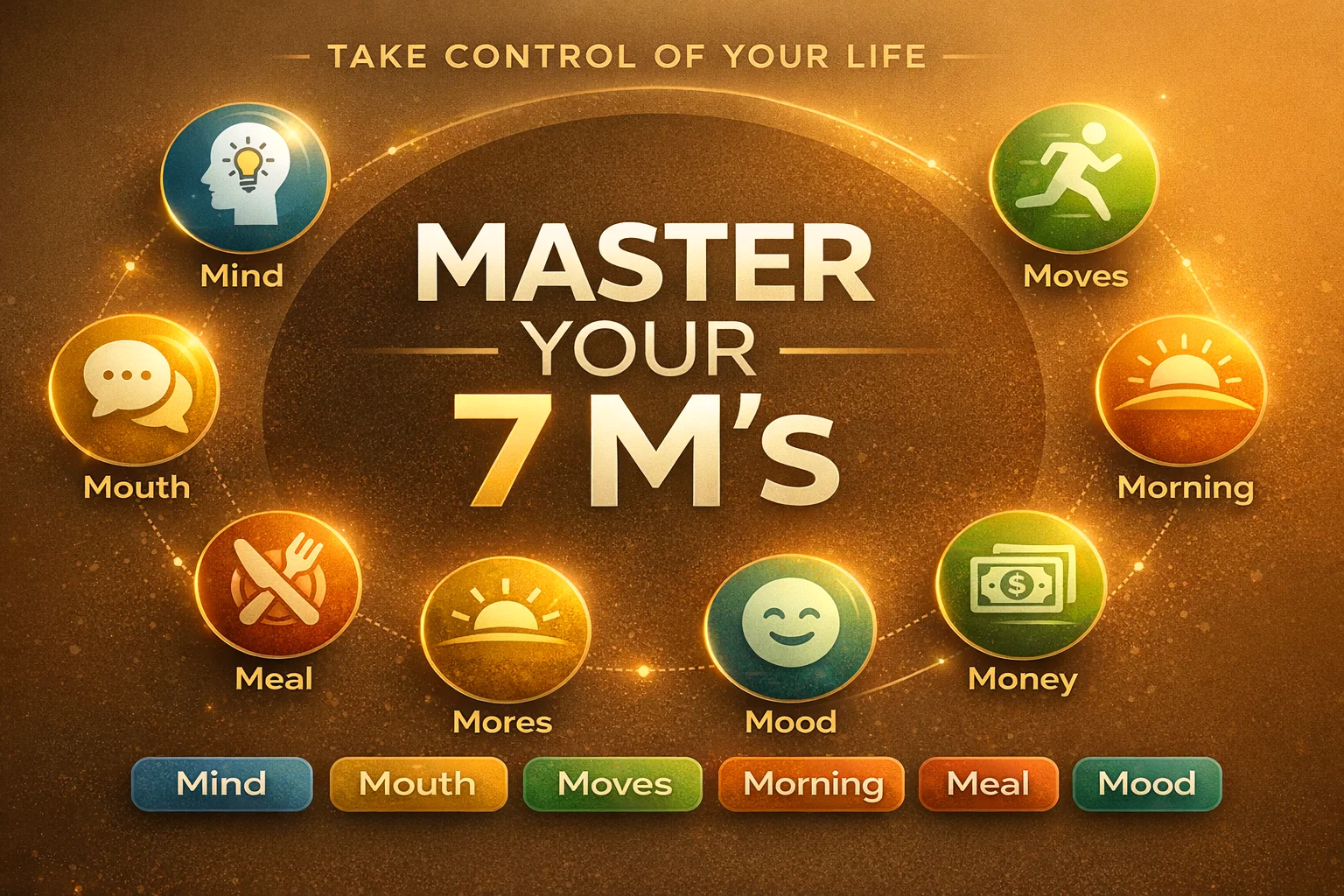
Success is rarely the result of a single, massive leap. Instead, it is the cumulative effect of small, intentional choices made every single day. When we look at the core of self-mastery, we find that it boils down to a few key pillars of discipline. The image of the 7 Ms provides a powerful framework for anyone looking to reclaim their autonomy and build a life of purpose. By focusing on these seven areas—Mind, Mouth, Moves, Morning, Meal, Money, and Mood—you can transition from being a passenger in your own life to being the captain of your destiny. Let us dive deep into how each of these elements functions and how you can start mastering them today.
1. The Mind: The Architect of Your Reality
Everything you see around you began as a thought. Your career, your relationships, and even your current state of happiness are heavily influenced by the internal dialogue running through your head. Mastering the mind is the first and most critical step because if you do not control your thoughts, your thoughts will control you. This often manifests as “autopilot” living, where limiting beliefs and fears dictate your actions without you even realizing it.
Practicing Mindfulness and Observation
To master the mind, you must move from being the “thinker” to being the “observer.” Mindfulness is the practice of watching your thoughts pass by like clouds in the sky without attaching judgment to them. When you notice a negative or self-sabotaging thought, you can acknowledge it and then consciously choose a more constructive alternative. Over time, this re-wires your brain for resilience and clarity.
2. The Mouth: The Power of Your Words
The words we speak carry an immense amount of energy. They have the power to heal or to hurt, to build up or to tear down. Mastering your mouth is about more than just avoiding gossip; it is about being intentional with every syllable you utter. Once a word leaves your lips, it cannot be taken back, and the impact it leaves on others—and yourself—can last a lifetime.
Integrity in Speech
Speaking with integrity means saying only what you mean. It involves avoiding exaggerations, unnecessary complaints, and harsh criticisms. When you use your words to encourage and provide value, you naturally attract higher-quality people and opportunities into your life. Remember that your internal dialogue is also part of this; the way you talk to yourself in private is just as important as how you speak to others in public.
3. Moves: Shaping Your Future Through Action
Every move you make today is a brick in the foundation of your future. It is easy to get lost in “analysis paralysis,” where we spend so much time planning that we never actually do anything. Mastering your moves means prioritizing action over intention. Whether it is a small step like sending a networking email or a large step like starting a new business, movement creates momentum.
The Compounding Effect of Daily Actions
Small, consistent actions compound over time. If you improve by just one percent every day, you will be significantly more capable by the end of the year. Focus on high-impact moves that align with your long-term goals. Ask yourself: Is what I am doing right now bringing me closer to the person I want to be tomorrow?
4. The Morning: Winning the Day Early
The first hour of your day sets the tone for the remaining fifteen. If you start your morning in a reactive state—checking emails, scrolling through social media, or hitting the snooze button—you are essentially letting the world dictate your energy. Owning your morning allows you to start from a place of proactive strength.
Designing a Power Routine
A successful morning routine does not have to be two hours long. It can be as simple as fifteen minutes of stretching, five minutes of journaling, and a glass of water. The goal is to create a ritual that centers your focus and prepares your body and mind for the challenges ahead. When you win the morning, you gain a psychological advantage that carries you through the afternoon slump.
5. The Meal: Fueling Your Physical Engine
We often forget that our bodies are biological machines that require high-quality fuel to function optimally. What you eat directly affects your cognitive function, your energy levels, and your emotional stability. Mastering your meals is not about restrictive dieting; it is about choosing foods that nourish your strength rather than feeding your struggles.
The Connection Between Diet and Mental Clarity
Sugar crashes and processed foods often lead to brain fog and irritability. By focusing on whole foods, hydration, and balanced nutrition, you provide your brain with the nutrients it needs to maintain focus and stay calm under pressure. Treat your nutrition as a form of self-respect. When you feel good physically, you have more bandwidth to tackle the other areas of self-mastery.
6. Money: Securing Your Peace of Mind
Money is a tool, but if you do not know how to use it, it can easily become a source of immense stress. Financial mastery is not necessarily about being a millionaire; it is about having control over your resources so they do not control your peace. When you live beyond your means or ignore your financial health, you create a constant undercurrent of anxiety.
Building Financial Discipline
Mastering money involves three stages: earning, saving, and investing. Start by tracking your expenses to see where your leaks are. Creating a budget gives you permission to spend on what matters while cutting out the waste. Financial freedom is the ability to make choices based on your values rather than your bank balance. By taking control of your finances today, you buy yourself peace of mind for the future.
7. Mood: Managing Your Internal Climate
Your mood acts as a magnet. It influences how people perceive you, how you respond to setbacks, and what kind of energy you radiate into the world. While we cannot always control external events, we can control our emotional response to them. Mastering your mood is about developing emotional intelligence and resilience.
Shifting Your Vibration
If you find yourself stuck in a negative mood, you have the power to shift it. This might involve physical movement, listening to uplifting music, or practicing gratitude. Gratitude is perhaps the fastest way to change your mood because it is impossible to feel fearful and grateful at the exact same time. By consciously managing your emotional state, you become more magnetic to positive outcomes and supportive relationships.
The Synergy of the 7 Ms
While each of these areas is powerful on its own, they are deeply interconnected. For example, if you master your Morning, you are more likely to have the clarity to master your Mind. If you master your Meal, you will have the energy to make better Moves. This is a holistic system for living. You do not have to be perfect in all seven areas overnight. The journey of self-mastery is about continuous improvement and awareness.
Conclusion: Taking the First Step Toward Mastery
Mastering your life is an ongoing process of refining your habits and checking in with your values. The 7 Ms—Mind, Mouth, Moves, Morning, Meal, Money, and Mood—offer a roadmap for anyone feeling overwhelmed or stuck. By taking small, intentional steps in each of these categories, you begin to build a life of discipline, peace, and achievement.
Start today by picking just one of the seven pillars to focus on. Perhaps you will commit to a consistent morning routine or decide to be more mindful of the words you speak to others. As you gain confidence in one area, the others will naturally begin to fall into place. You have the power to shape your reality; it all starts with the choice to take control.
Would you like me to generate a set of social media captions or a checklist to accompany this blog post?